
Machinery suddenly fails. Production lines stop. Downtime costs rise. If you manage heavy equipment, you know this problem well. Finding the right bearing is not just about a part. It’s about keeping everything running.
Tapered roller bearings are specially designed parts that manage both radial and axial loads in one assembly. They are essential for high-precision, high-stress applications where reliability cannot be compromised. For critical uses, choosing the correct bearing internal clearance—like C1, C2, or C3—is as important as the bearing type itself.
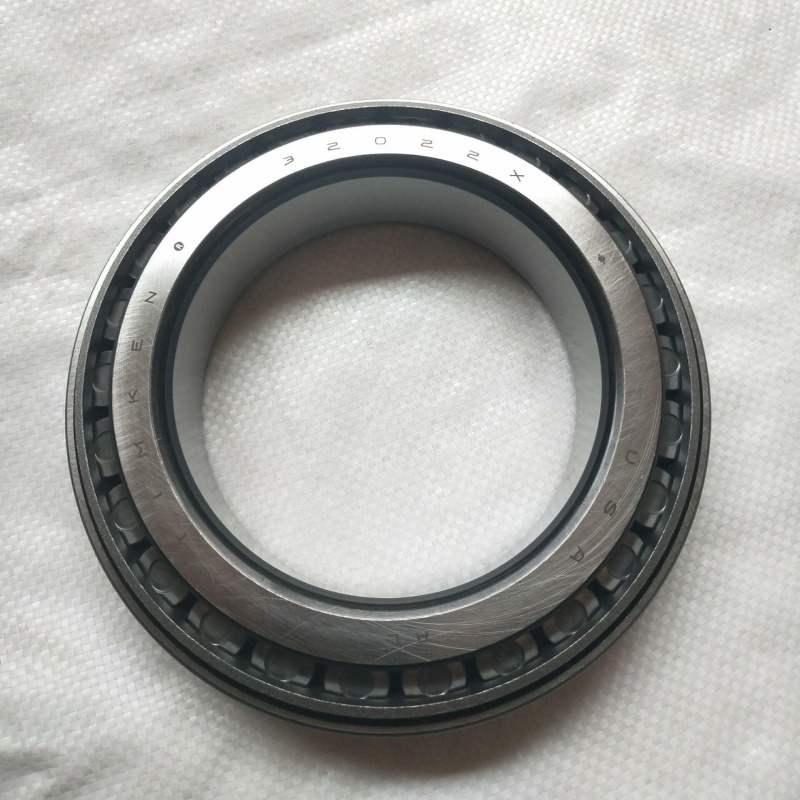
Choosing a bearing can seem simple, but the details make a huge difference. The wrong choice leads to premature wear, noise, and costly failures. In this article, I will break down everything you need to know about tapered roller bearings. We will explore their key uses, explain clearance codes, compare them to other types, and guide you to the best choice for your machinery. Stick with me, and let’s find the perfect solution for your needs.
What are tapered roller bearings1 used for?
Heavy loads push bearings to their limit. Vibration and shock from machinery cause unexpected failures. You need a bearing that can handle pressure from all directions without wearing out quickly. The solution requires a specific design.
Tapered roller bearings are used in applications that must support heavy combined loads2—both radial (from the side) and axial (from the end)—while maintaining precise alignment and durability. Their classic use is in vehicle wheel hubs, gearboxes, and large industrial machinery like mining equipment and rolling mills, where strength and accuracy are critical.
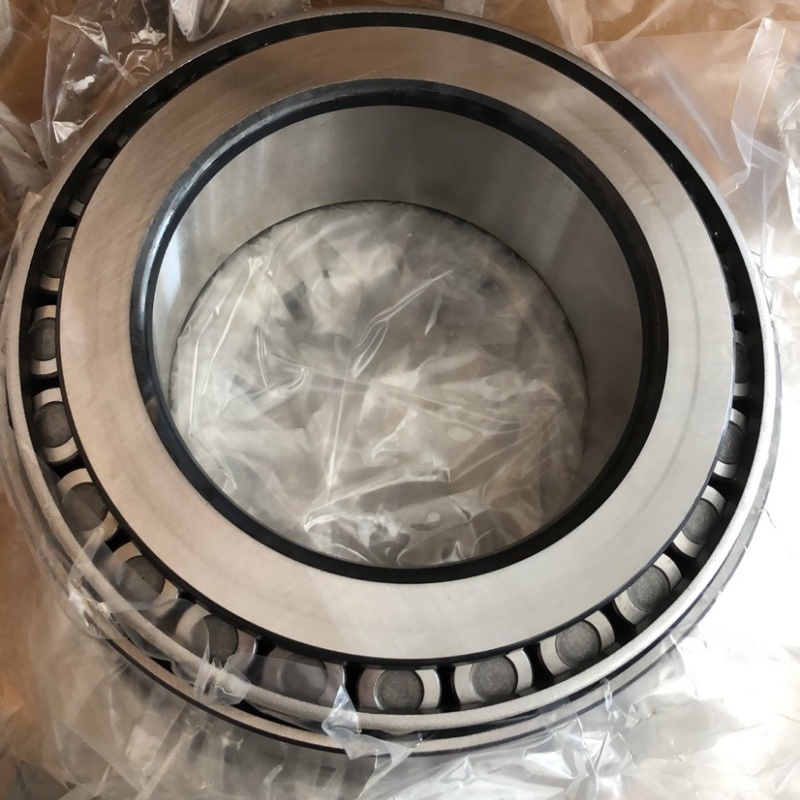
The unique value of tapered roller bearings lies in their geometry. The rollers are tapered, and the raceways are cone-shaped. This design allows the bearing to manage forces from different directions efficiently.
Understanding the Load Capacity and Design
The main reason to choose a tapered roller bearing is its ability to handle combined loads. This is a key difference from many other bearing types. Let’s look at how this works in common industries.
| Industry / Application | Primary Load Type | Why Tapered Roller Bearings Are Used | My Insight from Experience |
|---|---|---|---|
| Automotive (Wheel Hubs) | Heavy radial and axial loads from cornering and braking. | They manage both forces in one unit, ensuring stable steering and long life. | In our B2B work, clients like Rajesh in India often order these for truck and bus aftermarkets. The demand is steady because replacement is frequent in heavy vehicles. |
| Heavy Machinery (Mining Conveyors) | Extreme radial loads and shock from raw materials. | High load capacity and robustness prevent failure in dirty, high-vibration environments. | For exports to South Africa and Indonesia, mining equipment builders specify P5 precision class bearings from us. They need the extra accuracy for smooth conveyor operation. |
| Gearboxes (Industrial Pumps) | Combined loads from gears, plus high speeds. | The tapered design provides rigid support, minimizing shaft deflection for proper gear mesh. | A common request from our OEM clients is for customized clearances (C3 group) in pump bearings. This accommodates heat expansion without losing performance. |
| Agriculture (Tractor Transaxles) | High torque loads and axial forces from implements. | Durability under variable loads and in contaminated conditions is essential. | We see seasonal order spikes from regions like Brazil and Pakistan before harvest seasons. Distributors stock up because downtime during harvest is extremely costly for farmers. |
From my daily conversations with procurement managers at machinery factories, the choice often comes down to total cost of ownership3. A cheaper, standard ball bearing might fail in six months under heavy combined loads2. A correctly specified tapered roller bearing can last for years, even in tough conditions. This is why understanding the application is the first step. You must ask: What are the main forces? Is there shock or vibration? How fast will it run? The answers point you to the right bearing type. In our factory, we see many failed bearings returned for analysis. A frequent finding is that a cylindrical roller bearing was used where a tapered type was needed to handle the axial thrust. This mistake leads to rapid wear and unplanned stops.
What is C1, C2, and C31 bearing clearance?
Your new bearing arrives and fits perfectly. But under operating heat, it locks up and fails. Or, it becomes too loose and starts vibrating. The problem is not the bearing quality, but an invisible factor you might have overlooked: internal clearance.
C1, C2, and C31 are standardized codes for the internal radial clearance2 of a bearing before it is installed. C2 means a clearance smaller than the standard CN (Normal) group. CN is the standard, most common clearance. C3 means a clearance larger than standard. C4 is even larger, and C5 is the largest. Selecting the right group is critical for the bearing’s performance and lifespan under actual working conditions.

This clearance is the tiny amount of space left inside the bearing when it’s not under load. It is not a defect. It is a crucial design parameter that accounts for how the bearing will behave when running.
How Clearance Affects Bearing Life and Selection
Choosing clearance is about predicting the future state of your machine. Will parts expand from heat? Will the shaft and housing fit very tightly? The clearance group compensates for these factors.
The Purpose of Different Clearance Groups:
- C2 (Reduced Clearance)3: Used when fits are very loose, or loads are very light, and minimal internal movement is desired. It’s less common in industrial applications.
- CN (Normal Clearance)4: The default choice. Used for most general applications where operating temperatures and fits are standard.
- C3 (Increased Clearance)5: The most common "special" clearance we produce. It is used when the bearing inner ring is expected to heat up and expand more than the outer ring. This happens in electric motors, pumps, and gearboxes. The extra space prevents the bearing from being pre-loaded by thermal expansion, which would cause overheating and failure.
- C4/C5 (Larger Clearance): For very special cases with extreme temperature differences or unusual shaft/housing materials.
In our factory’s inspection process, we measure clearance on every batch. We know that a bearing destined for a hot climate country like India or Egypt, running in a motor, will almost always need C3 clearance. If we ship CN clearance bearings for those orders, we will get complaints about noise and short life.
Here is a simple guide based on real-world scenarios:
| Scenario | Recommended Clearance | Reason & My Insight |
|---|---|---|
| Standard gearbox, stable temperature | CN (Normal) | This is the safe default. No special thermal conditions exist. |
| Electric motor or high-speed spindle | C3 | The inner ring on the shaft gets much hotter. I advise my clients: "When in doubt about heat, go for C3." It’s the most requested special clearance. |
| Vibratory screen or hammer mill | C3 | Shock and vibration environments need a bit more internal space to prevent brinelling (dent marks on raceways). |
| Precision machine tool with rigid fits | C2 or CN | Here, fits are intentionally very tight, which reduces clearance. A standard clearance might become zero or negative (preload), which is desired for high precision. |
My key insight for buyers is this: Do not ignore the clearance spec. When you send an inquiry, always mention the operating temperature range and the type of fits you will use (tight or loose). As a manufacturer, we can produce any group, but we need that information. Many bearing failures6 we analyze stem from a mismatch between clearance and operating conditions, not from material or manufacturing flaws. It’s a simple specification that makes a complex difference in performance.
What is the difference between cylindrical and tapered roller bearings?
Two bearings look similar on the shelf. Both have rollers. But in your machine, one handles the job easily, and the other fails early. The hidden difference is in their design and what they are built to do.
The core difference is in their load-handling capability. Cylindrical roller bearings are designed primarily to support very high radial loads. Tapered roller bearings are uniquely designed to support combined loads—both high radial and significant axial loads—simultaneously within a single bearing unit.
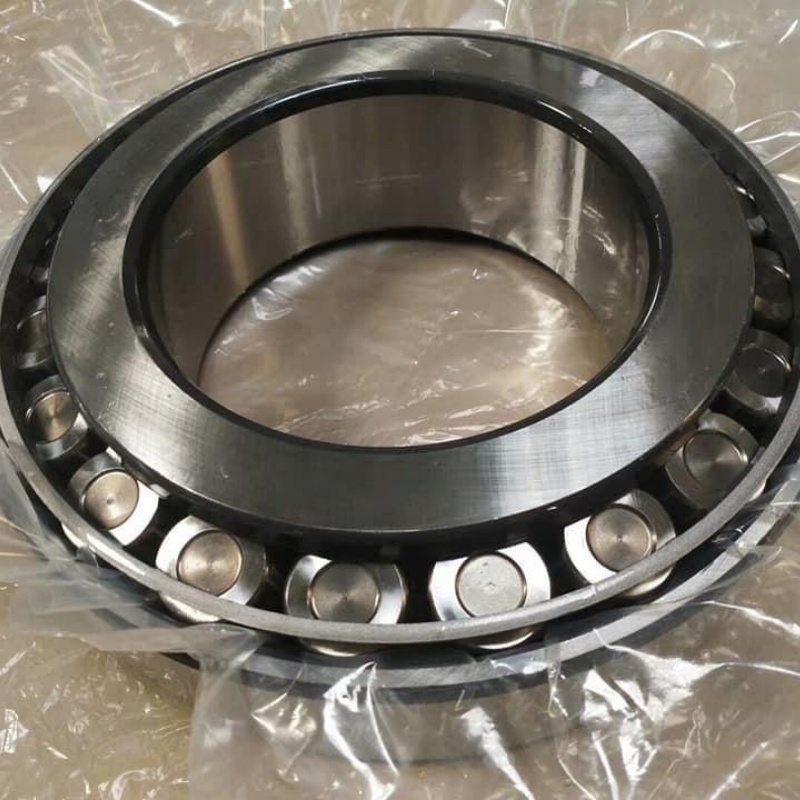
This distinction comes from their geometry. A cylindrical roller has straight sides, like a tube. A tapered roller is shaped like a small traffic cone. This simple shape change defines their entire function.
A Detailed Comparison for Better Selection
Choosing between them is not about which is better, but which is right for the job. Using the wrong type is a common and expensive mistake.
1. Design and Geometry:
- Cylindrical Roller Bearings1: The rollers and raceways are cylindrical. They often have guiding flanges on one ring to keep the rollers aligned, but these flanges are not designed to carry substantial axial loads.
- Tapered Roller Bearings2: The rollers and raceways are conical, converging at a common point on the bearing axis. This cone angle is what allows them to handle axial thrust3.
2. Load Capacity4:
- Cylindrical: Excellent for very high radial loads. They are often the best choice for the main shaft support in turbines, large electric motors, or printing presses where the load is purely or mostly radial.
- Tapered: Good for high radial loads and excellent for axial loads. They manage both at the same time. This is why they are the undisputed choice for vehicle wheel hubs (where you have the car’s weight and cornering forces) and bevel gear support.
- Cylindrical: Generally, they can run at higher speeds than tapered roller bearings. The straight rollers generate less friction and heat under high rotational speeds with pure radial load.
- Tapered: The tapered design creates more sliding friction, which limits their maximum speed compared to cylindrical types. They are better suited for low to moderate speed, high-load applications.
4. Adjustability and Mounting6:
- Cylindrical: Internal clearance is usually fixed. They are often used in pairs but don’t provide adjustable preload.
- Tapered: Their great advantage is adjustability. By adjusting the nut on a threaded shaft, you can set the exact internal clearance or preload after installation. This is vital for applications like pinion gear bearings, where precise backlash control is needed.
My Practical Insight for Buyers:
In my work with distributors like Rajesh’s company, they stock both types because their customers need both. A repair shop fixing a large industrial fan will need a cylindrical roller bearing. A truck repair shop will need a tapered roller bearing for the wheels. The question to ask is: "Is there a strong axial (thrust) load?" If the answer is yes or maybe, the tapered roller bearing is the safer, more reliable choice. If the load is purely radial and very heavy, the cylindrical type is often more efficient. We produce both in our factory, and our engineers often help clients walk through these questions before they place an order. Remember, a cylindrical bearing will fail quickly if subjected to constant axial thrust3. The rollers will scrub against the flanges and generate destructive heat.
What are the three main types of roller bearings?
You need a roller bearing for a heavy-load application. But a quick search shows many names: cylindrical, tapered, spherical. The choices are confusing. Picking the wrong category wastes time and money.
The three main types of roller bearings, based on roller shape and design, are: Cylindrical Roller Bearings1, Tapered Roller Bearings2, and Spherical Roller Bearings3. Each type is engineered to excel under specific load and misalignment conditions, forming the core toolkit for solving most heavy-duty industrial bearing challenges4.
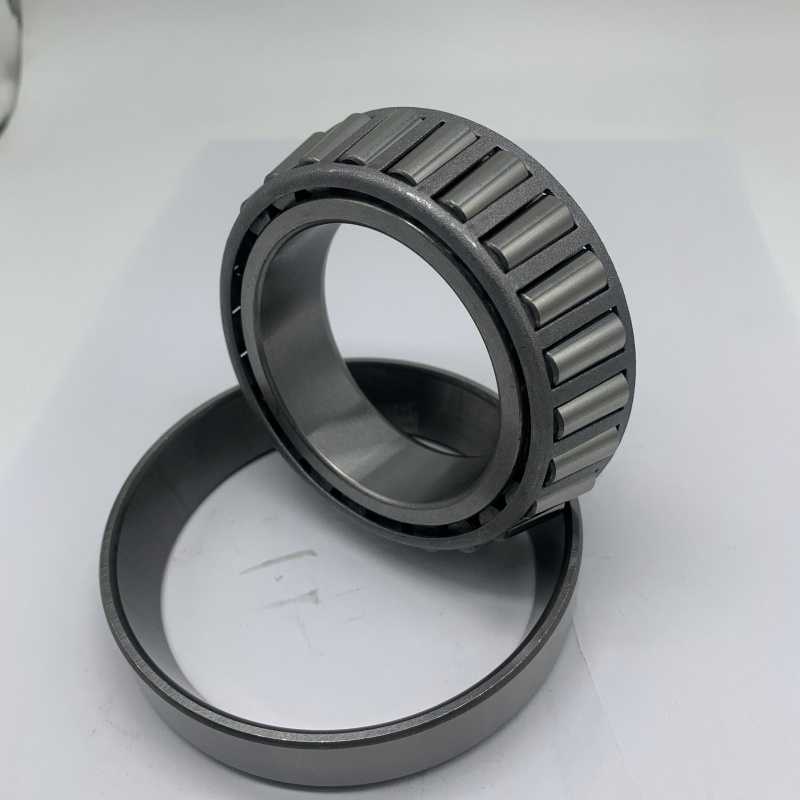
Understanding these three types covers 95% of industrial roller bearing applications. They are the fundamental building blocks.
Deep Dive into the "Big Three" Roller Bearing Families
Let’s break down each type’s superpower, its ideal use case, and where it falls short. This knowledge helps you narrow down your search immediately.
1. Cylindrical Roller Bearings1: The Radial Load Champion.
- Key Feature: Rollers are straight cylinders. They have the highest radial load capacity5 for a given size among all roller bearings.
- Best For: Applications with very heavy, pure radial loads and high speeds. Examples: machine tool spindles, large electric motor shafts, gearbox support where gears only create radial forces.
- Limitation: They can handle very little axial (thrust) load. Some single-row designs can manage a tiny bit, but they are not designed for it. Using them where axial load is present is a common failure point.
- My Factory Note: We produce these with precision class P6 and P56 for clients in the textile and printing machinery industry, where high-speed radial precision is everything.
2. Tapered Roller Bearings2: The Combined Load Expert.
- Key Feature: Rollers are tapered cones. They are the best standard choice for managing combined radial and axial loads7 in one bearing unit.
- Best For: Any application where shafts experience thrust alongside radial weight. The classic example is vehicle wheel bearings. Others: bevel gear support, rolling mill stands, mining conveyor head pulleys.
- Limitation: They are generally not the best for very high-speed applications (cylindrical or ball bearings are better) and they cannot tolerate shaft misalignment8.
- My Business Insight: This is our top-selling roller bearing category for export to emerging markets. Countries building infrastructure (like Vietnam, Bangladesh) need them for construction and automotive equipment. The ability to adjust clearance during installation is a huge plus for maintenance shops.
3. Spherical Roller Bearings3: The Misalignment Problem-Solver.
- Key Feature: Rollers are barrel-shaped, and the outer ring raceway is a sphere. This allows them to tolerate significant shaft misalignment8 (up to a few degrees) while still carrying heavy loads.
- Best For: Applications where the shaft might bend or deflect, or where mounting alignment is difficult to perfect. Examples: vibrating screens, conveyor idler rollers, agricultural machinery, and pulp and paper machinery.
- Limitation: They are more complex and often more expensive than cylindrical or tapered bearings. Their speed capability is also lower than cylindrical bearings.
- Our Client Use Case: We export many spherical roller bearings to Russia and Brazil for the mining and agriculture sectors. In these harsh, dirty environments where perfect alignment is impossible, spherical bearings are the only reliable choice.
Choosing Between Them: A Quick Guide
Here is a decision matrix based on the primary challenge you face:
| Your Main Challenge | First Choice | Reason |
|---|---|---|
| Extremely heavy radial load, high speed | Cylindrical Roller Bearing | Maximum radial capacity per size, efficient at high speeds. |
| Significant axial load present with radial load | Tapered Roller Bearing | Designed specifically for this combination. Adjustable. |
| Shaft misalignment or deflection is expected | Spherical Roller Bearing | The only roller bearing that can self-align and still carry heavy loads. |
| Heavy load in a dirty, shock-prone environment | Often Spherical or Tapered | Spherical for misalignment, Tapered for robust combined load capacity. |
In summary, think of these three as specialists. You wouldn’t call a heart surgeon to fix a broken bone. Similarly, don’t use a cylindrical bearing to solve a misalignment problem. As a factory, we stock and produce all three because our B2B clients, from automotive dealers to heavy equipment importers, encounter all these problems. Knowing this basic trilogy helps you start the conversation with your supplier on the right foot.
Conclusion
Choosing the right bearing is a strategic decision that impacts machine reliability and your total cost. Understand the load, consider the environment, and never overlook details like internal clearance. The correct choice saves money and prevents downtime.
-
Explore this link to understand the unique features and applications of cylindrical roller bearings, crucial for heavy radial loads. ↩ ↩ ↩ ↩ ↩ ↩
-
Learn about tapered roller bearings, their design, and why they are ideal for combined loads in various applications. ↩ ↩ ↩ ↩ ↩ ↩
-
Discover the advantages of spherical roller bearings, especially in misalignment situations, and their industrial uses. ↩ ↩ ↩ ↩ ↩ ↩
-
Gain insights into the challenges faced in heavy-duty applications and how to address them effectively. ↩ ↩ ↩
-
Understanding radial load capacity is essential for selecting the right bearing for heavy-duty applications. ↩ ↩ ↩
-
Learn about precision classes in roller bearings to ensure you choose the right quality for your applications. ↩ ↩ ↩
-
This resource will clarify how roller bearings handle both load types, vital for many industrial applications. ↩
-
Explore the impact of shaft misalignment on bearing performance and how to mitigate these issues. ↩ ↩