
Have you ever faced a sudden machine stop in your production line because of a failed bearing? The mess and the downtime cost us a lot. In packaging and filling, where every second counts and cleanliness is not just a preference but a requirement, the choice of bearings can make or break our operation.
Pillow block bearings are essential for packaging and filling machines because they provide reliable support for rotating shafts while offering features that meet strict hygiene standards, such as sealed designs and easy-clean surfaces, ensuring smooth operation and preventing contamination.
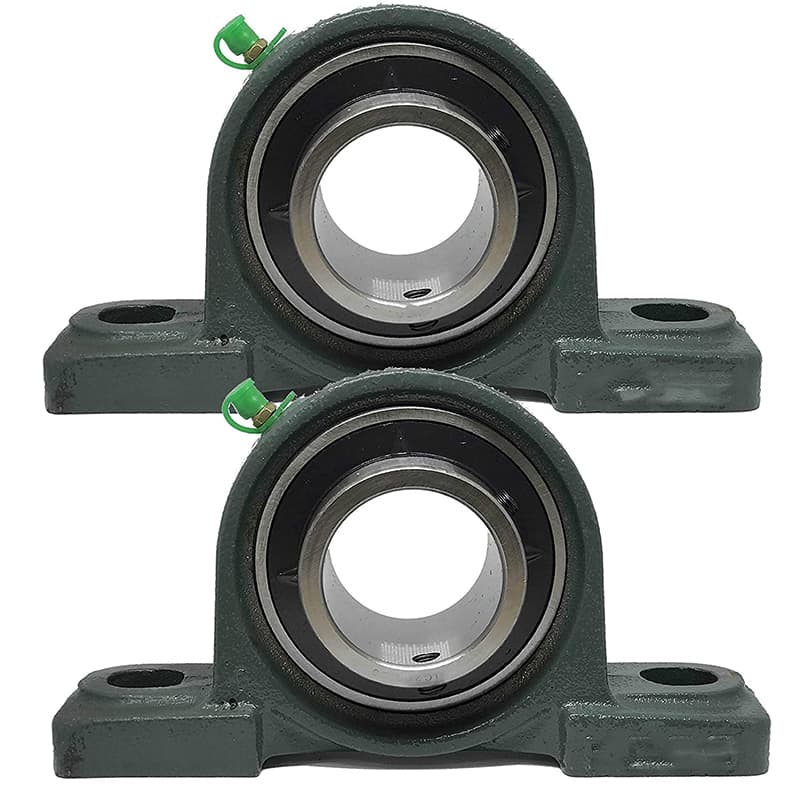
From my years of dealing with machinery manufacturers and maintenance teams, I’ve seen that the bearing is often an afterthought—until it fails. But in our business at FYTZ Bearing, we believe it should be the first thought. The right pillow block bearing doesn’t just spin; it safeguards your product quality and your production schedule. Let’s look closer at why these components are so critical and answer some common questions our clients, like Rajesh from India, often have.
What are pillow block bearings used for?
Picture this: a high-speed bottling line suddenly halts. Lubricant leaks from a bearing housing, threatening to contaminate the product. This nightmare scenario is why understanding pillow block bearings matters. They are not just generic parts; they are the guardians of motion in harsh environments.
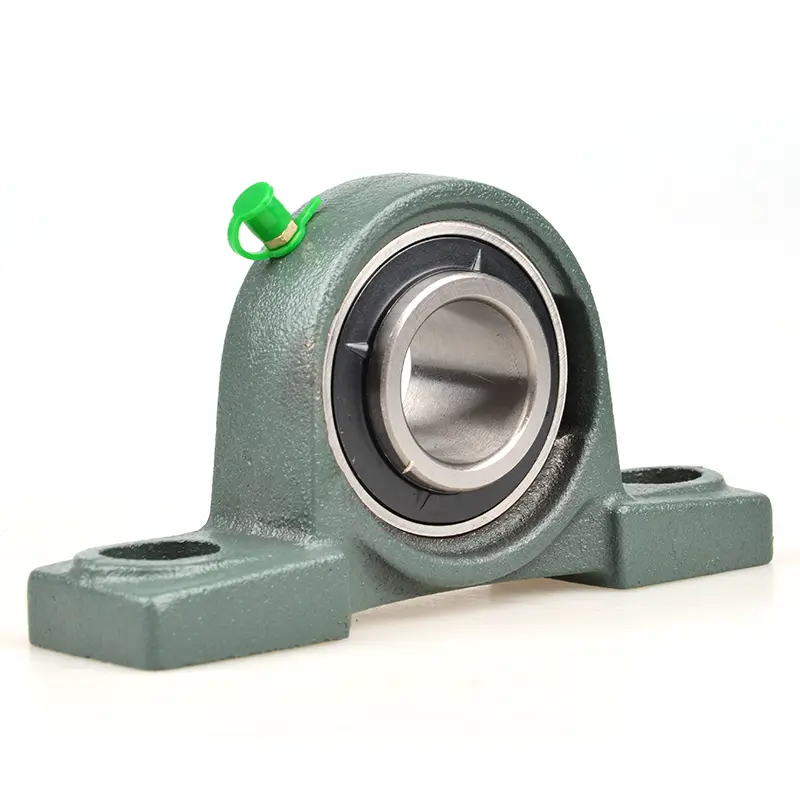
Pillow block bearings are used to mount and support a rotating shaft in a fixed position using a housing that is bolted to a base, like a machine frame. They are crucial in packaging and filling machines for supporting conveyor rollers, mixer shafts, and filling heads, providing stability and taking up radial and axial loads.
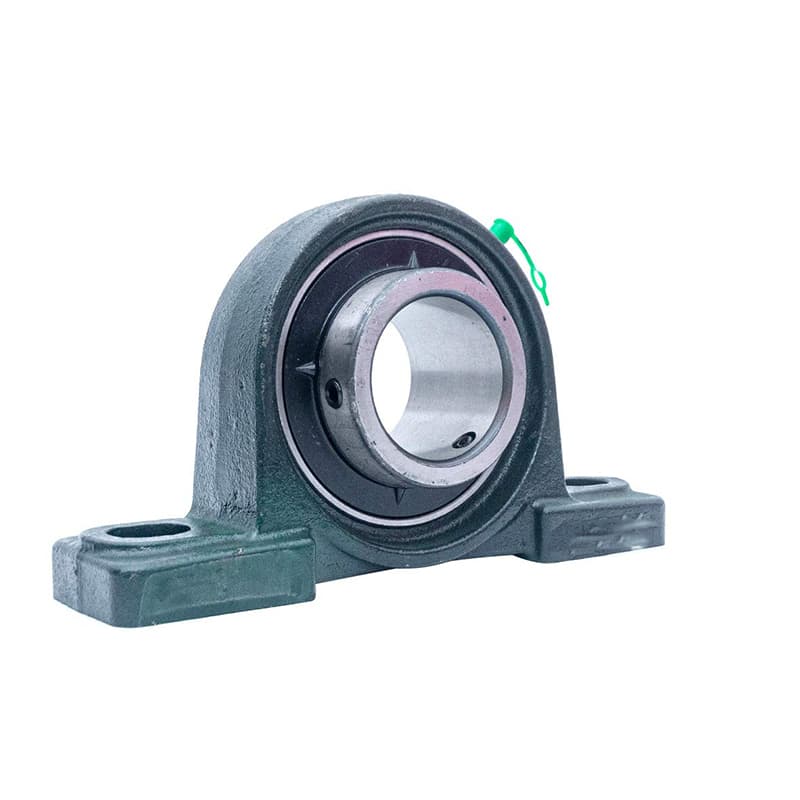
A Deeper Look into Pillow Block Bearing Functions and Selection
When Rajesh from IndoMotion Parts places an order, he’s not just buying a metal housing with a bearing inside. He is buying a solution for his clients’ reliability and hygiene challenges. Let’s break down their uses and key selection criteria.
Core Functions in Packaging Machinery:
Their primary job is to be a sturdy, reliable anchor. But in our industry, that’s just the start.
- Shaft Support and Load Management: They hold the shaft perfectly aligned, handling forces from the weight of containers (radial load) and the push from sealing mechanisms (axial load). An unbalanced load is a common cause of early failure.
- Protection and Sealing: This is where hygiene comes in. Standard bearings can fail quickly when exposed to water, steam, or acidic cleaning agents. Pillow blocks for packaging use special seals—often from materials like Nitrile Rubber (NBR) or Fluorocarbon (FKM)—that keep contaminants out and grease in. I’ve seen machines where upgrading to a triple-lip sealed pillow block bearing extended service intervals by 300%.
- Ease of Maintenance: Many designs allow for re-lubrication without disassembly. For a plant manager running 24/7, this feature is a lifesaver. It means they can perform maintenance during a scheduled stop without a full teardown.
Critical Selection Factors for Machine Builders:
Choosing the wrong unit is costly. Here is a simple framework we use with our OEM clients:
| Selection Factor | Why It Matters | Common Pitfall to Avoid |
|---|---|---|
| Housing Material | Cast iron is strong but can rust. Stainless steel (e.g., SS 304/316) is essential for wet or corrosive environments like food & beverage. | Using a standard cast iron housing in a dairy plant leads to rapid corrosion from caustic cleaners. |
| Sealing Type | Determines protection level. Contact seals (rubber lips) are better for hygiene; non-contact labyrinth seals are for very high speeds. | A basic seal allows washdown water to enter, washing out lubricant and causing rust within weeks. |
| Bearing Insert Type | The heart of the unit. Spherical roller bearings handle heavy loads; deep groove ball bearings are for higher speeds and moderate loads. | Using a deep groove ball bearing where shock loads are present (like case packing) leads to brinelling and premature failure. |
| Shaft Mounting | How it locks to the shaft. Setscrew is simple; eccentric locking collar is more secure; tapered adapter sleeve is for heaviest loads. | A loose setscrew on a vibrating filler causes fretting corrosion on the shaft, ruining both the bearing and the shaft. |
| Lubrication | Grease type and interval. Food-grade grease (NSF H1) is mandatory where incidental contact is possible. | Using industrial grease in a food machine poses a contamination risk and can fail audit. |
My personal insight from working with filling machine manufacturers is that the trend is moving toward "sealed-for-life" units with food-grade grease for mid-speed applications. This reduces maintenance complexity and contamination risk. However, for extreme loads or speeds, a re-lubricatable design is still king. The key is not to guess. We always advise clients to share their machine’s operating manual, and we help match the bearing specification to the actual duty cycle.
What is a 6203 bearing1 used for?
You might think a bearing model number is just a code. But when a client calls in a panic needing a "6203," I know exactly what their machine likely does. It’s the workhorse of light-duty rotational motion.
The 6203 bearing1 is a deep groove ball bearing2 with specific dimensions. It is widely used in packaging and filling machines inside electric motors3, gearboxes, small conveyor rollers, and pump impellers, providing smooth, low-friction rotation for high-speed, low-to-medium load applications.
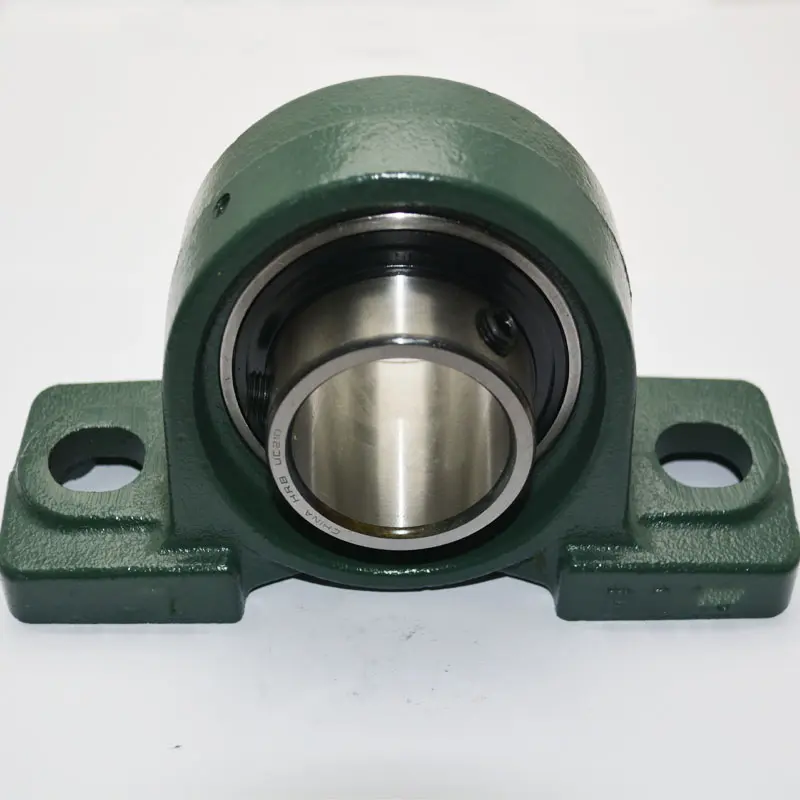
The Ubiquitous 6203: More Than Just a Number
The "6203" is not random. It’s a standard from the ISO system. "6" signifies a deep groove ball bearing2. "2" indicates the light-medium width series. "03" means its bore diameter is 17mm. This standardization is a blessing for procurement managers like Rajesh because it means cross-brand compatibility and easy sourcing. But not all 6203s are created equal.
Common Applications in Detail:
- Electric Motors: This is its most common home. Almost every small to medium AC/DC motor driving a conveyor belt or a pump in a packaging line will have 6203 bearing1s on its shaft. They are chosen for their ability to handle both radial and light axial loads at high speeds with minimal noise.
- Gearboxes and Reducers: In the compact gearboxes that reduce motor speed to usable roller speed, 6203 bearing1s support the gears. Their precision ensures smooth power transmission.
- Small Idler Rollers: On conveyor sections that don’t carry direct weight but guide the film or label, 6203 bearing1s offer a cost-effective, reliable solution.
- Centrifugal Pumps: For liquid filling machines, the pump that moves the product often relies on 6203 bearing1s to support the impeller shaft.
Why It Fails and How to Choose a Better One:
A 6203 bearing1 is simple, so its failure usually points to a simple cause: misalignment, overload, or contamination. In packaging, contamination from moisture or product residue is the biggest killer.
Here’s what we at FYTZ advise our B2B clients to look beyond the basic number:
| Performance Factor | Standard 6203 | FYTZ Recommended Upgrade for Harsh Environments |
|---|---|---|
| Sealing | Often comes as open or with basic metal shields (ZZ). | Opt for Rubber Seals (2RS). This keeps grease in and water/steam out during washdowns. |
| Clearance | Typically comes in Normal (CN) clearance. | Consider a C3 clearance for applications where the bearing housing gets hot (like in a motor next to a hot fill line), allowing for thermal expansion. |
| Material & Grease | Standard chrome steel with general-purpose grease. | Choose stainless steel (SUS 440) and food-grade grease for direct washdown areas or where product contact is possible. |
| Precision | Standard P0 (ABEC 1) tolerance. | Upgrade to P6 (ABEC 3) precision for applications in high-speed filler heads or printers where vibration must be minimized. |
My insight here is straightforward: Never buy a 6203 bearing1 based on price alone for critical machinery. The cost difference between a basic open-bearing and a sealed, food-grade precision version is minimal per unit, but the cost of a line stoppage due to failure is enormous. For distributors like Rajesh, stocking the upgraded version adds more value for his customers and builds his reputation for reliability.
What is C11, C2, and C32 bearing clearance3?
Imagine fitting a key into a lock. If it’s too tight, it won’t turn. If it’s too loose, it wobbles. Bearing clearance is the same idea for the rolling elements inside the bearing, and getting it wrong is a sure path to premature failure.
Bearing clearance (internal clearance) is the internal gap between the rolling elements and the raceways. C11 is the tightest, C2 is tighter than normal, CN is normal, C32 is looser than normal, and C4 is the loosest. Selecting the correct clearance is vital for managing heat, load, and fit for optimal bearing life.
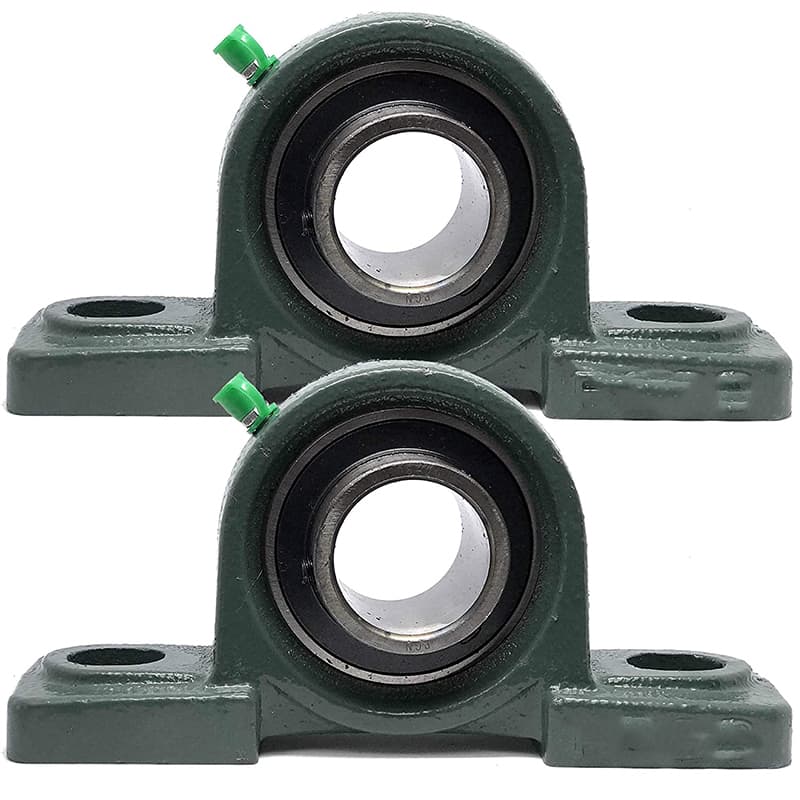
Demystifying Bearing Clearance: The Invisible Fit
This is a technical topic that many machine assemblers overlook, leading to "mysterious" bearing failures weeks after installation. The clearance is not a manufacturing defect; it’s a deliberate design parameter.
What Happens Inside the Bearing?
When a bearing operates, it generates heat. The inner ring, press-fitted onto a shaft, expands more than the outer ring, which is usually in a housing. This thermal expansion4 reduces the internal clearance. If you start with zero or negative clearance (too tight), the bearing will preload, overheat, and fail quickly. Conversely, too much clearance in a precision application causes vibration and noise.
How to Choose the Right Clearance: A Practical Guide
The "Normal" (CN) clearance is suitable for most general applications. But packaging machines have special conditions. Here’s our logic for selection:
| Clearance Code | Description | Best Used For in Packaging/Filling | My Personal Advice & Common Mistake |
|---|---|---|---|
| C11 / C2 | Tighter than normal. | Very rare. Only for applications where extreme precision is needed and temperatures are strictly controlled. | Avoid in most industrial settings. Using a C2 bearing in a standard motor on a hot filling line will almost certainly lead to seizure. |
| CN (Normal) | Standard clearance. | The default choice for most electric motors, gearboxes, and pumps operating under stable, moderate temperatures. | This is your safe, go-to option for 80% of components. If in doubt, start with CN. |
| C32 | Looser than normal. | Highly recommended for: Pillow block bearings (housing gets hot), applications with heavy loads, or where the inner ring is heated for mounting. Also common in vibratory applications. | This is often the best choice for pillow blocks. The extra space accommodates thermal expansion4 from both the shaft and the housing. I’ve replaced many failed CN bearings in hot environments with C32, solving the overheating issue. |
| C4 / C5 | Loosest. | Special applications like large paper roll bearings or very high-temperature environments (e.g., near ovens). | Not typical for standard packaging machinery. Using C4 where C32 is needed results in excessive play and vibration. |
A story from our factory floor: A client making sauce fillers complained that the pillow block bearings5 on their hot-fill carousel were failing every 3 months. They were using CN clearance bearings. We asked about the operating temperature near the bearing. It was above 80°C. We suggested a switch to C32 clearance bearings with high-temperature grease. The result? The bearing life extended to over 18 months. The lesson is clear: always consider the operating temperature at the bearing location, not just the room temperature. For our distributors, understanding this allows them to provide technical consulting, moving from just parts suppliers to solution partners.
What are the 4 types of bearings?
Walking through a modern packaging plant, you’ll see hundreds of bearings. But they generally fall into four main families, each with a unique superpower. Picking the wrong family for the job is like using a screwdriver to hammer a nail—it might work once, but it will fail messily.
The four primary types of bearings used in industrial machinery are: 1) Ball Bearings1 (like deep groove), best for high speed and moderate loads. 2) Roller Bearings (like cylindrical), ideal for heavy radial loads. 3) Tapered Roller Bearings2, designed to handle combined radial and heavy axial loads. 4) Spherical Roller Bearings3, the champions for very heavy loads and misalignment.
A Guide to the Four Bearing Families and Their Roles in Packaging
Each bearing type has a distinct design philosophy. Let’s connect them directly to the machines we know.
1. Ball Bearings1 (The Speedsters)
- Design: Use spherical balls as rolling elements. Point contact with the raceways.
- Superpower: Low friction, very high-speed capability, moderate load capacity.
- Packaging Machine Applications: Deep Groove Ball Bearings4s](https://www.thomasnet.com/insights/benefits-of-ball-bearings-in-various-industries/)[^1] (6203, 6305) are everywhere in motors, fans, and small rollers. Angular Contact Ball Bearings1 are critical in high-speed spindle units for labeling or coding heads where axial force is present.
- Limitation: They are not good for shock loads or very heavy loads. A heavy pallet dropping onto a conveyor supported only by ball bearings can dent the raceways.
2. Cylindrical Roller Bearings5 (The Radial Load-Bearers)
- Design: Use cylindrical rollers. Line contact with the raceways.
- Superpower: Excellent for very high radial loads. Some types allow the shaft to move axially independently of the housing (free end).
- Packaging Machine Applications: Used in the main rollers of heavy-duty case palletizing systems, the rolls of large stretch wrappers, and the drums of heavy bag fillers.
- Limitation: Generally, they cannot handle axial (thrust) loads unless specifically designed with flanges.
3. Tapered Roller Bearings2 (The Combined Force Experts)
- Design: Use conical rollers and raceways. The angles are designed to handle both radial and axial loads.
- Superpower: Managing combined loads simultaneously. They are often used in pairs, adjusted against each other to set precise clearance.
- Packaging Machine Applications: Essential in gearboxes that experience both twisting (radial) and pushing (axial) forces. Also found in the wheels and axles of mobile packaging units or cartoning machines.
- Limitation: They require careful adjustment during installation. Too tight, and they overheat; too loose, and they become noisy.
4. Spherical Roller Bearings3 (The Misalignment6 & Heavy-Duty Masters)
- Design: Use barrel-shaped rollers that run on a spherical outer ring raceway.
- Superpower: The undisputed champion for the heaviest radial loads and shock loads. They can also tolerate significant shaft misalignment (2-3 degrees), which is common in long conveyor runs.
- Packaging Machine Applications: This is the go-to choice for the insert inside many heavy-duty pillow block bearings on main conveyor lines, large mixer shafts in powder filling, and drum rollers in recycling or bulk handling attached to packaging lines.
- Limitation: They have a speed limit lower than ball bearings and are typically more expensive.
| Choosing the Right Family: A Quick Decision Matrix | If your application primarily requires… | Then start with this bearing type… | Common FYTZ Part Number Example |
|---|---|---|---|
| High Speed, Low/Moderate Load (Motor, Spindle) | Deep Groove Ball Bearing | 6205, 6308 | |
| Very Heavy Radial Load7, No Thrust (Heavy Roller) | Cylindrical Roller Bearing | NU206, NJ307 | |
| Combined Radial & Axial Load8 (Gearbox, Wheel) | Tapered Roller Bearing | 30206, 32208 | |
| Extreme Load & Misalignment6 (Main Conveyor, Mixer) | Spherical Roller Bearing / Pillow Block | 22208 (Bearing), SNV 090 (Housing) |
My final insight here is that for a machinery builder or maintenance provider, success lies not in using one type everywhere, but in applying the right tool for the job. At FYTZ, we produce all these types because a complex packaging line needs them all. For a distributor like Rajesh, understanding this helps him build a complete product portfolio and advise his customers correctly, ensuring the right bearing goes into the right machine.
Conclusion
Choosing the right pillow block bearing is a strategic decision for packaging machine hygiene and reliability. It balances correct type, clearance, and sealing to prevent downtime and ensure product safety.
-
Explore the benefits of Ball Bearings, known for their high-speed capabilities and low friction, essential for various machinery. ↩ ↩ ↩ ↩ ↩ ↩ ↩ ↩ ↩ ↩ ↩ ↩ ↩ ↩
-
Discover the unique applications of Tapered Roller Bearings, designed for combined radial and axial loads in complex systems. ↩ ↩ ↩ ↩ ↩ ↩ ↩ ↩ ↩ ↩
-
Find out why Spherical Roller Bearings are the go-to choice for heavy loads and misalignment in industrial settings. ↩ ↩ ↩ ↩
-
Understand the critical role of Deep Groove Ball Bearings in motors and spindles within packaging machinery. ↩ ↩ ↩
-
Learn how Cylindrical Roller Bearings excel in supporting heavy radial loads, making them vital for heavy-duty machinery. ↩ ↩
-
Discover how certain bearings are designed to tolerate misalignment, enhancing the reliability of machinery. ↩ ↩
-
Explore which bearings are best suited for handling heavy radial loads, ensuring optimal performance in machinery. ↩
-
Learn how to select the right bearings for applications requiring both radial and axial load support. ↩