Shock loads break things. In a mining crusher or a rock drilling rig, a single impact can shatter a standard bearing. I’ve seen the aftermath: seized equipment, halted production, and urgent calls for replacement parts. The problem isn’t the shock itself; it’s using a bearing not built for it.
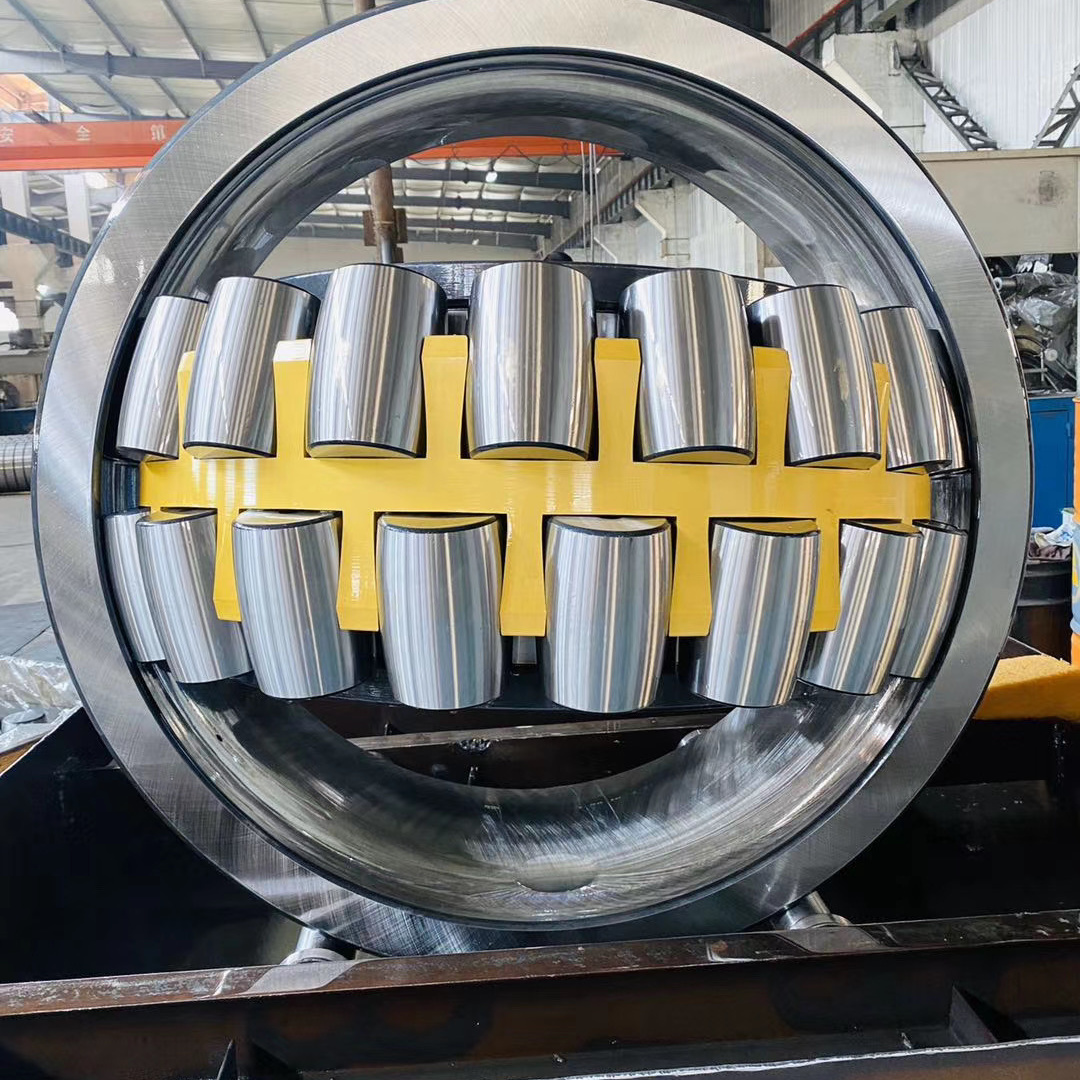
Spherical roller bearings are engineered for high-shock and heavy-load applications where shaft misalignment is present. Their self-aligning capability and robust, multi-row roller design make them ideal for mining crushers, construction machinery, vibrating screens, and material handling equipment, absorbing impact and ensuring reliability.
You operate or supply parts for heavy machinery. Downtime costs you thousands per hour. You need bearings that survive the punishment. But you also need to know their limits and what makes them different from other options. This article will explain where spherical rollers excel and where they might not be the best fit. We’ll cover their core uses, their disadvantages, their other names, and how they stack up against cylindrical rollers. This knowledge helps you choose the right bearing for the toughest jobs.
What is a Spherical Roller Bearing1 used for?
A spherical roller bearing is not a general-purpose component. It is a specialist. It solves specific, tough problems in harsh industries. If you’re sourcing parts for a cement plant in Egypt or a quarry in Brazil, this bearing is likely on your list. Knowing its exact purpose helps you spec it correctly.
Spherical roller bearings are primarily used in applications with very high radial loads2, moderate axial loads, and significant shaft or housing misalignment. Their key uses include vibrating machinery3 (screens, conveyors), heavy industrial gearboxes4, fans, pumps, and the rolling mills and crushers found in mining and construction.
Deeper Dive: The Niche of High Load and Forgiveness
Let’s move beyond the list and understand why it’s the go-to choice in these punishing environments.
The Core Value Proposition: Load + Misalignment Tolerance
This combination is rare. Most bearings excel at one or the other.
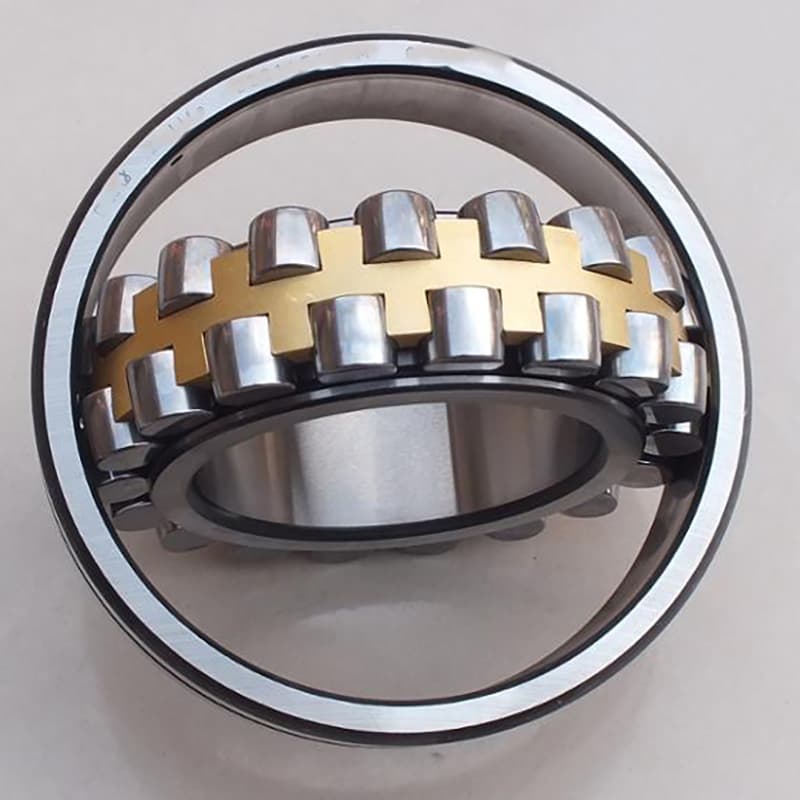
- Very High Radial Load Capacity: The barrel-shaped rollers have a large contact area with the raceways. This allows them to support enormous weights and forces, often higher than a same-sized tapered or cylindrical roller bearing.
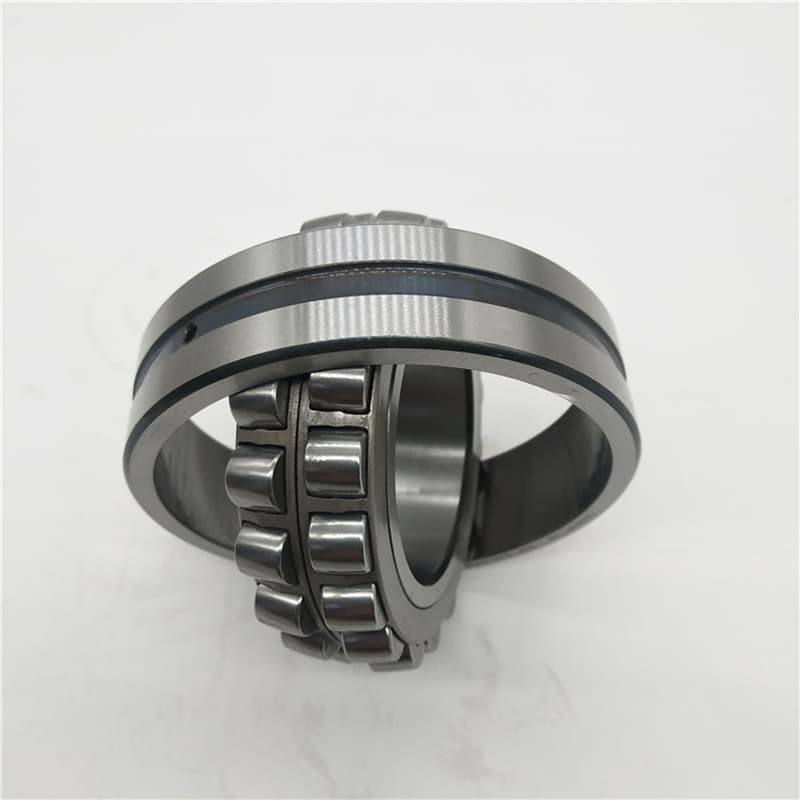
- Built-In Misalignment Correction: This is the defining feature. The outer ring has a spherical (concave) raceway. The inner ring with rollers and cage can pivot inside it. This allows for 1 to 3 degrees of static misalignment. In the real world, foundations settle, frames weld with distortion, and long shafts bend. A spherical roller bearing accommodates this without failing.
| Industry-Specific Application Breakdown | Industry | Typical Machine Component | Why Spherical Roller Bearing1s Are Used Here |
|---|---|---|---|
| Mining & Quarrying | Cone Crusher & Gyratory Crusher Main Shaft | Extreme shock loads5 from crushing rock. High radial loads. Potential for housing distortion. | |
| Mining & Quarrying | Vibrating Screen Shaft Bearings | Continuous, high-frequency vibration (a form of shock). High radial loads. Frame flexibility causes misalignment. | |
| Construction | Large Off-Road Vehicle Wheel Hubs & Drivetrains | High loads, rough terrain shocks, and frame flex. | |
| Cement & Steel | Large Industrial Fans & ID/FD Fans | Heavy fan wheel weight (radial load), some thrust, and thermal expansion can cause misalignment. | |
| Pulp & Paper | Dryer Rolls | Long, heated rolls expand and sag, causing misalignment. High radial load from roll weight. | |
| Material Handling | Conveyor Pulley Bearings | Long shaft spans lead to deflection and misalignment. High belt tension creates radial load. |
The "Shock Load" Specialist Role
Shock loads are sudden, high-magnitude impacts. Think of a jaw crusher biting into a giant rock or a hydraulic hammer pounded against concrete.
- How Spherical Rollers Cope: Their design has inherent strength. The large, robust rollers and tough cages can absorb and distribute impact energy. The line contact spreads the load. A quality bearing uses clean, high-toughness steel that resists cracking under impact.
- Our Factory Focus (FYTZ): For these applications, we pay special attention to material quality and heat treatment. The steel must have the right hardness for wear resistance but also enough ductility to withstand shock without brittle fracture. Our P5/P6 precision manufacturing ensures load is shared evenly across all rollers, preventing a single roller from taking a disproportionate hit.
For Distributors and Buyers: When a customer describes an application with heavy load, vibration, or potential misalignment, the spherical roller bearing should be your first suggestion. It’s the "forgiving" heavy-lifter. Selling it for the right job builds your reputation as a problem-solver.
What are the disadvantages of spherical roller bearings?
No bearing is perfect for every job. The very features that make spherical rollers great for harsh environments create trade-offs. Recommending them for the wrong application will lead to poor performance and unhappy customers. I’ve seen them fail quickly in high-speed precision spindles where they simply don’t belong.
The main disadvantages of spherical roller bearings are their limited high-speed capability, higher friction than ball bearings, more complex and costly design, and sensitivity to axial load alignment. They are also physically larger than other roller bearings of similar capacity and require good lubrication management.
Deeper Dive: Understanding the Trade-Offs of a Robust Design
Let’s examine each disadvantage. Knowing these helps you avoid misapplication and select a better alternative when needed.
1. Speed Limitations1
This is their most significant limitation for many applications.
- Cause: Several factors combine:
- Heavier Rollers: The barrel-shaped rollers are massive. At high speeds, centrifugal force tries to fling them outward, increasing stress on the cage and outer ring.
- Sliding Friction: The spherical roller design inherently has more sliding contact (especially between the rollers and guide ribs/flanges) than a pure rolling bearing. This generates more heat.
- Complex Cage Dynamics: Keeping the rollers aligned in a pivoting inner assembly is challenging at very high RPM.
- Practical Impact: While specific limits vary by size and design, spherical roller bearings are generally not suitable for very high-speed applications like machine tool spindles or turbochargers. A deep groove ball bearing or cylindrical roller bearing is a better choice for high RPM.
2. Higher Friction and Heat Generation2
Related to speed, but also relevant at lower speeds.
- Cause: The sliding contacts (roller ends against guide ribs) and the tighter internal guidance create more friction than a comparable-sized ball bearing.
- Practical Impact: This leads to higher operating temperatures. It also means slightly lower mechanical efficiency—more input power is lost as heat. In applications where energy efficiency is critical, this is a factor to consider.
3. Size, Cost, and Complexity3
- Size: To achieve their high load capacity and self-alignment, the bearing has a larger cross-section. The outer ring with its spherical raceway is particularly bulky.
- Cost: More material, a complex outer ring grind, and a sophisticated cage design make them more expensive to manufacture than a cylindrical roller bearing of similar basic load rating.
- Complexity: The two rows of rollers and the pivoting mechanism make the bearing more complex to manufacture to high precision. This is why choosing a factory with strong process control, like ours, is crucial for consistent performance.
4. Axial Load Capacity and Sensitivity4
This is a nuanced point.
- They Can Handle Axial Loads: Spherical roller bearings can support substantial axial (thrust) loads, typically in both directions.
- The Disadvantage: However, their axial load capacity is highly dependent on the alignment of the load. The axial load must be applied centrally. If the thrust load is applied off-center (eccentrically), it can cause the inner ring to tilt unevenly, leading to excessive stress on one side of the rollers and premature failure. Tapered roller bearings are generally more robust and forgiving regarding thrust load alignment.
5. Lubrication Demands5
Their higher friction and heat generation mean they require good lubrication. The grease must withstand higher operating temperatures. Re-lubrication intervals might be shorter than for a less demanding bearing in a similar environment.
| When to Choose a Different Bearing | If Your Application Prioritizes… | Consider This Bearing Instead of Spherical Roller |
|---|---|---|
| Very High Rotational Speed | Deep Groove Ball Bearing6, Cylindrical Roller Bearing7 | |
| Maximum Energy Efficiency (Low Friction) | Deep Groove Ball Bearing6 | |
| Extremely High/Precise Unidirectional Thrust | Tapered Roller Bearing8 (paired) or Thrust Bearing | |
| Compact Design Space | Cylindrical Roller Bearing7 or Needle Roller Bearing | |
| Lowest Possible Cost for Pure Radial Load | Cylindrical Roller Bearing7 |
For a procurement manager, these disadvantages are selection criteria. If a design engineer specifies a spherical roller bearing for a high-speed pump, it’s worth a conversation. Maybe a cylindrical roller bearing with a separate thrust bearing is a better fit. Understanding both sides makes you a valuable partner.
What is another name for a Spherical Roller Bearing?
In the bearing world, names and codes can be confusing. You might see different terms in a catalog, on a drawing, or from a customer. Knowing the other names helps you avoid confusion and ensures you source the correct part. I’ve seen orders delayed because of a simple name mismatch.
A Spherical Roller Bearing is also commonly called a Self-Aligning Roller Bearing1. This name directly describes its key feature. In older texts or specific regions, you might also encounter the term "Double-Row Barrel Roller Bearing2," though this is less common in modern technical sourcing.
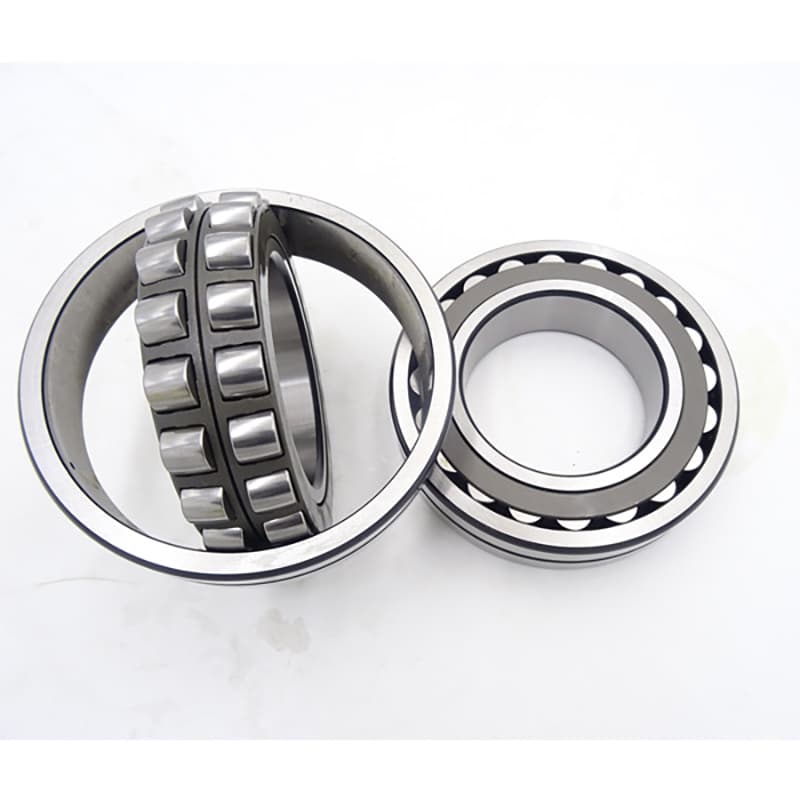
Deeper Dive: Navigating Terminology and Standard Designations
The naming isn’t just about synonyms. It’s tied to standardization, which is critical for correct identification and interchangeability.
1. Self-Aligning Roller Bearing1: The Functional Name
This is the most widely understood alternative name. It is used in marketing materials, general engineering discussions, and by many distributors.
- Why it’s used: It immediately tells the user the primary benefit: the bearing compensates for misalignment. For a maintenance engineer dealing with a wobbly shaft, asking for a "self-aligning bearing" is intuitive.
- Caution: "Self-aligning" can also refer to Self-Aligning Ball Bearings. These are different. They have two rows of balls and a spherical outer ring but are for lower loads. Always confirm the bearing type is for roller elements, not balls.
2. Standard Series Designations3: The "Real" Name
In part numbers and engineering drawings, spherical roller bearings are identified by standardized series numbers. This is the most precise language.
- Common ISO/ANSI Series4 (Metric):
- 21300 Series: Basic design, often with a tapered bore and adapter sleeve for mounting. (e.g., 21308 E)
- 22200 Series: Spherical roller bearing with a cylindrical bore. A very common series. (e.g., 22210 E)
- 22300 Series: A wider and heavier version of the 22200 series, for even higher loads. (e.g., 22312 E)
- 23000/23100/23200 Series: Very large spherical roller bearings for heavy industry.
- The Suffix Code: The letters and numbers after the base number are critical. They specify internal design, cage type, clearance, and sealing.
- E: Denotes a reinforced (robust) internal design with an improved cage. This is now very common.
- C3, C4: Indicate a larger than normal internal radial clearance, often used where high heat is expected.
- W33: Indicates a lubrication groove and holes in the outer ring for oil circulation.
- Example: A bearing marked 22210 E C3 is a spherical roller bearing from the 22210 series with a reinforced internal design (E) and a C3 operational clearance.
3. Manufacturer-Specific Names and Brands
Large bearing manufacturers may have their own trademarked names for their spherical roller bearing lines (e.g., SKF’s "CC" design or Timken’s "Type E"). However, they will always cross-reference to the standard ISO series numbers.
Why This Matters for Sourcing and Distribution
- Avoiding Errors: A customer in Vietnam might ask for a "self-aligning bearing for a conveyor." You must ask follow-up questions about load and size to determine if they need a spherical roller bearing or a self-aligning ball bearing. The wrong type will fail quickly.
- Cross-Referencing5: If you have a failed bearing with a part number from one brand (e.g., an old SKF number), you can use a cross-reference guide or ask your supplier (like us) to find the equivalent standard FYTZ part number or another brand’s equivalent. We do this daily for our distributors.
- Technical Communication6: Using the standard series number (e.g., 22316 E) is the most precise way to communicate with engineers and factories globally. It leaves no room for misunderstanding about dimensions, load rating, or basic design.
For a bearing importer like Rajesh, mastering this terminology is essential. It allows you to correctly interpret customer requests, build accurate catalogs, and communicate efficiently with your factory suppliers. It turns you from an order-taker into a knowledgeable partner.
What is the difference between spherical and cylindrical roller bearings?
These two bearing types often compete for applications with high radial loads. Choosing the wrong one is a classic error. I’ve seen cylindrical rollers fail in a vibrating screen because they couldn’t tolerate the frame’s flex. I’ve also seen spherical rollers replaced with cylindrical ones in a gearbox to save cost, only to have the gears wear out from shaft misalignment.
The key difference is self-alignment1. Spherical roller bearings can tolerate shaft misalignment (1-3°), while cylindrical roller bearings cannot. Cylindrical rollers have a higher basic radial load capacity2 for their size and can run at higher speeds, but they require near-perfect alignment and support almost no axial load.
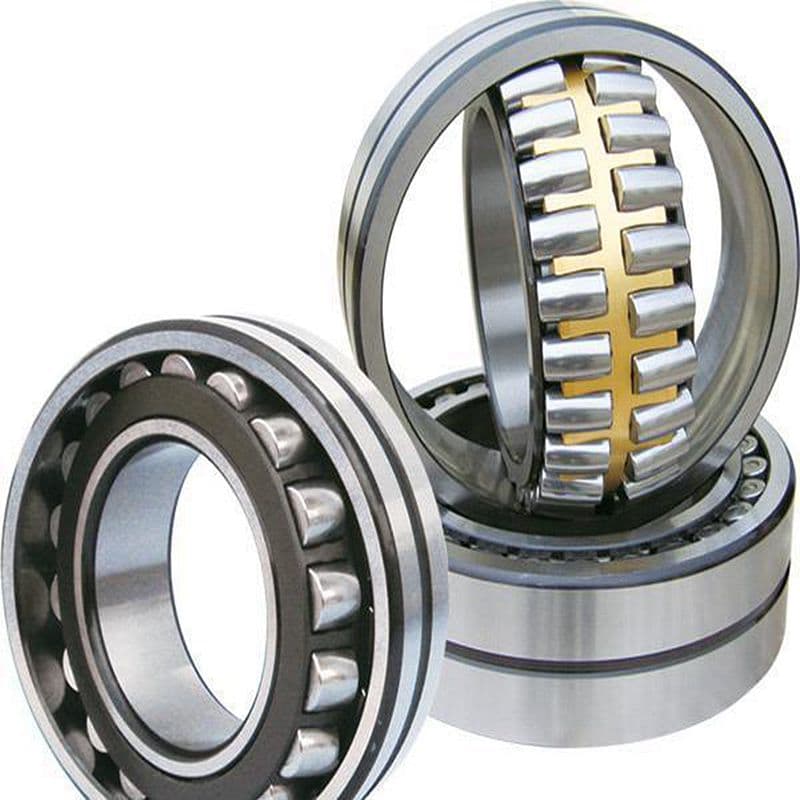
Deeper Dive: A Head-to-Head Comparison for Application Selection
Let’s put them side-by-side across all critical selection criteria. This is a decision matrix for engineers and purchasers.
1. Design and Geometry: The Core Distinction
- Spherical Roller Bearing (SRB):
- Rollers: Barrel-shaped (concave).
- Raceways: Outer ring has a spherical (concave) raceway. Inner ring has two angled raceways.
- Result: The inner ring assembly can pivot inside the outer ring.
- Cylindrical Roller Bearing (CRB):
- Rollers: Straight, cylindrical.
- Raceways: Both inner and outer rings have straight, parallel raceways.
- Result: The rings are strictly parallel. There is no pivoting capability.
| 2. Performance Characteristics Comparison Table | Characteristic | Spherical Roller Bearing (SRB) | Cylindrical Roller Bearing (CRB) | Which is Better For… |
|---|---|---|---|---|
| Radial Load Capacity | Very High | Extremely High (Highest of all roller types for a given cross-section) | CRB for pure, massive radial loads in a precise, rigid setup. | |
| Axial (Thrust) Load Capacity | Moderate to High (Bidirectional) | Very Low to None (Requires separate thrust bearing) | SRB for applications with combined loads. | |
| Misalignment Tolerance | High (1-3 degrees) | Very Low (Requires near-perfect alignment) | SRB is the clear winner in applications with flex or poor alignment. | |
| Speed Capability | Moderate (Limited by roller mass & friction) | High (Can achieve very high RPMs) | CRB for high-speed applications like machine tool spindles or electric motors. | |
| Rigidity | Moderate (Self-alignment adds some flexibility) | Very High (Extremely rigid, minimal deflection) | CRB where shaft position must be absolutely fixed (e.g., precision gearbox). | |
| Friction & Heat Generation | Higher (Due to sliding contacts) | Lower (Closer to pure rolling) | CRB for lower operating temperatures and higher efficiency. | |
| Cost & Complexity | Higher cost, more complex design | Lower cost, simpler design | CRB is more cost-effective for simple, high-radial load applications. |
3. Application Scenarios: Making the Choice Clear
When to choose which? Let’s look at typical situations.
- Choose a Spherical Roller Bearing (SRB) when:
- The application has high radial load AND misalignment is present or expected. (Vibrating screens, conveyor pulleys, fans on flexible bases).
- The application has combined radial and axial loads and you want a single-bearing solution. (Some gearboxes, rolling mill roll necks).
- The environment is harsh with shock loads and structural movement. (Mining and construction equipment).
- Choose a Cylindrical Roller Bearing (CRB) when:
- The application has extremely high, pure radial loads in a perfectly aligned, rigid housing. (Machine tool spindles, large electric motor shafts, piston pin bearings).
- High rotational speed is a primary requirement.
- Maximum rigidity3 and precise shaft location are critical.
- Cost is a major driver and axial loads are handled by another means.
4. The Hybrid or "Best of Both" Scenario
Sometimes, a machine uses both. A classic example is a large gearbox.
- The input and output shafts might use cylindrical roller bearings for high radial load capacity2 and rigidity3 to ensure perfect gear alignment.
- The intermediate or idler shafts might use spherical roller bearings to accommodate slight housing distortions and handle combined loads from helical gears.
Implication for Distributors and Buyers: You must ask the right questions. If a customer needs a bearing for a "heavy roller," ask: Is the shaft long? Is the frame welded? Will it vibrate? If yes, suggest an SRB. If they say it’s in a precision, rigid housing for a motor, suggest a CRB. Your correct recommendation saves them from a premature failure.
Conclusion
For the brutal, misalignment-prone world of mining and construction, spherical roller bearings offer a unique blend of high load capacity and forgiveness that few other bearings can match, making them a cornerstone of reliability.
-
Understanding self-alignment is crucial for selecting the right bearing type, especially in applications with misalignment. ↩ ↩ ↩ ↩ ↩ ↩
-
Learn about radial load capacity to make informed decisions on bearing selection for high-load applications. ↩ ↩ ↩ ↩ ↩
-
Learn how rigidity influences bearing selection for applications requiring precise shaft positioning. ↩ ↩ ↩ ↩ ↩
-
This resource provides insights into ISO/ANSI Series, helping you understand the classification of spherical roller bearings. ↩ ↩ ↩
-
Learn about Cross-Referencing to ensure you find equivalent bearings across different brands effectively. ↩ ↩ ↩
-
Enhance your technical communication skills to avoid misunderstandings and improve sourcing efficiency. ↩ ↩ ↩
-
Exploring this comparison helps in making informed choices for specific applications, optimizing performance. ↩ ↩ ↩
-
This resource will provide insights into thrust load handling, crucial for selecting the right bearing type. ↩