
Finding a reliable source for high-precision tapered roller bearings can feel overwhelming. You need quality you can trust, but you also face tight budgets and delivery deadlines. I understand this pressure from talking to buyers like Rajesh in India every day. The search often feels like a compromise between cost and performance, but it doesn’t have to be.
As a factory specializing in tapered roller bearings, we provide precision P5/P6 class products with high load capacity and long service life. We cover the needs of B2B buyers, from standard sizes to full OEM customization, ensuring you get the exact bearing for your application without the premium brand markup.
The market is full of options, from expensive European brands to uncertain low-cost alternatives. You might be a distributor building your inventory or a manufacturer finalizing a new machine design. Your choice impacts your product’s reliability and your own reputation. This article will guide you through the key questions: Who really makes the best bearings? How do you identify and select the right ones? What are the trade-offs? And finally, how do you define "highest quality" for your specific business needs? Let’s find the clear answers you need for a confident purchase.
Who makes the best tapered roller bearings1?
The word "best" is tricky in our industry. For a Formula One team, the best bearing is ultra-lightweight and costs thousands. For a farm equipment repair shop in Brazil, the best bearing is tough, available, and affordable. Asking who makes the best is really asking who makes the right bearing for your situation. I’ve seen customers pay for over-engineering and others suffer from under-specification. The true "best" fits your technical needs and business model perfectly.
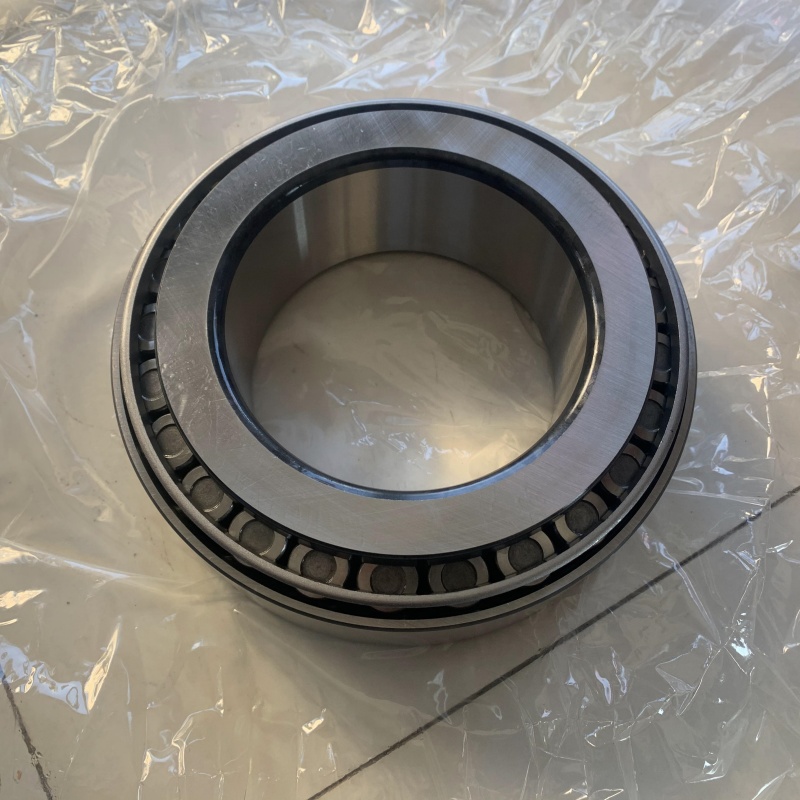
There is no single "best" manufacturer globally. The right choice depends on your priority: ultimate performance, cost-effectiveness2, local availability, or customization. Leading brands like SKF, Timken3, and NSK4 excel in premium segments. However, for B2B wholesalers and OEMs, specialized factories like ours (FYTZ) offer the optimal balance of precision, reliability, and value, often producing equivalents to these top-tier brands.
Deeper Dive: Mapping the "Best" to Your Business Reality
To move beyond a simple list of brands, we need to analyze the market layers. The "best" manufacturer changes based on who you are and what you need.
| The Market Tier Structure The bearing supply chain is not flat. It has distinct tiers that serve different customer types. |
Market Tier | Typical Players | Primary Customer | Value Proposition | Consideration for "Best" |
|---|---|---|---|---|---|
| Tier 1: Premium Global Brands | SKF5 (Sweden), Timken3 (USA), Schaeffler/INA/FAG (Germany), NSK4/NTN (Japan) | Large OEMs, high-precision6 industries (aerospace, luxury automotive), end-users for critical replacements. | Technology leadership, extensive R&D, global technical support, brand prestige. | Best for: Applications where failure cost is catastrophic and budget is secondary. | |
| Tier 2: Established International & Regional Leaders | JTEKT (Japan), Nachi, C&U (China), FYTZ (Our Position) | Industrial OEMs, large bearing distributors and importers (like Rajesh’s company), automotive aftermarket chains. | High quality at competitive prices, strong capability in standard and common precision6 series (P5, P6), reliable volume supply, OEM/ODM7 services. | Best for: The vast majority of industrial and automotive applications. This tier offers the optimal performance-to-cost ratio for B2B. | |
| Tier 3: Local/Commodity Suppliers | Numerous small local factories and traders. | Price-sensitive local repair shops, very low-cost equipment manufacturers. | Lowest initial purchase price. | Best for: Non-critical, low-load applications where price is the only deciding factor. Quality and consistency are major risks. |
Defining "Best" by Your Priority
Now, let’s match the priority to the producer.
- If your priority is UNMATCHED PERFORMANCE & SUPPORT: Choose a Tier 1 Premium Brand. You are paying for their historical R&D, their global warranty, and their field engineers. The bearing itself is part of a larger service package.
- If your priority is OPTIMAL VALUE & RELIABLE SUPPLY: Choose a Tier 2 Specialist Factory like FYTZ. This is where we operate. We invest in modern CNC grinders, automated assembly, and stringent inspection (not just sample checks, but full-line monitoring). We achieve P5/P6 precision6, which meets over 95% of industrial needs. Our "best" is defined by consistent quality, the ability to customize (OEM/ODM7), and stable supply for your 3-5 container annual orders. For an importer, this builds a trustworthy brand without the Tier 1 price tag.
- If your priority is LOWEST INITIAL PRICE: You might look at Tier 3. But you must understand the trade-off: potential variability in quality, lesser material consistency, and minimal technical backup. This can harm your distributor reputation with failed parts.
The OEM/ODM7 Path: You Can Be the "Best" Brand
Here is a key insight for distributors and machinery makers. With a capable Tier 2 factory, you can have bearings made to your exact specifications, with your own packaging and logo. This means you can become the "best" and most trusted brand in your local market, like Turkey or South Africa. You control the quality specification with the factory, and you build customer loyalty directly. We help many clients do this, moving them from simple resellers to brand owners.
How to identify tapered roller bearing1s?
A bearing arrives without clear packaging, or you find it in an old machine. You need to know exactly what it is to order a replacement. Wrong identification means downtime, wasted money, and unhappy customers. I’ve helped distributors over video call, guiding them to measure a few key points on a dirty bearing. Getting this right is a fundamental skill that protects your business.
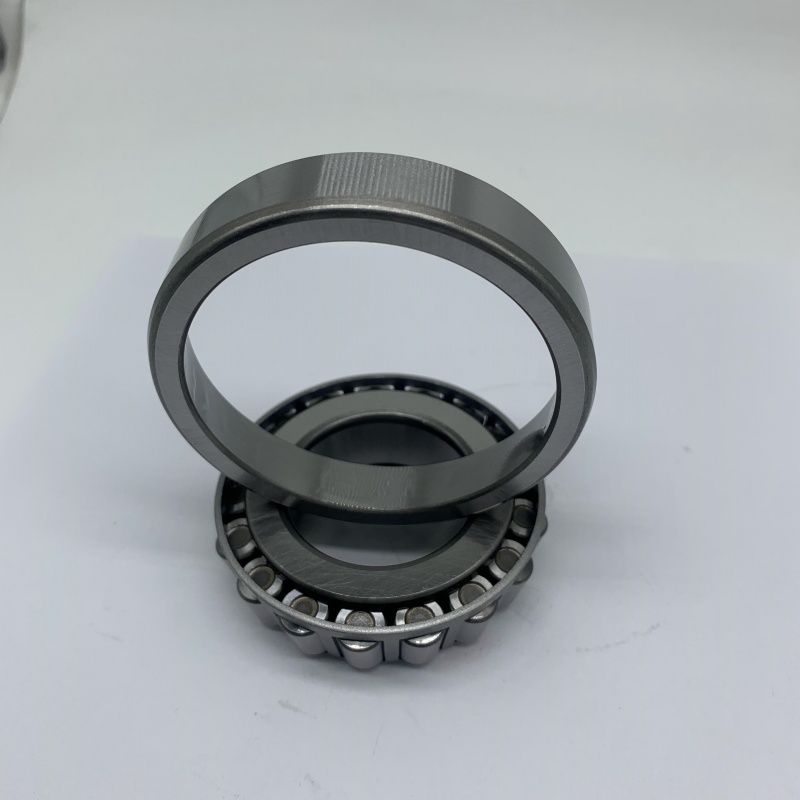
You identify a tapered roller bearing1 by its separable cone and cup design and its conical rollers. The most reliable method is to find the part number2 stamped on the cone face and cup OD. If worn off, take four key dimensions: Cone Bore3 (d), Cup Outside Diameter4 (D), Total Width5 (T), and Cone Width6 (C), then use a bearing cross-reference guide or consult your supplier.
Deeper Dive: A Step-by-Step Identification Protocol
Mistakes in identification are common and costly. Follow this structured approach to be sure.
Step 1: Visual Confirmation of Type
First, confirm it is a tapered roller bearing1 and not another type.
- Check Separability: Can you easily pull the inner ring assembly (cone with rollers) out of the outer ring (cup)? If yes, it’s very likely a tapered roller bearing1. Spherical roller bearings are also separable, but their rollers are barrel-shaped, not conical.
- Look at the Rollers: The rollers should be clearly tapered, wider at one end. This is the defining visual clue.
Step 2: Locate and Record the Part Number (The Best-Case Scenario)
Look for etched or stamped alphanumeric codes.
- Primary Location: On the face of the cone (the large rib side) and on the outer cylindrical surface of the cup.
- Common Systems: You might see:
- Metric/Inch Codes (Timken-style): e.g.,
LM67048 / LM67010. This indicates a cone (LM67048) and cup (LM67010) set. - ISO/National Standards: A string of numbers and letters following a pattern like
30206 J(where 302 indicates the bearing type and series).
- Metric/Inch Codes (Timken-style): e.g.,
- Action: Write down everything you see, including any smaller prefixes or suffixes. These indicate material, clearance, or manufacturer specifics.
Step 3: Precise Dimensional Measurement (When No Number is Visible)
This is the critical skill. Use calibrated calipers. Measure in millimeters.
| Dimension | Symbol | What to Measure | Why It’s Important |
|---|---|---|---|
| Cone Bore3 Diameter | d | The inside diameter (ID) of the inner ring (cone). | This is your shaft size. It must be a precise fit. |
| Cup Outside Diameter4 | D | The outside diameter (OD) of the outer ring (cup). | This is your housing bore size. |
| Total Bearing Width | T or B | The total width of the assembled bearing (cup face to cone back face). | This ensures the bearing fits the space in the assembly. |
| Cone Width6 | C | The width of the inner ring assembly (cone) alone, from its large rib face to its back face. | This is key for cross-referencing, especially in Timken-style numbering. |
Step 4: Observe Key Design Features
Note these details; they help specify the exact variant.
- Cage Type7: Is it a pressed steel cage (most common), a machined brass cage (for high-speed or high-temperature), or a polymer cage (for low noise)?
- Flange or Not?: Does the cup have an external flange for axial location in the housing?
- Seals/Shields: Are there rubber seals or metal shields attached? Standard tapered roller bearing1s are often open, but sealed units exist for certain applications.
Step 5: Cross-Reference and Source
With the part number2 or the four dimensions (d, D, T, C), you can now:
- Use a Bearing Interchange Manual8: These are thick books or online databases that list bearings by dimensions and cross-reference brands.
- Contact Your Supplier Directly: Send the information and a clear photo to a technical supplier like us. A good factory will identify it quickly and confirm availability of an exact match or a suitable equivalent.
Pro Tip for Distributors: Create a simple measurement form for your team and customers. Standardizing this process reduces errors in ordering and builds your reputation as a technical expert, not just a parts seller.
What are the disadvantages of tapered roller bearings?
No component is perfect for every job. I advise clients to see the full picture. Promoting only the advantages of tapered roller bearings would be a disservice. Knowing the limitations helps you avoid them in the wrong application and saves you from future headaches and returns. An honest supplier discusses both sides.
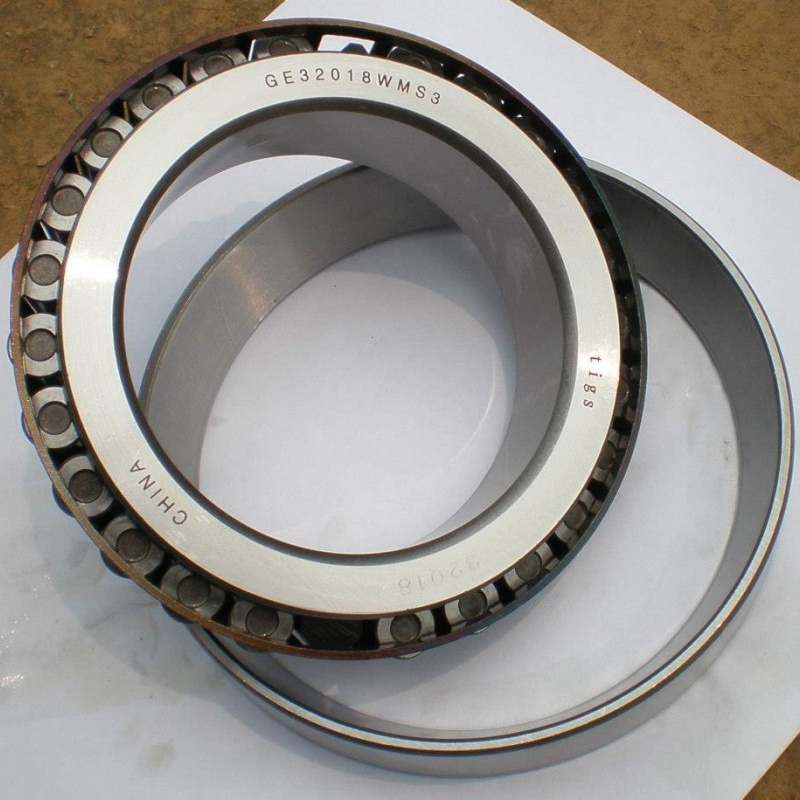
The main disadvantages of tapered roller bearings are their sensitivity to misalignment, their need for precise adjustment during installation, and their generally higher friction at very high speeds compared to ball bearings. They also typically handle axial load in only one direction per single row, requiring paired mounting for bidirectional thrust.
Deeper Dive: Understanding the Constraints and Mitigations
Let’s examine each disadvantage in detail. More importantly, let’s look at when it matters and how to work around it.
1. Low Misalignment Tolerance1: The Rigidity Trade-Off
This is the most significant limitation.
- The Problem: A tapered roller bearing’s rigid, line-contact design requires very good alignment between the shaft and housing. Typical allowable misalignment is only 0.0005 to 0.001 radians (about 2-4 arc-minutes). Exceeding this causes uneven load distribution. The rollers carry load only at their ends, leading to high edge stresses, rapid wear, heat generation, and premature flaking (spalling).
- Comparison: A spherical roller bearing can handle 1-3 degrees of misalignment, over 50 times more.
- When It Matters: In applications with long shafts, flexible foundations, or housing machining inaccuracies. Examples: conveyor pulleys, large fans, textile machinery.
- How to Mitigate:
- Design for Precision: Ensure housings and shafts are machined to tight tolerances and aligned carefully during assembly.
- Use Self-Aligning Housings2: For some applications, a tapered roller bearing can be mounted in a "self-aligning" pillow block, where the housing itself pivots. This is less common but exists.
- Choose an Alternative: If misalignment is unavoidable, specify a spherical roller bearing instead.
2. Installation Complexity3 and Adjustment Required
They are not "drop-in" like most deep groove ball bearings.
- The Problem: The internal clearance (play) or preload (negative clearance) must be set correctly during installation. This is usually done by tightening a nut on the shaft against the bearing. Too loose (excessive clearance) leads to shaft wobble and vibration. Too tight (excessive preload) generates high friction, heat, and early failure.
- When It Matters: In every single installation. This requires skilled mechanics and proper tools (torque wrenches, dial indicators).
- How to Mitigate:
- Follow Manufacturer Guidelines: Use the specified tightening torque and rotation procedure to seat the rollers.
- Measure Clearance/Preload: Use a dial indicator to check axial endplay or preload after adjustment.
- Use Pre-Adjusted Units4: Consider double-row or four-row tapered roller bearings, which are factory-adjusted. Also, matched pairs (DB, DF mountings) simplify setting.
3. Speed Limitations5 and Friction
- The Problem: While they can run at high speeds (e.g., in automotive wheel hubs), their theoretical maximum speed is generally lower than an equivalent-sized deep groove ball bearing. This is due to higher centrifugal forces on the heavier rollers and sliding friction at the roller end/rib contact.
- When It Matters: In very high-speed spindles, turbochargers, or machine tool applications where extreme RPM is the primary goal.
- How to Mitigate:
- Optimize Lubrication: High-quality oil mist or jet lubrication is critical for heat dissipation at high speeds.
- Use Advanced Designs: Special high-speed tapered bearings use lighter materials, optimized roller profiles, and special rib designs to reduce sliding friction.
4. Primarily Unidirectional Axial Load Capacity6
- The Problem: A single row tapered roller bearing handles axial load efficiently in one direction only—the direction that drives the rollers against the large rib of the cone. To handle thrust from both sides, you must use two bearings in an opposed configuration.
- When It Matters: In applications with reversing axial loads, like some gearboxes or worm drives.
- How to Mitigate: This is a design feature, not a flaw. Engineers almost always use them in pairs (back-to-back or face-to-face) or specify a double-row tapered roller bearing. The "disadvantage" is the need for two bearing positions instead of one.
Key Takeaway for Buyers: These "disadvantages" are simply the other side of their strengths (rigidity, high load capacity). The task is to match the bearing to the application. If your machine design has alignment challenges or needs simple installation, a spherical roller or deep groove ball bearing might be a better choice. A good supplier will ask about your application to guide you away from a poor fit.
Who makes the highest quality bearings1?
"Highest quality" is a claim everyone makes, but few can prove consistently. For a distributor, a batch failure can mean losing a major client. Quality isn’t just about a shiny surface; it’s about predictable, reliable performance in every single unit, shipment after shipment. I define quality as the absence of surprises for our customers.
The highest quality bearings1 come from manufacturers who master the entire production process with rigorous control. This includes premium brands2 and select specialist factories. True quality is proven by consistent material properties, precise geometric accuracy (meeting P5/P6 class), rigorous 100% inspection, and traceability—not just by a brand name or a low price.
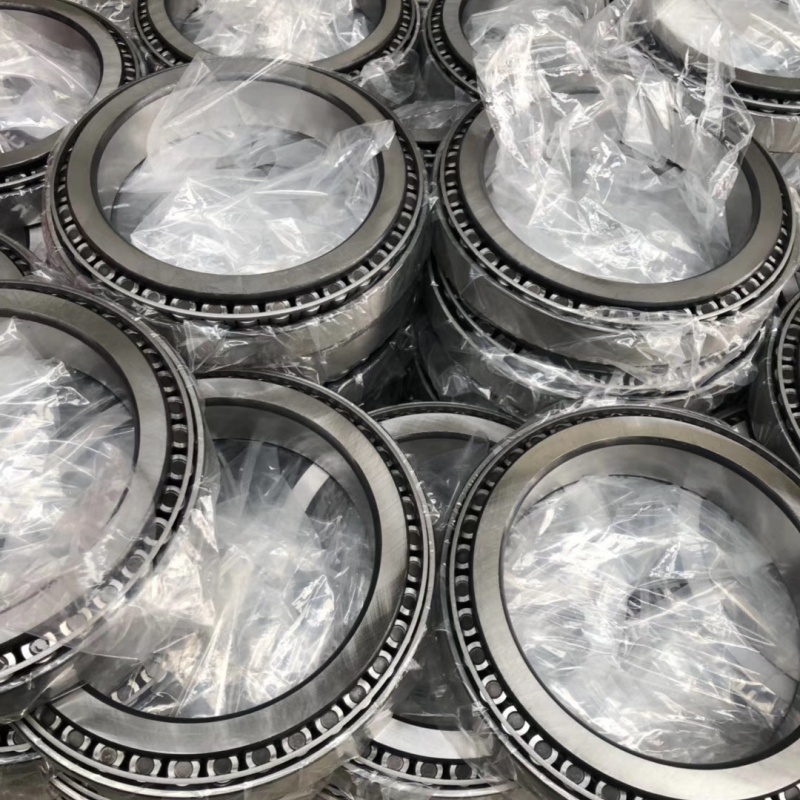
Deeper Dive: Deconstructing "Quality" into Measurable Factory Actions
Forget marketing slogans. Let’s look at what happens on the factory floor to create quality. As a factory owner, I see these as non-negotiable pillars.
Pillar 1: Material Quality and Heat Treatment
The bearing’s life begins with the steel.
- Action: Use certified bearing steel from reputable mills (e.g., grades like GCr15/52100). The chemical composition must be controlled for hardness and fatigue resistance.
- Proof: Material certificates (MTC) should accompany each steel batch.
- Critical Process: Heat treatment (hardening and tempering). The goal is a hard, wear-resistant surface (around 60-65 HRC) with a tough, ductile core. Inconsistent heat treatment leads to soft spots (early wear) or brittle microstructures (cracking).
- Our Practice: We use controlled atmosphere furnaces and tempering ovens with precise temperature profiles. We perform regular hardness tests and metallographic analysis on samples.
Pillar 2: Manufacturing Precision and Consistency
Precision is about hitting the same target every time.
- Action: Implement modern, CNC-controlled grinding machines for raceways and rollers. The machine’s capability must exceed the required tolerance.
- The Standard: Precision classes are defined by ISO standards. For tapered roller bearings, common classes are:
- Normal (P0): Standard industrial use.
- P6 Class: High precision for most industrial gearboxes and motors.
- P5 Class: Higher precision for machine tools, high-speed applications.
- Our Practice: We produce up to P5 class. This means dimensions (bore, OD, width) and running accuracy (radial runout) are held within microns. We don’t just sample test; we use statistical process control (SPC) on production lines to catch deviations in real-time.
Pillar 3: 100% Inspection and Testing
Final inspection is the last gate.
- Action: Every single bearing should pass through several checks, not just a random sample.
- Key Checks:
- Dimension & Geometry: Automated gauges check critical dimensions.
- Surface Finish: Profilometers check for smoothness of raceways.
- Vibration & Noise (NVH): Bearings are spun on analyzers. High-quality bearings have low vibration values (Z1, Z2, Z3 groups). This is critical for automotive and electric motor applications.
- Rotational Torque: Checks for smooth, free rotation without binding.
- Our Practice: Our integrated inspection line includes all these steps. We can provide NVH test reports for distributors who supply to the auto aftermarket, a key selling point.
Pillar 4: Traceability and Process Control
Quality means you can trace a problem back to its root.
- Action: Implement a batch numbering system. This links the finished bearing to its specific heat of steel, its production date, and the machines that made it.
- Benefit: If a field issue arises (extremely rare with these controls), we can investigate the exact batch and correct the specific process step, preventing future issues.
Who, Then, Makes the "Highest Quality"?
Given these pillars, the answer has two parts:
- The Premium Brands (Tier 1): They excel at all four pillars and add extensive R&D for extreme applications. You pay for this comprehensive capability.
- The Certified Specialist Factories (Tier 2, like FYTZ): We focus on delivering these four pillars for the standard and common precision industrial bearing ranges. Our "highest quality" is achieving P5/P6 precision3, excellent material, and 100% inspection at a cost structure that allows our B2B partners to be competitive. We prove quality with inspection reports, material certificates, and sample approvals before shipment.
For an importer like Rajesh, partnering with a factory that operates this way is the definition of sourcing "high-quality" bearings. It minimizes his risk, satisfies his end customers, and builds his own brand’s reputation for reliability.
Conclusion
Finding the right precision tapered roller bearing source is about matching proven factory capabilities with your specific business and technical needs. True quality is built through controlled processes, not just claimed in a catalog.
-
Discover leading manufacturers known for their exceptional bearing quality and reliability. ↩ ↩ ↩ ↩ ↩ ↩ ↩ ↩ ↩
-
Learn about premium brands that excel in bearing quality and innovation. ↩ ↩ ↩ ↩ ↩
-
Get insights into the P5/P6 precision standards and their importance in industrial applications. ↩ ↩ ↩ ↩ ↩ ↩
-
Learn about pre-adjusted units to simplify installation and ensure optimal performance. ↩ ↩ ↩ ↩ ↩
-
Learn about speed limitations to make informed decisions for high-speed applications. ↩ ↩ ↩
-
Understanding load capacity is essential for selecting the right bearing for your application. ↩ ↩ ↩ ↩ ↩ ↩
-
Explore the various cage types to understand their impact on bearing performance and application. ↩ ↩ ↩ ↩
-
A Bearing Interchange Manual is a valuable resource for finding compatible bearings based on dimensions. ↩