
Machines fail in harsh conditions. Dust, heavy shock loads, and extreme temperatures punish standard components. I’ve seen bearings turn to dust in mining equipment and seize in desert heat. The cost isn’t just a bearing; it’s production downtime and lost revenue. Your challenge is finding a component tough enough to survive.
Engineered tapered roller bearings are purpose-built for tough conditions. They handle severe radial, axial, and shock loads. Special seals, materials, and lubricants protect against contamination and extreme temperatures, making them ideal for mining, agriculture, construction, and heavy industrial applications.
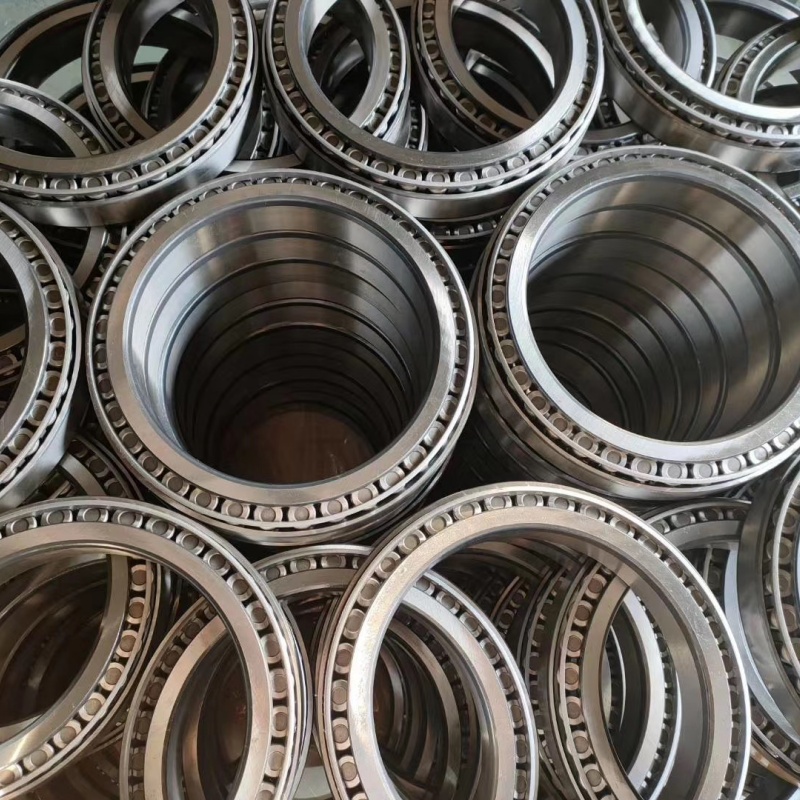
You might manage equipment for a quarry in South Africa or import parts for farm machinery in Brazil. You need a bearing that won’t quit when the going gets tough. But you also need to know its limits. Not every tough job needs the same solution. This article will guide you through the real-world strengths and weaknesses of tapered roller bearings in demanding settings. We will look at what they are good for, what loads they handle, and where you might need a different option. My goal is to help you make an informed, confident choice for your most critical applications.
What are the disadvantages of tapered roller bearings?
Even the strongest tool has its limits. Choosing a tapered roller bearing for the wrong reason leads to premature failure, angry customers, and costly returns. I once had a distributor in Indonesia use them in a severely misaligned conveyor. The bearings failed in weeks. Knowing the disadvantages upfront saves you from these expensive mistakes.
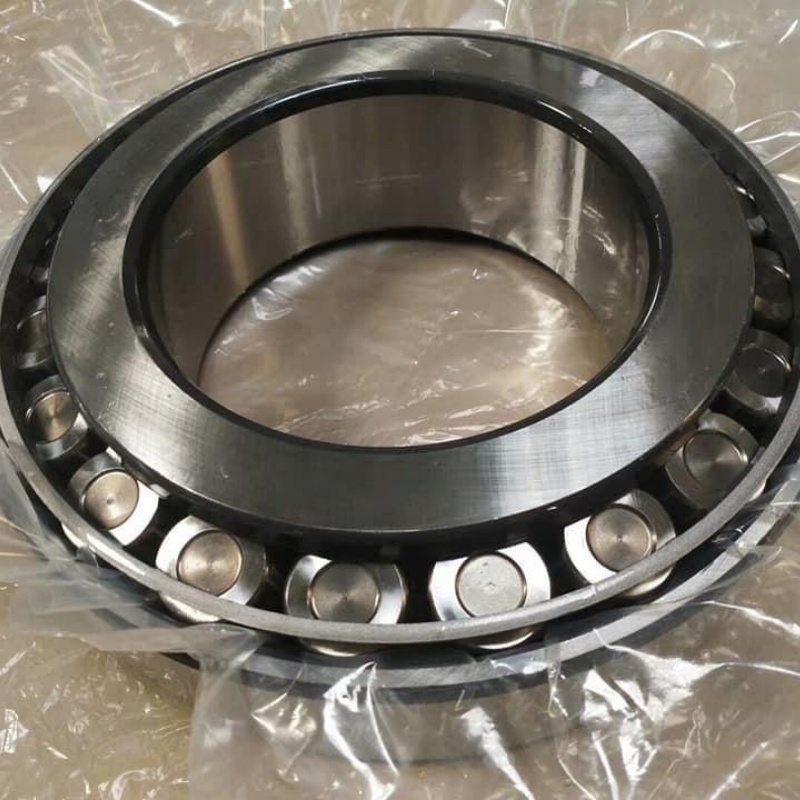
The main disadvantages are low tolerance for misalignment1, need for precise installation adjustment2, higher friction at very high speeds3, and typically handling axial load in only one direction4 per bearing row. These factors make them less suitable for applications with shaft deflection, simple assembly needs, or very high RPMs.
Deeper Dive: The Cost of Rigidity and How to Mitigate It
The "disadvantages" of tapered roller bearings are the direct flip side of their core strengths: rigidity and high load capacity. Understanding this trade-off is key to proper application.
1. Misalignment Intolerance: The Rigidity Penalty
This is the most critical limitation in challenging environments, which often involve structural flex.
- The Core Issue: The line contact design demands near-perfect alignment between the shaft and housing. Allowable misalignment is typically less than 0.001 radians (about 3-4 arc-minutes). In a dusty, vibrating mining crusher or a long agricultural driveline, frames twist and shafts bend.
- Consequence of Misalignment: Load concentrates on the roller ends. This creates extreme edge stress, rapid wear, heat generation, and spalling (surface fatigue). The bearing fails quickly, often with a characteristic diagonal wear pattern across the rollers.
- Comparison with Alternatives: A spherical roller bearing can tolerate 1-3 degrees of misalignment, making it inherently more forgiving in flex-prone structures.
- Mitigation Strategies for Harsh Environments:
- Robust Design: Use heavy-duty, stiff housings and shafts to minimize deflection. Add alignment features like piloted housings.
- Careful Installation: Use dial indicators to align the machine during assembly, especially after maintenance in field conditions.
- Alternative Bearing Choice: If alignment control is impossible (e.g., on a long trailer axle with flexible mounting), a spherical roller bearing is likely a better choice.
2. Installation Complexity: The Precision Penalty
They are not plug-and-play. Field maintenance in tough conditions is hard.
- The Core Issue: Internal clearance or preload must be set during installation by tightening a locknut. Incorrect setting is a major cause of failure. Too loose causes shaft play and impact damage. Too tight causes overheating and seizure.
- Challenge in Harsh Settings: Imagine a mechanic setting bearing clearance in a muddy field or a dusty mine workshop. It requires skill, proper tools (torque wrench, dial indicator), and time—all of which are often in short supply.
- Mitigation Strategies:
- Factory-Pre-Adjusted Units: Specify double-row or four-row tapered roller bearings. They come from the factory with pre-set internal clearance, simplifying installation. We produce these for roller conveyors and heavy gearboxes.
- Use of Adapter Sleeves: Tapered adapter sleeves can simplify mounting on shafts, though adjustment is still needed.
- Clear Instructions & Kits: Provide your end clients with simple, visual installation guides and pre-packaged installation kits (nut, washer, seal).
3. Speed and Friction Limitations
- The Core Issue: While capable of high speeds (e.g., in truck wheel hubs), their maximum speed is generally lower than a comparable ball bearing. This is due to higher friction from roller end/rib contact and greater centrifugal forces on the heavy rollers.
- Relevance to Harsh Environments: Many heavy-duty applications (crushers, bulldozers) are low-speed, high-torque. This is less of a disadvantage here. However, in applications like large fans or pumps in industrial plants, it matters.
- Mitigation Strategy: Ensure excellent, continuous lubrication. Oil circulation or jet lubrication is preferred for high-speed, high-load tapered bearing applications to remove heat.
4. Primarily Unidirectional Thrust
- The Core Issue: A single bearing handles heavy axial load efficiently in one direction only. Reversing loads require a second bearing in opposition.
- Mitigation Strategy: This is a design feature, not a flaw. Engineers plan for it. Standard practice is to use them in pairs (back-to-back or face-to-face) or to use a double-row bearing. The "disadvantage" is the need for two bearing positions, which increases cost and complexity compared to a single spherical roller bearing that handles bidirectional thrust.
Key Takeaway: For a procurement manager or distributor, these disadvantages define the application boundary. When a customer describes an application with severe misalignment, need for simple replacement, or very high speeds, you should question if a tapered roller is the best fit. Recommending the right bearing type builds your technical credibility.
What are tapered roller bearings1 good for?
Now for their superpowers. In the right application, tapered roller bearings1 are incredibly robust and reliable. They are the workhorses of industry. I’ve supplied them for sugar mill gearboxes2 in Egypt and for off-road vehicle axles in Russia. When the load is heavy and the conditions are dirty, these bearings often outlast all others.
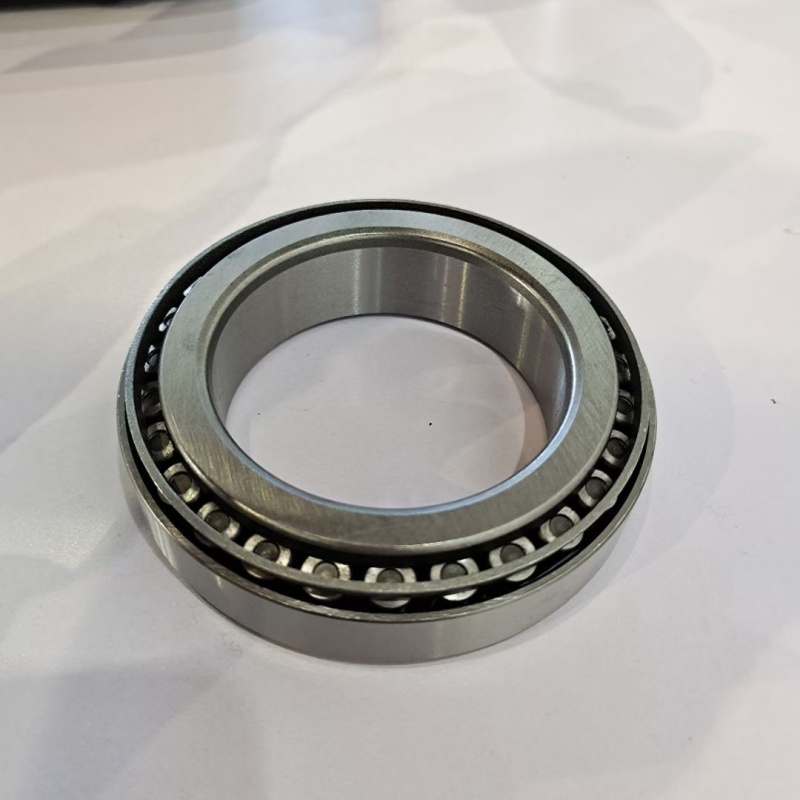
Tapered roller bearings excel in applications requiring high rigidity and combined load capacity. They are ideal for gearboxes, wheel hubs, rolling mills, construction machinery, agricultural equipment, and mining conveyors. Their strength lies in managing both heavy radial and thrust loads simultaneously in compact, durable arrangements.
Deeper Dive: Champions in Specific Harsh Environment Arenas
Let’s move beyond a generic list. We’ll examine why they are the preferred choice in specific tough industries.
1. Automotive & Transportation: Wheel Hubs and Axles
This is a premier application. Passenger cars, trucks, and heavy vehicles use them.
- Why They Excel: Wheel bearings face complex loads: radial load from the vehicle’s weight and cornering forces, and axial (thrust) loads during braking and cornering. Tapered roller bearings (often in pre-adjusted, sealed pairs) handle this combination perfectly.
- Harsh Environment Factor: They must withstand road shock, water, salt, and dirt. Modern hub units integrate the bearing with seals and sensors. For distributors like Rajesh in the auto aftermarket, stocking quality tapered roller hub units is a core business.
- Our Role: We produce auto bearings to precise OEM specifications, with low noise levels (Z1/Z2 vibration groups) crucial for passenger cars.
2. Heavy Industry & Metal Processing: Rolling Mill Drives
The demands here are extreme: monstrous loads, shock from ingot entry, and high temperatures.
- Why They Excel: Their high rigidity3 prevents shaft deflection under huge rolling forces, ensuring product thickness accuracy. They handle the severe radial load from the rolls and the axial load from helical gear drives.
- Special Configuration: Four-row tapered roller bearings1 are standard here. They are factory-adjusted to provide an ultra-rigid, compact solution. Failure here means stopping an entire production line at immense cost.
- Our Capability: We can supply large-bore, four-row tapered roller bearings1 for such heavy industrial applications, a key product for markets in Russia and Turkey.
3. Agriculture & Construction: Final Drives and Axles
Tractors, combines, excavators, and loaders operate in dirt, mud, and under shock loads.
- Why They Excel: Final drive gearboxes2 transmit high torque to wheels or tracks. The bearings must support the gear shafts under heavy radial and axial gear loads. Tapered rollers provide the necessary stiffness for proper gear mesh and longevity.
- Harsh Environment Factor: Sealing is critical. We offer bearings with enhanced seal options (like rubber contact seals or labyrinth designs) to keep contaminants out and grease in.
4. General Industrial: Gearboxes and Reducers
From wind turbines to cement mixers, gearboxes2 are everywhere.
- Why They Excel: Gear shafts generate both radial loads (from gear teeth pressure) and axial loads (from helical gears). A pair of tapered roller bearings1 on a shaft provides defined, rigid support for the gears, ensuring quiet operation and long life. Their adjustability allows precise control of gear backlash.
- Precision Class: For high-performance gearboxes2, P5 or P6 precision class bearings are used. We regularly supply these to machinery manufacturers and their spare part distributors.
| Industry | Typical Machine | Bearing Function | Why Tapered Rollers Are "Good For" This |
|---|---|---|---|
| Automotive | Truck Wheel Hub | Support wheel, handle cornering & braking forces. | Combined load capacity, durability, available as pre-sealed unit. |
| Mining | Cone Crusher | Support the main crushing shaft. | Extreme shock load resistance, high rigidity3 for precise shaft control. |
| Agriculture | Tractor Final Drive | Support differential and axle shafts. | Handles high torque & gear loads, robust against contamination. |
| Steel | Rolling Mill Work Roll | Support the roll under extreme pressure. | Ultra-high rigidity3 (4-row), manages combined loads from rolling. |
| Power Transmission | Industrial Gearbox | Support input/output shafts with helical gears. | Precise shaft positioning, manages radial and axial gear loads. |
For an importer, understanding these applications helps you target the right customers. A construction equipment repair shop needs different specs than a gearbox rebuilder. Your product knowledge becomes a sales tool.
What load types is a tapered roller bearing suitable for?
Load type is the most important selection criterion. Putting a bearing under a load it cannot support is a guaranteed failure. I simplify this for my customers: think about the direction of the force on your shaft. Is it sideways, from the end, or both? The answer determines if a tapered roller bearing is your solution.
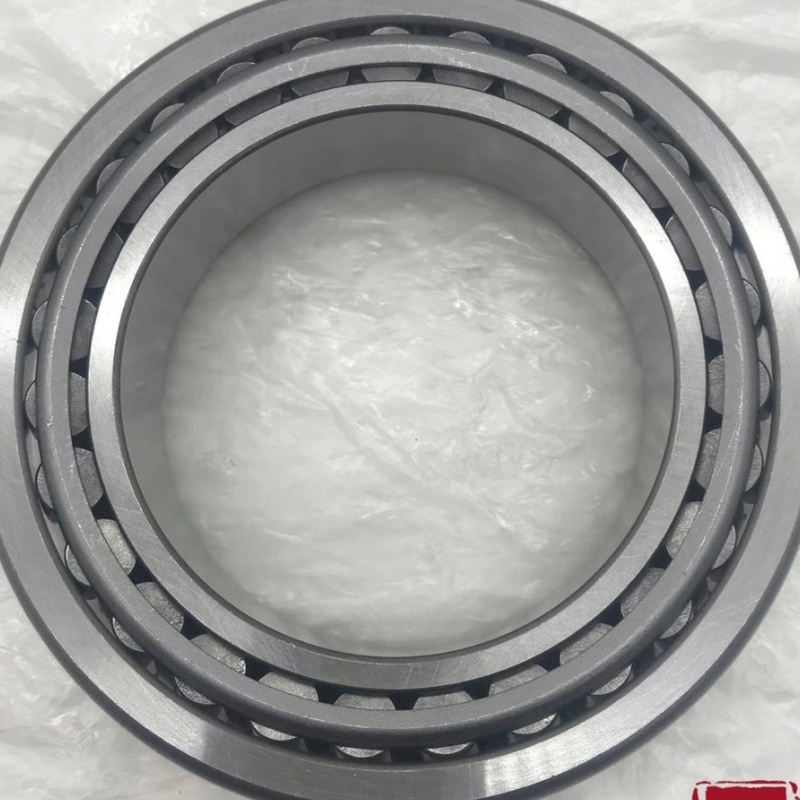
Tapered roller bearings are uniquely suitable for combined loads1—simultaneous radial and axial forces. They also handle pure radial loads2 very well and are excellent for shock or impact loads3. They are generally not used for pure axial loads4 alone; a dedicated thrust bearing is more efficient for that specific case.
Deeper Dive: Analyzing Load Scenarios in Real-World Machinery
Let’s break down each load type and see how tapered roller bearings5 react. This is practical engineering for buyers and specifiers.
1. Combined Radial and Axial Loads: Their Prime Domain
This is where they shine and why they are so widely used.
- The Mechanics: The tapered design converts part of any radial load into an axial force component within the bearing. This force pushes the rollers against the large rib of the cone. This mechanism allows a single bearing row to support substantial axial load in addition to the radial load.
- Real-World Example – Automotive Pinion Bearing: In a truck differential, the pinion gear is driven by the propeller shaft. The helical gears create a strong axial (thrust) force trying to push the pinion shaft out. The radial load comes from the gear teeth meshing. A pair of tapered roller bearings5 at the pinion directly counters both forces, keeping the gear alignment perfect.
- Design Implication: Because they handle both, they often simplify designs by replacing two separate bearings (one for radial, one for axial).
2. Heavy Radial Loads
They are also excellent for primarily radial applications.
- Comparison: For a given size, a cylindrical roller bearing might have a slightly higher basic radial load rating. However, a tapered roller bearing is often chosen because it can handle any incidental axial load (from thermal expansion, slight misalignment, or unexpected forces) without problem. A cylindrical roller bearing would need a separate thrust bearing.
- Real-World Example – Conveyor Roller End: A heavy conveyor roller is mainly under radial load from the belt and material. However, belt tracking issues or frame misalignment can introduce axial forces. A tapered roller bearing provides a more forgiving and robust solution in such an uncertain environment.
3. Shock and Impact Loads
Harsh environments are full of impacts.
- Why They Handle It Well: The line contact between rollers and raceways has a large contact area. This distributes impact forces over a wider area, reducing stress concentrations. Additionally, the tough, through-hardened steel used can absorb significant energy without deforming.
- Real-World Example – Mining Shovel Crowd Mechanism: When the shovel digs into a rock pile, the bearings in the crowd (forward/backward) mechanism experience massive shock loads. Tapered or spherical roller bearings are standard here for their impact resistance.
4. Pure Axial (Thrust) Loads: The Misapplication
- The Guidance: While they can carry axial loads, using a single tapered roller bearing for pure thrust is inefficient.
- Why? For pure thrust, a dedicated thrust ball bearing or cylindrical roller thrust bearing has a design optimized for that single load direction. It will have a higher thrust capacity in a more compact height than a tapered roller bearing arranged for the same purpose.
- Exception: They are used in opposing pairs to handle reversing axial loads, as in some machine tool spindle6s.
| Load Direction and Bearing Arrangement Table | Desired Load Capacity | Recommended Bearing Arrangement | Schematic | Typical Use Case |
|---|---|---|---|---|
| Heavy Radial + One-Direction Axial | Single tapered roller bearing. | [Bearing with radial & single arrow] | Gearbox input shaft with helical gears. | |
| Heavy Radial + Reversing Axial | Two tapered roller bearings5 mounted back-to-back (DB) or face-to-face (DF). | [Two bearings opposed] | Machine tool spindle, differential case. | |
| Maximum Rigidity for Radial & Axial | Two tapered roller bearings5 mounted back-to-back (DB). This provides the widest effective support. | [DB arrangement] | High-precision gearboxes, pinion supports. | |
| Very High Radial, Moderate Any-Direction Axial | Double-row tapered roller bearing. Factory pre-adjusted. | [Double row bearing] | Rolling mill rolls, large industrial fans. |
For a distributor, this knowledge helps you interpret customer needs. A customer asking for a "bearing for a gearbox shaft" likely needs a bearing for combined loads1. Your next questions should be about shaft size and load magnitude to select the correct series (light, medium, heavy).
Can tapered roller bearings1 handle thrust loads?
This is a very common and crucial question. The short answer is "yes, very well," but with a critical detail that everyone must understand. Getting this detail wrong is a top reason for bearing failure. I’ve seen bearings installed backwards in a gearbox, leading to immediate axial play and damage.
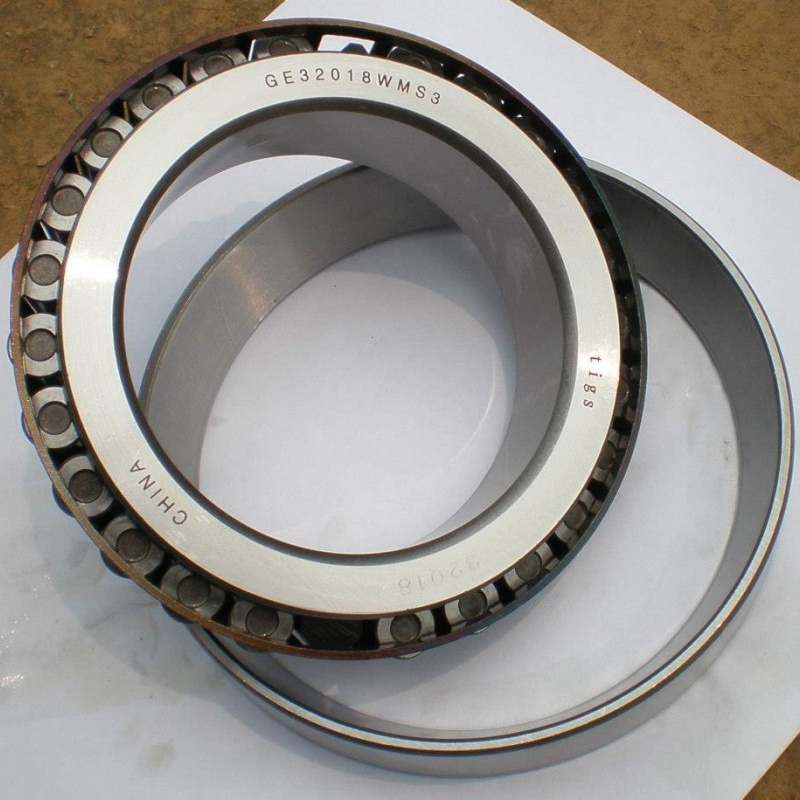
Yes, tapered roller bearings1 are excellent at handling thrust (axial) loads. However, a single-row bearing handles thrust efficiently in one direction only—the direction that forces the rollers against the large rib of the inner ring (cone). To handle thrust from both directions, two bearings must be used in an opposed configuration.
Deeper Dive: Mastering Thrust Capacity for Reliable Machine Design
Understanding thrust handling is not just academic; it dictates how you mount the bearing and how you design the surrounding components.
1. The Mechanism: How They Manage Thrust
The tapered geometry is key. Think of the roller and raceway as two inclined planes.
- Under Thrust Load: An axial force applied to the shaft tries to push the cone assembly out of the cup. Because of the angle, this force is transferred through the rollers onto the angled raceway of the cup. This generates a radial reaction force. The large rib on the cone stops the rollers from being pushed out axially. The rollers transmit the thrust load between the cone rib and the cup raceway.
- Critical Direction: This only works if the thrust load pushes the cone into the cup, driving the rollers against the large rib. If thrust is applied in the opposite direction, it tries to pull the cone out, and the small rib (if present) is not designed to carry significant load. This causes the rollers to skew and skid, leading to rapid failure.
2. Thrust Capacity Ratings
Bearings have both a dynamic radial load rating (Cr)2 and a dynamic axial load rating (Ca)3. The axial rating is typically a significant fraction of the radial rating, often around 40-60% for a single row bearing, depending on the contact angle.
- Contact Angle Matters: Bearings are designed in series. A "light" series may have a smaller contact angle, favoring radial load. A "medium" or "heavy" series has a larger contact angle, offering greater thrust capacity relative to its size.
- Our Specification: When we provide bearing data to OEM clients, we include both Cr and Ca values so their engineers can calculate exact life under combined loading.
3. Configurations for Bidirectional and High Thrust
Since a single row is unidirectional, engineers use standard arrangements.
- Back-to-Back Mounting (DB)4: The two bearings are mounted with their cone backs facing each other. This arrangement best handles combined radial and reversing axial loads and provides high rigidity. It is the most common arrangement for gearbox shafts.
- Face-to-Face Mounting (DF)5: The two bearings are mounted with their cone fronts facing each other. This arrangement accommodates some shaft misalignment better than DB but is slightly less rigid.
- Tandem Mounting (DT): Two bearings are mounted with the same orientation to increase the thrust capacity in a single direction. This is less common.
- Double-Row and Four-Row Bearings: These are essentially two or four bearing rows in a single unit, pre-configured by the factory to handle specific load combinations, including bidirectional thrust.
4. Installation: Setting Clearance/Preload6 for Thrust Performance
This is the practical skill for mechanics and maintenance teams.
- Clearance vs. Preload6: After mounting, the axial play between the cone and cup is adjusted.
- Endplay (Clearance): A small axial gap. Allows for thermal expansion. Used in many general applications.
- Preload6: A negative clearance. The bearing is slightly compressed axially before the external load is applied. This eliminates all internal play, maximizing rigidity and rotational accuracy. Crucial for high-precision, high-thrust applications like pinion bearings.
- How to Set It: This is done by tightening the shaft locknut against the bearing, often with a specified torque and procedure that involves rotating the shaft to seat the rollers.
Practical Advice for Distributors and Maintenance Providers:
When a customer asks for a tapered roller bearing for a thrust application, you must ask: "Is the thrust in one direction only, or does it reverse?" The answer determines if you sell one bearing or a matched pair. Providing the correct mounting diagram and adjustment instructions with your bearing adds immense value and prevents comebacks. We include these guides with our technical datasheets for this exact reason.
Conclusion
In harsh environments, the robust, combined-load capability of engineered tapered roller bearings makes them a premier choice. Success depends on respecting their need for precision alignment and correct installation to unlock their full potential.
-
Explore this link to understand the mechanics and applications of tapered roller bearings, crucial for effective thrust load management. ↩ ↩ ↩ ↩ ↩ ↩ ↩ ↩ ↩ ↩
-
Understanding Cr is essential for evaluating bearing performance under various load conditions. ↩ ↩ ↩ ↩ ↩ ↩ ↩
-
Discover the significance of Ca ratings for ensuring reliable bearing operation in axial load scenarios. ↩ ↩ ↩ ↩ ↩ ↩
-
This resource will clarify how DB mounting enhances load handling and rigidity in mechanical systems. ↩ ↩ ↩
-
Explore DF mounting to understand its benefits for accommodating shaft misalignment in applications. ↩ ↩ ↩ ↩ ↩
-
Learn about preload techniques to maximize bearing performance and accuracy in high-thrust applications. ↩ ↩ ↩ ↩