
I still remember visiting a customer’s site in India a few years ago. We were in a hot and dusty automotive parts workshop. The manager, Rajesh, showed me a gearbox that kept overheating and shutting down his production line. The culprit? An old, worn-out bearing. That moment made me realize how a single component, like a tapered roller bearing, can be the difference between profit and loss for a business owner. Energy efficiency isn’t just a buzzword; it’s a direct path to saving money and staying competitive.
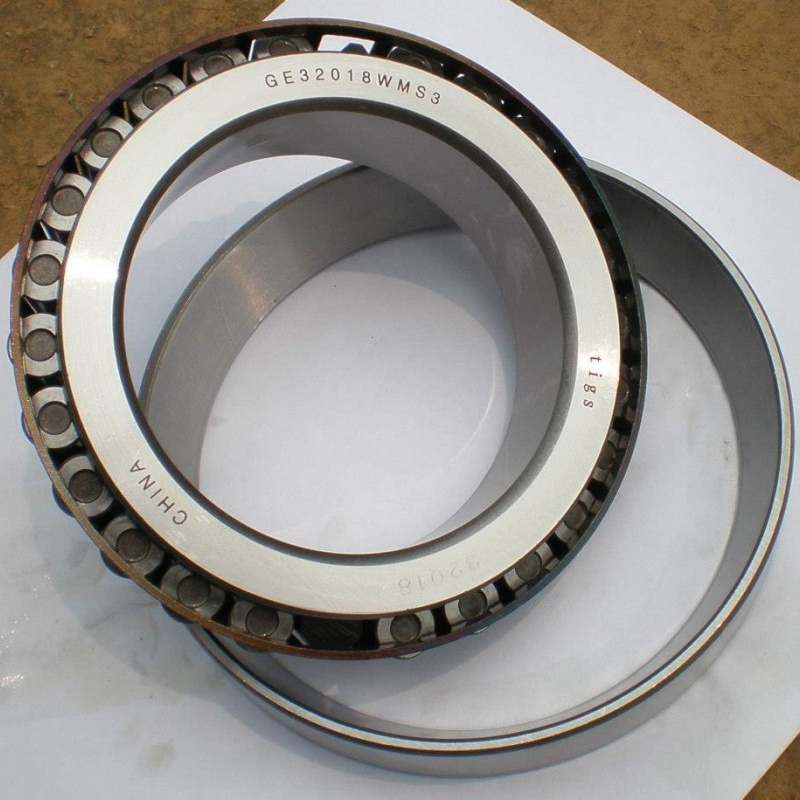
A tapered roller bearing is a type of rolling-element bearing designed to handle large axial and radial loads simultaneously. Its unique conical shape allows rollers and raceways to meet at a common apex, reducing friction and enabling more efficient power transmission. For businesses like yours, this translates directly into lower energy consumption and reduced operating costs.
You’re likely reading this because you face similar challenges. High energy bills, unexpected machine downtime, and the constant pressure to maintain output. Maybe you’re a procurement manager sourcing parts for distributors, or an importer looking for reliable, high-performance bearings for your clients. The right bearing choice is critical. In this article, I’ll break down everything you need to know about tapered roller bearings. We’ll look at how they work, why they save energy, and how they compare to other options like spherical rollers. My goal is to give you clear, actionable information you can use to make smarter purchasing decisions for your business.
What is a tapered roller1?
Imagine a cone. Now, imagine that cone is the rolling element inside a bearing. That’s the core idea of a tapered roller1. Its shape is not cylindrical like a ball or a standard roller. It is tapered from one end to the other. This simple geometric design is the foundation of its powerful capabilities. If you’ve ever struggled with a bearing that failed under heavy sideways loads, understanding this shape is the first step to a solution.
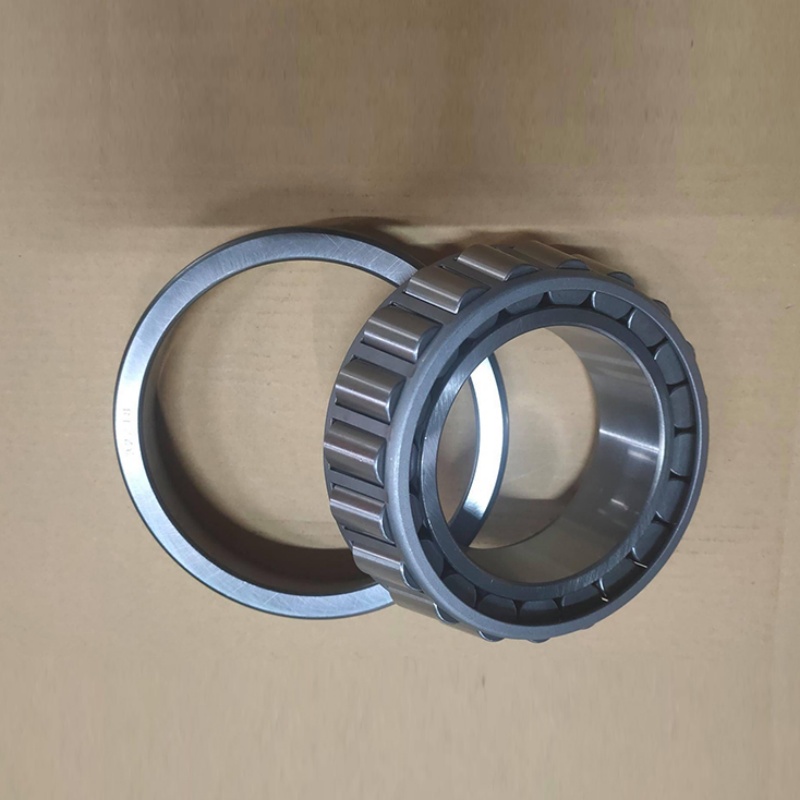
A tapered roller1 is a conical-shaped rolling element used in bearings. Its design allows it to manage combined loads2—both radial (from the side) and axial (from the end)—effectively. The rollers are guided by a rib on the inner ring, called the cone, which keeps them aligned and prevents skewing. This precise guidance is key to its stable and efficient operation under stress.
Deeper Dive: The Mechanics and Geometry of a Tapered Roller
To truly understand why tapered roller1s are so effective, we need to look at the mechanics behind the shape. It’s not just a design quirk; it’s a calculated engineering solution to a common industrial problem.
The Problem of Combined Loads
Most machinery doesn’t apply load in just one direction. A gearbox shaft, for example, experiences radial loads from the gears meshing and axial (thrust) loads from the helical angle of the gear teeth. A standard deep groove ball bearing can handle some axial load, but it’s not ideal for heavy, sustained thrust. A cylindrical roller bearing handles high radial loads but almost no axial load. This often forces engineers to use two separate bearings—one for radial and one for axial loads—which adds cost, complexity, and space.
How the Taper Solves This
The tapered roller1‘s conical shape is the elegant solution. When assembled, the rollers sit between two angled raceways: the inner ring (cone) and the outer ring (cup). Because of the angle, any radial force applied to the bearing creates a component of force that pushes the roller against the cup’s large rib. This allows a single tapered roller1 bearing unit to support significant axial load in one direction.
Key Design Parameters
The performance of a tapered roller1 bearing is defined by its contact angle3. This is the angle between the line of contact of the roller and the raceway and a plane perpendicular to the bearing axis.
| Design Parameter | What It Means | Impact on Performance |
|---|---|---|
| Contact Angle | The steepness of the taper. | A larger contact angle3 (steeper taper) means greater capacity for axial loads. A smaller angle favors higher radial load capacity. |
| Roller Length & Diameter | The size of the rolling elements. | Longer rollers generally increase load capacity and rigidity. The taper ratio affects stress distribution. |
| Rib Guidance | The design of the cone’s large rib. | Ensures proper roller alignment, minimizes skewing and friction, and is critical for high-speed stability. |
The FYTZ Perspective: Precision in Production
At our factory, producing a consistent, high-quality tapered roller1 is where the battle for efficiency is won or lost. The geometry must be perfect. Any deviation in taper, surface finish, or hardness will lead to uneven load distribution, increased friction, heat generation, and premature failure. We use integrated production and precision grinding4 to ensure every roller that leaves our line meets strict tolerances (like P5/P6 class). This consistency is non-negotiable for OEMs and distributors who need reliable performance batch after batch. For an importer like Rajesh, this means fewer complaints from his end customers and a stronger reputation for quality.
What are the advantages of tapered roller bearings1?
You buy bearings to solve problems, not create new ones. The goal is to keep machines running longer, with less energy, and fewer breakdowns. I’ve seen too many businesses choose the wrong bearing for cost reasons, only to pay much more later in downtime and repair. Tapered roller bearings offer a set of advantages that directly address the core pains of equipment manufacturers and maintenance providers. They are a strategic investment in operational reliability.
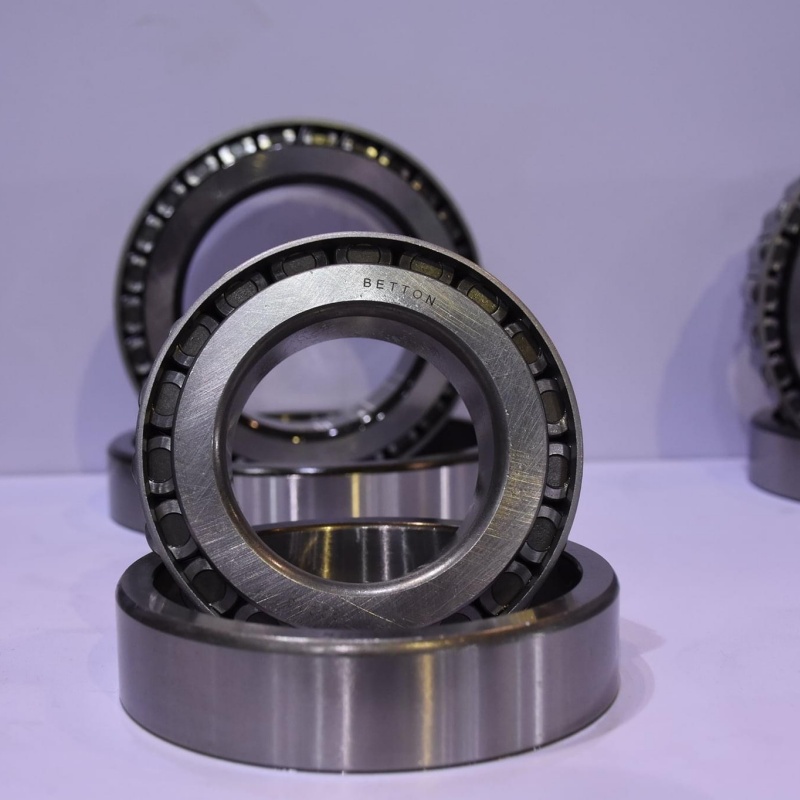
The main advantages of tapered roller bearings1 are their ability to handle combined radial and axial loads2 in a single unit, their high rigidity, and their superior capacity for shock loads. This leads to longer service life, more precise shaft positioning3, and overall better energy efficiency in demanding applications.
Deeper Dive: From Features to Tangible Business Benefits
Listing features is easy. Understanding how those features translate into real-world benefits for your business is what matters. Let’s break down the key advantages.
1. Combined Load Capacity: Simplifying Design and Inventory
This is the most significant advantage. By using a single tapered roller bearing (or a matched pair), you can replace two separate bearings. This simplification has multiple benefits:
- Cost Reduction: You reduce the number of parts to purchase, inventory, and install.
- Space Savings: The design becomes more compact, which is crucial in modern, size-constrained machinery.
- Simplified Assembly: Fewer components mean faster, less error-prone assembly for manufacturers.
2. High Rigidity and Precise Shaft Positioning
The line contact between the tapered rollers and the raceways creates a very stiff bearing arrangement. The shaft is held firmly in place with minimal deflection under load.
- Benefit: This is vital for applications like gearboxes, machine tool spindles, and rolling mills. Precise gear alignment means less noise, less wear, and more efficient power transfer. For our customers in the auto parts aftermarket, this translates to transmissions that shift smoother and last longer.
3. Excellent Durability and Shock Load Resistance
Tapered roller bearings are robust. Their design and the materials used (high-grade chrome steel) allow them to withstand heavy loads and sudden impact loads that would damage other bearing types.
- Benefit: In applications like construction equipment, mining machinery, or agricultural implements—markets we serve extensively in countries like Russia, Brazil, and South Africa—this durability is essential. It means less unplanned downtime in harsh operating environments.
4. Tunable Internal Clearance and Preload
Unlike many bearing types, tapered roller bearings1 allow for precise adjustment of internal clearance or preload during installation. By tightening the nut on the shaft, you can set the bearing to have a slight gap (clearance) or a negative gap (preload) where the rollers are under slight compression even at rest.
- Benefit: Clearance is set for applications with thermal expansion. Preload is used to eliminate all internal play, maximizing rigidity and rotational accuracy for high-precision machines. This adjustability gives engineers and maintenance teams a powerful tool to optimize performance.
5. Energy Efficiency: The Direct Link to Lower Costs
This brings us back to the main title. How do tapered rollers save energy?
- Reduced Friction: The optimized geometry and precise manufacturing lead to lower rolling friction compared to less sophisticated designs.
- Reduced Sliding Friction: The roller guidance rib minimizes sliding contact between roller ends and the rib.
- Efficient Load Transfer: The direct line of contact ensures loads are carried efficiently without energy-wasting deflections.
For a factory running hundreds of machines, this reduction in friction across all bearings can lead to a measurable decrease in total power consumption. For a bearing distributor, offering an "energy-efficient" bearing line is a strong value proposition to environmentally-conscious clients.
What is the difference between a tapered roller and a spherical roller?
When you’re sourcing bearings for a client or a new machine design, the choice often comes down to these two heavy-duty contenders. Both are called "roller" bearings and both handle high loads, but they are fundamentally different tools for different jobs. Picking the wrong one can lead to premature failure. I recall a case where a distributor in Vietnam tried to replace a specified spherical roller bearing with a tapered one to save cost. The result was rapid failure due to misalignment. Knowing the difference protects your business from such costly mistakes.
The key difference lies in their design and core strength. A tapered roller bearing has conical rollers and raceways, excelling at combined radial and axial loads with high rigidity. A spherical roller bearing has barrel-shaped rollers and a spherical outer ring raceway, allowing it to tolerate significant shaft misalignment but primarily handling very high radial loads with only moderate axial capacity.
[^1]](https://sdycbearing.com/wp-content/uploads/2025/12/Tapered-Roller-Bearings-37-1.jpg)
Deeper Dive: Choosing the Right Tool for the Job
Understanding these differences is not academic; it’s practical purchasing and engineering knowledge. Let’s compare them across critical dimensions.
1. Core Design Philosophy
- Tapered Roller Bearing2: Designed for precision and rigidity. Its goal is to hold a shaft in a very exact position under heavy combined loads. Think of it as a precision vice.
- Spherical Roller Bearing1: Designed for forgiveness and radial load capacity. Its goal is to keep running smoothly even when the shaft or housing is slightly misaligned. Think of it as a flexible coupling that also carries load.
| 2. Load Capacity3 and Type This is the most critical selection criterion. |
Load Type | Tapered Roller Bearing2 | Spherical Roller Bearing1 |
|---|---|---|---|
| Radial Load | Very High | Extremely High (Generally higher than tapered for the same envelope size) | |
| Axial (Thrust) Load | Very High (in one direction) | Moderate (in both directions, but typically less than tapered) | |
| Combined Load | Excellent (Its primary strength) | Good, but axial capacity is a secondary feature. |
- Tapered Roller Bearing2: Very low tolerance. It requires the shaft and housing to be aligned very precisely (typically within a few thousandths of an inch). Misalignment causes uneven load distribution, edge stressing, and early failure.
- Spherical Roller Bearing1: High tolerance. The spherical outer ring raceway allows the entire inner assembly to pivot. It can typically accommodate 1-3 degrees of misalignment, making it ideal for applications where shaft deflection or housing inaccuracies are expected (e.g., long shafts, conveyor pulleys).
- Tapered Roller Bearing2: Can achieve high speeds, especially when set with correct preload. Common in automotive wheel hubs and gearboxes.
- Spherical Roller Bearing1: Generally has a lower maximum speed limit due to the higher friction of its longer, barrel-shaped rollers and the sliding contact at the guide ribs.
| 5. Typical Applications6: A Side-by-Side Look | Industry / Machine | Where to Use a Tapered Roller Bearing2 | Where to Use a Spherical Roller Bearing1 |
|---|---|---|---|
| Automotive | Wheel hubs, gearboxes, pinion bearings. | Rarely used. | |
| Heavy Industry | Rolling mill roll necks, large gearboxes. | Vibrating screens, conveyor pulleys, fans, pumps. | |
| Agriculture | Tractor final drives, axle systems. | Hay baler rollers, implement wheels with misalignment. | |
| General | Any application requiring precise shaft location under heavy combined loads. | Any application with high radial loads and potential misalignment. |
For Importers and Distributors: Your clients will often have a specified bearing type. Stocking both is important. However, when a client has a problem with frequent bearing failure due to misalignment, suggesting a switch to a spherical roller (if space allows) can be a valuable service. Conversely, if a machine lacks rigidity, a tapered roller bearing might be the upgrade needed.
What does a tapered roller bearing1 look like?
If you’re placing an order, managing inventory, or identifying a replacement, you need to know exactly what you’re looking at. A tapered roller bearing1 has a distinct look that sets it apart from ball bearings or other roller types. Even within tapered roller bearing1s, there are visual clues to their size, series, and configuration. Let me give you a straightforward visual guide so you can confidently identify them.
A tapered roller bearing1 is a separable assembly. It typically consists of four main parts you can see: the inner ring (cone)2 with rollers and cage attached, the outer ring (cup), and sometimes a cage holding the rollers. The cone looks like a cone with a large flange, and the cup is a simple ring with a tapered inside surface. They are often sold and handled separately.

Deeper Dive: Anatomy, Identification, and Sourcing Considerations
Recognizing the parts is the first step. Understanding the variations and markings is what makes you a knowledgeable buyer or seller.
The Four Key Components (Visible Anatomy)
- The Cone (Inner Ring): This is the heart of the bearing. It is a conical piece with a large, integral rib on one end (the large rib). The tapered rollers3 run on its outer surface. The cage is usually riveted or welded to this cone assembly. The bore is cylindrical and fits onto the shaft.
- The Cup (Outer Ring): This is a simple, cup-shaped ring. Its inner surface is a tapered raceway that matches the angle of the rollers. It has no ribs or complex features; it presses into the housing. The separable nature means installation is often easier: press the cup into the housing, mount the shaft with the cone, and then insert the shaft assembly.
- The Tapered Rollers: These are the conical rolling elements. They are precision-ground and hardened. Their number, size, and taper angle define the bearing’s capacity.
- The Cage (Retainer): This holds the rollers evenly spaced around the cone. It prevents the rollers from touching each other, which reduces friction and wear. Cages can be made of pressed steel (common), machined brass, or polymer.
Visual Variations: Series and Types
Not all tapered roller bearing1s look the same. The proportions tell a story about its series and purpose.
- Single-Row Tapered Roller Bearing: The most common type. It handles axial load in one direction. To handle axial load in both directions or to provide very rigid support, they are almost always used in pairs, mounted opposite each other.
- Matched Pairs (DF, DB, DT Mounting): These are sets of two single-row bearings supplied together, pre-matched by the factory for optimal performance when mounted in specific configurations (face-to-face, back-to-back, or tandem). They will have special markings.
- Double-Row Tapered Roller Bearing: Two rows of rollers and a double cone are assembled into a single, wider cup. This provides a compact, pre-adjusted unit for very rigid support. It looks like two single-row cones side-by-side in one housing.
- Four-Row Tapered Roller Bearing: Used almost exclusively in heavy industrial applications like rolling mill stands. They are massive, complex assemblies designed for extreme loads.
Markings and How to Read Them
This is crucial for sourcing the correct replacement or OEM part.
- Part Number: Usually etched or stamped on the face of the cone and the outer surface of the cup. A common system is the TIMKEN metric or imperial numbering system4, which is widely adopted. For example, a number like "LM67048/LM67010" refers to a cone/cup set.
- Brand & Origin: Look for the manufacturer’s logo. As a factory (FYTZ), we offer both our own brand and ODM/OEM services. This means you might see your own company’s logo on the bearing if you order a private label batch.
- Other Markings: May include production date codes, material grades, or precision class markings (like P5).
For the Procurement Manager and Distributor:
When you receive an inquiry or need to identify a bearing, start with the part number. If it’s worn off, you’ll need to take critical dimensions5:
- Cone Bore Diameter (d): The shaft size.
- Cup Outside Diameter (D): The housing bore size.
- Total Bearing Width (T or B): The width of the assembled bearing.
- Cone Width (C): The width of the inner ring assembly.
With these measurements and a bearing cross-reference catalog (or a supplier like us), you can find the correct part. Always check if it’s part of a matched set—replacing just one of a mismatched pair can lead to quick failure. Our technical sales team helps customers with this identification process daily, preventing costly errors.
Conclusion
Choosing the right tapered roller bearing is a direct investment in your machinery’s efficiency, reliability, and your bottom line. Their unique design tackles combined loads, saves energy, and offers the durability needed for demanding global markets.
-
Explore this link to understand the mechanics and applications of tapered roller bearings, enhancing your knowledge for better decision-making. ↩ ↩ ↩ ↩ ↩ ↩ ↩ ↩ ↩ ↩ ↩ ↩ ↩ ↩ ↩ ↩ ↩ ↩ ↩ ↩ ↩
-
Learn about the critical role of the inner ring in bearing performance and longevity, which is essential for effective maintenance. ↩ ↩ ↩ ↩ ↩ ↩ ↩ ↩
-
Understanding tapered rollers is key to grasping bearing capacity and performance, making this resource invaluable for engineers. ↩ ↩ ↩ ↩ ↩
-
Understanding the TIMKEN numbering system is crucial for accurate identification and sourcing of bearings. ↩ ↩ ↩
-
Learn about the essential measurements needed for accurate bearing identification, preventing costly procurement errors. ↩ ↩
-
Explore the industries and machines that benefit from each type of bearing for optimal performance. ↩