
You install a standard open bearing in a dusty area. It fails in months. You replace it with a sealed bearing, but the motor runs hot and consumes more power. Each bearing type has a specific job. Picking the wrong one wastes money and causes repeated downtime.
Choose open bearings for clean, high-speed, or easily relubricated applications. Choose shielded bearings for moderate contamination and very high speeds. Choose sealed bearings for dirty, wet, or maintenance-inaccessible locations where contamination protection is the priority over maximum speed and easy relubrication.
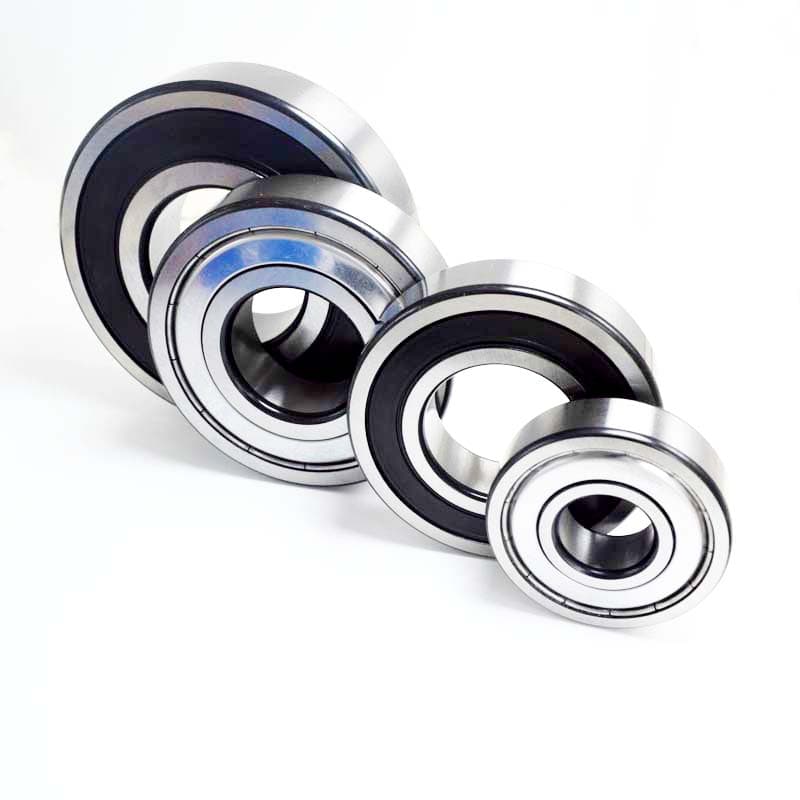
The choice isn’t about "good vs. bad," but "best fit for the conditions." To make the right decision for your production line, you must understand the trade-offs between sealed and shielded bearings, the real drawbacks of seals, the flawed premise of "ball bearing vs. sealed bearing," and the specific situations that demand a sealed design. Let’s examine each factor.
What is better, sealed or shielded bearings1?
This is the most common question we get, and it has no universal answer. "Better" depends entirely on your operating environment and performance priorities. Each design makes a different compromise between protection, speed, and maintenance2.
Sealed bearings are better for maximum contamination protection3 in dirty or wet environments and are often "lubricated-for-life." Shielded bearings are better for higher-speed applications and environments with only light dust, as they have lower friction and often allow for relubrication. The "better" choice is defined by your need for protection versus speed.
The Protection-Speed Trade-Off: A Detailed Comparison
The core difference lies in how the bearing interfaces with the world. This interface dictates its capabilities and limits.
Shielded Bearings (Z, ZZ): The "Keep Large Stuff Out" Design
- Structure: A thin metal plate (shield) is stamped and pressed into a groove on the outer ring. There is a small, non-contact running gap between the shield and the inner ring.
- Advantages (Why it’s "better" in some cases):
- Lower Friction: The non-contact design creates almost no additional drag. This allows for higher rotational speeds compared to a sealed bearing of the same size.
- Less Heat Generation: Lower friction means less heat buildup.
- Often Relubricatable: Many shielded bearings1 are designed with relubrication4 grooves and holes, allowing fresh grease to be added to extend life.
- Disadvantages: Offers only basic protection. It can keep out large debris like wood chips or bugs, but it is ineffective against fine dust, moisture, or liquid contaminants. Grease can also slowly work its way out.
Sealed Bearings (RS, 2RS, RZ, 2RZ): The "Lock Contaminants Out" Design
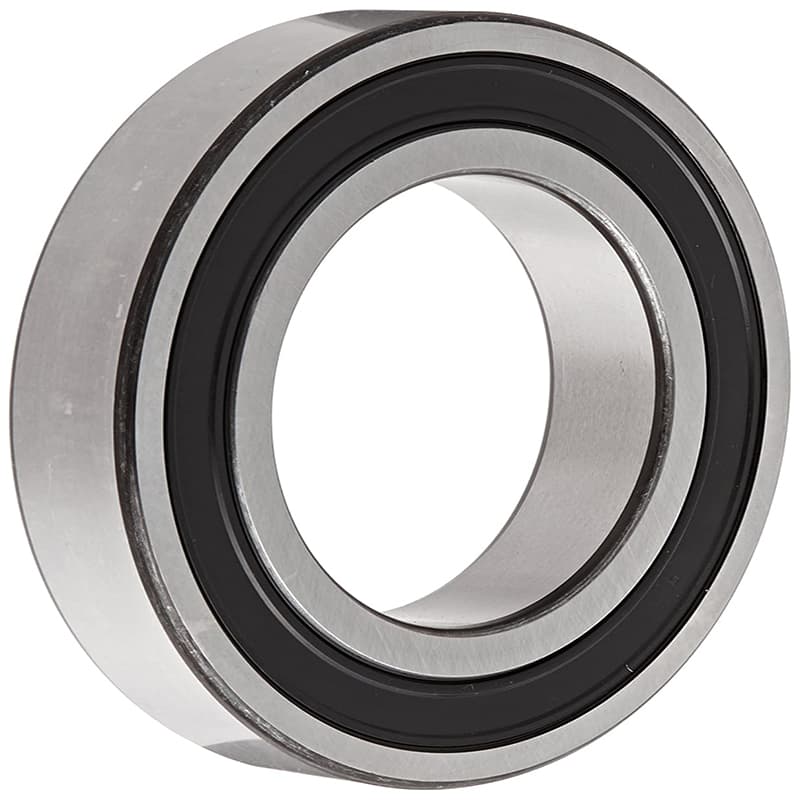
- Structure: A rubber or polymer seal is bonded to a metal carrier and pressed into the outer ring groove. The seal lip makes light contact with a land on the inner ring or shield.
- Advantages (Why it’s "better" in other cases):
- Superior Protection: Effectively blocks fine dust, dirt, moisture, and other contaminants. Also retains grease much better.
- "Lubricated-for-Life": Most sealed deep groove ball bearings are factory-filled with grease and are not intended for relubrication4. This simplifies maintenance2.
- Disadvantages: The contact creates friction and drag, which limits the maximum speed (lower speed rating than shielded/open). It also generates more heat. The seal can wear over time.
| Feature | Shielded Bearing (ZZ) | Sealed Bearing (2RS) | Which is "Better" For… |
|---|---|---|---|
| Contamination Protection | Good for large particles. | Excellent for fine dust & moisture. | Sealed in dirty, wet, or washdown environments. |
| Friction & Speed | Very Low friction, High speed capability. | Higher friction, Lower speed limit. | Shielded for high-speed motors, fans, spindles. |
| Heat Generation | Low. | Higher due to seal drag. | Shielded where heat management is critical. |
| Relubrication | Usually possible (if designed for it). | Usually NOT possible ("sealed for life"). | Shielded for applications where long-term grease replenishment is planned. |
| Maintenance | May require periodic relubrication4. | Install and forget (until failure). | Sealed for hard-to-access or low-maintenance2 designs. |
For Rajesh’s customers, this choice is practical. A textile mill full of lint and humidity? Sealed bearings (2RS) are better. An electric motor in a clean, ventilated electrical room? Shielded bearings (ZZ) are better, offering higher efficiency and speed. The answer is always in the application’s environment.
What are the disadvantages of sealed bearings?
Sealed bearings solve a major problem (contamination), but they introduce specific compromises. Choosing them without understanding these disadvantages can lead to unexpected failures, especially in applications they are not suited for.
The main disadvantages of sealed bearings are lower maximum speed due to seal drag friction, higher operating temperature1, the general inability to be relubricated ("sealed for life"), potential for seal degradation2 from heat or chemicals, and typically higher cost compared to open or shielded versions.
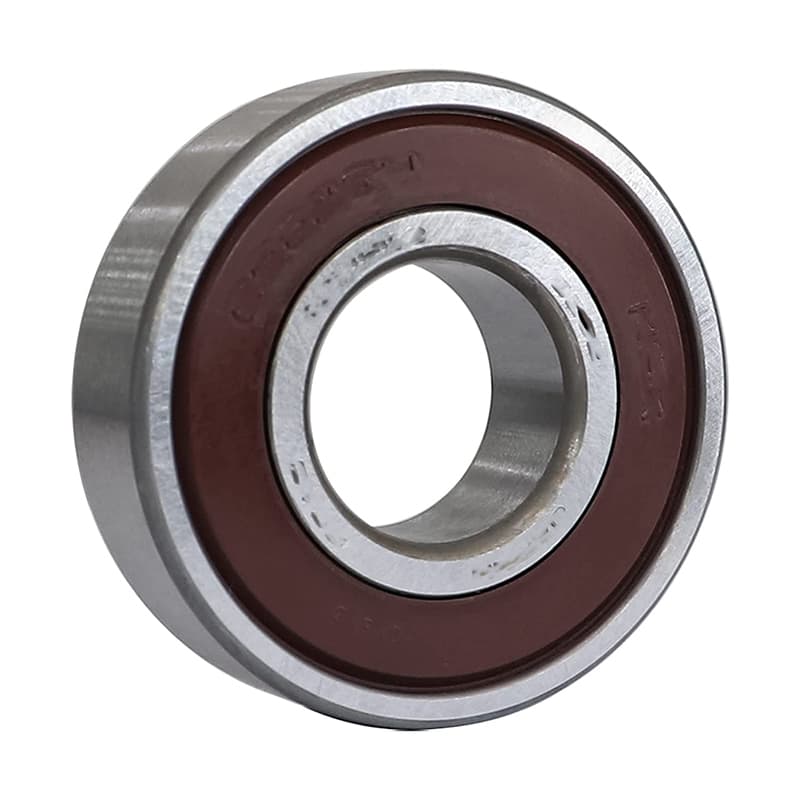
The Hidden Costs of the Seal
The seal is not a free addition. It impacts performance, thermal management, and lifecycle costs in measurable ways.
1. Speed Limitation (The Friction Penalty)
The seal lip rubs against the inner ring. This rubbing creates constant friction.
- Impact: This friction consumes energy (slightly higher power draw) and, more importantly, generates heat. The heat must be dissipated. If the bearing’s speed is too high, the frictional heat can build up faster than it can be carried away, causing the bearing to overheat. Therefore, manufacturers publish a lower maximum speed rating3 (n max) for sealed bearings than for identical open or shielded bearings.
- Consequence: You cannot directly substitute a sealed bearing into a high-speed application designed for an open bearing. It may overheat and fail.
2. The "Sealed-for-Life" Limitation
Most common deep groove ball bearings with contact seals (RS) are not designed for relubrication.
- The Problem: The grease inside has a finite service life. It degrades from mechanical shear, oxidation, and heat. Once it’s degraded, you cannot add new grease. The bearing’s life is now directly tied to the grease life4.
- Consequence: In a continuous-running application, the bearing may fail due to grease breakdown long before the rolling elements are mechanically worn out. For critical, 24/7 equipment, this makes a "lubricated-for-life" sealed bearing a potential reliability risk unless its calculated grease life4 exceeds the required service interval.
3. Seal Material Limitations
The seal is often made of Nitrile Rubber (NBR)5, which has temperature and chemical limits.
- Temperature: Standard NBR seals are typically rated for -40°C to +120°C. Above 120°C, the rubber hardens, cracks, and loses its sealing ability.
- Chemicals: NBR is not resistant to many solvents, ozone, or certain oils. Exposure can cause the seal to swell, shrink, or degrade.
- Consequence: In high-temperature environments (near ovens, dryers) or where chemical splashes occur, the seal itself becomes the weak link.
4. Increased Cost and Complexity
Sealed bearings cost more to manufacture than open or shielded ones. The seal is an additional component that requires precision assembly.
| Disadvantage | Direct Consequence | Mitigation Strategy |
|---|---|---|
| Lower Speed Limit | Risk of overheating at high RPM. | Always check the sealed bearing’s speed rating (n max) against your application speed. |
| Non-Relubricatable | Life limited by initial grease charge. | For critical apps, calculate grease life4 or consider alternative solutions (e.g., externally sealed housings with relubricatable open bearings). |
| Seal Degradation | Seal failure leads to rapid bearing contamination. | Select seal material for the environment (e.g., FKM/Viton for high temp/chemicals). |
| Higher Operating Temperature | Can affect adjacent components, degrade grease faster. | Ensure adequate heat dissipation; don’t use in already hot locations without checking ratings. |
Understanding these drawbacks prevents misuse. For example, suggesting a standard 2RS bearing for a high-speed grinder spindle would be a mistake. The seal drag would overheat it. The "disadvantage" isn’t a flaw in the bearing; it’s a mismatch between the bearing’s design and the application’s demands.
Which is better, ball bearing or sealed bearing?
This question reveals a common misunderstanding. It sets up a false comparison. A "sealed bearing" is a ball bearing (or roller bearing) with a specific feature. The real comparison is between an open ball bearing and a sealed ball bearing.
"Ball bearing" and "sealed bearing" are not opposing categories. A sealed bearing is a type of ball bearing with integrated contact seals. The proper comparison is between an open ball bearing and a sealed ball bearing. The sealed version is better for contamination protection1; the open version is better for speed, cooling, and relubrication flexibility.
Clarifying the Terminology and the Real Choice
Let’s clear up the confusion. All the bearings we are discussing here are deep groove ball bearings. The "open," "shielded," and "sealed" descriptors refer to their closure type2—how they are sealed from the environment.
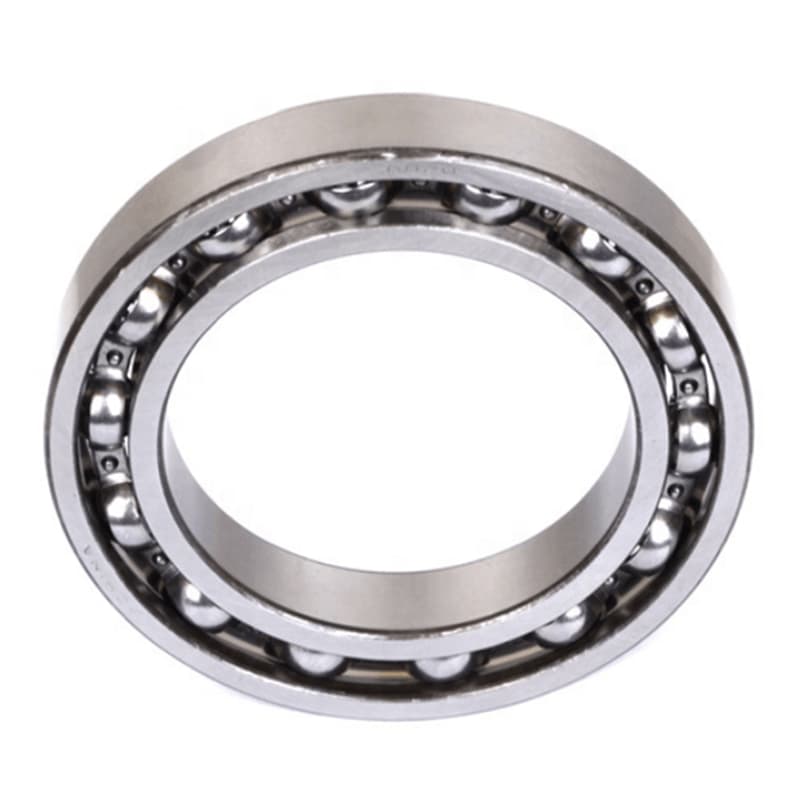
Open Deep Groove Ball Bearings
- Description: The bearing has no integral shields or seals. The rolling elements and raceways are fully visible.
- Primary Use: Used in applications where the bearing will be housed in a custom, externally sealed environment (like a gearbox or a pump), or where it will be frequently relubricated and contamination is controlled.
- Advantages: Highest possible speed rating, best heat dissipation, easiest to inspect, clean, and relubricate.
- Disadvantages: Offers zero inherent protection. Requires an effective external sealing system designed by the machine builder.
Sealed Deep Groove Ball Bearings (e.g., 6205-2RS)
- Description: This is a ball bearing that comes from the factory with contact seals pre-installed on both sides.
- Primary Use: Used as a standalone, self-contained component in environments where external sealing is difficult or where maintenance access is limited.
- Advantages: Built-in, reliable contamination protection1. Simplified design for OEMs (no need to design seals). "Lubricated-for-life" convenience.
- Disadvantages: Lower speed, higher friction, non-relubricatable (usually), as previously discussed.
The Correct Decision Process:
The question should never be "Should I use a ball bearing or a sealed bearing?"
The correct questions are:
- "Do I need a deep groove ball bearing for this application?" (Based on load, speed, and rigidity needs).
- "Given my environment, what closure type2 for that ball bearing is best: Open, Shielded, or Sealed?"
| Bearing Specification | "Open Ball Bearing" | "Sealed Ball Bearing" (e.g., 2RS) |
|---|---|---|
| Core Type | Deep Groove Ball Bearing | Deep Groove Ball Bearing |
| Closure Type | None (Open) | Integrated Contact Seals (Sealed) |
| Better for Speed? | Yes. | No. |
| Better for Dirty Environments? | No. | Yes. |
| Requires External Sealing? | Yes, mandatory. | No, sealing is integrated. |
| Typical Application | Inside a sealed gearbox or transmission. | Electric motor, conveyor roller, agricultural equipment. |
For an OEM designing a new machine, this distinction is critical. If they are building an enclosed gearbox, they will specify open ball bearing3s and design their own labyrinth seals or gaskets for the gearbox casing. If they are building a fan motor that will be exposed to air (and dust), they will specify sealed ball bearing4s (2RS) for the motor itself. One is not universally "better"; they are tools for different parts of the machine.
When to use sealed bearings1?
Sealed bearings are a specific solution for specific problems. Using them as a default choice "just to be safe" can introduce unnecessary cost and performance penalties. Knowing the exact scenarios where they are the correct, and often the only, choice ensures optimal reliability.
Use sealed bearings1 when the operating environment is dirty, dusty, wet, or corrosive; when the bearing is difficult or expensive to access for maintenance; in "lubricated-for-life2" designs where relubrication is not planned; and in applications where simplifying assembly by eliminating external seals is a priority for the OEM.
The Decision Matrix for Sealed Bearing Application
Let’s translate the general advice into concrete, common situations encountered in factories and machinery.
Scenario 1: Hostile Environmental Conditions
This is the primary and most justifiable reason.
- Dusty & Abrasive Environments: Grain handling, cement plants, woodshops, textile mills. Fine particles will quickly destroy an open or shielded bearing. Sealed bearings (2RS) are essential.
- Wet & Washdown Conditions: Food & beverage processing, pharmaceutical plants, marine applications, agricultural equipment. Seals prevent water ingress that causes rust and washes out grease.
- Corrosive Atmospheres: Chemical plants, plating shops, areas with acidic fumes. Special seal materials (FKM) can be specified to resist chemical attack.
Scenario 2: Maintenance Inaccessibility or High Relubrication Cost
- Sealed "Lubricated-for-Life" Design: When the cost of scheduled maintenance (labor, downtime) exceeds the cost of simply replacing the bearing at the end of its grease life. Common in consumer appliances, some automotive components, and non-critical industrial fans.
- Hard-to-Reach Locations: Bearings installed inside complex assemblies, at the top of tall structures, or in locations requiring significant disassembly to access. A sealed bearing’s finite but predictable life is preferable to the high cost of frequent maintenance access.
Scenario 3: OEM Design Simplification and Standardization
For equipment manufacturers, using pre-sealed bearings1 simplifies their design and assembly process.
- Eliminates Custom Sealing: They don’t need to design, source, and assemble separate seals, gaskets, and seal retainers. This reduces part count and assembly time.
- Standardization: They can use the same sealed bearing across multiple product lines in different environments, simplifying their supply chain, even if it’s "over-specified" for some cleaner applications.
Scenario 4: Applications with Light to Moderate Loads and Speeds
Remember the disadvantages. Sealed bearings work best where their speed and temperature limitations are not challenged.
- Good Examples: Conveyor rollers, small to medium electric motors (especially TEFC – Totally Enclosed Fan Cooled), idler pulleys, office machinery, household appliances.
- Poor Examples: High-speed machine tool spindles, turbochargers, precision grinding spindles. Here, the friction and heat from seals are unacceptable.
| Application Characteristic | Favor Sealed Bearing? | Why? | Example |
|---|---|---|---|
| Environment: Dirty/Dusty | YES | Essential to keep abrasives out. | Farm equipment, mining conveyor rollers. |
| Environment: Wet/Humid | YES | Prevents rust and grease washout. | Food processing mixer, pump in a damp basement. |
| Maintenance: Inaccessible | YES | "Lubricated-for-life" is a benefit. | Ceiling fan motor, embedded in a sealed compressor. |
| Speed: Very High (>10,000 rpm) | NO | Seal drag causes overheating. | CNC spindle, dental drill. |
| Temperature: Very High (>120°C) | NO (Standard Seal) | NBR seals degrade. Requires high-temp seals (FKM). | Bearing near an oven or dryer. |
| Requires Frequent Relubrication | NO | Most sealed bearings1 cannot be relubricated. | Heavy-duty industrial gearbox (uses open bearings). |
For a plant maintenance planner, this matrix helps standardize parts. They might decide: "All motors under 10hp in our dusty plant get 2RS sealed bearings1. All high-speed blowers get ZZ shielded bearings. All gearbox rebuilds get open bearings." This policy-driven approach optimizes both performance and life for each specific duty.
Conclusion
The optimal choice between open, shielded, and sealed deep groove ball bearings is a strategic decision based on environment, speed, and maintenance strategy. Match the bearing’s protection level to the contamination threat, and always respect its speed and thermal limits for reliable, long-lasting performance.
-
Explore the advantages of sealed bearings to understand their role in enhancing machinery performance and reliability. ↩ ↩ ↩ ↩ ↩ ↩ ↩ ↩ ↩ ↩
-
Learn about lubricated-for-life designs and how they can reduce maintenance costs and improve efficiency. ↩ ↩ ↩ ↩ ↩ ↩ ↩
-
Explore the benefits of open ball bearings to see if they fit your specific application needs. ↩ ↩ ↩
-
Learn about sealed ball bearings to understand their advantages in protecting against contamination. ↩ ↩ ↩ ↩ ↩ ↩ ↩
-
Discover the properties of NBR and its suitability for various temperature and chemical conditions. ↩