
A vibrating screen shakes non-stop, 24 hours a day. The wrong bearing choice means catastrophic failure in weeks, not years. Vibration, heat, and misalignment attack every component. You need a bearing system, not just a part.
For vibrating screens, select spherical roller bearings with C4 clearance to handle thermal expansion, a robust pressed steel or brass cage to resist fatigue, and a high-adhesion, extreme pressure (EP) grease with a wide temperature range. This combination is critical for absorbing shock and managing misalignment in this severe environment.
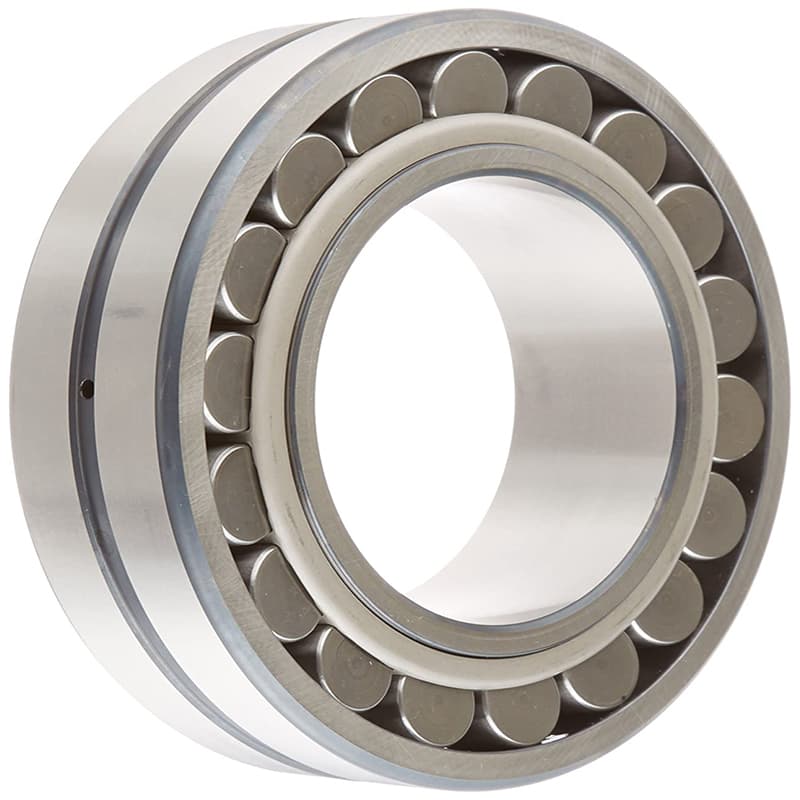
This selection is precise. To get it right, you must understand clearance codes, acknowledge the bearing’s own limitations, know how to verify specifications, and be certain you are using the correct bearing type for the job. Let us explore each critical factor.
What is C1, C2, and C31 bearing clearance2?
Bearing clearance is the space inside the bearing before it is mounted. For vibrating screens3, this single specification is often the difference between success and failure. Picking the standard "C3" clearance for a vibrating screen is one of the most common and costly mistakes we see.
C1, C2, and C31 are ISO standard codes4 for radial internal clearance (RIC). C1 is clearance smaller than normal. C2 is clearance smaller than normal but larger than C1. C3 is clearance larger than normal. C4 is even larger than C3, which is typically required for vibrating screen applications.
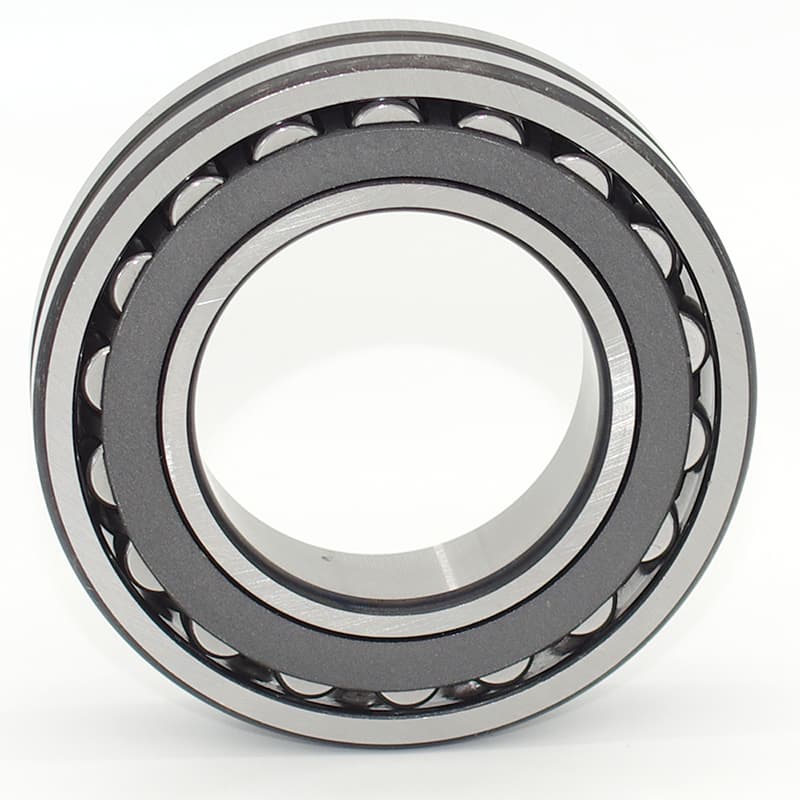
Understanding the Clearance Spectrum: Why C4 is the Screen Bearing Standard
The clearance group is not a quality grade. It is a functional selection based on how the bearing will operate. Let’s look at what each code means and why the extreme environment of a vibrating screen demands the largest standard clearance.
The ISO 5753 Standard Ranges:
The clearance values are defined in microns (µm). For a given bearing size, each code corresponds to a specific minimum and maximum clearance range.
- C1: The tightest standard group. Used for applications requiring very precise shaft positioning where minimal internal play is needed, and where operating temperatures are very controlled. Almost never used in heavy industry.
- C2: Tighter than normal. Used in precision spindles or where fits and temperatures are very predictable.
- CN (or just no suffix): This is "Normal" clearance. It is the default for most general industrial applications under standard temperature conditions. Think of a pump or motor in a factory.
- C3: Larger than normal. This is the most common general industrial selection. It accounts for the normal thermal expansion5 of the inner ring running hotter than the outer ring, and for typical interference fits. It is correct for most gearboxes and conveyors.
- C4: Larger than C3. This is the essential clearance for vibrating screens3, kiln carriages, and other high-heat applications.
Why Vibrating Screens Demand C4 (or even C5) Clearance:
A vibrating screen generates intense, cyclic internal friction. This friction creates significant heat within the bearing itself. The inner ring, rollers, and cage get very hot.
- Thermal Expansion: This internal heat causes the inner ring and rollers to expand more than the outer ring, which is often cooled by ambient air. This naturally reduces the internal clearance.
- The Risk: If you start with a C3 clearance, this thermal reduction can eat up all the clearance. The bearing can become preloaded (zero or negative clearance). A preloaded bearing6 under heavy load and vibration will overheat rapidly and fail.
- The Solution: Start with a C4 clearance7. The extra internal space provides a safety margin. It ensures that even after thermal expansion5, the bearing retains a small, positive operating clearance. This prevents thermal runaway and seizure.
| Clearance Code | Relative Size | Typical Application | VIBRATING SCREEN SUITABILITY |
|---|---|---|---|
| C1 / C2 | Smaller than Normal | High-precision, low-temperature apps | Never. Will cause preload and rapid failure. |
| CN (Normal) | Standard | General industrial, low to moderate heat | Not suitable. Risk of thermal preload. |
| C3 | Larger than Normal | Most industrial gearboxes, pumps, motors | Marginal. May work on smaller, low-intensity screens but is not recommended. |
| C4 | Larger than C3 | Vibrating screens, dryers, high-heat apps | Standard and correct choice for most screens. |
| C5 | Larger than C4 | Extremely high-temperature or special fit apps | Used for the largest, hottest, or most severe screens. |
For Rajesh’s customers in mining and aggregates, this is a non-negotiable specification. When a screen maintenance manager orders a replacement bearing, Rajesh’s team must confirm: "This is for a vibrating screen, correct? You need the C4 clearance7 version." Supplying a standard C3 bearing will lead to a callback, a damaged machine, and a loss of trust. The right clearance is the first and most important line of defense.
What are the disadvantages of spherical roller bearings1?
Spherical roller bearings are excellent for vibrating screens2, but they are not perfect. Assuming they can handle anything is a mistake. Knowing their weaknesses helps you mitigate them through proper selection, installation, and maintenance—especially in a punishing environment.
The key disadvantages of spherical roller bearings include a lower speed capability compared to ball bearings, higher friction which generates more heat, sensitivity to improper lubrication, and complexity which can lead to higher cost. In vibrating screens, managing this heat and friction is the primary challenge.
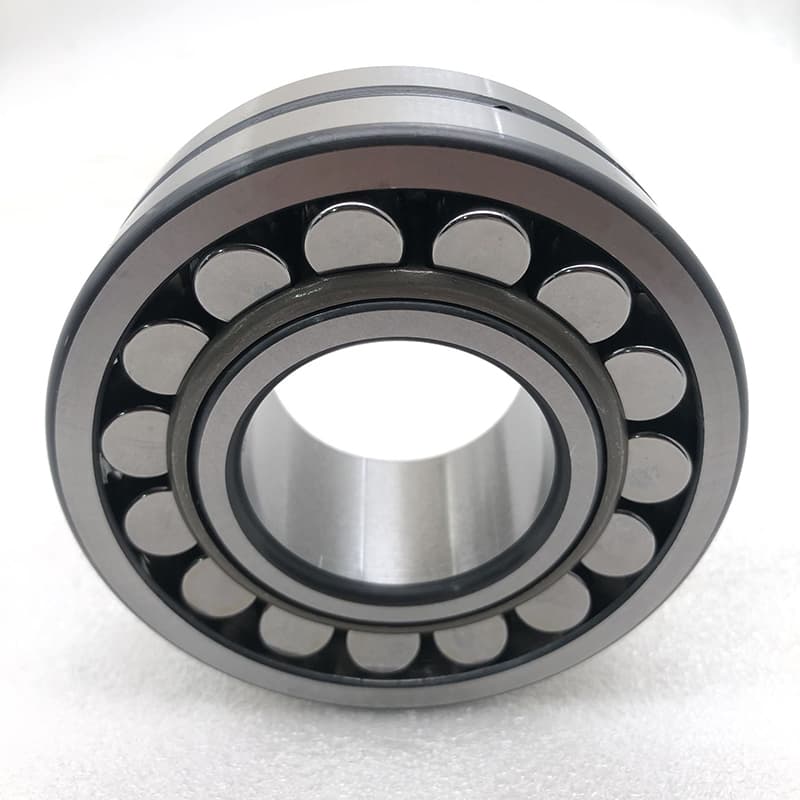
A Realistic View of Limitations in a Harsh Environment
We manufacture these bearings because their strengths outweigh their weaknesses for heavy-duty applications. But to use them successfully on a vibrating screen, you must actively manage their shortcomings.
1. Speed Limitation and Friction
- The Issue: Spherical rollers have line contact with the raceways. This creates more rolling and sliding friction than the point contact of a ball bearing. More friction means more heat.
- Impact on Screens: While screen bearings don’t spin at extremely high RPM, the intense vibration causes micro-movements and sliding within the bearing. This exacerbates friction and heat generation3. This is why C4 clearance and the right grease are non-negotiable—they are countermeasures to this inherent disadvantage.
2. Sensitivity to Lubrication
This is the number one cause of premature failure in screen applications.
- The Issue: The complex internal geometry with multiple rolling surfaces requires consistent, high-quality lubrication film. If the grease channel degrades, bleeds oil too quickly, or becomes contaminated, metal-to-metal contact begins immediately.
- Impact on Screens: The vibrating action constantly works the grease, accelerating oil separation (bleeding). Dust and moisture contamination are common. Using a standard industrial grease here is a recipe for failure. You need a specialized, adhesive, high-temperature grease.
3. Complexity and Cost
- The Issue: Spherical roller bearings are more complex to manufacture than deep groove ball bearings. They have more parts (two rows of rollers, a center guide flange, often a complex cage). This leads to a higher unit cost.
- Impact: There is no way around this. The cost is justified by the bearing’s ability to handle misalignment and heavy loads. However, it makes selecting the correct, high-quality bearing even more important—a cheap, poorly made spherical roller bearing will fail quickly, wasting the entire investment.
4. Precision and Runout
- The Issue: While they are precise, they are generally not as precise as a cylindrical roller bearing or an angular contact ball bearing. Their running accuracy (radial runout) is higher.
- Impact on Screens: This is not a major concern for screens, as the application is not high-precision. The self-alignment capability far outweighs this disadvantage.
| Disadvantage | Root Cause | Exacerbated by Vibration? | Mitigation Strategy for Screens |
|---|---|---|---|
| High Friction & Heat | Line contact, sliding at guide flanges | Yes, significantly. | Use C4/C5 clearance, select high-temperature grease, ensure proper cooling if possible. |
| Lubrication Sensitivity | Complex internal geometry, many surfaces | Yes. Vibration works the grease hard. | Use a shear-stable, high-adhesion EP grease with a wide temp range. Establish a strict regreasing schedule. |
| Lower Speed Limit | Friction and heat generation3 | Not directly, but micro-sliding occurs. | Not a primary concern for screen RPMs, but heat management is. |
| Higher Cost | Complex design, more components | No. | Justified by application necessity. Do not compromise with low-quality alternatives. |
Understanding these disadvantages is not to avoid spherical roller bearings1, but to use them correctly. For a screen application, you are choosing them for their unmatched strengths (self-alignment, high load capacity). You then deliberately select features (C4 clearance, robust cage, special grease) to protect them from their own vulnerabilities in that specific harsh environment.
What is used to measure clearance in spherical roller bearings?
You have specified a C4 clearance1 bearing for your screen. How do you know the bearing you received actually has C4 clearance1 inside? You cannot tell by looking. Relying on the box label is risky. Verification through measurement is a critical step for quality assurance.
Radial internal clearance (RIC)2 in spherical roller bearings is measured using a dial indicator3 setup. The bearing outer ring is fixed, a dial gauge contacts the inner ring, and a known force is applied radially to measure the total movement, which is the clearance. Automated electronic gauges are used in factories for high-volume inspection.
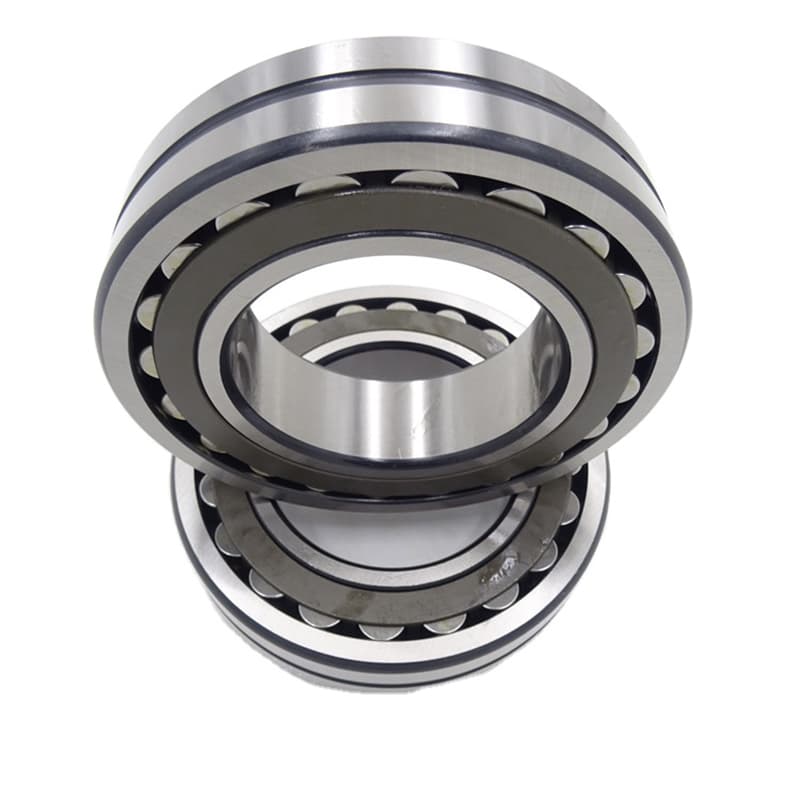
From Factory Instruments to Field Checks: Verifying Clearance
As a manufacturer, we measure clearance on 100% of our spherical roller bearings for critical applications like screens. The process must be precise and repeatable. Here’s how it works at different levels.
Method 1: Factory Automated Measurement (The Gold Standard)
In our factory, we use dedicated clearance measuring instruments4.
- Setup: The bearing is placed in a precision fixture that locates the outer ring.
- Measurement: Pneumatic or mechanical arms apply a standardized, repeatable radial force to the inner ring in opposite directions.
- Reading: High-resolution sensors (LVDTs) measure the displacement of the inner ring. The instrument’s computer calculates the total radial internal clearance.
- Recording: This value is logged against the bearing’s serial number or batch number. It is this data that forms the Radial Internal Clearance Report we can provide to buyers like Rajesh. This report proves the bearing falls within the C4 (or specified) range per ISO 57535.
Method 2: Workshop Dial Indicator Method (The Reliable Verification)
This is the method a larger maintenance workshop or quality-focused distributor can use.
- Fixture: You need a stable base and a way to hold the outer ring securely without distorting it. A simple V-block can work for smaller bearings.
- Gauge: Mount a dial indicator3 (with 0.01mm or 0.0005" graduation) so its plunger touches the inner ring’s bore or face.
- Procedure:
- Seat the bearing by rotating the inner ring and set the dial to zero.
- Apply a firm, consistent radial force to the inner ring away from the gauge. Note the reading (e.g., -0.05mm).
- Apply force in the exact opposite direction (toward the gauge). Note the reading (e.g., +0.10mm).
- The clearance is the total travel: |(-0.05)| + |(+0.10)| = 0.15mm (150 µm).
- Compare: Check this measured value against the ISO 57535 table for that bearing’s size and C4 clearance1 group. The value should be between the listed min and max for C4.
Method 3: The Functional "Feel" Check (For Basic Screening)
Without tools, you can perform a basic check. Hold the outer ring firmly and try to "rock" the inner ring radially. Compare this feel to a known-good bearing (a "master sample") that has verified C4 clearance1. While not quantitative, it can flag a bearing that has obviously too little (feels stuck) or grossly too much clearance (excessive wobble).
| Measurement Method | Accuracy | Equipment | Best For |
|---|---|---|---|
| Automated Factory Gauge6 | Very High (±2-3 µm) | Specialized instrument | Manufacturing QC, generating certified reports. |
| Dial Indicator on Fixture | High (±5-10 µm) | Dial indicator, fixture, force gauge | Incoming inspection for distributors, final check before installation. |
| Functional "Rock" Test | Low (Qualitative only) | Hands and a reference sample | Quick field check to catch major deviations. |
For Rajesh’s business, investing in a basic dial indicator3 setup for his warehouse is a mark of professionalism. When a pallet of "C4" screen bearings arrives from any supplier, his team can sample 3-5 pieces and measure the actual clearance. If the measurements show C3 or random values, he has factual grounds to question the batch before it ever goes to a customer. This protects his clients and his brand. In the world of vibrating screens, guessing about clearance is not an option.
When to use a Spherical Roller Bearing?
The spherical roller bearing1 is a specialist. Using it where a simpler bearing would work is a waste of money. Using a simpler bearing where a spherical roller is needed is a guarantee of failure. The decision to use one should be clear and based on specific application challenges.
Use a spherical roller bearing1 when your application has any of these three conditions: 1) Significant unavoidable shaft misalignment2, 2) Very heavy radial loads3 combined with moderate axial loads, or 3) A harsh environment4 with shock and vibration5. Vibrating screens are a classic example that combines all three.
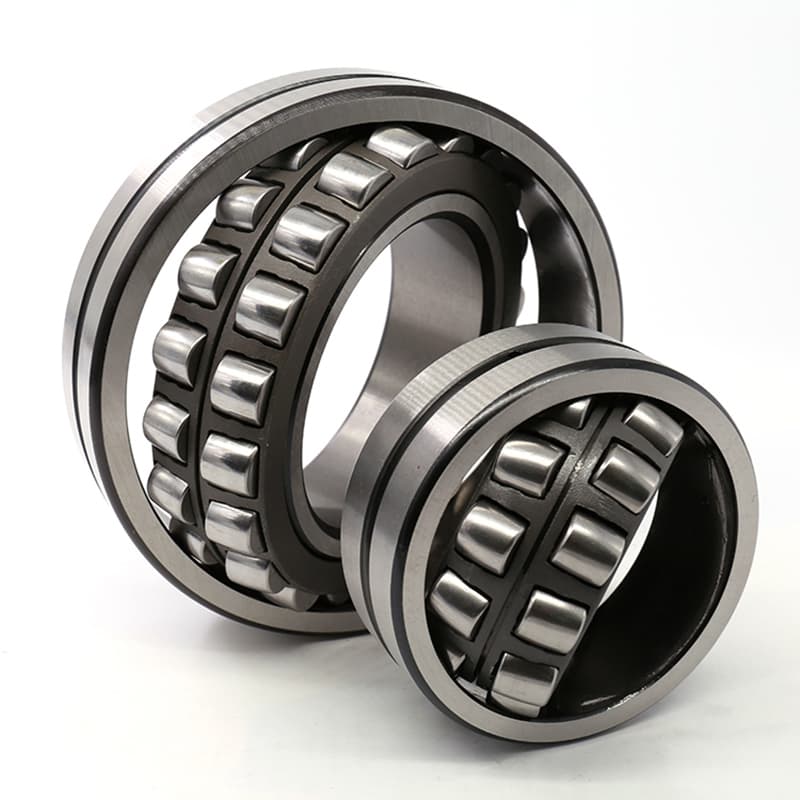
The Decision Matrix: Is a Spherical Roller Bearing Your Solution?
Let’s move beyond the textbook definition and look at real-world scenarios. We can compare spherical roller bearing1s to other common types to see where they are the unequivocal choice.
Scenario 1: The Problem of Misalignment
This is their superpower. They can typically accommodate 1.5 to 3 degrees of misalignment between the shaft and housing.
- Example: A long conveyor shaft will deflect under load. A gearbox output shaft might not be perfectly aligned with the driven machine. In these cases, using a cylindrical or tapered roller bearing (which are not self-aligning) would cause edge loading and premature failure. The spherical roller bearing1 pivots internally to accommodate this, spreading the load evenly.
- Vibrating Screen Link: The violent shaking of a screen ensures that perfect, static alignment is impossible. The spherical roller bearing1 is the only type that can survive this constant dynamic misalignment.
Scenario 2: Heavy Combined Loads with Need for Simplicity
While tapered rollers also handle combined loads6, spherical rollers often do it in a single bearing row position (though they are usually used in pairs for shaft stability). They offer very high radial load capacity and good thrust capacity.
- Example: The roll neck of a steel rolling mill. It experiences huge radial forces from the material and some axial thrust. A spherical roller bearing1 is a standard choice here.
- Vibrating Screen Link: The bearing supports the weight of the screen deck and material (heavy radial load) and must handle some inertial thrust forces from the vibratory motion.
Scenario 3: Harsh, Shock-Prone Environments
Their robust construction and ability to handle misalignment make them suitable for dirty, shock-loaded applications.
- Example: Crushers, mining shovels, and of course, vibrating screens7. The bearing must tolerate impact loads from material and the constant vibration itself.
When NOT to Use a Spherical Roller Bearing:
- Very High-Speed Applications: Use angular contact ball bearings or cylindrical roller bearings.
- Pure, High-Speed Thrust Loads: Use thrust ball or cylindrical roller bearings.
- Light Load, Precision Positioning: Use deep groove ball bearings or cylindrical roller bearings.
- Cost-Sensitive, Simple Radial Loads: A deep groove ball bearing is often sufficient and cheaper.
| Application Characteristic | Recommended Bearing Type | Why Spherical Roller is (or isn’t) the Answer |
|---|---|---|
| Shaft Misalignment (>0.5°) | Spherical Roller Bearing | Only type that self-aligns to prevent edge loading. |
| Heavy Radial + Moderate Axial Load | Spherical Roller or Tapered Roller | Both are good. Spherical offers misalignment tolerance; tapered may offer higher pure thrust capacity. |
| High Vibration & Shock | Spherical Roller Bearing | Robust design and internal clearance handle shock pulses. |
| Very High Rotational Speed | Angular Contact Ball Bearing | Spherical rollers generate too much friction and heat at high RPM. |
| Precise, Rigid Shaft Positioning | Tapered Roller Pair (preloaded) | Spherical roller has higher inherent clearance/runout, giving less rigidity. |
For Rajesh and his team, this matrix is a sales and technical tool. When a customer from a quarry describes a bearing failure8 on a vibrating screen, they know immediately to recommend a spherical roller bearing1. They can explain why: because of the misalignment and shock. They can then guide the customer to the correct specifications within that family: the 222 or 223 series, with C4 clearance, a pressed steel cage, and the appropriate grease. This transforms their role from order-takers to trusted advisors.
Conclusion
For vibrating screens, spherical roller bearing success hinges on three tailored choices: C4/C5 clearance for heat, a rugged cage for shock, and a specialty grease for adhesion. This targeted selection directly counteracts the harsh operating environment to ensure maximum bearing life.
-
Explore the benefits of spherical roller bearings to understand their unique capabilities in various applications. ↩ ↩ ↩ ↩ ↩ ↩ ↩ ↩ ↩ ↩ ↩ ↩ ↩ ↩ ↩
-
Learn how shaft misalignment impacts bearing choices and performance, ensuring optimal machinery operation. ↩ ↩ ↩ ↩
-
Discover the best bearing options for handling heavy radial loads effectively in industrial applications. ↩ ↩ ↩ ↩ ↩ ↩ ↩ ↩
-
Find out which bearings can withstand harsh conditions, ensuring durability and reliability in tough applications. ↩ ↩ ↩
-
Learn how different bearings manage shock and vibration, crucial for selecting the right type for your application. ↩ ↩ ↩ ↩ ↩
-
Explore the concept of combined loads in bearings to make informed decisions for your machinery needs. ↩ ↩ ↩
-
Understand the role of spherical roller bearings in vibrating screens and their importance in maintaining performance. ↩ ↩ ↩
-
Investigate the common causes of bearing failure to prevent issues and enhance machinery longevity. ↩
