
Your machinery pushes limits. Standard bearings buckle under the strain, causing unexpected downtime and expensive repairs when you can least afford it.
Our tapered roller bearings are engineered specifically for high load capacity. They excel at handling heavy combined radial and axial loads, offering superior strength and durability for demanding applications in industries like mining, construction, and heavy machinery.
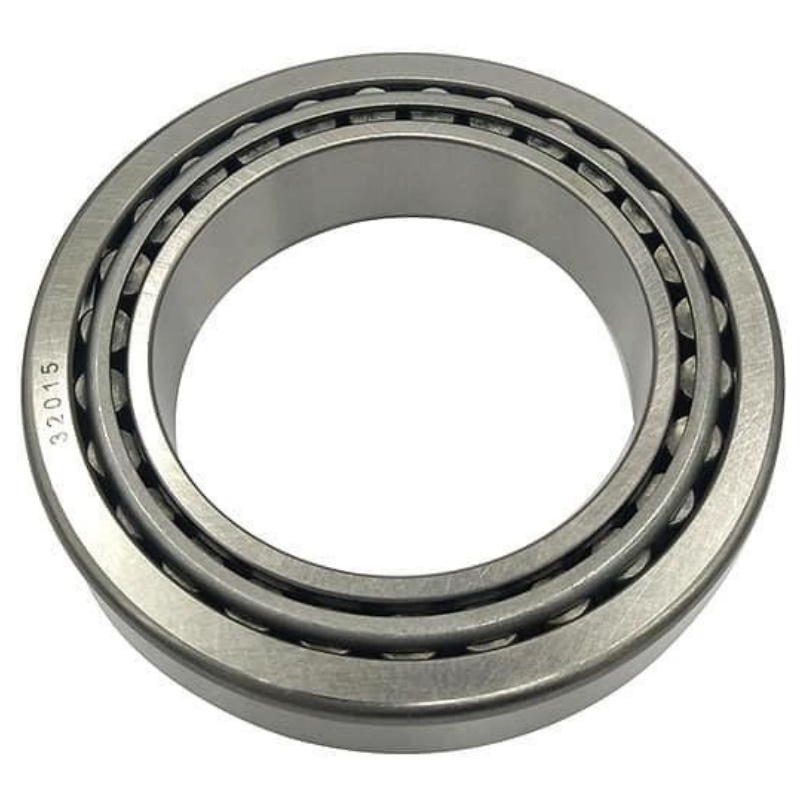
Load capacity is more than a number in a catalog. It’s about real-world performance under stress. Let’s explore how our bearings are built to carry the weight of your most critical operations.
What loads can a tapered roller bearing handle?
You have a shaft with complex forces. You need a bearing that won’t just take the radial weight but also the push and pull from gears, belts, or operational thrust.
A tapered roller bearing is uniquely designed to handle significant combined loads1. It can support high radial loads and high axial (thrust) loads in one direction simultaneously. The exact capacity is defined by its dynamic load rating (C), which varies by size and series, but this design makes it a powerhouse for applications where both types of force are present.
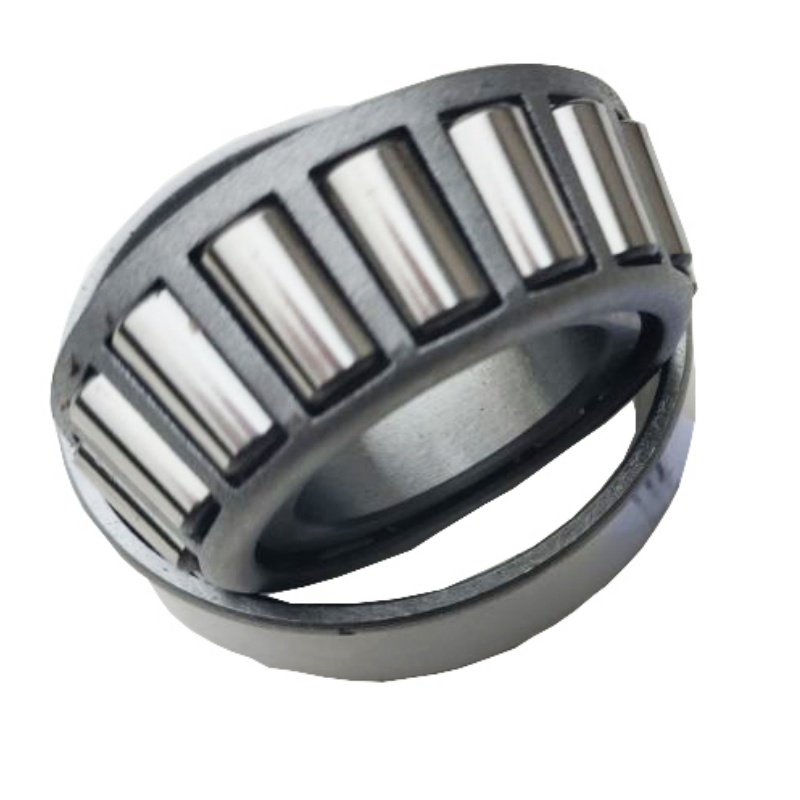
The magic is in the geometry. The tapered design converts radial load into an axial force within the bearing. This lets a single bearing type manage forces that would require two separate bearings (one radial, one thrust) in other designs.
The Mechanics of Combined Load Management
Understanding how it handles these loads explains why it’s so effective and how to use it correctly.
The Geometry of Strength:
The rollers and raceways are angled. When a radial load (Fr) is applied, it tries to push the cone assembly out of the cup. This creates an internal separating force that acts axially. Because of this, the bearing must be mounted in opposition to another tapered bearing or against a shoulder to absorb this thrust.
Load Capacity in Practice:
The bearing’s capacity is not a single mystery number. It is published in two key ratings:
- Dynamic Radial Load Rating (C)2: The constant radial load the bearing can carry for 1 million revolutions.
- Dynamic Axial Load Rating (Ca)3: The constant axial load it can carry for 1 million revolutions.
For a tapered bearing, these ratings are interconnected. A common bearing like the FYTZ 303104 has a C rating of 112 kN and a Ca rating of 89 kN. This means it can theoretically handle a pure radial load of 112 kN, or a pure axial load of 89 kN, or any combination in between according to a specific formula.
How to Determine if a Bearing is Suitable:
Engineers use the concept of equivalent dynamic load (P)5. This is a calculated single load value that represents the combined effect of your actual radial (Fr) and axial (Fa) loads.
The formula is: P = X Fr + Y Fa
- X and Y are factors found in our bearing catalog. They depend on the bearing design and the ratio of Fa to Fr.
- You then compare this P value to the bearing’s C rating to calculate its expected life.
Real-World Load Examples:
| Application | Primary Load Type | Why Tapered Bearings Excel Here |
|---|---|---|
| Vehicle Wheel Hub | Radial: Vehicle weight. Axial: Cornering and braking forces. | A pair handles both loads perfectly, providing safety and stability. |
| Gearbox Output Shaft | Radial: Gear tooth pressure. Axial: Thrust from helical gears. | Simplifies design by replacing two bearings with one pair. |
| Rolling Mill Work Roll | Extreme Radial: Rolling force. Axial: Some side thrust. | High rigidity and massive radial capacity prevent deflection. |
| Conveyor Drive Pulley | High Radial: Belt tension + weight. Low Axial: Potential misalignment. | Handles the dominant radial load while accommodating minor thrust. |
The key takeaway is that tapered bearings don’t just tolerate axial load; they are designed for it. When you choose our FYTZ tapered bearings, you’re selecting a component whose fundamental geometry is optimized for the complex loading found in real machinery. For a distributor like Rajesh, this means he can confidently supply bearings for the toughest jobs, knowing the design itself is the first line of defense against failure.
What bearings are best for heavy loads?
"Heavy loads" can mean different things: massive radial weight, high thrust, or punishing shock. No single bearing is best for all of them, but for the most common industrial heavy loads, roller bearings are the clear choice.
For very high radial loads, spherical roller bearings1 are often the best. For high combined radial and axial loads, tapered roller bearings2 are typically the best. For very high pure radial loads at high speeds, cylindrical roller bearings3 are excellent. The "best" choice depends on the specific mix of forces and conditions.
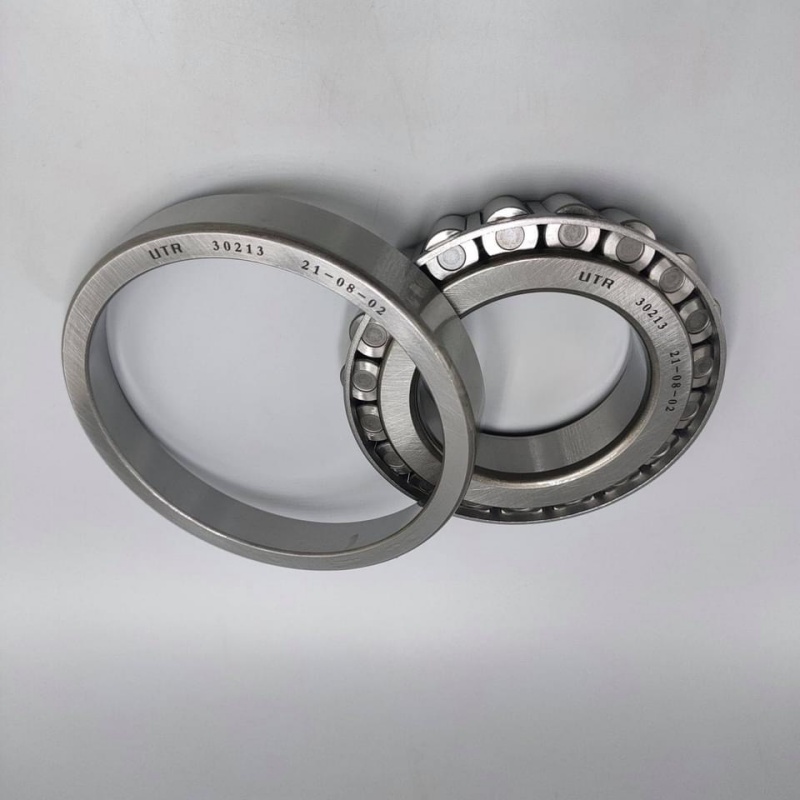
Think of it as matching a tool to a task. Each heavy-load bearing type has a specialty. Using the wrong one is like using a wrench as a hammer—it might work for a while, but it will fail prematurely.
Selecting the Right Heavy-Load Specialist
We manufacture all three types because each serves a vital role. Let’s break down their strengths and ideal applications.
1. Spherical Roller Bearings: The Radial Load Champion
- Key Strength: Highest pure radial load capacity4 for a given size. They are also self-aligning5, which forgives installation misalignment and shaft deflection.
- Load Handling: Excellent radial, moderate axial capacity.
- Best For: Applications where the load is overwhelmingly radial and alignment is a concern. Think vibrating screens, large fans, conveyor tail pulleys, and paper mill rolls.
- FYTZ Focus: We ensure our spherical rollers have optimized roller profiles and robust cages to handle the immense forces and often harsh environments.
2. Tapered Roller Bearings: The Combined Load Workhorse
- Key Strength: Exceptional ability to handle high radial and high axial loads6 simultaneously. They provide high rigidity.
- Load Handling: Excellent combined load capacity.
- Best For: Applications where loads are complex. This includes vehicle axles, gearboxes, rolling mills, construction machinery, and machine tool spindles.
- FYTZ Focus: Our tapered bearings are built with premium carburized steel for toughness and precise geometry for optimal load distribution across all rollers.
3. Cylindrical Roller Bearings: The High-Speed Radial Option
- Key Strength: Very high radial load capacity with very low friction, allowing for higher speeds than other roller bearings.
- Load Handling: Excellent radial, essentially no axial capacity (unless flanged).
- Best For: High-speed, pure radial load situations like electric motor shafts, machine tool main spindles, and wind turbine gearboxes.
- FYTZ Focus: We produce precision-grade cylindrical rollers with super-finished surfaces to minimize heat generation at high RPMs.
Decision Matrix for Heavy Load Applications:
| Your Primary Load Condition | Recommended Bearing Type | Why It’s the Best Fit |
|---|---|---|
| Extremely heavy radial load, with misalignment | Spherical Roller Bearing | Highest radial rating + self-alignment protects against edge loading. |
| Heavy radial AND heavy axial load together | Tapered Roller Bearing | Unique geometry is designed specifically for this combined stress. |
| Very heavy radial load at high speed | Cylindrical Roller Bearing | High capacity with low friction prevents thermal runaway at speed. |
| Heavy loads with severe shock/impact | Tapered Roller Bearing (or Spherical) | Carburized steel and robust construction absorb impacts better. |
| Heavy load in a compact space | Tapered Roller Bearing | Provides combined load capacity in a relatively compact package compared to using two separate bearings. |
For a machinery designer or maintenance engineer, this matrix is a starting point. When Rajesh’s customer from a steel plant needs bearings for a new conveyor, the discussion begins here. Is the main concern the sheer weight of the ore (radial)? Then spherical rollers might be best. Is the drive system also creating thrust? Then tapered rollers should be considered. This consultative approach ensures the selected FYTZ bearing delivers maximum life and reliability.
What roller bearing has the greatest load capacity?
If we measure by a single metric—the dynamic radial load rating (C)1 for a standard boundary dimension—the title often goes to the spherical roller bearing2. However, "greatest" needs context, as it may not be the most capable in the specific way your application requires.
In terms of pure radial load capacity3 per unit size, spherical roller bearing2s generally have the greatest load capacity among standard roller bearings. Their design, with two rows of barrel-shaped rollers on a common spherical raceway, maximizes the number of load-carrying elements and contact area, yielding the highest C rating.

Raw radial capacity is impressive, but it’s only one part of the story. A bearing with a higher C rating might still be the wrong choice if it can’t handle other aspects of your application.
Beyond the Top Number: A Holistic View of Capacity
Focusing solely on the highest C rating is like buying a truck based only on its maximum tow rating, without considering fuel economy, maneuverability, or cargo space. We need a broader perspective.
Why Spherical Rollers Win the Radial Contest:
- Two Rows of Rollers: This effectively doubles the number of elements sharing the load compared to a single-row tapered or cylindrical bearing.
- Long Roller Contact: The barrel-shaped rollers have a long line contact with the raceways.
- Self-Alignment: This ensures the load is distributed evenly across the full length of the rollers, even if the shaft bends slightly. This prevents edge loading, which would reduce effective capacity.
The Critical Limitations of "Greatest Capacity":
- Axial Load Capacity: While good, the axial capacity of a spherical roller bearing2 is not proportional to its massive radial capacity. It is often significantly lower than that of a tapered roller bearing4 of a similar size.
- Speed Limitations: Their complex design and higher friction often limit their maximum operational speed compared to cylindrical or tapered roller bearing4s.
- Precision and Rigidity: They are designed to accommodate misalignment, which means they are inherently less rigid than a precisely set pair of tapered roller bearing4s. For applications requiring absolute shaft positional stability, this is a disadvantage.
Comparative Load Capacity Snapshot (Conceptual for ~100mm bore):
| Bearing Type (Example Series) | Dynamic Radial Load Rating (C) | Dynamic Axial Load Rating (Ca) | Key Design Reason |
|---|---|---|---|
| Spherical Roller Bearing (22320) | Highest (e.g., 380 kN) | Moderate (e.g., 110 kN) | Two rows of rollers, long contact lines. |
| Tapered Roller Bearing (30220) | Very High (e.g., 240 kN) | High (e.g., 220 kN) | Tapered geometry efficiently resolves thrust. |
| Cylindrical Roller Bearing (NU320) | High (e.g., 300 kN) | Very Low (~0 kN) | Single row, line contact, low friction design. |
When to Choose the "Greatest" and When to Look Elsewhere:
- Choose Spherical Roller if: Your application is dominated by a massive, slow-moving radial load and you have alignment challenges. A mine hoist or a large dam gate hinge is a classic example.
- Choose Tapered Roller if: You have significant axial thrust accompanying the radial load, or you need high rigidity. A high-performance gearbox or a rolling mill stand are perfect examples.
- Choose Cylindrical Roller if: You need high radial capacity at very high speeds with minimal heat generation, like in a turbo-compressor.
For FYTZ, manufacturing spherical roller bearing2s with the "greatest" capacity means paying extreme attention to heat treatment and grinding. We must ensure that every one of those many rollers can carry its share of the load without premature fatigue. When Rajesh supplies these bearings to a customer building heavy processing equipment, he can legitimately claim they offer top-tier radial strength. But his real value comes from knowing when that specific strength is what the customer truly needs.
What is the load capacity of roller bearings?
This is a practical question with a complex answer. The load capacity of a roller bearing is not one number but a system of ratings that describe its strength under different conditions.
The load capacity of a roller bearing is defined by its static load rating (C0)1 and dynamic load rating (C)2. The static rating (C0) is the maximum load it can handle without permanent deformation while stationary. The dynamic rating (C) is the load it can endure for 1 million revolutions while rotating. These values are specific to each bearing model and size.
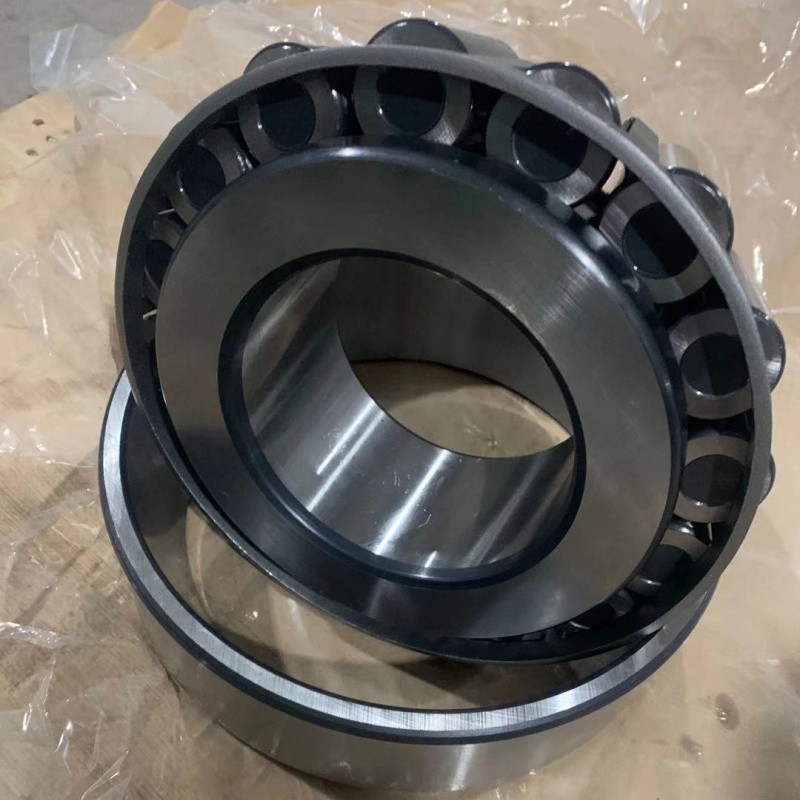
These ratings are the starting point for all engineering calculations. They turn the abstract idea of "strength" into usable, comparable data. Let’s demystify these ratings and show you how to apply them.
Decoding and Applying Load Ratings for Reliable Design
You have a catalog with pages of numbers. Here’s how to find the right ones and use them correctly to ensure your machine doesn’t fail under load.
1. Static Load Rating (C0) – For Stationary or Slow-Oscillating Conditions
- What it means: This is the load that will cause a total permanent deformation of the rolling element and raceway of 0.0001 times the roller diameter. In simpler terms, it’s the load limit before the bearing is brinelled or dented.
- When to use it:
- When the bearing is stationary under load for long periods.
- When it rotates very slowly (less than 10 rpm).
- When it undergoes heavy shock loads while rotating. The shock load should not exceed C0.
- Safety Factor: For static loads, a safety factor3 (fs = C0 / P0) is used. For smooth operations, fs should be ≥ 1.5. For shock loads, fs should be ≥ 2.5 or higher.
2. Dynamic Load Rating (C) – For Rotating Applications (The Most Important)
- What it means: This is the heart of bearing selection. It is the constant, steady load that a group of identical bearings can carry for 1 million revolutions with a 90% reliability (i.e., 10% failure rate, known as L10 life4).
- How to use it: You use it in the life calculation formula: L10 = (C / P)^p
- L10 = Basic rating life in millions of revolutions.
- C = Dynamic load rating from the catalog.
- P = Equivalent dynamic bearing load (calculated from your actual radial and axial loads).
- p = Exponent: 10/3 (≈3.33) for roller bearings.
The Crucial Step: Calculating the Equivalent Dynamic Load (P)
This is where many mistakes happen. You can’t just use the radial load.
- For combined loads5 (radial Fr + axial Fa): P = X Fr + Y Fa
(X & Y are catalog factors). - For pure radial load: P = Fr.
- For pure axial load: P = Fa.
Example: Putting it All Together
You select an FYTZ 32310 B tapered roller bearing for a gearbox shaft.
- From our catalog: C = 195 kN.
- Your calculated loads: Fr = 30 kN, Fa = 15 kN.
- From the catalog tables, for Fa/Fr = 0.5, you find X = 0.67, Y = 1.41.
- Equivalent Load P = (0.67 30) + (1.41 15) = 20.1 + 21.15 = 41.25 kN.
- Basic Life L10 = (195 / 41.25)^3.33 ≈ (4.73)^3.33 ≈ ~150 million revolutions.
If your shaft runs at 1000 RPM, this life translates to approximately 2500 hours of L10 life4. You would then apply adjustment factors for reliability, lubrication, and contamination to estimate the real-world service life.
How FYTZ Ensures Rated Load Capacity:
Our published ratings are not just copied from a standard. They are validated through:
- Material Testing: We verify the steel’s fatigue strength.
- Manufacturing Precision: Consistent geometry ensures every roller shares the load equally. If one roller is oversized, it takes more load and fails early, reducing the whole bearing’s capacity.
- Rigorous Quality Control: Every batch is sampled and tested to confirm it meets the performance standards that underpin the C and C0 ratings.
For Rajesh and his technical customers, this process is the blueprint for reliability. A customer designing a new piece of equipment can use our catalog data with confidence. They know that if they calculate a required C rating of 100 kN, and they select our bearing with a C rating of 150 kN, they have built in a safety margin that will translate into years of trouble-free operation. This trust is the foundation of a long-term supply partnership.
Conclusion
When your application demands true high load capacity, our tapered roller bearings provide the proven strength, precise engineering, and reliable performance to ensure your machinery operates at its peak, without compromise.
-
Understanding C0 is crucial for ensuring your bearing can handle stationary loads without deformation. ↩ ↩ ↩ ↩
-
The dynamic load rating is essential for selecting bearings that can withstand rotating applications effectively. ↩ ↩ ↩ ↩ ↩ ↩ ↩
-
Understanding safety factors ensures that your bearings operate reliably under varying load conditions. ↩ ↩ ↩ ↩
-
L10 life helps predict the lifespan of bearings, ensuring you make informed decisions for your machinery. ↩ ↩ ↩ ↩ ↩ ↩ ↩
-
Knowing how to calculate combined loads is essential for accurate bearing selection and performance. ↩ ↩ ↩
-
Explore the challenges and solutions related to high axial loads in bearing systems to ensure optimal performance. ↩
