
You face tough conditions: heavy loads, shock impacts, and demanding applications. A standard bearing might not survive, but the right tapered roller bearing will thrive under this pressure.
Our high-strength tapered roller bearings are engineered to manage heavy combined radial and thrust loads efficiently. They offer superior durability, precise operation, and longer service life in challenging industrial and automotive applications compared to many other bearing types.
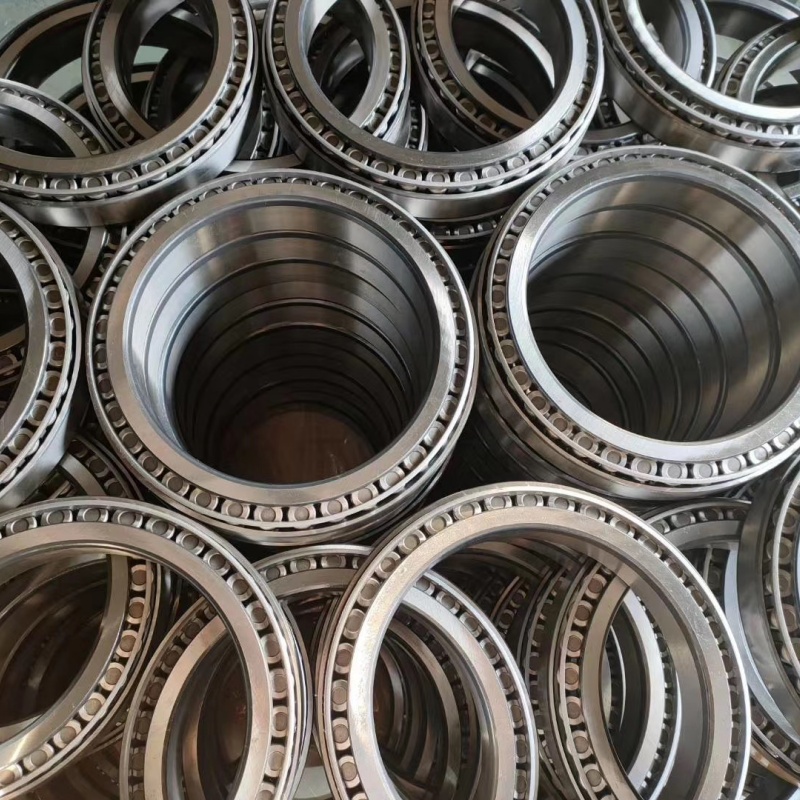
The choice is clear when performance under stress is non-negotiable. Let’s explore the specific advantages that make our tapered roller bearings the reliable backbone of heavy machinery and critical drivetrains.
What are the advantages of tapered roller bearings?
Choosing a bearing is about matching its strengths to your challenges. Tapered roller bearings bring a unique set of advantages to the table that solve specific problems in power transmission.
The key advantages of tapered roller bearings are their ability to handle high combined radial and axial loads simultaneously1, their adjustable internal clearance2 for precise setting, their high rigidity3 due to line contact4, and their separable design5 for easy installation, inspection, and replacement. This makes them exceptionally versatile and durable.

These aren’t just minor benefits; they are fundamental design features that translate directly into machine reliability. Let’s examine each advantage and see how it works in real-world applications.
The Engineering Edge: How Design Creates Advantage
The advantages come from the unique geometry and construction of the bearing. We design and manufacture our FYTZ tapered bearings to maximize these inherent strengths.
1. Combined Load Capacity: The Core Strength
- How it Works: The rollers are tapered, and the raceways are angled. This geometry allows the bearing to resolve forces. Radial loads create an axial reaction force within the bearing. This means a single tapered bearing can support both types of load at once.
- Real-World Impact: In a gearbox, a shaft experiences radial load from the gears and axial thrust from the helical gear teeth. A tapered bearing pair can handle both without needing separate radial and thrust bearings. This simplifies design, saves space, and increases reliability.
2. Adjustable Clearance/Preload: Precision Performance
- How it Works: Tapered roller bearings are almost always used in pairs (opposed). The distance between the outer rings (cups) or the inner rings (cones) can be adjusted during installation. This lets you set the exact internal clearance or even apply a preload.
- Real-World Impact: This is critical for applications requiring high rigidity3 and minimal shaft deflection. In machine tool spindles or precision gearboxes, proper preload eliminates play, ensures accurate positioning, reduces vibration, and extends bearing life. Our bearings are manufactured with tight tolerances to make this adjustment precise and consistent.
3. High Rigidity and Line Contact
- How it Works: The rollers make line contact4 with the raceways, unlike the point contact of ball bearings. This distributes loads over a larger area. The tapered design also resists bending moments effectively.
- Real-World Impact: This results in less deformation under heavy loads. The shaft stays more precisely aligned. This rigidity is vital for the rolling mills in steel plants, large mining conveyors, and heavy vehicle axles that our bearings serve globally.
4. Separable Design: Ease of Maintenance
- How it Works: The cone assembly (inner ring with rollers and cage) and the cup (outer ring) can be mounted separately. This is a major practical advantage.
- Real-World Impact: Installation is easier, especially on long shafts. Inspection is simpler because you can remove and examine each component independently. Replacement is more cost-effective; if only the outer race is damaged, you might only need to replace the cup. For our distributors like Rajesh, this means his customers in repair shops can service equipment faster and with lower parts cost.
Comparison of Key Advantages in Application:
| Application Challenge | How Tapered Roller Bearings Help | FYTZ Enhancement |
|---|---|---|
| Heavy truck wheel hub | Handles vehicle weight (radial) and cornering forces (axial). | High-quality carburized steel for impact resistance. |
| Gearbox output shaft | Manages gear loads and thrust from helical gears. | Precision P5/P6 grading for smooth, low-noise operation. |
| Rolling mill work roll | Supports immense rolling forces with minimal deflection. | Optimized roller profile and heat treatment for extreme load capacity. |
| Agricultural tractor final drive | Withstands shock loads from uneven terrain. | Robust cage design and thorough cleanliness control to prevent debris-initiated failure. |
For an importer like Rajesh, these advantages are selling points. He can explain to a gearbox manufacturer customer that our tapered bearings offer design flexibility and durability. For a wheel hub supplier, he can emphasize the safety and longevity from precise load handling. The advantages are not just theoretical; they are the reasons his customers’ products succeed in the market.
What is the strongest roller bearing?
"Strongest" can mean different things: highest pure radial load, best combined load, or greatest shock resistance. The answer depends on what type of strength your application demands.
In terms of pure radial load capacity1, spherical roller bearings2 are typically the strongest. For handling very high combined radial and axial loads in a compact design, tapered roller bearings3 are exceptionally strong and often the most practical and widely used choice for heavy-duty applications.
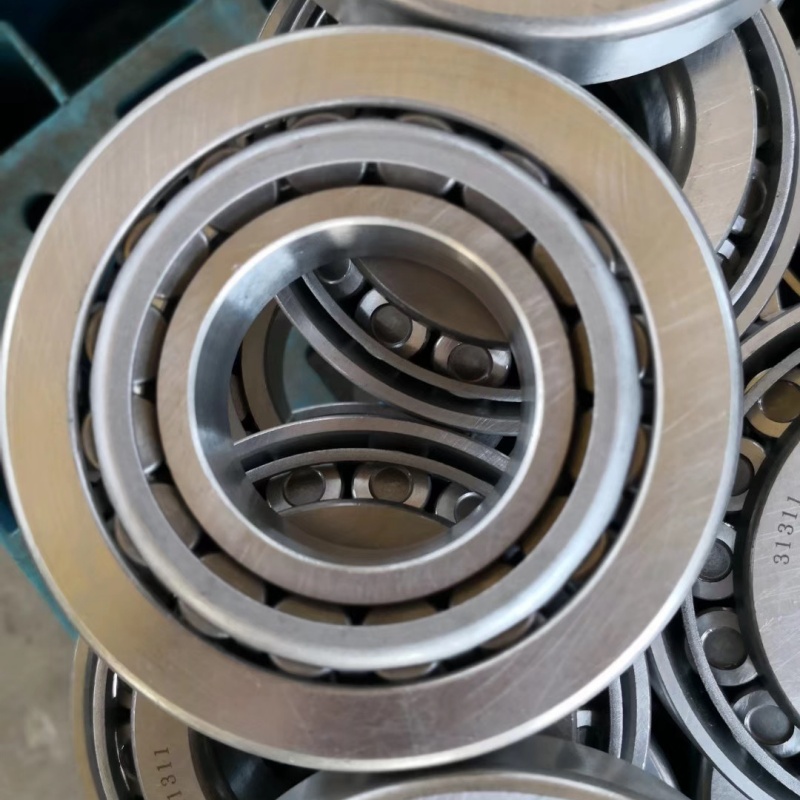
Calling one bearing "the strongest" is an oversimplification. Each roller bearing type has a domain where it excels. The real skill is matching the right type of strength to your specific need.
A Detailed Comparison of Heavy-Duty Roller Bearings
We produce multiple types of heavy-duty roller bearings. Each has its optimal application. Here is an honest look at where each one shines.
Contenders for "Strongest":
1. Spherical Roller Bearings
- Strength Claim: Highest pure radial load rating for a given size. This is their standout feature.
- Key Feature: Self-aligning. They can tolerate significant shaft misalignment.
- Typical Limitation: Their axial load capacity is only moderate relative to their radial capacity. They are not typically chosen for high-thrust applications.
- Best Use Case: Very heavy, slow-to-moderate speed applications where the primary load is radial and alignment is imperfect. Examples: large fans, vibrating screens, conveyor pulleys.
2. Tapered Roller Bearings
- Strength Claim: Excellent combined load capacity4. They are uniquely strong at handling high radial and high axial loads simultaneously.
- Key Feature: Adjustable clearance/preload. High rigidity.
- Typical Limitation: They are not self-aligning5. Installation requires precise alignment and setting.
- Best Use Case: Applications with significant combined loads, especially where rigidity and precise shaft positioning are critical. Examples: vehicle wheel hubs, gearboxes, rolling mills, machine tool spindles.
3. Cylindrical Roller Bearings
- Strength Claim: Very high radial load capacity and high-speed capability6.
- Key Feature: Low friction, separable design.
- Typical Limitation: They generally cannot handle any axial load (except some NJ/NUP types with flanges).
- Best Use Case: High-speed, pure radial load situations. Examples: electric motor shafts, machine tool main spindles.
Why Tapered Roller Bearings Are the "Workhorse" of Strength:
For a vast number of industrial and automotive applications, the load is not purely radial. There is almost always some axial component. A spherical roller bearing might have a higher radial rating, but if it can’t handle the accompanying thrust, it will fail. A tapered bearing is designed for this exact scenario.
Consider a heavy truck wheel. The radial load is the weight of the truck. The axial loads come from cornering, braking, and road camber. A spherical roller bearing might handle the weight, but it would fail quickly under cornering forces. A pair of tapered roller bearings3 is the standard, proven solution because it is strong in the exact way the application demands.
Load Capacity Comparison Table (Conceptual for similar size):
| Bearing Type (e.g., 320 size series) | Radial Load Capacity | Axial Load Capacity | Combined Load Suitability |
|---|---|---|---|
| Spherical Roller Bearing | Highest (e.g., 100%) | Moderate (e.g., 25% of its radial) | Good for heavy radial with some axial. |
| Tapered Roller Bearing | Very High (e.g., 85%) | High (e.g., 60% of its radial) | Excellent for high combined loads. |
| Cylindrical Roller Bearing | Very High (e.g., 90%) | Very Low (typically ~0%) | Excellent for pure radial load only. |
For our clients, the choice is practical. When Rajesh supplies bearings to a mining equipment manufacturer, they might use spherical rollers on the vibrating screen (high radial, misalignment) but specify our tapered rollers for the gear reducers driving the conveyors (combined loads, need for rigidity). At FYTZ, we strengthen our tapered rollers through precise control of the carburizing heat treatment process7. This creates a hard, wear-resistant surface on the rollers and raceways with a tough, ductile core that resists shock loads8—delivering the kind of strength that matters most in harsh operating conditions.
Are tapered bearings better?
"Better" is not an absolute term. Tapered bearings are better for some things, and worse for others. The real question is: are they better for your specific application?
Tapered roller bearings are better than many alternatives for applications requiring high combined radial and axial load capacity1, high rigidity2, and adjustable clearance3. However, they are not better for pure high-speed applications (where angular contact ball bearings excel) or for applications with severe misalignment (where spherical rollers are better). The right bearing is the one that best fits the job.
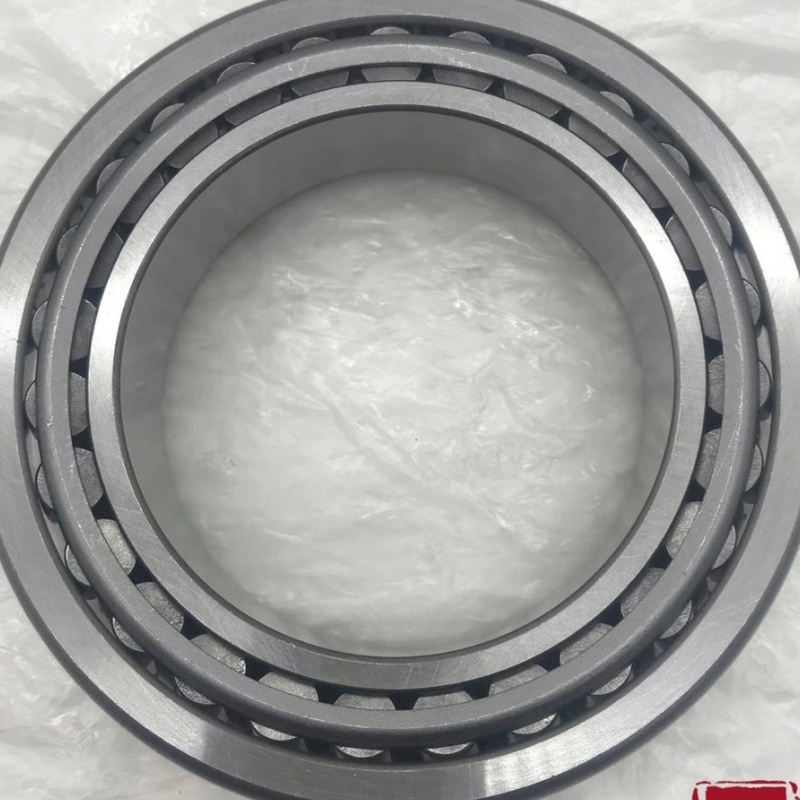
A blanket statement is useless for engineering. We need a clear framework to decide when a tapered bearing is the superior choice and when another type might serve you better.
Making an Objective Choice: When to Use Tapered Bearings
Let’s compare tapered roller bearings to other common bearing types across key performance criteria. This will give you a decision matrix.
Tapered Roller Bearings vs. Other Common Types:
1. Vs. Deep Groove Ball Bearings
- Tapered is Better When: You have significant axial loads4 or combined loads. You need higher rigidity and less shaft deflection. Ball bearings have limited axial capacity and are less rigid.
- Ball Bearing is Better When: You need very high speeds with low friction and low heat generation. Your application has light to moderate loads and minimal axial load. Cost is a primary driver for simpler applications.
2. Vs. Spherical Roller Bearings
- Tapered is Better When: You have high axial thrust loads. You need precise shaft positioning and high rigidity2. Your application allows for good alignment during installation.
- Spherical is Better When: The primary load is very heavy and radial. Shaft or housing misalignment is inevitable or expected (e.g., long shafts, flexible frames). Self-alignment is a critical requirement.
3. Vs. Cylindrical Roller Bearings
- Tapered is Better When: Your application has any meaningful axial load. Cylindrical rollers are not designed for thrust.
- Cylindrical is Better When: The load is purely radial and very high speed is required. They offer the lowest friction among roller bearings for radial loads.
4. Vs. Angular Contact Ball Bearings
- Tapered is Better When: Loads are very heavy. You need higher rigidity and impact resistance. The application involves shock loads5.
- Angular Contact is Better When: The highest possible speeds are needed (e.g., machine tool spindles, turbochargers). Loads are high but primarily axial or moderate combined.
Decision Guide: Is a Tapered Bearing Right for You?
Ask these questions about your application:
| Question | If YES, consider Tapered. | If NO, consider another type. |
|---|---|---|
| Is there a significant axial (thrust) load? | ✅ Yes, they excel here. | ➡️ Look at spherical (for radial) or cylindrical (for pure radial). |
| Is high rigidity2 and minimal shaft deflection critical? | ✅ Yes, their line contact provides this. | ➡️ A ball bearing might suffice for less rigid needs. |
| Can the bearing installation be precisely aligned? | ✅ Yes, they require good alignment. | ➡️ A self-aligning spherical bearing6 may be safer. |
| Are shock loads5 or heavy impacts expected? | ✅ Yes, their robust design handles shocks well. | ➡️ For lighter shocks, other types may work. |
| Is operational speed very high (>10,000 rpm)? | ❌ No, other types are better for very high speeds. | ✅ Yes, consider angular contact ball bearings. |
The FYTZ Advantage Within Tapered Bearings:
Even when tapered bearings are the right category, not all are created equal. Our bearings are "better" within the category because:
- Material: We use vacuum-degassed, carburizing steel7 for optimal core toughness and surface hardness.
- Precision: We offer P5 and P6 precision grades8 for applications requiring smooth, quiet running and precise axial location.
- Design: We optimize the roller profile and guiding to minimize stress concentrations and heat generation.
- Control: Our integrated production and inspection lines ensure consistency and traceability in every batch.
For Rajesh, this knowledge is his toolkit. When a customer designing a new agricultural gearbox asks, "Should I use tapered or spherical bearings?", he can guide the conversation. He can ask about expected thrust from the gears, shock loads5 from the field, and alignment capabilities. This positions him as a technical partner, not just a vendor, and ensures his customer gets the optimal solution—which often is our high-strength tapered roller bearing.
What loads can a tapered roller bearing handle?
This is the most practical question. You have a shaft with known forces. You need to know if a specific tapered bearing can take it. The answer lies in the bearing’s dynamic load rating and how you apply it.
A tapered roller bearing can handle significant radial loads and axial (thrust) loads simultaneously. Its exact capacity is defined by its dynamic load rating (C)1, a published value. For example, a common 30205 bearing may have a dynamic radial load rating of 28 kN and a dynamic axial load rating of 19 kN. The actual safe load depends on speed, lubrication, and the bearing pair configuration.
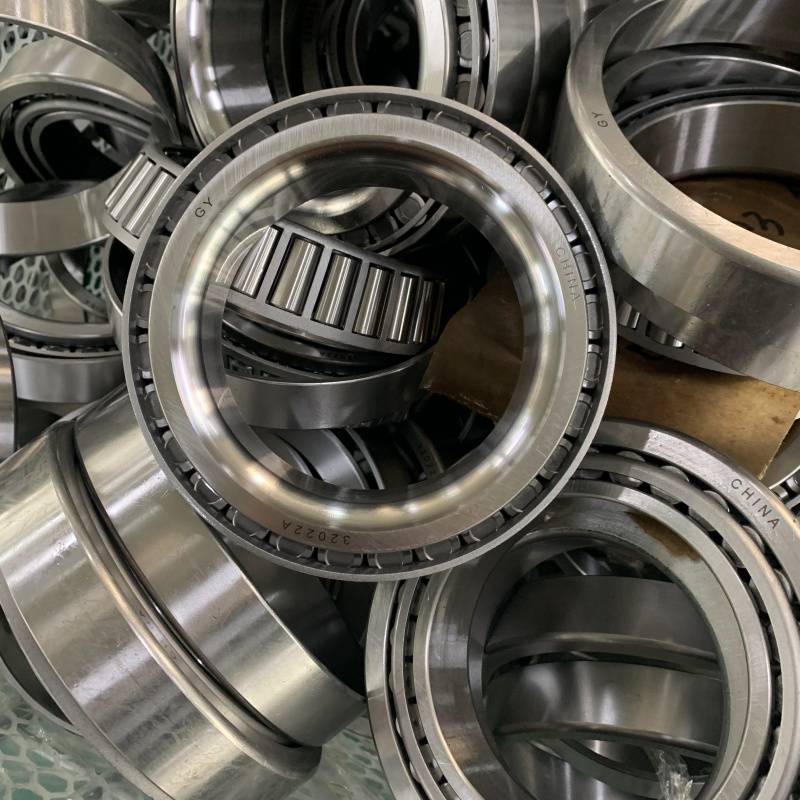
Knowing a single number isn’t enough. You need to understand how to use the ratings and how real-world conditions affect them. Let’s demystify bearing load ratings and their practical use.
From Catalog Ratings to Real-World Reliability
Bearing catalogs provide the data, but applying it correctly is key. Here’s how to think about loads and our bearing’s capabilities.
Understanding the Load Ratings:
- Dynamic Radial Load Rating (C)2: This is the most important number. It is the constant radial load that a group of identical bearings can endure for 1 million revolutions with a 90% probability of survival. It’s the standard for comparing capacity and calculating life.
- Dynamic Axial Load Rating (Ca)3: This is the constant axial load for the same 1-million-revolution life. For tapered bearings, this rating is also significant.
- Static Load Rating (C0)4: This is the maximum load the bearing can withstand without permanent deformation when not rotating. It matters for applications with heavy static loads or severe shock loads.
How Loads Work in a Tapered Bearing:
A radial load on a tapered bearing induces an axial reaction force. This is why they are almost always used in pairs (X or O arrangement). The pair shares the loads.
- Back-to-Back (O arrangement)5: Provides good moment load resistance and rigidity.
- Face-to-Face (X arrangement)6: Allows for more shaft thermal expansion.
Calculating Bearing Life (Simplified Approach):
The basic life equation is: L10 = (C / P)^(10/3)
Where:
- L10 is the basic rating life in millions of revolutions (the life 90% of bearings will reach or exceed).
- C is the dynamic load rating from the catalog.
- P is the equivalent dynamic bearing load7.
Calculating P is the crucial step. For a tapered bearing under combined radial (Fr) and axial (Fa) load, the formula is: P = X Fr + Y Fa
- X and Y are factors found in the bearing catalog. They depend on the bearing’s design and the ratio of Fa/Fr.
- This calculation determines the single load that has the same life effect as the actual combined loads.
A Practical Example for a Machine Designer:
Imagine a gearbox shaft. You calculate:
- Radial load Fr = 5000 N
- Axial load Fa = 2000 N
You select an FYTZ 30205 bearing. Our catalog gives: C = 28,000 N, and for Fa/Fr = 0.4, the factors are X=0.4, Y=1.5. - Equivalent Load P = (0.4 5000) + (1.5 2000) = 2000 + 3000 = 5000 N.
- Basic Life L10 = (28,000 / 5,000)^(3.33) ≈ (5.6)^(3.33) ≈ 230 million revolutions.
This life can then be converted to hours based on the shaft’s operating speed.
Factors That Reduce Effective Load Capacity8:
Our catalog ratings assume perfect conditions. Real life is less perfect. These factors effectively lower the load the bearing can safely handle for a target life:
- Poor Lubrication: Inadequate or wrong grease/oil increases friction and wear, drastically shortening life.
- Contamination: Hard particles in the bearing cause abrasive wear, acting like a higher load.
- Misalignment: Even small misalignment creates edge loading, concentrating stress.
- Excessive Temperature: High heat degrades lubricants and can soften bearing steel.
- Shock Loads: Impacts far exceed the average calculated load.
How FYTZ Ensures Rated Load Capacity:
We don’t just print numbers from a standard table. We validate performance:
- Material Integrity: Our heat treatment ensures the steel can withstand the Hertzian contact stresses under rated loads without premature spalling.
- Geometric Accuracy: Precise grinding of the tapered raceways and rollers ensures the load is distributed evenly across all rollers, preventing overload on a single roller.
- Cleanliness: Advanced cleaning processes remove manufacturing debris that could act as a stress concentrator under load.
For Rajesh’s customers—the machinery builders and repair shops—this understanding is power. They can move from guesswork to engineering. When they specify an FYTZ tapered roller bearing, they have confidence in the load ratings we publish. This confidence allows them to build more reliable machines and offer stronger warranties, directly benefiting their business.
Conclusion
For demanding applications where heavy loads, shock resistance, and precise operation are critical, our high-strength tapered roller bearings offer an unmatched combination of performance, durability, and value. Choose the bearing engineered for the challenge.
-
Understanding dynamic load rating is crucial for selecting the right bearing for your application. ↩ ↩ ↩ ↩
-
Learn how to calculate and interpret the Dynamic Radial Load Rating for better bearing performance. ↩ ↩ ↩ ↩ ↩ ↩
-
Explore the significance of Dynamic Axial Load Rating for ensuring bearing reliability. ↩ ↩ ↩ ↩ ↩ ↩
-
Discover how Static Load Rating affects bearing performance under non-rotating conditions. ↩ ↩ ↩ ↩ ↩
-
Learn how this arrangement enhances load resistance and rigidity in machinery. ↩ ↩ ↩ ↩ ↩ ↩
-
Explore how this arrangement accommodates thermal expansion in shafts. ↩ ↩ ↩
-
Understanding this calculation is key to ensuring the longevity of your bearings. ↩ ↩ ↩
-
Identifying these factors can help you maintain optimal bearing performance. ↩ ↩ ↩