
Equipment breakdown under heavy load is not just an inconvenience; it means costly downtime and lost production. For over a decade at FYTZ Bearing, I have seen how the right bearing can be the difference between profit and loss in harsh industrial environments. Let us talk about strength.
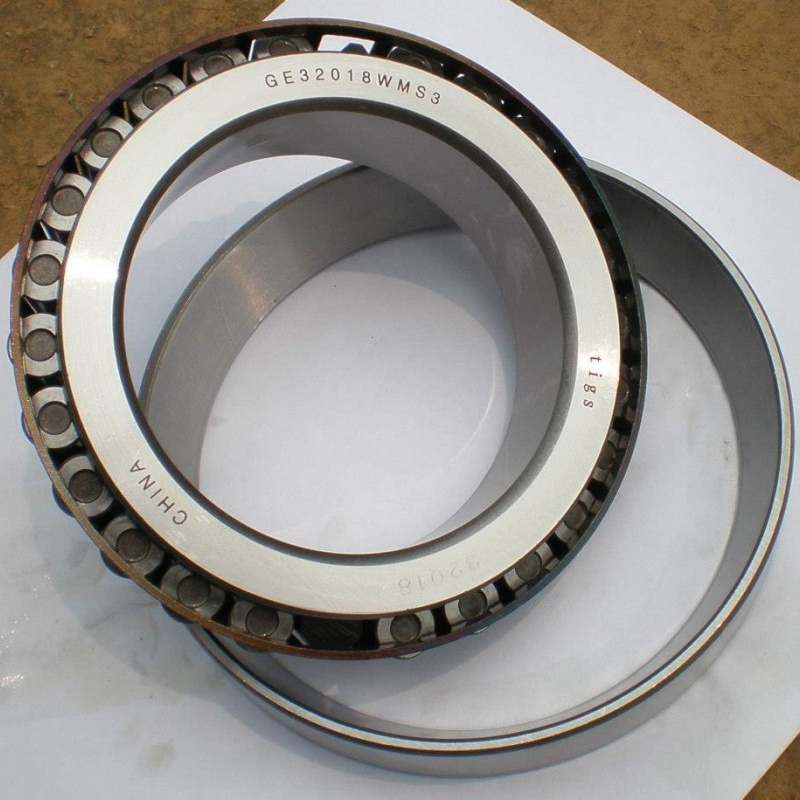
High strength tapered roller bearings are engineered for demanding operations involving heavy combined radial and axial loads. Their robust construction, utilizing premium carburized steel and optimized roller profiles, provides exceptional load capacity and impact resistance, making them ideal for mining, heavy construction, and gearbox applications.
Strength alone is not the full story. The true measure of a bearing is how it performs under specific pressures, at certain speeds, and within its limitations. We need to explore what "strongest" really means and where these bearings truly excel—and where they might not be your best choice.
What is the strongest roller bearing?
The word "strongest" is simple, but the answer is not. It depends completely on what kind of force your bearing needs to fight. Is it pure crushing weight? Is it a sideways push? Or is it a brutal, sudden shock? Picking wrong means a quick and expensive failure.
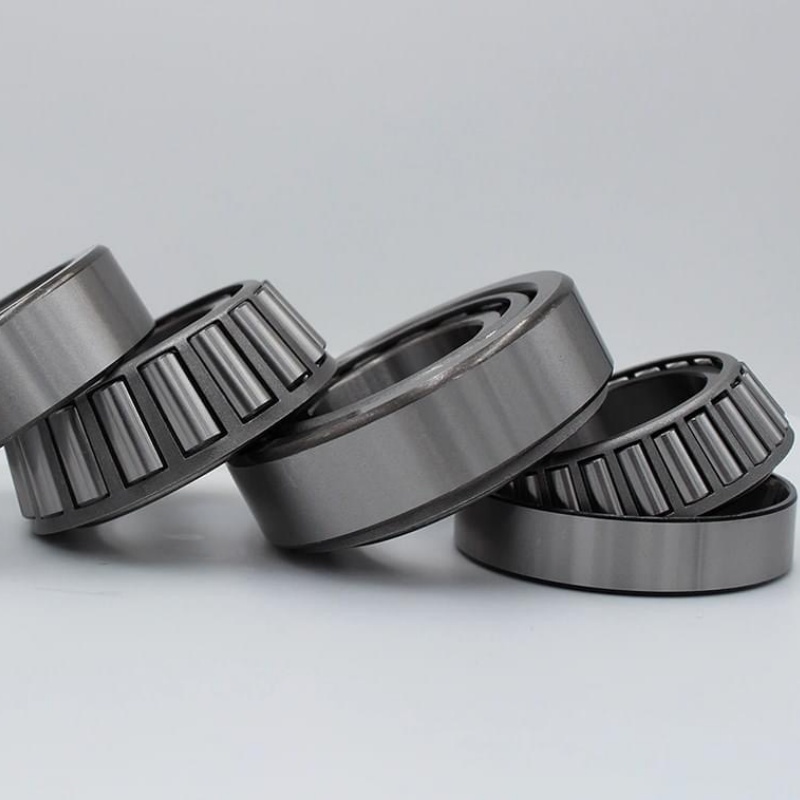
The "strongest" roller bearing for pure radial (crushing) load is the cylindrical roller bearing. For handling combined radial and axial (thrust) loads together, the tapered roller bearing is typically the strongest. For extreme misalignment under heavy load, the spherical roller bearing offers the greatest strength and flexibility.
Defining "Strength" in the Bearing World
When Rajesh from IndoMotion Parts asks me for the "strongest" bearing, my first question is always about the application. A bearing strong in one aspect can be weak in another. Let us break down strength into its main types.
1. Radial Load Strength1 (Pure Crushing Force):
This is the force pressing down perpendicular to the shaft. Imagine a conveyor roller supporting tons of ore.
- Champion: Cylindrical Roller Bearings2. Their rollers have full line contact with the raceways along their entire length. This design distributes the load over the largest possible area. They are the undisputed kings of handling massive, pure radial loads. However, they generally cannot handle any axial (thrust) load.
- Contender: Tapered Roller Bearings3. They also have high radial load capacity due to line contact, but part of their design is allocated to handling thrust. So, for the same physical size, a cylindrical bearing will typically have a higher pure radial load rating.
2. Combined Load Strength4 (Radial + Axial Together):
This is the real-world challenge in gearboxes, wheel hubs, and rolling mills. The bearing must support weight and resist pushing forces along the shaft.
- Champion: Tapered Roller Bearings3. This is their specialty. The angled rollers are perfectly positioned to resolve these combined forces into manageable loads along the roller-raceway contact lines. A pair of tapered rollers is the go-to solution for heavy-duty applications5 where both load types are present.
- Contender: Spherical Roller Bearings6. They also handle combined loads very well and have the added superpower of tolerating significant shaft misalignment. However, for a perfectly aligned application with very high thrust, tapered rollers often have a higher specific capacity.
3. Impact Load and Misalignment Strength7 (Shock & Imperfection):
This is strength against sudden hammer-like blows and the ability to function when things are not perfectly aligned.
- Champion: Spherical Roller Bearings6. Their self-aligning design and robust barrel-shaped rollers make them incredibly forgiving and strong in dirty, misaligned, and shock-prone environments like vibrating screens or crane sheaves.
- Contender: Tapered Roller Bearings3. High-quality, through-hardened or carburized tapered rollers have good shock resistance. But they are much less tolerant of misalignment. A strong impact in a misaligned state can cause edge loading and premature failure.
| Strength Type | Definition | Strongest Bearing Type | Key Reason | Common FYTZ Client Application |
|---|---|---|---|---|
| Pure Radial Load | Force perpendicular to the shaft | Cylindrical Roller Bearing | Full line contact, maximum load distribution | Large electric motor, rolling mill backup roll |
| Combined Radial & Axial | Weight + pushing force along the shaft | Tapered Roller Bearing | Angled rollers resolve combined forces efficiently | Truck wheel hub, industrial gearbox, pinion shaft |
| Impact & Misalignment | Sudden shocks + off-angle mounting | Spherical Roller Bearing | Self-aligning, barrel rollers distribute shock | Vibrating screen, agricultural equipment, crane |
So, when a mining equipment manufacturer in South Africa asks for the "strongest" bearing for a new crusher design, we do not just sell tapered rollers. We have a conversation. We analyze the load charts. Often, the final solution is a combination: cylindrical rollers for the pure radial loads on the main shaft and heavy-duty tapered rollers for the thrust-loaded pinion. That is how you build true strength into machinery.
What loads can a tapered roller bearing handle?
Tapered roller bearings are not general-purpose components; they are specialized tools. Using them correctly means understanding their unique load-handling profile. This knowledge prevents under-engineering, which leads to failure, and over-engineering, which wastes money.
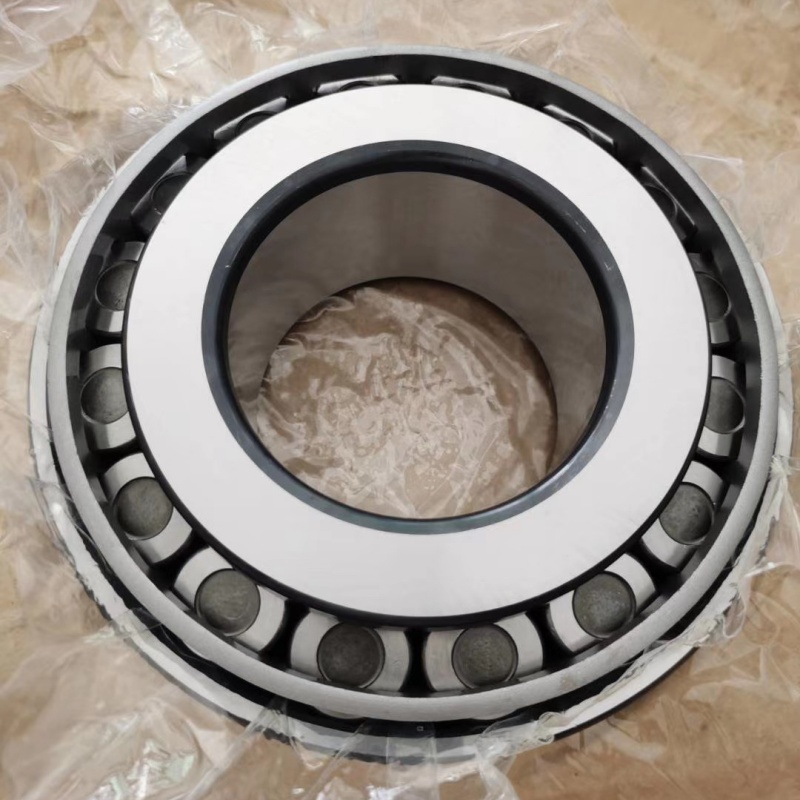
Tapered roller bearings are designed to handle moderate to very heavy combined radial and axial (thrust) loads simultaneously. They excel where the axial load is continuous and significant. They also provide high rigidity for applications requiring precise shaft positioning under heavy radial loads.
The Load-Handling Profile of a Champion
In our factory, we test bearings to their published dynamic (C) and static (C0) load ratings. But these numbers only tell part of the story. Let us look at how tapered rollers manage different load types in practice.
1. Combined Loads: Their Core Competency
This is the primary reason to choose a tapered roller bearing. The contact angle (the angle of the rollers) determines the ratio.
- A steep contact angle (e.g., 25-30 degrees): Favors higher thrust load capacity1. Good for applications like pinion shafts where thrust is dominant.
- A shallow contact angle (e.g., 10-15 degrees): Favors higher radial load capacity2. Common in wheel hub units where vehicle weight is major.
- The Reality: In operation, a radial load on a tapered bearing generates an induced internal thrust force. This is why they are almost always used in adjusted pairs (X or O arrangements). The pair works together to manage thrust from both directions and stabilize the shaft.
2. Thrust-Only Loads
A single tapered roller bearing, or a pair, can be used primarily for thrust. They offer higher load capacity in a more compact design compared to many thrust ball bearings. However, for very high-speed thrust applications, angular contact ball bearings3 usually generate less heat due to lower friction.
3. Radial-Only Loads
They can handle heavy radial loads effectively. However, if the application is purely radial with no thrust, a cylindrical roller bearing4 will often be a more efficient (higher capacity) or economical choice. Using tapered rollers here means you are paying for thrust capacity you do not need.
4. Moment Loads (Overturning Forces)
A properly preloaded pair of tapered roller bearings5 provides excellent resistance to moment loads6—forces that try to tilt or bend the shaft. This creates a rigid "spindle-like" support, which is critical in machine tool heads or gearboxes where shaft deflection must be minimized.
| Load Type | Can Tapered Handle It? | How Well? | Configuration Needed | Better Alternative for Pure Load |
|---|---|---|---|---|
| Heavy Combined (Radial + Axial) | Excellent | Their designed purpose. Top choice. | Opposed pair (O arrangement) | None. This is their specialty. |
| Moderate Combined, High Speed | Good (with cooling) | Good, but friction/heat may limit very high speeds. | Properly paired and lubricated | Angular contact ball bearing pair |
| Pure, Heavy Radial | Good | High capacity, but not optimal. | Can be used singly or paired. | Cylindrical Roller Bearing |
| Pure, High-Speed Thrust | Fair | Possible, but heat from sliding friction is a concern. | Paired for two-direction thrust. | Thrust Ball or Angular Contact Bearing |
| Heavy Shock Loads | Good to Very Good | Depends on material toughness (carburized is best). | Rigid, well-supported mounting. | Spherical Roller Bearing (more forgiving) |
For Rajesh’s customers in auto repair shops, this is vital. When rebuilding a differential, they must use a matched pair of tapered rollers7. Installing mismatched bearings, or failing to adjust them correctly, means the bearings cannot share the complex combination of gear loads properly. This leads to noisy failure within miles. The right bearing, installed right, handles the load for years.
Which is the best bearing for quieter operation at high speed?
Noise in machinery is more than an annoyance; it is a warning sign of vibration, wear, and inefficiency. In high-speed applications1 like electric motors, machine tools, or turbochargers, a quiet bearing is often a reliable, long-lasting bearing. But "quiet" and "high-speed" can have competing requirements.
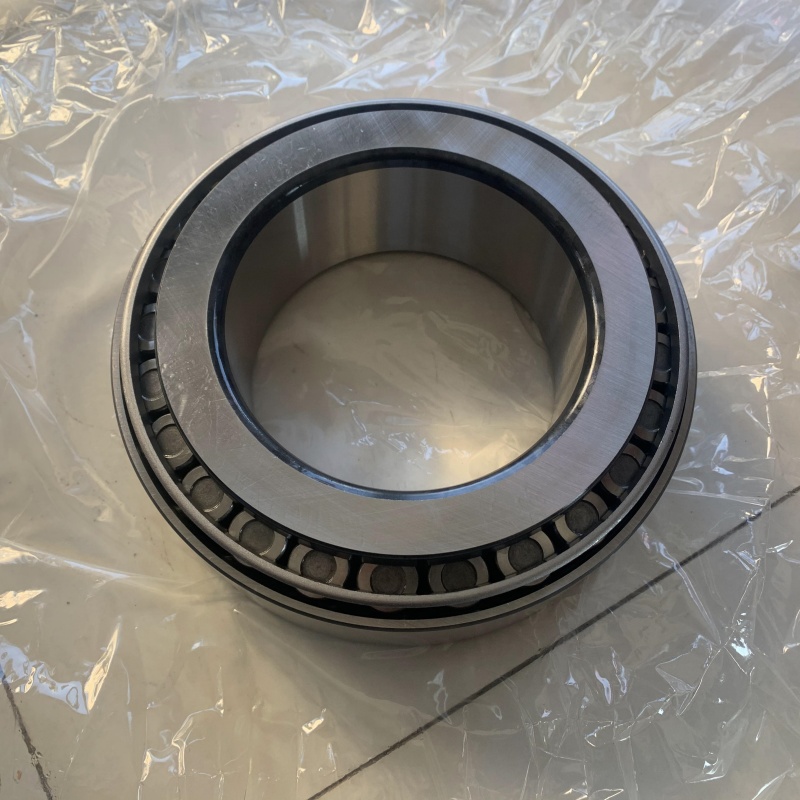
For quieter operation at very high speeds with moderate loads, precision angular contact ball bearings2 or deep groove ball bearings3 are typically the best. For high-speed applications1 that also must handle significant combined loads, advanced low-noise tapered roller bearings4 with optimized geometry and superior finishing are the preferred choice.
The Quest for Silence at High RPM
As a manufacturer, we measure bearing noise in decibels. The quest for quiet operation drives many of our precision processes. Let us look at why some bearings are naturally quieter and where tapered rollers fit into the high-speed noise picture.
Why Ball Bearings Are Often Quieter at High Speed:
- Point Contact: Ball bearings have point (or elliptical) contact. This generally generates less vibration and lower rolling noise compared to the line contact of rollers.
- Lower Friction: Less sliding friction (especially in angular contact designs) means less heat and thermal distortion, which maintains smooth operation.
- Precision Manufacturing: High-speed ball bearings are made to extreme precision grades (P4, P2). Any imperfection in roundness or surface finish is magnified at high RPM into noise. Our P5/P6 precision tapered rollers are excellent, but the finest ball bearings are made to even tighter tolerances for silence.
The Challenge for Tapered Roller Bearings at High Speed:
Their line contact and inherent sliding friction at the roller ends can generate more heat and noise. However, this is not the full story. Modern "high-speed" tapered roller bearings have closed the gap significantly through:
- Optimized Roller Profiles: Using a logarithmic or modified profile minimizes edge stressing and sliding, reducing vibration.
- Advanced Cage Design: Using lightweight, guided polyamide or precision-stamped bronze cages reduces centrifugal forces and prevents roller-to-roller contact.
- Super-Finishing: Mirror-like finishes on rollers and raceways (Ra < 0.1 µm) drastically reduce vibration excitation.
The Load-Speed-Noise Triangle:
You cannot have all three at maximum levels. You must balance them.
- High Speed + Low Noise + Light Load: Choose Angular Contact Ball Bearings.
- High Speed + Low Noise + Moderate Combined Load: Choose High-Precision Tapered Roller Bearings with advanced features.
- Moderate Speed + Low Noise + Very Heavy Combined Load: Choose Standard Tapered Roller Bearings with good finishing.
- High Speed + Heavy Load (Noise secondary): This is a tough challenge requiring specialized cooling and lubrication, possibly with cylindrical or tapered rollers.
| Bearing Type | Typical High-Speed Quietness | Reason | Best Speed Range | Load Capability During Quiet Op |
|---|---|---|---|---|
| Precision Deep Groove Ball | Excellent | Point contact, low friction, high precision | Very High | Light to Moderate Radial (& some thrust) |
| Angular Contact Ball | Excellent | Designed for high-speed thrust, low friction | Very High | Moderate Combined Loads |
| High-Spec Tapered Roller | Good to Very Good | Optimized profile, super-finish, good cage | High | High Combined Loads |
| Standard Tapered Roller | Fair to Good | Line contact, more sliding friction | Moderate | Very High Combined Loads |
| Cylindrical Roller | Good (at high speed) | Full line contact can hum; needs precision | High | Very High Radial Loads Only |
For a client in Vietnam manufacturing electric motorcycle gearboxes, the choice is clear. They need speed and must handle gear forces. A standard tapered bearing might be too noisy. We recommend our low-noise series tapered roller bearings. They cost a bit more, but they meet the speed and load demands while keeping the gearbox whisper-quiet—a key selling point for their product. That is the real value of choosing the right "quiet" bearing.
What are the disadvantages of tapered roller bearings?
No component is perfect. I have seen customers try to force tapered roller bearings into every application, only to face recurring problems. Knowing their weaknesses is not a criticism; it is essential for good engineering and prevents costly misapplications that damage your reputation.
The main disadvantages of tapered roller bearings include higher friction and heat generation1 at very high speeds, complex installation requiring precise axial adjustment2, sensitivity to misalignment3, and generally higher cost and space requirements4 compared to deep groove ball bearings for simpler applications.
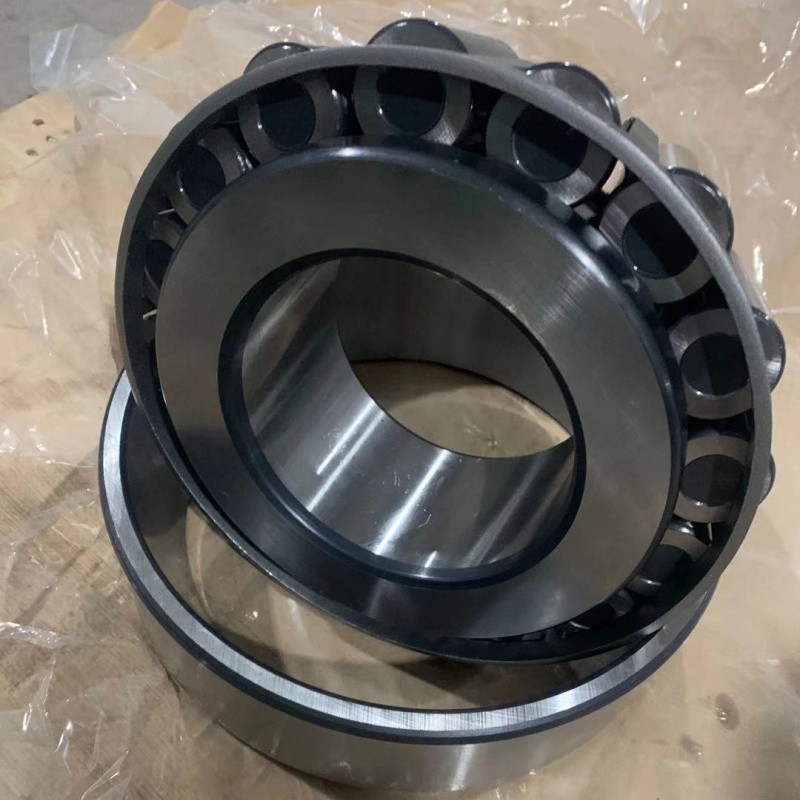
A Clear-Eyed View of the Trade-Offs
We produce millions of tapered roller bearings at FYTZ because they are superb components. But we are honest with distributors like Rajesh about where they might cause headaches. Let us examine these drawbacks in detail.
1. Friction, Heat, and Speed Limitations
This is the primary trade-off for their strength. The line contact that gives them high load capacity also creates more sliding friction, particularly at the roller ribs and ends.
- Result: At very high rotational speeds, this friction generates significant heat. This heat can degrade the lubricant, expand the bearing components unevenly, and lead to premature failure5. While advanced designs help, they have a practical speed limit (the dn value) lower than an equivalent-sized ball bearing.
2. Installation and Adjustment Complexity
This is the biggest practical issue in the field. Unlike a deep groove ball bearing that is often a simple press-fit, tapered roller bearings require careful setting.
- The Problem: They need controlled axial clearance or preload. This is not optional.
- Too loose: Causes axial play, leading to vibration, poor positioning, and impact damage under load.
- Too tight: Eliminates all internal clearance, causing excessive friction, rapid heat buildup, and catastrophic failure.
- The Solution requires skilled technicians, feeler gauges or dial indicators, and often iterative adjustment. This increases repair time and the potential for error.
3. Sensitivity to Misalignment and Mounting Errors
Tapered roller bearings are not self-aligning. They require the shaft and housing to be aligned accurately, typically within a few thousandths of an inch.
- Consequence: Misalignment causes uneven load distribution across the roller length. The rollers carry the load only on their edges instead of their full length. This creates high localized stress6, leading to early spalling (fatigue) and noise. Proper housing machining and shaft preparation are non-negotiable.
4. Cost, Size, and Design Complexity
- Cost: They are generally more expensive than deep groove ball bearings of comparable bore size.
- Size & Complexity: Because they handle thrust in one direction, they are almost always used in pairs. This requires more axial space on the shaft. The design must also include a method for adjustment: threaded nuts, spacer sleeves, or adjustable housings. This adds parts and complexity.
| Disadvantage | Root Cause | Impact on End-User | FYTZ’s Practical Advice for Clients |
|---|---|---|---|
| High-Speed Friction/Heat | Line contact & roller end sliding | Limits top speed, requires robust cooling/lubrication | Recommend angular contact balls for very high-speed spindles. |
| Complex Installation | Need for precise axial setting | Requires more skilled labor, risk of incorrect setup | Supply detailed manuals; suggest pre-adjusted hub units for auto aftermarket. |
| Misalignment Sensitivity | Fixed, non-aligning geometry | Premature failure if housings/shafts are poorly machined | Emphasize the importance of housing quality and alignment checks. |
| Higher Cost & Bulk | Paired design, precision parts | Higher initial cost, more complex assembly design | Advocate for Total Cost of Ownership7: their longer life in the right app justifies cost. |
Understanding these disadvantages is powerful. It means when a customer in Brazil complains about repeated failures in a high-speed fan, you do not just sell them a more expensive tapered roller. You investigate. You might find that shaft whip (misalignment) is the real culprit, and a self-aligning ball bearing is the correct, cost-effective fix. This builds trust and positions you as an expert, not just a parts seller.
Conclusion
High strength tapered roller bearings are unmatched for heavy combined loads but demand careful selection and installation. Understanding their full profile—strengths, load capabilities, speed-noise limits, and weaknesses—ensures they deliver reliable, powerful performance in your toughest applications.
-
Understanding these effects can help in selecting the right bearing for high-speed applications. ↩ ↩ ↩ ↩ ↩
-
This resource will clarify the challenges and solutions for proper installation, ensuring optimal performance. ↩ ↩ ↩ ↩
-
Exploring this topic can help prevent premature failures and improve bearing longevity. ↩ ↩ ↩ ↩ ↩ ↩
-
This information can assist in making informed decisions about bearing selection and application. ↩ ↩ ↩ ↩
-
Identifying causes of premature failure can lead to better maintenance practices and longer bearing life. ↩ ↩ ↩
-
Learning about this stress can help in designing better systems to avoid bearing damage. ↩ ↩ ↩ ↩
-
This perspective can help justify the initial investment in quality bearings for long-term savings. ↩ ↩ ↩