You want your own branded bearings to build customer loyalty. But managing OEM production with a Chinese factory seems complex and risky. You worry about quality control, communication, and protecting your brand. I understand these challenges from both sides of the business.
Successful OEM branding with a Chinese supplier requires clear technical specifications, selecting a factory with integrated production (like FYTZ), and managing the process step-by-step from prototyping to final inspection. You can achieve custom packaging, laser engraving, and quality that matches your brand promise while controlling costs.
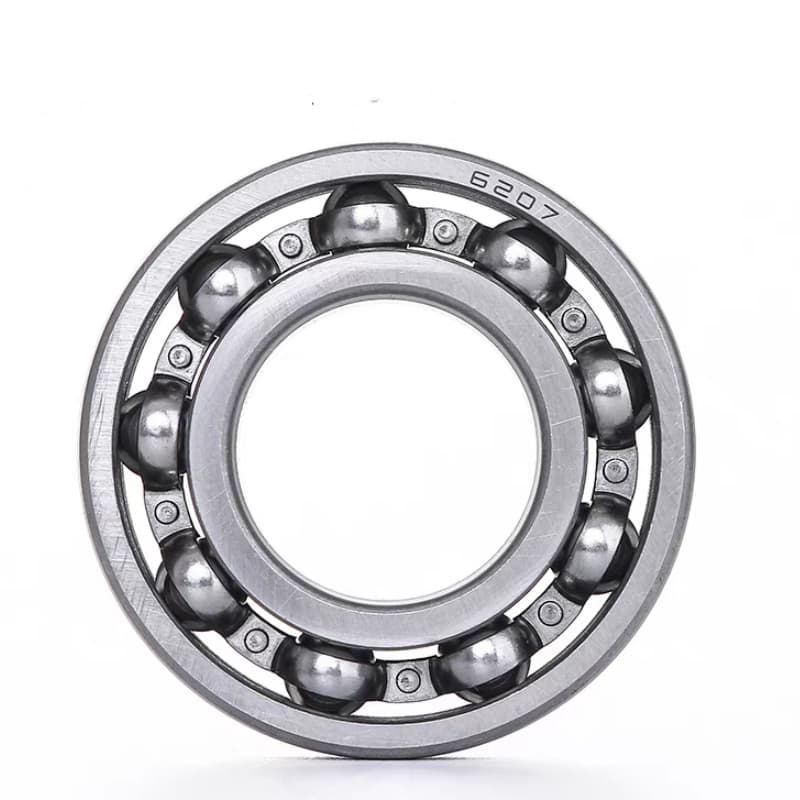
Many importers like Rajesh in Mumbai start with generic bearings. Then they see the value of having their own brand. But the path from idea to finished product has many steps. You need to know who makes bearings in China, how global brands operate there, and the practical details like customs codes. This guide will walk you through the entire process.
Who makes ball bearings1 in China?
China’s bearing industry is massive and layered. It ranges from small workshops to advanced, automated factories. Knowing who makes what is the first step to finding the right partner for your OEM project.
Thousands of factories in China make ball bearings1, broadly divided into large state-owned groups (like C&U Group2), major private manufacturers, and specialized smaller factories. For OEM branding3, look for integrated private factories with strong R&D and quality control4, not just assembly shops or traders.
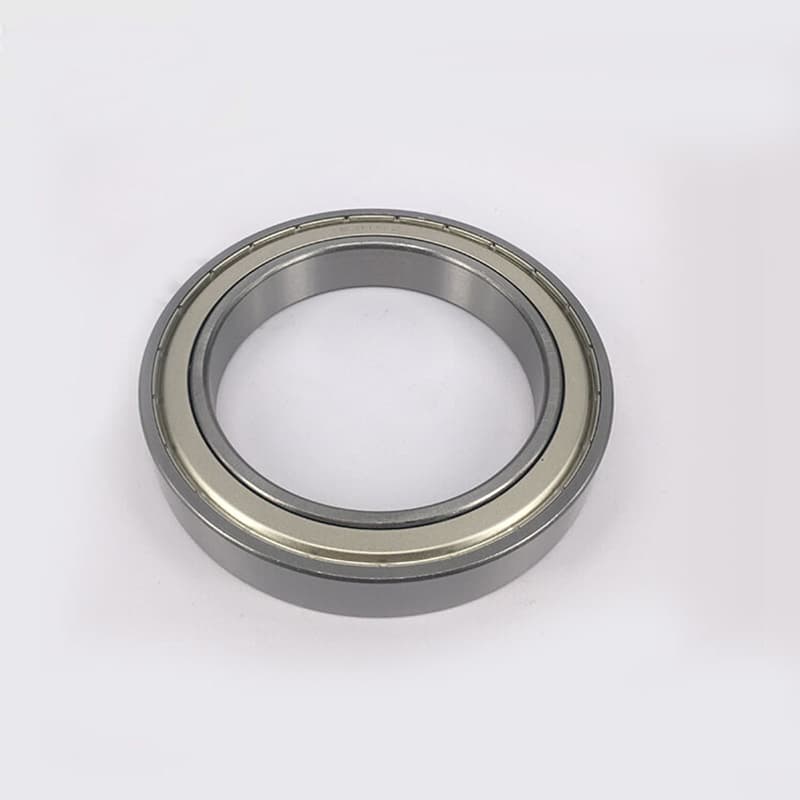
Understanding China’s Bearing Manufacturing Ecosystem
To find a good OEM partner, you need to look beyond a company’s website. You must understand their real capabilities. Let’s break down the landscape.
First, the major state-owned and large private groups. Companies like C&U Group2, Wanxiang Group, and LYC Bearing are giants. They have complete product lines and supply global automotive and industrial OEMs. Their strengths are scale, R&D, and comprehensive quality systems. However, for a mid-size importer’s OEM order, they might have high minimum order quantities5 (MOQs) and less flexibility. They often prioritize large-volume contracts.
Second, the tier of specialized private factories6. This is where many successful OEM partnerships happen. Factories like FYTZ Bearing fall into this category. We focus on specific bearing types, like deep groove ball bearings1 and taper roller bearings. Our strengths are different:
- Flexibility: We can accommodate lower MOQs for custom branding. We adjust production lines for specific client requests.
- Direct Communication: You often work directly with the factory owner or senior management. Decisions are faster.
- Integrated Production: We control the process from raw material to finished bearing. This gives us full quality traceability. It is a key point. Many "manufacturers" are actually assemblers who buy components from other workshops. This makes consistent quality harder to guarantee.
Third, the assemblers and trading companies. This is the riskiest category for serious OEM work.
- Assemblers: They purchase rings, balls, cages, and seals from various sub-suppliers and put them together. Quality consistency is a major challenge because they don’t control the component manufacturing.
- Trading Companies: They do not manufacture anything. They source from different factories, often chasing the lowest price. Quality and consistency can vary wildly from shipment to shipment. For OEM branding3, they add a middleman layer, complicating communication and technical adjustments.
Here is a table to help you evaluate potential partners:
| Supplier Type | Example | Best For OEM Branding? | Key Considerations for You |
|---|---|---|---|
| Large Integrated Group | C&U, LYC | Possibly, for very large volumes. | High MOQs, less flexible, process can be bureaucratic. |
| Specialized Private Factory | FYTZ Bearing | Yes, ideal for most importers. | Flexible MOQs, direct communication, full process control. |
| Assembler | Small workshops | Risky. | Quality inconsistency, unclear material source, poor traceability. |
| Trading Company | Various on Alibaba | No (for core OEM). | No control over production, quality varies, hidden costs. |
The Verification Process.
Once you identify a potential partner like a specialized factory, you must verify their claims.
- Ask for a Virtual or Physical Tour: A real factory will readily show you their production lines, heat treatment facilities, and QC lab over a video call.
- Request Audit Reports: Do they have ISO 9001 certification7? Can they share internal audit records?
- Check their Export History: Who are their current clients? Exporting to demanding markets like Europe or serving as a sub-supplier to multinationals is a good sign.
- Discuss their OEM Process: Ask specific questions. "How do you handle laser engraving setup?" "Can I provide my own packaging design?" "What is your procedure for first article inspection?" Their answers will show their experience level.
For Rajesh, who needs reliable bearings for the Indian aftermarket under his own brand, a specialized private factory is the perfect match. He gets the quality control4 of an integrated producer with the flexibility and personal attention that a larger group might not offer. The goal is to find a partner who sees your OEM project as a long-term collaboration, not just a one-time order.
Does Timken1 manufacture in China?
Yes, Timken1 does manufacture in China. The Timken1 Company, a leading global maker of tapered roller bearings2, has a significant manufacturing presence there. This fact is important for you as an OEM buyer because it shows the capability level of China’s industrial base.
Yes, Timken1 manufactures bearings in China through its owned factories. They produce high-precision tapered roller bearings2 and other engineered products for both the Chinese domestic market and global export. This demonstrates that China has the skilled workforce, technology, and supply chain to support world-class bearing manufacturing.
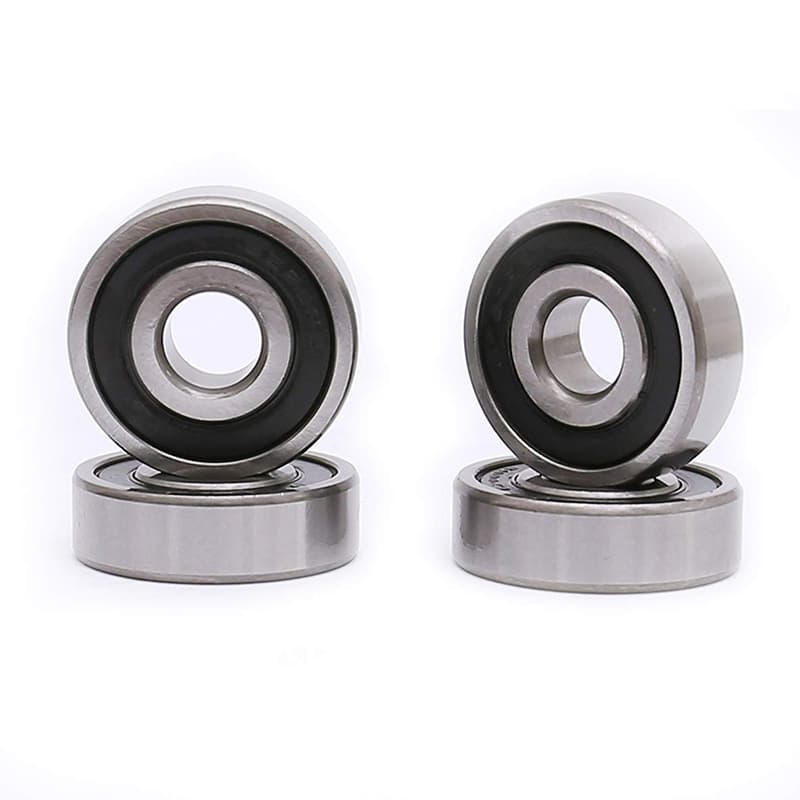
What a Global Brand’s Presence Means for Your OEM Project
The fact that Timken1 makes bearings in China is not just trivia. It has practical implications for your own sourcing strategy. Let’s explore what this means.
First, it validates the manufacturing ecosystem. For Timken1 to invest in factories in China, they must be confident in several factors:
- Skilled Labor3: The presence of a global brand means there is a pool of engineers and technicians trained to high standards. This talent pool also feeds the wider industry, including factories like ours.
- Advanced Machinery4: Timken1 factories use state-of-the-art CNC grinders, heat treatment lines, and inspection equipment. The availability and servicing of this advanced machinery exist in China, meaning other factories can also access similar technology.
- Supply Chain Maturity5: To make bearings that meet Timken1‘s specifications, the local supply chain for high-grade steel, precision components, and tooling must be mature and reliable. This infrastructure benefits all manufacturers in the region.
Second, it sets a benchmark for quality. Timken1‘s operations follow global corporate standards for quality management6, safety, and environmental practices. This creates a local benchmark. Other factories, especially those aiming to be tier-one or tier-two suppliers, often adopt similar management systems and quality control philosophies to remain competitive. When you are evaluating a potential OEM partner, you can ask about their quality systems in reference to these international standards.
Third, it highlights a two-tier market7. Timken1‘s products command a premium price based on their brand, R&D, and specific performance guarantees. Their Chinese factories are part of a global system focused on these high-end, highly engineered applications. Alongside this, there is a vast market of other Chinese manufacturers (like FYTZ) who produce bearings to international dimensional and performance standards (like ISO, ABMA) at different price points. These bearings are perfectly suitable for the vast majority of industrial, automotive, and agricultural applications. Your OEM project likely falls into this second category—you need high-quality, reliable bearings that meet standard specifications, not necessarily the ultra-premium engineering solution for a specific aerospace or extreme application.
The Key Takeaway for OEM Buyers.
You should not expect a small or mid-size Chinese factory to be exactly like Timken1. But you can and should expect them to have professional processes. The presence of Timken1 shows that the environment is capable of excellence.
When discussing your OEM project, use this knowledge to ask better questions:
- "What grade of steel do you use? Is it comparable to the material used by major international brands?"
- "What is the tolerance class of your standard deep groove ball bearings? Can you achieve P6 or P5 precision consistently?"
- "How does your heat treatment process ensure consistent hardness and core toughness?"
These questions show you are a serious buyer. They also help you gauge if the factory is operating in the professional tier of the market. At FYTZ, we welcome these questions. We use GCr15 bearing steel8, our standard precision is P0 (ABEC1) with P6/P5 available, and we have fully controlled heat treatment lines. We may not be Timken1, but we operate with the same principles of quality and consistency that make such brands successful. For your own branded line, this level of quality is what will build your reputation in markets like India, Brazil, or South Africa.
Does SKF1 manufacture in China?
Yes, SKF1 also manufactures in China. SKF1, the Swedish bearing giant, has multiple production units and a major technical center2 in China. Their strategy is similar to Timken’s but on an even larger scale, covering almost all bearing types.
Yes, SKF1 has several manufacturing plants in China producing a wide range of bearings, including deep groove ball bearings3, spherical roller bearings, and hub bearing units. They also have a large technical center2 for R&D and application engineering, solidifying China’s role as a critical hub in the global bearing supply chain.
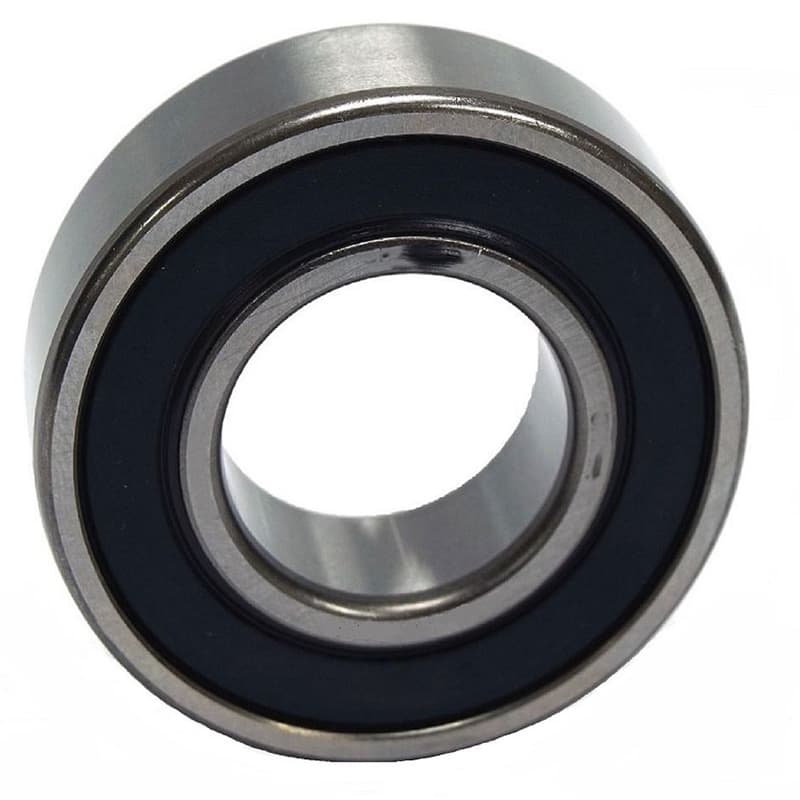
The Implications of SKF1‘s Integrated Chinese Operations
SKF1‘s presence is multifaceted. They don’t just make bearings; they have deep local engineering and logistics networks. This offers another layer of insight for your OEM sourcing4.
SKF1‘s activities in China go beyond simple assembly. They have integrated manufacturing facilities. This means they perform forging, heat treatment, grinding, and assembly under one roof. This is the same model that reliable smaller factories emulate. For you, the lesson is clear: an integrated factory is a sign of quality control5. It is a model you should look for in your own OEM partner. A factory that only assembles purchased parts has less control over the final product’s consistency.
The SKF1 Technical Center is a key point. This center does application engineering, testing, and product development for the Asian market. Its existence means there is a high concentration of bearing engineering expertise6 in China. This expertise disperses into the local industry over time. Engineers and managers who trained or worked at SKF1 or similar multinationals often move to other companies, bringing their knowledge with them. This raises the overall technical level of the manufacturing base.
What This Means for Your Deep Groove Ball Bearing OEM Project:
- Access to High-Level Components: The advanced supply chain that supports SKF1 also supplies other factories. This means your OEM partner can likely source high-quality raw materials (steel tubes, wire for balls), precision seals, and advanced lubricants locally.
- Benchmarking Quality: SKF1 products are known for their consistency and long life. While your target market may not require the SKF1 premium, you can use their standards as a reference. Ask your potential supplier about their processes for ensuring material purity, grinding accuracy, and cleanliness—all factors that SKF1 emphasizes.
- Understanding the Market Segmentation: SKF1 serves the premium segment. Your branded product, produced with a reliable Chinese factory, will target the value segment. This is a huge and profitable market. The goal is not to counterfeit SKF1, but to offer a quality-assured alternative under your own trusted brand name. Companies like FYTZ enable this by providing bearings that meet international size and performance standards at a competitive cost.
A Practical Comparison for Clarity:
Let’s imagine you are Rajesh, sourcing OEM 6205 deep groove ball bearings3.
| Aspect | SKF1 6205 (Made in China) | Your OEM 6205 (Made at FYTZ) | Your Advantage |
|---|---|---|---|
| Brand Power | Extremely high, global recognition. | Building your own brand loyalty in your local market. | You control the customer relationship and margin. |
| Price Point | Premium, includes brand premium. | Competitive, based on manufacturing cost + margin. | You can offer better value to your customers. |
| Technical Support | Extensive global engineering network. | Direct factory support from your partner on specifications and application. | More personalized and responsive service for your needs. |
| Core Quality | Very high, consistent. | High, meeting ISO standards (P0/P6), with traceability. | You get reliable performance for most applications at a lower cost. |
| Customization | Limited to their standard catalog. | Fully customizable: laser marking, packaging, grease, seals. | Your product is unique to your market needs. |
The existence of SKF1‘s high-end manufacturing in China does not make other factories obsolete. It actually validates the ecosystem. It proves that with the right partner, you can access manufacturing capability that is part of the same world-class supply chain. Your job is to find the partner whose business model aligns with yours—one focused on producing excellent bearings for distributors and brands like yours, not competing directly in the premium OEM space.
What is the HS code for deep groove ball bearing?
The HS (Harmonized System) code is a universal language for international trade. Knowing the correct code for your deep groove ball bearings is not just paperwork. It is essential for accurate shipping, calculating import duties, and avoiding customs delays in your country.
The standard HS code for deep groove ball bearings is 8482.10.00. This code falls under Chapter 84 of the HS system, specifically for "ball or roller bearings." It is crucial for importers to use this code correctly on commercial invoices and packing lists to ensure smooth customs clearance1.
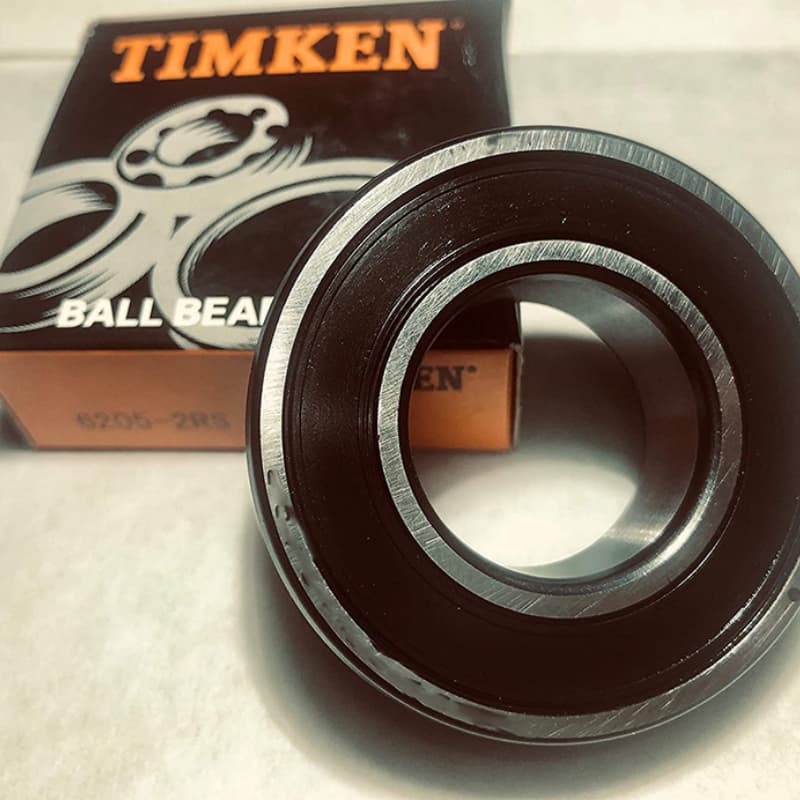
The Importance and Nuances of the HS Code 8482.10.00
As an exporter, I prepare shipping documents daily. A wrong HS code can cause your shipment to be held at port, lead to wrong duty calculation2s, or even result in fines. Let’s break down this code and its implications.
First, understanding the code structure.
- 84: The Chapter. This is for "Nuclear reactors, boilers, machinery and mechanical appliances; parts thereof."
- 82: The Heading. This is for "Ball or roller bearings."
- 10: The Subheading. This specifies "Ball bearings."
- 00: Further subdivision. This often indicates "Other" or the most general category for deep groove ball bearings.
This code (8482.10.00) covers most common deep groove ball bearings, whether they are open, shielded (ZZ), or sealed (2RS). It applies to bearings from small sizes used in electric motors to larger sizes used in industrial machinery.
Why getting it right matters for you, the importer.
- Accurate Duty Calculation: Every country has a customs tariff schedule. The duty rate for bearing imports is tied to the HS code. If the code is wrong, you might pay too much or too little duty. Paying too little can lead to back duties and penalties later.
- Smooth Customs Clearance: Customs officials use the HS code to identify the product. An incorrect code raises red flags. It can cause inspections, delays, and require you to submit corrected documents. For a perishable shipment, this is a disaster. For bearings, it means your goods sit in a port warehouse accruing demurrage charges.
- Trade Statistics and Compliance: Governments use HS codes to track import and export data. Using the correct code ensures accurate trade statistics3. It also helps with compliance against any trade remedies, like anti-dumping duties, that might apply to specific codes from specific countries.
Potential Complications and Sub-Categories.
While 8482.10.00 is the standard, there can be nuances.
- Precision Class: Extremely high-precision bearings (like ABEC 7/P4 or higher) for machine tool spindles might be classified under a more specific code in some countries. However, for standard P0/P6 precision deep groove ball bearings, 8482.10.00 is correct.
- Part of an Assembly: If the bearing is already installed in a housing (like a pillow block), the entire unit may have a different HS code.
- Country-Specific Variations: The first 6 digits (8482.10) are harmonized globally. However, countries can add extra digits (8-digit or 10-digit codes) for more detailed national tracking. As the importer, you or your customs broker are responsible for using the correct national code. We, as the exporter, provide the internationally recognized 6-digit code.
How a Professional Supplier Helps.
A reliable factory like FYTZ will always list the correct HS code on our commercial documents (Commercial Invoice, Packing List). We confirm this with you before shipping. We understand that our job is not done when the container leaves our factory. Smooth logistics are part of the service.
Here is a simple table to clarify related codes:
| Product Description | Typical HS Code (6-digit) | Notes |
|---|---|---|
| Deep Groove Ball Bearing | 8482.10 | Your standard product for OEM branding4. |
| Tapered Roller Bearing | 8482.20 | A different sub-heading under the same heading. |
| Spherical Roller Bearing | 8482.30 | Another common type we produce. |
| Bearing Housings (without bearings) | 8483.30 | A different heading for parts. |
| Pillow Block (Bearing + Housing) | 8483.30 | Often classified as a housing unit. |
For Rajesh, importing to India, he must ensure his customs broker uses the correct Indian tariff code based on 8482.10. We provide the foundation with accurate documentation. This attention to detail prevents problems and is a sign of a professional supplier. When discussing your OEM order, don’t hesitate to ask about the HS code and documentation. It shows you are managing the entire import process professionally
Conclusion
Building your own bearing brand with a Chinese OEM partner is a powerful growth strategy. Success depends on choosing an integrated factory, communicating specifications clearly, and managing the process from prototyping to logistics.
-
Explore this resource to learn about the customs clearance process and how to avoid common pitfalls. ↩ ↩ ↩ ↩ ↩ ↩ ↩ ↩ ↩ ↩ ↩ ↩ ↩ ↩ ↩ ↩ ↩ ↩ ↩ ↩ ↩ ↩ ↩ ↩ ↩ ↩ ↩ ↩ ↩ ↩ ↩ ↩ ↩ ↩
-
This link will help you understand how duty calculations work and the importance of using the correct HS code. ↩ ↩ ↩ ↩ ↩ ↩ ↩
-
Discover how HS codes impact trade statistics and compliance, essential for any importer. ↩ ↩ ↩ ↩ ↩ ↩
-
Understand the implications of OEM branding on imports and how it relates to HS codes and duties.
. ↩ ↩ ↩ ↩ ↩ -
Find out about effective quality control practices to ensure product consistency and reliability. ↩ ↩ ↩
-
Explore the relationship between engineering expertise and manufacturing quality for better outcomes. ↩ ↩ ↩
-
Learn about the two-tier market concept and its implications for sourcing strategies. ↩ ↩
-
Investigate GCr15 bearing steel to understand its advantages in bearing manufacturing. ↩