
The container is about to be sealed. Once it leaves the factory, any defect becomes your problem. A failed bearing in your customer’s machine costs far more than the bearing’s price. The final, hands-on inspection before shipment is your last and most critical line of defense.
Conduct pre-shipment inspection by performing visual checks for surface defects, rust, and proper markings; dimensional verification of bore, OD, and width against ISO tolerances; radial clearance measurement; and a functional assessment through smooth manual rotation. This process catches manufacturing flaws and prevents shipment of non-conforming goods.
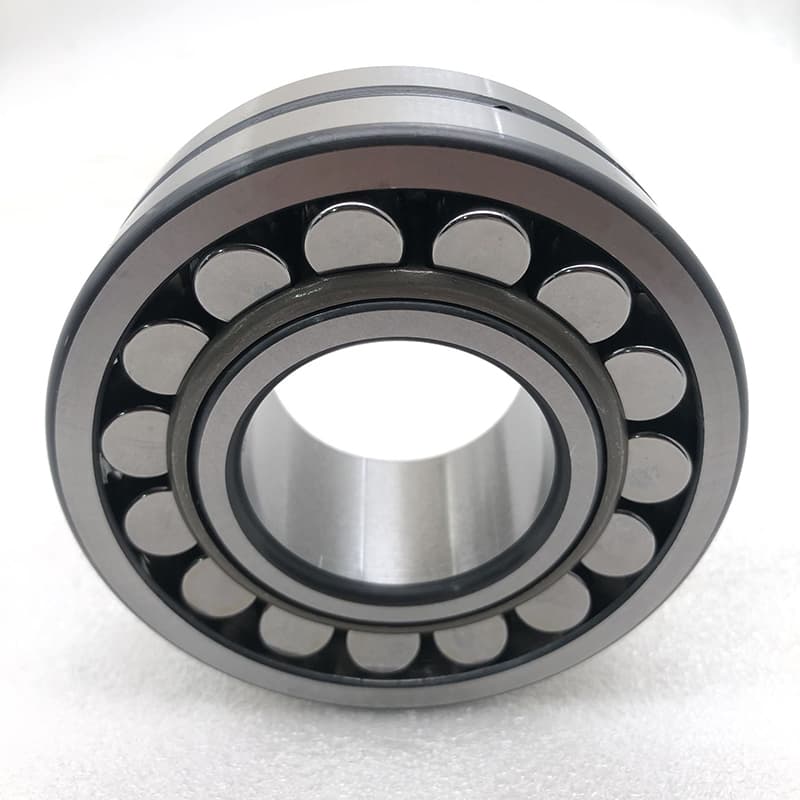
This is not a casual glance. It is a systematic, documented process that separates professional importers and distributors from those who just hope for the best. Whether you are inspecting your own FYTZ order or auditing a supplier, this guide will walk you through a foolproof method. Let’s start with the most immediate check: your eyes.
How to visually inspect bearings?
Your eyes can spot many problems before you touch a tool. A visual inspection1 is fast, free, and reveals a lot about the care taken in manufacturing and handling. I’ve seen bearings rejected based on sight alone, saving costly downstream failures.
Visually inspect bearings under good light. Look for surface defects2 like cracks, nicks, rust, or discoloration (grinding burns). Check for proper, clear stamping of the bearing number and brand. Examine seals or shields for damage or improper fit. Look for contamination or improper grease fill in open bearings.
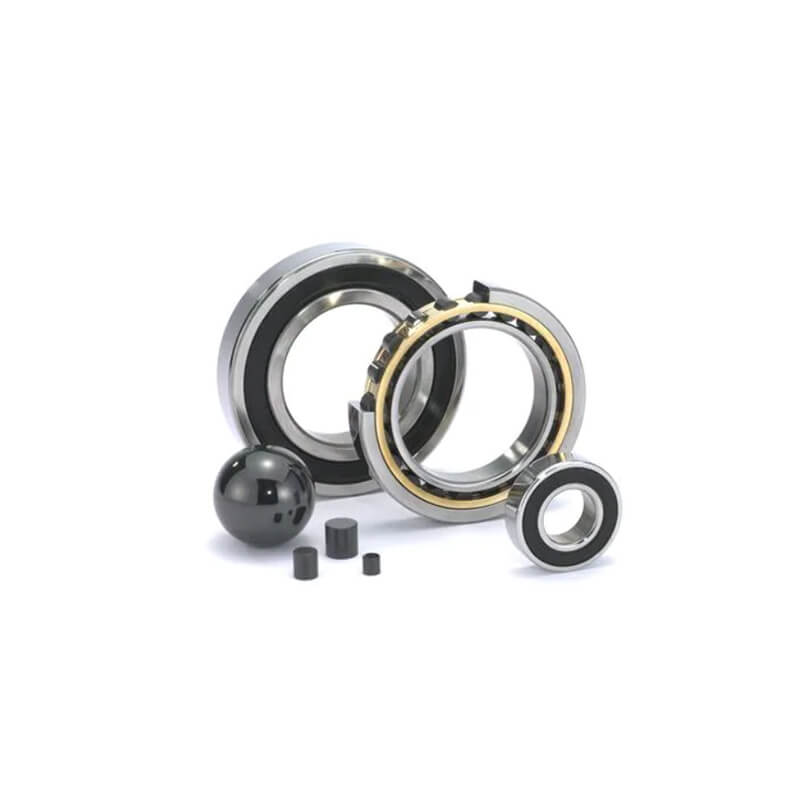
A Systematic Visual Inspection Protocol
Don’t just look; scan with purpose. Follow a consistent sequence to ensure you don’t miss anything.
1. The Initial Overall Scan
Pick up the bearing. Look at its general condition under bright, white light (a good LED lamp is ideal). Does it look new and clean, or is it already stained or oily? The overall appearance sets the tone.
2. Detailed Surface Examination
Now, examine each component systematically:
- Outer Ring: Rotate it slowly. Look at the outer diameter surface and the side faces. Check for:
- Rust or Corrosion: Even small spots can grow during ocean transit.
- Dents or Nicks: From improper handling with tools.
- Grinding Burns: A bluish or straw-colored discoloration on the raceway or side faces. This indicates excessive heat during grinding, which weakens the steel.
- Inner Ring: Repeat the process. Also, check the bore surface for scratches.
- Rollers (if visible through the cage): Look for scratches, pitting, or uneven finish on the rollers.
3. Marking and Identification Check
This is a critical traceability and authenticity check.
- Clarity: The markings (brand, bearing number, origin, clearance group) should be stamped clearly and deeply. Faint, shallow, or smeared markings are a red flag for poor process control or counterfeit products.
- Accuracy: Verify that the stamped number matches the bearing you ordered (e.g., 22213 C3).
4. Seal and Lubricant Inspection
- Seals/Shields: Ensure they are fitted evenly, not cocked or protruding. Check for cuts or tears in rubber seals.
- Open Bearings: Check the grease. It should be a consistent color (usually light yellow or blue) and fill the spaces evenly. Look for signs of separation (oil pooling) or contamination (dark chunks or grit).
For an importer like Rajesh’s company, training warehouse staff3 on these visual cues is powerful. They can quickly sort obviously defective bearings. A simple visual inspection sheet4ps://sensemore.io/what-is-visual-inspection-in-maintenance/?srsltid=AfmBOoos0_ixiJg2YIogcblPxhPtjeneXybV1fn-G-pglqPloBi3J2)1 sheet can be used:
| Visual Check Item | Acceptable | Not Acceptable |
|---|---|---|
| Surface Finish | Smooth, uniform, metallic shine. | Grinding burns (blue/brown), deep scratches, rust. |
| Markings | Clear, deep, legible stamp. | Faint, missing, or incorrect markings. |
| Seals/Shields | Evenly fitted, no damage. | Crooked, torn, or loose. |
| General Cleanliness | Free of dirt, metal chips, excessive oil. | Visible contamination or grease leakage. |
Catching these issues before shipment allows the factory (like FYTZ) to replace the defective units immediately, at their cost. It prevents arguments and delays after the goods arrive at your port.
How to check spherical roller bearing clearance?
The internal radial clearance1 is a vital hidden dimension. It’s not about the size of the bearing, but the space inside it. Incorrect clearance will cause overheating (if too tight) or impact damage (if too loose). You must verify it matches the specification (e.g., C3, C4).
To check spherical roller bearing radial clearance2, mount the inner ring and fix it. Apply a dial indicator3 perpendicular to the outer ring. Push and pull the outer ring firmly in the radial direction. The total movement on the dial indicator3 is the radial internal clearance. Compare this measured value to the standard range for the specified clearance group (C2, CN, C3, C4).
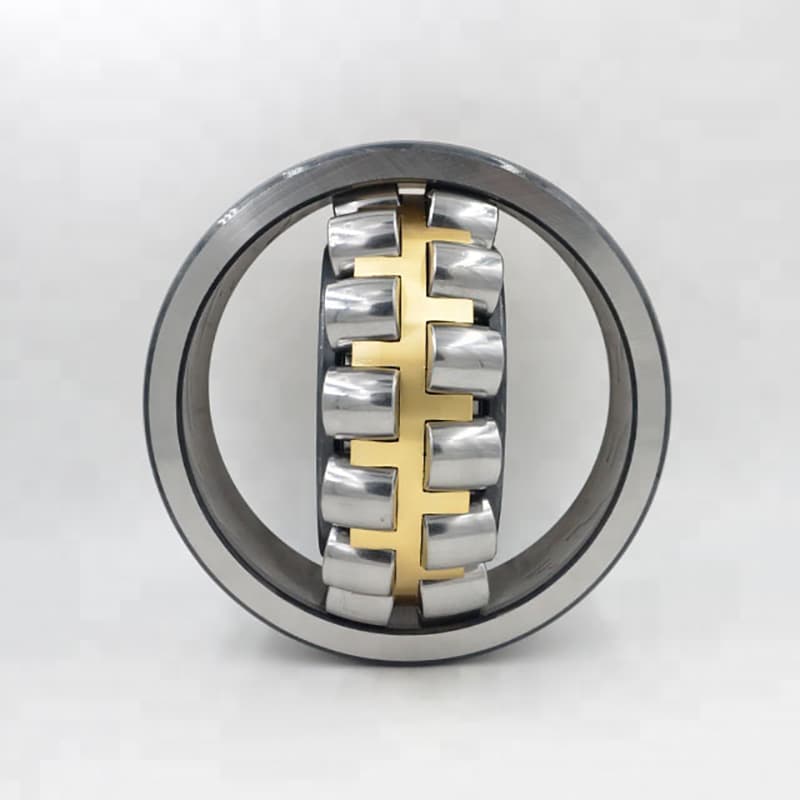
The Practical Method and Interpretation of Results
This check requires a simple setup but provides immense insight into the bearing’s internal geometry and fit for your application.
1. The Setup and Measurement Process
You need a flat surface (a granite plate or heavy table), a V-block or fixture to hold the inner ring, a dial indicator3, and a stand.
- Place the bearing with its inner ring resting securely in the V-block or clamped down. The outer ring must be free to move.
- Position the tip of the dial indicator3 against the outer ring’s outside diameter, perpendicular to it.
- Zero the dial indicator3.
- Apply firm hand pressure to push the outer ring away from the indicator, then pull it towards the indicator. Do this in several radial directions.
- The total range of movement shown on the dial (from the lowest to the highest reading) is the radial internal clearance.
2. Understanding and Applying the Results
- Clearance Groups: Bearings are manufactured with standardized clearance ranges larger than "zero" to account for thermal expansion. Common groups are CN (Normal), C3 (greater than Normal), C4 (greater than C3).
- Comparison: You must have a reference table for the clearance group. For example, for a 22213 bearing, the C3 clearance range might be 0.075mm to 0.135mm. Your measured value must fall within this range.
- What the Results Tell You:
- Within Range: The bearing is correctly manufactured for that clearance group.
- Below Minimum: The clearance is too tight. This could lead to preload and overheating in operation.
- Above Maximum: The clearance is too loose. This will cause vibration and impact loads.
3. Why This Matters for Pre-Shipment Inspection
A batch of bearings all measuring at the very low end of the C3 range might behave like CN bearings after the inner ring expands from heat. A batch with excessive variation (some tight, some loose) indicates poor manufacturing process control4. Checking clearance on a sample (e.g., 5-10 bearings from a batch) is a excellent quality indicator.
For a technical distributor or importer, this check is a strong differentiator. When Rajesh’s team performs this on a sample from an FYTZ shipment and finds consistent, in-spec clearance, it provides concrete data to assure their end customers of the bearing’s fitness for purpose. It moves the conversation from "it looks okay" to "we verified its critical internal geometry."
How do you inspect a bearing prior to installation what to look for?
This question blends pre-shipment and pre-installation checks. Before a bearing goes into a machine, you perform a final, thorough inspection. For an importer, this is also what your customer will do. Your pre-shipment inspection1 should be even more rigorous to ensure your customer’s pre-installation check finds no issues.
Prior to installation, inspect the bearing for cleanliness, damage from handling or storage, proper internal clearance2, smooth and quiet rotation3, and verify the shaft and housing are clean and within dimensional tolerance. This ensures the bearing starts its life in optimal conditions.
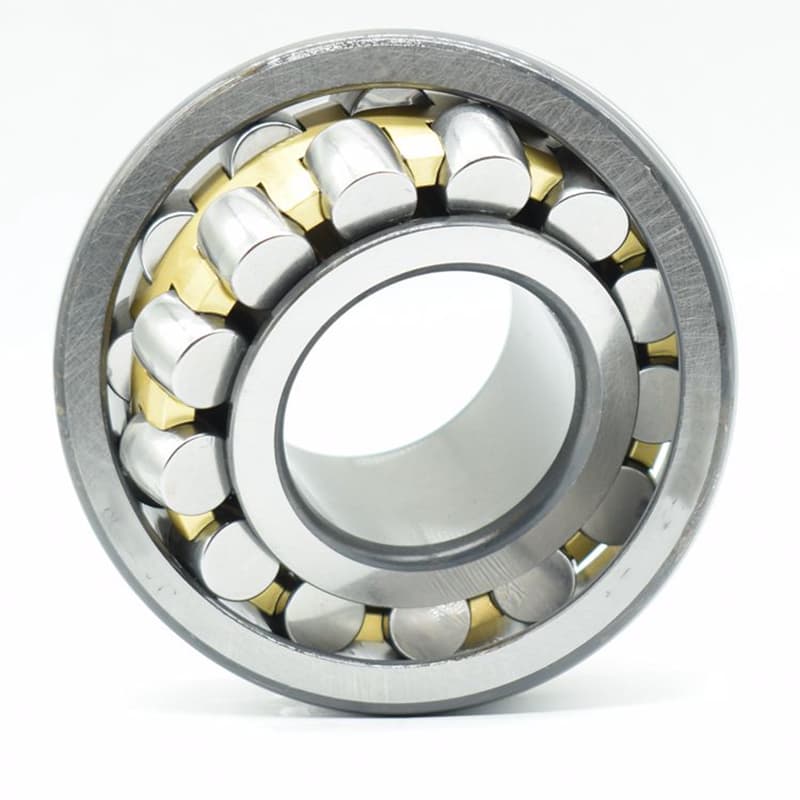
The Final Verification: From Your Warehouse to the Customer’s Machine
Think of this as the last check before the point of no return. It combines all previous checks with a focus on installation readiness.
1. The Bearing Itself (Re-check)
Even if it passed pre-shipment, handle it carefully in your warehouse. Before sending it to a customer or installing it yourself, do a quick recap:
- Cleanliness: Blow off any dust with dry, clean air. Wipe with a lint-free cloth if needed. Never spin a bearing with compressed air, as it can damage it.
- Visual Re-check: Look for any new nicks or corrosion that may have occurred in storage.
- Hand Rotation: Give it one final smooth spin by hand. It should feel the same as when it arrived.
2. The Critical "Fit-for-Purpose" Verification
This is often overlooked by importers but is the source of many "bearing failure" complaints that aren’t the bearing’s fault.
- Verify Shaft and Housing Dimensions: This is arguably the most important pre-installation step. Use micrometers and bore gauges to measure the actual shaft diameter and housing bore. Compare them to the drawings or the bearing’s specifications. They must be within the prescribed tolerance for the desired fit (e.g., g6 for shaft, H7 for housing).
- Check Surface Finish: The shaft and housing seats should be smooth and free of burrs, scratches, or corrosion. A rough surface will damage the bearing during press-fit.
3. Documentation and Preparation
- Have the Correct Tools Ready: Induction heater for the inner ring, proper mounting tools. Ensure they are clean.
- Review Lubrication Requirements: Is the bearing pre-greased? Does it need additional, specific lubricant?
For an importer like Rajesh, this broader perspective is crucial. When they supply bearings, they can add value by providing simple guidance notes to their customers: "Before installing, please check your shaft diameter is 65.000mm – 65.011mm for a proper fit with our 22213 bearing." This proactive advice prevents installation errors and builds their reputation as a technical partner, not just a parts seller.
What are some important checks when determining the serviceability of a bearing?
This question looks at used bearings, but the principles are vital for pre-shipment inspection1 of new ones. You are checking if a new bearing is serviceable—that is, fit for its intended service life. Many of the checks are the same, just with different acceptance criteria.
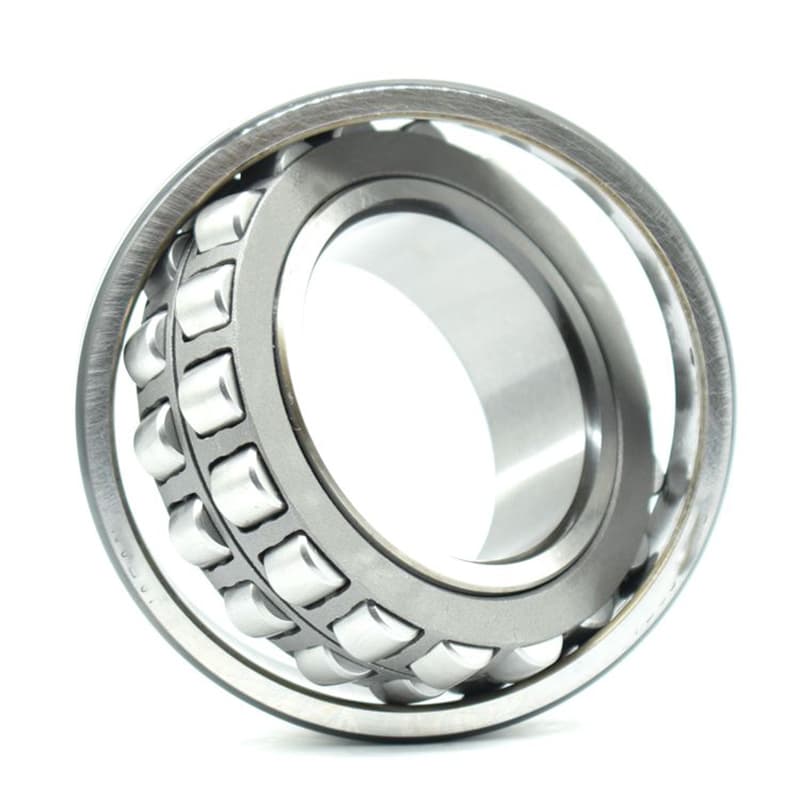
Important serviceability checks for a new bearing include dimensional accuracy2, surface integrity3 (no defects), internal clearance, rotational smoothness4 and noise level, vibration characteristics5, and material hardness6. For a used bearing, you add checks for wear, spalling, discoloration from overheating, and cage integrity.
A Holistic Serviceability Assessment Framework
A bearing is a system. Its serviceability depends on all components being within specification. Your pre-shipment inspection1 should mimic a serviceability assessment to predict field performance.
1. The Material Integrity Check (The Foundation)
While you can’t easily test hardness in a warehouse, you can look for signs of poor material processing:
- Discoloration: As mentioned, grinding burns indicate local overheating and softened material.
- Cracks: Use a magnifying glass to inspect stress concentration areas like undercuts and raceway edges. A dye penetrant test can be used for critical applications.
2. The Geometric and Assembly Check (The Structure)
- Dimensional Accuracy: Covered earlier. Out-of-spec dimensions mean it won’t fit or will fit incorrectly.
- Runout: This checks how much the raceways "wobble" as the bearing rotates. Excessive runout causes vibration. A simple dial indicator check can be set up on the inner ring while rotating the outer ring (or vice-versa).
- Cage Fit and Security: The cage should be centered and should not have excessive axial play. Rollers should not fall out when the bearing is tilted (for some designs).
3. The Dynamic Performance Check (The Behavior)
This is the closest you get to simulating actual operation.
- Rotational Smoothness: The hand spin test. Any grit, binding, or irregularity indicates internal geometry problems or contamination.
- Vibration/Acoustic Emission: As discussed, a basic vibration check on a test spindle can reveal imbalances or subsurface defects that are not visible.
Creating a Pre-Shipment Serviceability Scorecard:
You can combine these checks into a simple scorecard for each sampled bearing. This turns subjective judgment into objective data.
| Check Category | Specific Test | Tool Required | Pass/Fail Criteria |
|---|---|---|---|
| Material & Surface | Visual for burns, cracks, rust. | Good light, magnifying glass. | No defects found. |
| Dimensions | Bore, OD, Width measurement. | Micrometer, bore gauge. | Within ISO tolerance for specified class. |
| Internal Geometry | Radial Clearance measurement. | Dial indicator, fixture. | Within range for specified clearance group. |
| Dynamic Feel | Manual rotation. | None. | Smooth, free, silent rotation. |
| Marking & Packaging | Legibility, correctness, protection. | Visual. | Clear stamps, proper anti-rust packaging. |
When a factory like FYTZ knows you will perform these checks, they are incentivized to get it right the first time. For the importer, this systematic approach provides confidence and creates a defendable record. If a bearing later fails in service, you can refer back to its pre-shipment inspection1 record to see if it was a latent defect or an application/installation issue.
Conclusion
A thorough pre-shipment inspection combining sharp visual checks, precise dimensional measurement, and functional assessment is the most effective way to ensure the spherical roller bearings you receive are reliable and ready for long service life. It protects your investment and upholds your reputation for quality.
-
A thorough understanding of pre-shipment inspections can enhance quality control and reduce the risk of defects. ↩ ↩ ↩ ↩ ↩ ↩ ↩
-
Understanding dimensional accuracy is crucial for ensuring that bearings fit correctly and function optimally. ↩ ↩ ↩ ↩
-
Exploring surface integrity assessment methods can help you identify defects that may affect bearing performance. ↩ ↩ ↩ ↩ ↩ ↩ ↩ ↩
-
Learning about tests for rotational smoothness can help ensure that bearings operate without issues. ↩ ↩ ↩
-
Understanding vibration characteristics can help predict potential failures and improve reliability. ↩
-
Exploring material hardness testing methods can provide insights into the durability and longevity of bearings. ↩
