
You receive a container of spherical roller bearings. They look perfect. But when installed, they cause excessive machine vibration or a troubling hum. Your customer is angry. The financial loss and reputational damage are huge. Setting clear acceptance criteria for noise and vibration is your shield.
Importers should define bearing acceptance criteria using ISO standards for vibration (ISO 15242), establish baseline vibration velocity limits (e.g., ≤ 1.8 mm/s for medium bearings), understand that some inherent vibration is normal (Varying Compliance Vibration), and perform sample testing before accepting bulk shipments to ensure quality matches specifications.
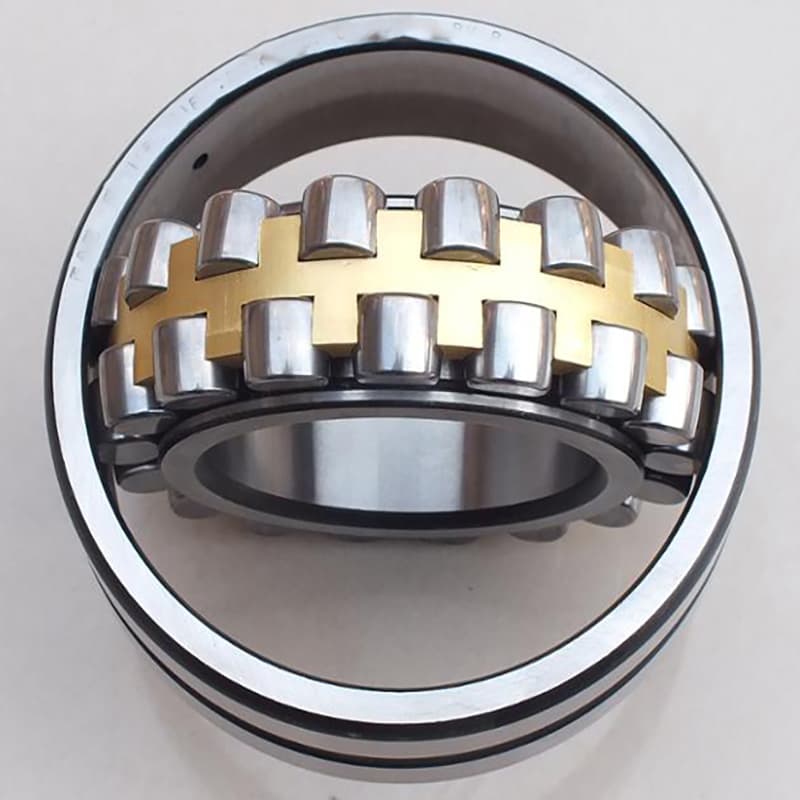
Visual inspection is not enough. Noise and vibration are the first indicators of internal quality—geometric precision, surface finish, and assembly consistency. As an importer, you must move beyond trusting the packing list to verifying performance. Let’s establish a practical framework for acceptance.
What is the ISO standard for spherical roller bearings?
You need a rulebook to judge the bearings you import. ISO standards are that rulebook. They define not just dimensions and load ratings, but also the methods to measure the very characteristics—like vibration—that determine if a bearing is fit for purpose.
The key ISO standard for evaluating spherical roller bearing vibration is ISO 152421. This standard specifies how to measure vibration on unmounted bearings under controlled laboratory conditions. It provides a method to classify bearing vibration levels, allowing for objective quality comparison between different batches or suppliers.
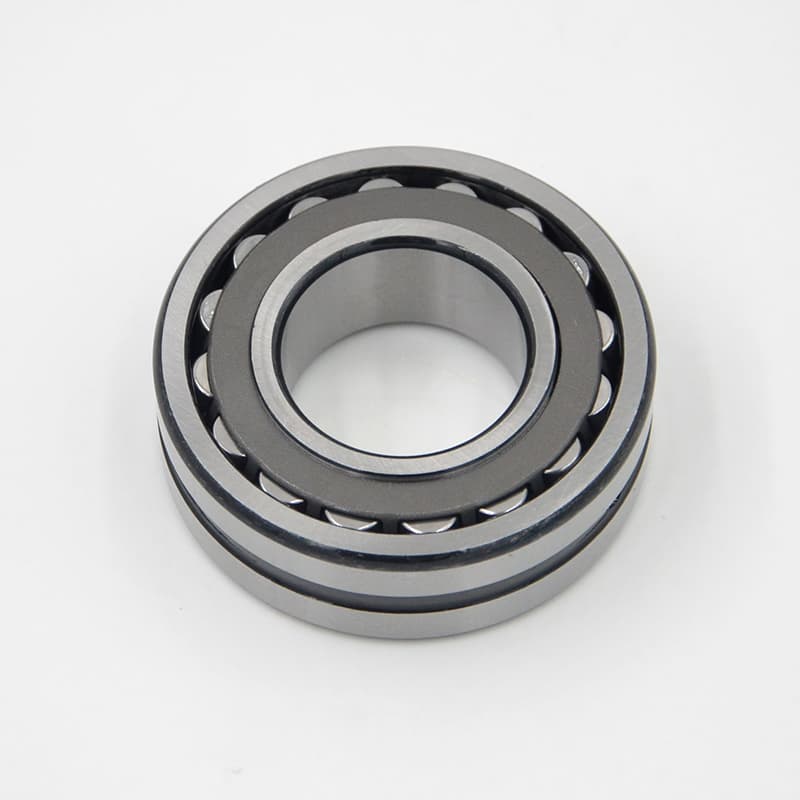
ISO 152421: Your Technical Arsenal for Quality Control
ISO 152421 is not a simple pass/fail test. It’s a structured measurement procedure that generates comparable data. As an importer, referencing this standard in your purchase agreements elevates your quality demands.
1. The Core of the Standard: The Test Method
The standard mandates a specific test setup:
- The bearing is placed on a quiet, precision test spindle2.
- A vibration velocity sensor3 is attached to the bearing’s outer ring.
- The bearing is run at a defined speed (e.g., 1800 rpm) under a light axial load.
- Vibration is measured in the low-frequency band (50-300 Hz) and the high-frequency band (300-1800 Hz). These bands help diagnose different types of defects.
2. Vibration Classes: Defining "Good" vs. "Bad"
Based on the measured velocity (in µm/s or mm/s), bearings can be grouped into vibration classes. While ISO 152421 provides the method, manufacturers often define their own class limits. A common reference point is comparing against the manufacturer’s own published vibration criteria4 or industry norms.
- Low Vibration Class: Suitable for applications requiring smooth, quiet operation (e.g., fans, certain gearboxes).
- Standard Vibration Class: Acceptable for most general industrial applications (e.g., conveyors, crushers).
- Higher than Standard: May indicate manufacturing inconsistencies and could lead to premature noise issues in sensitive applications.
3. How to Use This Standard in Your Importer QC
- In Your RFQ/Contract: Specify "Spherical roller bearings shall have vibration levels tested per ISO 152421. Vibration velocity shall not exceed [Supplier’s] published standard grade limits. Test reports shall be made available."
- Upon Shipment: Require the supplier (like FYTZ) to provide ISO 15242 test certificates5.org/obp/ui/#iso:std:iso:15242:-2:ed-1:en)1 test certificates for a representative sample or the whole batch. This is your first-line documentary evidence.
- In Your Warehouse (Sample Check): Invest in a simple vibration tester. Perform spot checks on random samples from the shipment using a method that mimics ISO 152421 principles. Compare your readings to the supplied certificates.
For an importer like Rajesh’s company, this transforms quality from a hope to a verifiable condition. When sourcing from FYTZ, they can request and receive these test reports. If a competing supplier cannot provide ISO 152421 data, it’s a red flag. This standard gives you the language and the leverage to ensure you are buying a quality-controlled product, not just a commodity with a bore and OD.
What is the vibration limit on SKF bearings?
SKF sets a widely recognized benchmark. Many importers and end-users ask, "Is it as good as SKF?" Understanding SKF’s vibration limits1 provides a concrete reference point for setting your own acceptance criteria, especially when evaluating alternative suppliers.
SKF defines vibration limits1 for its bearings based on internal standards that align with ISO 152422 principles. They classify bearings into V1, V2, V3, and V43 vibration groups, with V1 being standard and V4 being ultra-low vibration. The exact limit in µm/s depends on bearing size and type. For a typical medium-sized spherical roller bearing4 (e.g., 222 series), the standard (V1) vibration velocity5 might be in the range of 100-200 µm/s (0.1-0.2 mm/s).
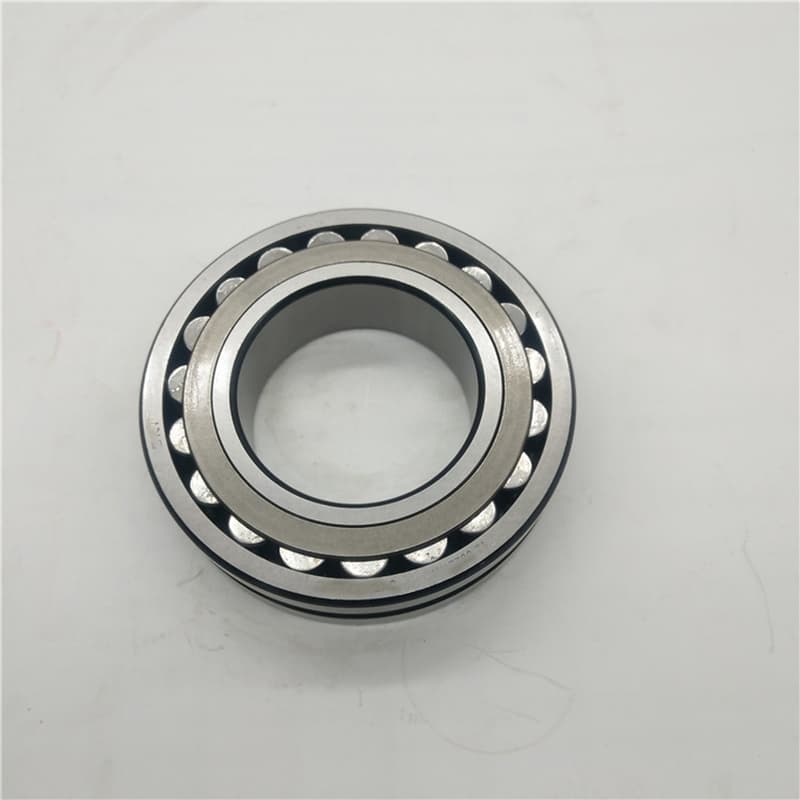
Using Benchmark Data to Set Realistic Importer Expectations
You don’t need to match SKF’s premium V4 grade for every application. But knowing their standard (V1) limits gives you a powerful tool to assess if a supplier’s bearings are in the right "ballpark" for industrial use.
1. The Purpose of SKF’s Vibration Groups
- V1 (Standard): For general applications. This is the baseline most industrial bearings should meet.
- V2, V3, V4 (Low/Ultra-Low): For applications where vibration is critical, like high-speed motors or precision machinery. These command a significant price premium.
2. Translating the Benchmark for Your Imports
As an importer, your goal for standard industrial spherical roller bearing4s should be to source products that consistently meet a vibration level equivalent to or close to SKF’s V1 standard for the corresponding size. You can obtain SKF’s published vibration data for specific bearing numbers from their catalog or website.
3. How to Apply This in Supplier Evaluation and QC
- During Supplier Qualification: Ask potential suppliers, "Can you provide vibration test data6 for your 22220 bearing, and how does it compare to SKF’s V1 level for that size?" A reputable manufacturer like FYTZ will have this data and be transparent.
- Setting Contractual Limits: Instead of a vague "low vibration," you can specify: "Vibration velocity for bearing 22220 shall be ≤ 0.18 mm/s (180 µm/s) when tested per ISO 152422 at 1800 rpm." This number can be derived from SKF’s V1 data or agreed with your supplier.
- Practical Warehouse Check: A bearing that measures 0.4 mm/s is likely problematic. One that measures 0.15 mm/s is likely good for general use.
4. The Cost-Quality Balance
Insisting on V4-level vibration for a conveyor idler bearing is over-specification and wasteful. Insisting on a basic, measurable standard (like a reasonable velocity limit) protects you from defective or poorly manufactured batches. The table below provides a simplified, practical guideline for importers:
| Target Application | Vibration Benchmark | Importer Action |
|---|---|---|
| Heavy, low-speed machinery (e.g., crushers, heavy conveyors) | Meet general industrial standard. Equivalent to or slightly above SKF V1 is acceptable. | Focus on load capacity and robustness. Vibration checks guard against severe defects. |
| Medium-speed industrial drives (e.g., gearboxes, fans, pumps) | Should meet SKF V1 equivalent. This ensures smooth operation and acceptable noise. | Make vibration compliance a key contract requirement. Perform sample testing. |
| High-speed or precision applications | Require V2/V3 equivalent. | This is a specialized market. Source from suppliers with proven capability, not general traders. |
For Rajesh, this knowledge is power. When he sources spherical rollers from FYTZ for his Indian market, he can have a technical discussion. He can say, "For our customers in fan manufacturing, we need bearings with consistent low vibration. Can your 222 series meet these limits?" FYTZ can provide test data proving they can, allowing Rajesh to compete with confidence against suppliers offering only unknown-quality products.
What are varying compliance vibrations of rolling bearings?
This is a critical concept. Not all vibration is a defect. Even a perfectly manufactured bearing will produce a baseline level of vibration due to its fundamental physics. Understanding this separates normal operation from problematic noise.
Varying Compliance Vibration1 (VCV) is the inherent, low-frequency vibration generated in a rolling bearing as the number of rolling elements in the load zone changes during rotation. This causes small, periodic deflections of the rings. It is a fundamental characteristic, not a fault, and its frequency is typically at the "VCV frequency2" (RPM x Number of rolling elements / 2).
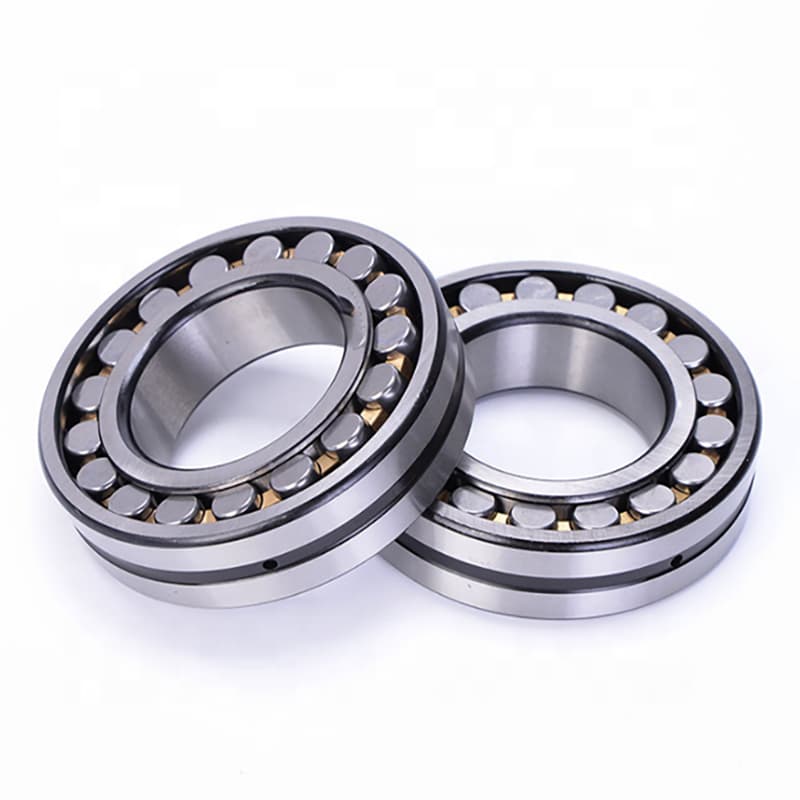
Distinguishing Fundamental Physics from Manufacturing Defects
For an importer, you must accept that bearings will have some VCV. Your acceptance criteria3 should focus on ensuring that vibration from defects does not dominate or excessively amplify this natural baseline.
1. The Mechanics of VCV
Imagine a bearing under radial load. The bottom rollers carry the load; the top ones are unloaded. As the bearing rotates, rollers move in and out of this load zone. Each time a roller enters the load zone, it gets slightly compressed. This compression and release happen cyclically, creating a tiny deflection of the outer ring. This deflection is measured as vibration.
2. Implications for Acceptance Criteria
- VCV is Unavoidable: You cannot specify "zero vibration." Any acceptance limit must allow for this inherent component.
- VCV Frequency is Predictable: For a spherical roller bearing with, say, 13 rollers running at 1500 rpm, the VCV frequency2 is 1500 * 13 / 2 = 9750 cycles per minute (162.5 Hz). Vibration energy at this frequency is normal.
- Defects Create Other Frequencies: A damaged roller creates vibration at its specific "roller defect frequency." A rough raceway creates broadband high-frequency noise. Your QC should look for excessive vibration, especially at frequencies other than the VCV frequency2.
3. Practical QC for the Importer
Sophisticated frequency analysis4 is ideal but not always practical for a warehouse. However, you can adopt a two-tier approach:
- Overall Velocity Check: Use a simple vibration meter to measure the overall vibration velocity5 (mm/s) on a test rig. Compare it to your agreed limit (e.g., 0.2 mm/s). This catches bearings with severe overall problems.
- Listen and Feel: An experienced technician can often distinguish the smooth "hum" of normal VCV from the harsh "growl" or "grinding" of a defective bearing by sound and touch.
The key is to set realistic limits that screen out bad bearings without rejecting every bearing for its natural VCV. A supplier that understands VCV, like a technical manufacturer6, will design and manufacture to minimize it where possible (through optimized internal clearance and precision) and will be able to explain the vibration profile of their product. This technical dialogue is a sign of a quality-oriented partner.
What are the disadvantages of spherical roller bearings1?
To set intelligent acceptance criteria, you must know what can go wrong. The disadvantages of spherical roller bearings1 point directly to potential failure modes that manifest as excessive noise and vibration. Your QC should specifically check for signs of these weaknesses.
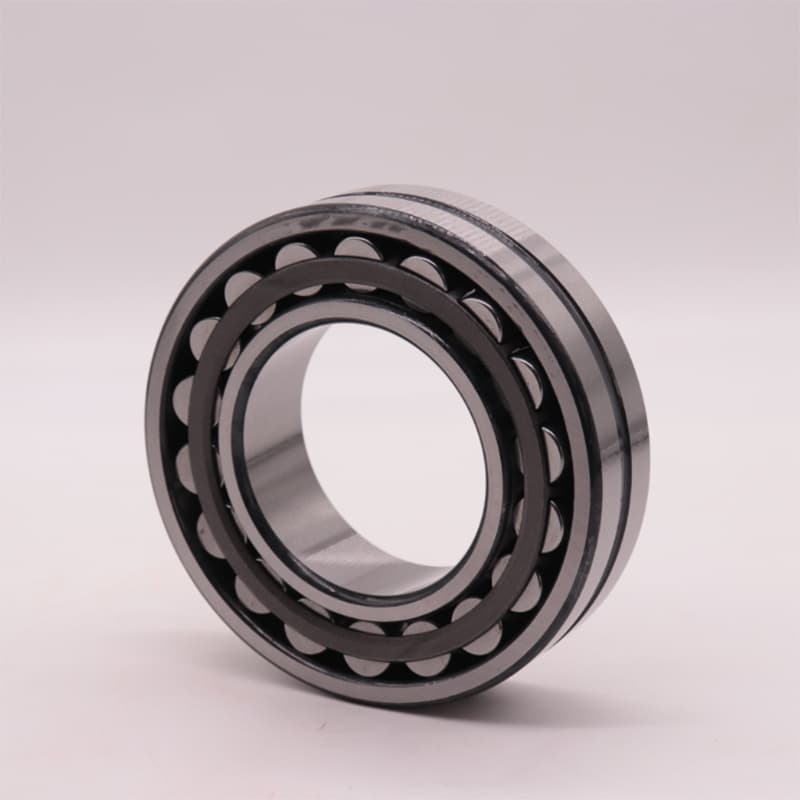
The main disadvantages of spherical roller bearings1 are their limited high-speed capability compared to ball bearings, higher friction2 leading to more heat generation, sensitivity to lubrication3 quality, and complexity in manufacturing which, if not controlled, leads to inconsistency in internal geometry and increased vibration.
Linking Disadvantages to Measurable QC Parameters
Each disadvantage translates into a vibration or noise signature that your acceptance process can detect.
1. Manufacturing Complexity & Internal Geometry
This is the biggest source of quality variation. A spherical roller bearing has three critical curvatures: the inner ring raceway, the outer ring raceway, and the roller profile. Imperfect geometry causes uneven load distribution and vibration.
- QC Focus: Consistent, low vibration per ISO 15242 is the best overall indicator of good internal geometry. High vibration in a new, unmounted bearing almost always points to geometric errors.
2. Higher Friction and Heat Generation
The line contact and sliding between rollers and guiding ribs create more friction than ball bearings. Poor lubrication or incorrect internal clearance worsens this.
- QC Focus: While hard to test statically, a bearing that feels excessively stiff or "notchy" when rotated by hand may have lubrication issues or incorrect clearance, which will lead to overheating and noise in operation.
3. Sensitivity to Lubrication and Contamination
The rollers’ sliding motion on the guide ribs requires a good lubricant film. Dry or contaminated bearings will screech or growl.
- QC Focus: Check the integrity of the bearing’s seals or shields. For open bearings, inspect the grease for consistency and cleanliness. Ensure the bearing is adequately lubricated as per the supplier’s specification.
4. Practical Acceptance Checklist for Importers
Based on these disadvantages, your receiving inspection should include:
| Potential Disadvantage Manifestation | Importer QC Check | Acceptance Criteria |
|---|---|---|
| High vibration from poor geometry. | Vibration test on sample bearings per ISO 15242 or simple comparitor. | Must be within agreed velocity limit (e.g., ≤ 0.2 mm/s). |
| Increased friction/heat potential. | Hand rotation: Feel for smoothness. | Should rotate smoothly without binding, gritty feel, or intermittent stiffness. |
| Noise from lubrication issues. | Visual inspection of seals and grease (if open). | Seals intact, no grease leakage. Grease should be clean and evenly distributed. |
| General dimensional defects. | Measurement of bore, OD, width with calipers. | Must be within standard tolerance for the bearing series. |
For an importer, these checks form a robust but practical barrier. When Rajesh receives a shipment from FYTZ, his team can perform the hand-rotation test and a spot vibration check on a few bearings. If they pass, it’s a strong indicator that the manufacturing process is under control and the disadvantages inherent to the design have been minimized through quality execution. This protects his business and his customers’ trust.
Conclusion
For importers, clear acceptance criteria for noise and vibration are essential for risk management. By leveraging ISO standards, understanding benchmark data, acknowledging inherent vibration (VCV), and targeting checks at the design’s weak points, you can ensure the spherical roller bearings you import are reliable and build your reputation for quality.
-
Understanding both sides of spherical roller bearings helps in making informed decisions for applications. ↩ ↩ ↩ ↩ ↩ ↩ ↩ ↩ ↩ ↩ ↩ ↩ ↩ ↩
-
Explore the factors contributing to friction in bearings to enhance performance and longevity. ↩ ↩ ↩ ↩ ↩ ↩ ↩
-
Learn about the critical role of lubrication in bearing performance and how to maintain it. ↩ ↩ ↩ ↩
-
Discover how frequency analysis can help identify defects in rolling bearings beyond normal vibrations. ↩ ↩ ↩ ↩
-
Find out how to effectively measure vibration velocity to ensure the reliability of rolling bearings. ↩ ↩ ↩
-
Learn what to look for in a technical manufacturer to ensure high-quality rolling bearings and minimize VCV. ↩ ↩