
Your warehouse is full of bearings. Some sizes move fast, others sit for years. Capital is tied up, and carrying costs eat your profits. As a bearing distributor, I see this struggle every day. The solution isn’t more inventory; it’s smarter inventory built around standardization.
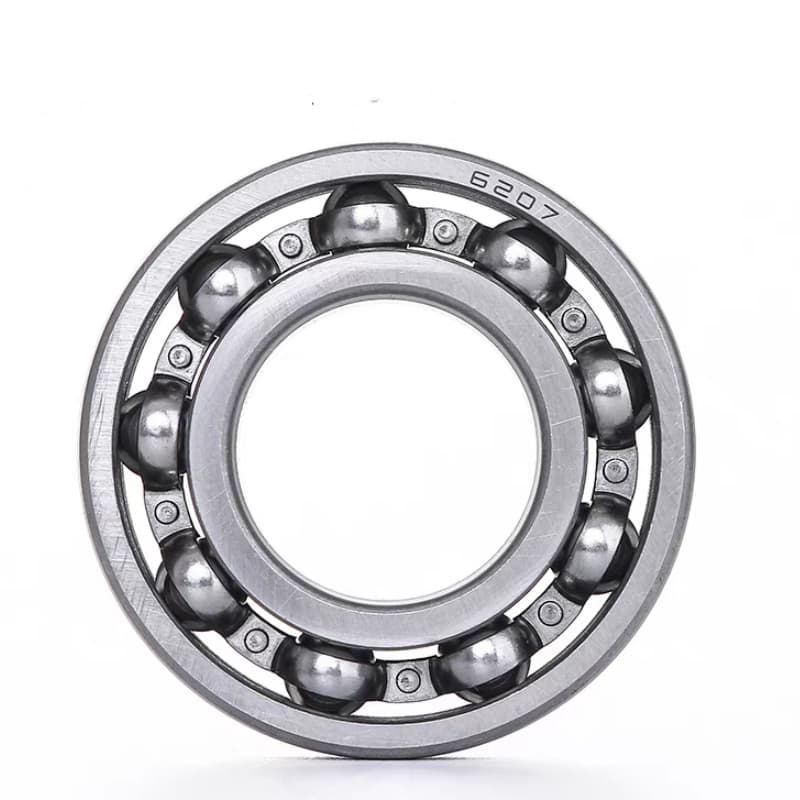
Reducing inventory cost requires standardizing on the most versatile bearing types and sizes. Deep groove ball bearings are ideal for this. Their wide applicability, standard dimensions (ISO 15), and ability to handle both radial and axial loads allow you to stock fewer SKUs to cover more customer needs, reducing capital tie-up and obsolescence risk.
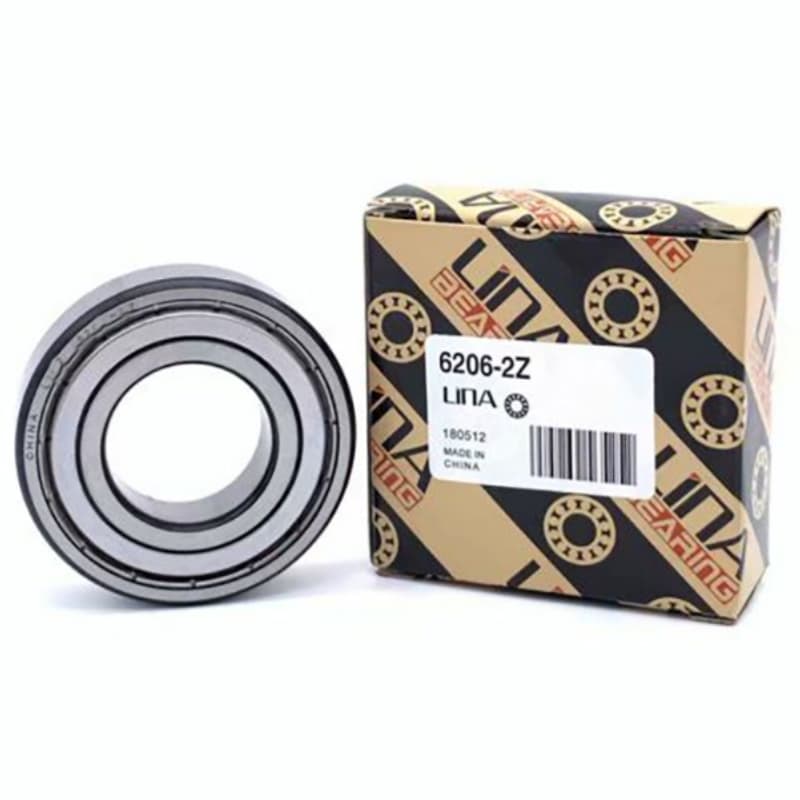
Holding stock is necessary, but holding the wrong stock is expensive. A strategic, standardized range turns inventory from a cost center into a competitive advantage. Let’s explore how the deep groove ball bearing’s inherent strengths make it the perfect tool for this strategy.
What are the advantages of deep groove ball bearings1?
For a distributor, a product’s advantages aren’t just technical. They are commercial. A bearing that can solve many problems with one part number is a distributor’s dream. This is the core of inventory cost reduction2.
The key advantages of deep groove ball bearings1 for inventory reduction are their versatility in handling combined radial and axial loads3, high availability in standard sizes4, low unit cost due to mass production5, and ease of installation6. This allows a distributor to satisfy a large percentage of customer requests with a small, focused range of stock.
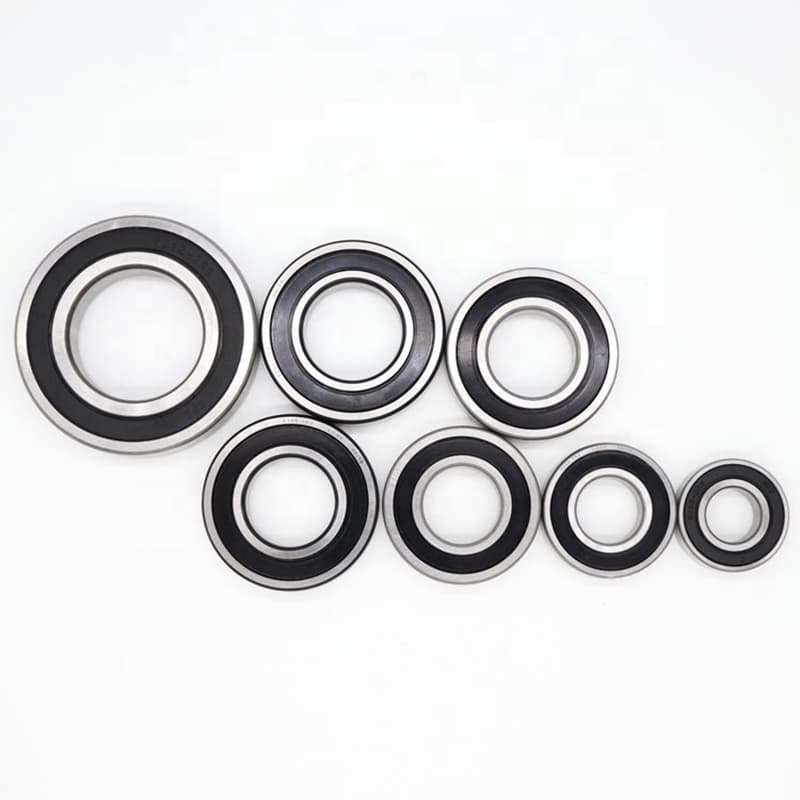
From Engineering Benefits to Business Benefits
The technical benefits of deep groove ball bearings1 translate directly into powerful inventory management advantages. Let’s break down this translation.
1. Versatility = Fewer SKUs Needed
A customer might need a bearing for a radial load, another for a light thrust load, and another for a combined load. Instead of stocking three different bearing types (e.g., a cylindrical roller, a thrust ball, and an angular contact), you can often meet all three needs with one deep groove ball bearing of the correct size and capacity. This directly reduces the number of part numbers you must keep in stock.
2. Standardization = Predictable Supply and Lower Cost
Deep groove ball bearings follow international size standards (ISO 15). A 6205 bearing from any reputable manufacturer will have the same basic dimensions. This standardization means:
- Multi-Sourcing: You are not locked into one supplier. You can source from multiple factories (like FYTZ) to get the best price and ensure supply continuity.
- Volume Discounts: You can consolidate your purchase volume onto fewer, more common item numbers, qualifying for better pricing from manufacturers.
- Less Complexity: Your warehouse staff doesn’t need to be experts in niche bearing types. They pick from a simple, logical size grid.
3. Mass Production & Low Cost = Higher Inventory Turns
These are among the most produced bearings in the world. This drives their unit cost down. A lower unit cost means less money is tied up in each bearing sitting on your shelf. You can afford to hold more stock of fast-moving items without blowing your budget.
4. Ease of Use = Faster Customer Service
When a customer calls with an urgent need, you can quickly check your stock of standard deep groove bearings. If you have it, you can ship immediately. You don’t waste time researching obscure bearing types or waiting for special orders. Speed builds customer loyalty.
For a distributor like Rajesh’s IndoMotion Parts, this strategy is critical. By building their core inventory around a well-chosen range of deep groove ball bearings1 (e.g., the 60, 62, and 63 series from 6000 to 6310), they can serve the vast majority of their industrial and automotive aftermarket customers. They might keep a small stock of specialized bearings (like tapered rollers for wheel hubs), but the deep groove range is their high-turnover, low-risk profit engine. The table below illustrates the inventory efficiency:
| Strategy | Typical SKU Count (Example) | Business Impact |
|---|---|---|
| Carry Every Possible Bearing Type | 500+ SKUs (Deep groove, spherical, cylindrical, taper, thrust, needle, etc.) | High capital tied up, low turns, high obsolescence risk, complex management. |
| Standardize on Deep Groove + 1-2 Specialties | 100 SKUs (80 deep groove sizes, 20 key tapered/spherical) | Lower capital, higher turns, simpler operations, focused purchasing power. |
| Stock Only Ultra-Common Deep Groove Sizes | 30 SKUs (e.g., 6000-6205, 6300-6305) | Very fast turns, but risks lost sales for less common sizes. |
At FYTZ, we support this strategy. We offer comprehensive ranges of standard deep groove bearings, ready for bulk purchase. We help distributors like Rajesh identify the optimal size mix for their local market, maximizing their inventory efficiency from the start.
Can a deep groove ball bearing1 take axial load?
This is the most important technical question for standardization. If the answer were "no," its versatility would be limited. The fact that the answer is "yes, within limits" is what makes it the cornerstone of a reduced-SKU inventory strategy.
Yes, a deep groove ball bearing1 can take axial (thrust) load in both directions. This is due to its deep, continuous raceway grooves. The axial load capacity2 is typically about 50-70% of its static radial load rating. For continuous high axial loads, angular contact bearings3 are better, but for many applications, a deep groove bearing is sufficient.
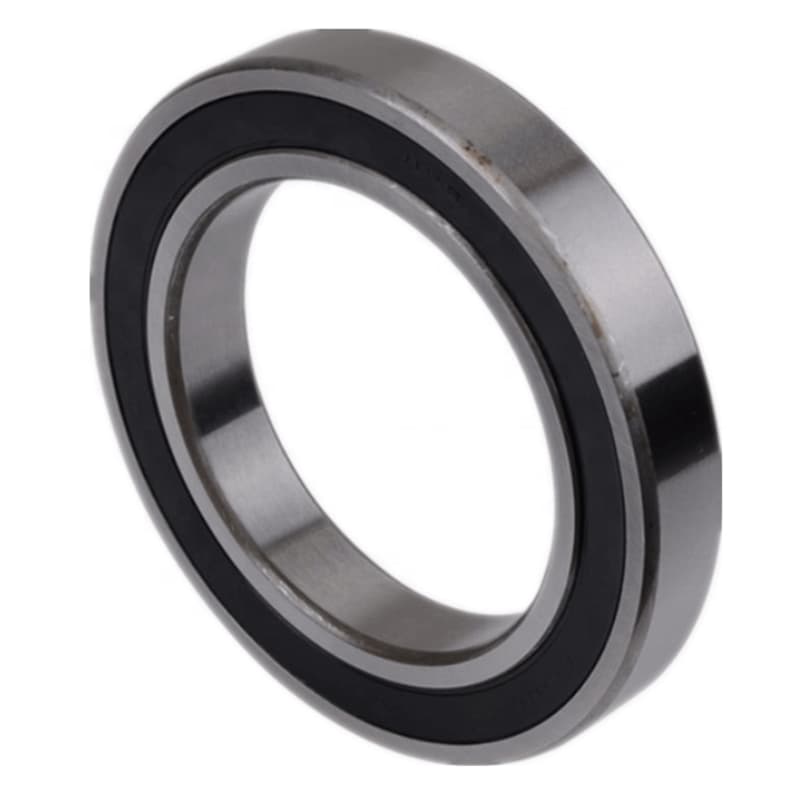
Understanding the Limits to Build Confidence in Standardization
A distributor needs to know not just if it can take axial load, but how much and when to recommend it. This knowledge prevents misapplication and returns, protecting your reputation while still leveraging the bearing’s versatility.
1. How It Handles Axial Load: The Geometry
The deep groove forms a shoulder. When an axial force is applied, the balls are pressed against this shoulder. The contact angle changes slightly, creating a force component that resists the thrust. Because the groove is on both rings and symmetrical, it works for thrust in either direction.
2. Quantifying the Capacity
Manufacturers provide a static axial load rating4 (C0a). As a rule of thumb, a deep groove ball bearing1 can safely handle a continuous axial load up to 50% of its static radial load rating (C0). For intermittent loads, it can go higher. This is enough for many common applications:
- The axial force from a helical gear.
- The light thrust in a small pump.
- The magnetic pull in an electric motor.
- The preload in a paired arrangement.
3. When to Use It vs. When to Stock a Specialist
This is the critical judgment for inventory planning5. You stock the deep groove bearing for the majority of cases, and you might keep a small stock of angular contact bearings3 for the clear exceptions.
| Application Scenario | Recommended Bearing | Inventory Strategy Rationale |
|---|---|---|
| General motor, fan, pulley support (light/moderate axial load). | Deep Groove Ball Bearing | Covers the vast majority of cases. The standard stock item. |
| Machine tool spindle, high-precision pump (high, continuous one-direction thrust). | Angular Contact Ball Bearing (pair). | A specialized item. Stock only if you have proven, recurring demand from a specific customer segment. |
| Suspected high thrust but unknown magnitude | Recommend Deep Groove, but upsize the bearing. | A larger deep groove bearing (e.g., a 6305 instead of a 6205) has a higher axial rating. This keeps you within your standardized range while solving the problem. |
For Rajesh’s team, training is key. Their salespeople need to ask the right questions: "Is there a strong pushing or pulling force along the shaft?" If the answer is "yes, but not huge," they can confidently recommend a deep groove bearing from their standard stock. If the answer is "yes, it’s the main load," they know to check their small stock of angular contacts or offer to source one specially. This balance minimizes the need to stock every possible specialist bearing.
What is the ISO standard for bearing tolerances?
Standardization is worthless without consistency. The ISO standards for bearing tolerances are what make a 6205 bearing from one factory interchangeable with a 6205 from another. This interchangeability is the foundation of a multi-source, low-risk inventory strategy.
The primary ISO standard for rolling bearing tolerances is ISO 4921. It defines tolerance classes2 for radial bearings, including dimensional accuracy (width, bore, OD) and running accuracy (radial runout, axial runout). Common classes are Normal (P0), P6, P5, P4, and P2, with increasing precision and cost.
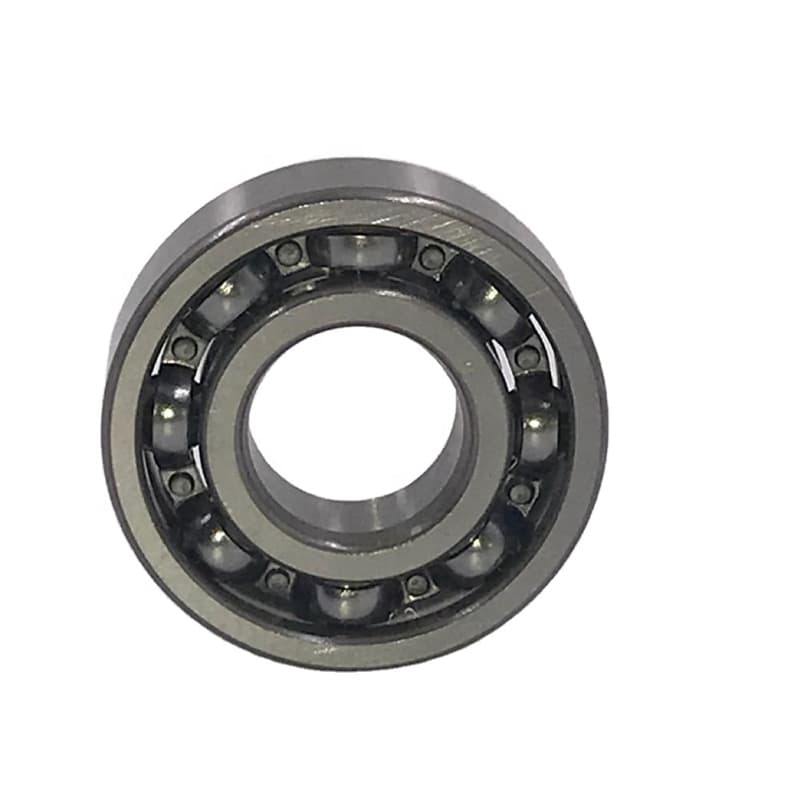
How Tolerance Standards Enable Inventory Efficiency
Tolerances might seem like an engineering detail, but for inventory management, they are a commercial safety net. They ensure that the bearing you receive matches the bearing you ordered, every single time.
1. Dimensional Interchangeability3: The Core of Standardization
ISO 4921 ensures that a bearing with a nominal 25mm bore actually fits a 25mm shaft. The standard defines allowable limits for bore diameter variation (like +0/-0.007mm for a normal class 25mm bore). This means:
- You can source from Manufacturer A this month and Manufacturer B next month without worrying about fit.
- Your customers can rely on your bearings to fit their machinery.
- You can consolidate orders for the same size from multiple manufacturers, increasing your buying power.
2. Precision Classes4: Managing a Tiered Inventory
Not all applications need the same precision. ISO tolerance classes2 let you segment your inventory to match demand.
- Normal Class (P0): For the vast majority of industrial applications. This should be the bulk of your standard stock. It’s cost-effective and readily available.
- P6/P5 Classes: For applications requiring quieter operation, higher speeds, or more precise positioning (e.g., some motors, gearboxes). You might stock a few key sizes in P6 to serve premium customers or specific OEMs.
- P4/P2 Classes: For machine tools and high-tech applications. These are typically not stock items. You would source them against specific customer orders.
3. The Business Impact of Sticking to ISO Standards
- Reduces Returns: Bearings that don’t fit are returned, costing you shipping and damaging relationships. ISO-compliant bearings minimize this risk.
- Simplifies Purchasing: You can write purchase orders based on ISO size and tolerance (e.g., "6205-2RS, P6"), and any compliant manufacturer will understand.
- Builds Trust: Consistently supplying bearings that meet international standards builds your reputation as a reliable, professional supplier.
At FYTZ Bearing, we manufacture to ISO 4921 standards as a baseline. For distributors, this is non-negotiable. When Rajesh places an order with us for 10,000 pieces of 6205 bearings, he knows every single one will have dimensions within the ISO Normal class limits. This allows him to forecast demand, plan warehouse space, and sell to his customers with absolute confidence. His inventory of FYTZ bearings is not a gamble; it’s a predictable, reliable asset.
What is the L10 life1 of bearings?
For inventory planning, you need to know not just what bearings to stock, but how good they are. L10 life1 is the universal language for bearing durability. It helps you match the bearing’s quality to the application’s needs and justify your product selection to customers.
The L10 life1 of a bearing is a calculated rating life. It represents the number of hours (or revolutions) at which 90% of a group of identical bearings, operating under the same load and speed, are expected to survive without material fatigue (spalling). It is calculated using the bearing’s dynamic load rating2 and the applied load (L10 = (C/P)^p for ball bearings).
Using L10 Life as a Tool for Inventory Quality Stratification
L10 life1 isn’t just a number on a datasheet. It’s a powerful concept for managing inventory quality levels and customer expectations.
1. The Formula and What It Tells You
The formula for ball bearings is: L10h = (10^6 / (60 n)) (C/P)^3
- L10h: Life in hours.
- n: Speed in RPM.
- C: Basic dynamic load rating2 (from catalog).
- P: Equivalent dynamic load applied to the bearing.
A higher C rating3 means a longer L10 life1 under the same load. This C rating3 is a direct result of the bearing’s manufacturing quality: steel purity, heat treatment, and geometric precision.
2. Why L10 Matters for Your Standardized Range
When you standardize on deep groove ball bearings from a supplier, you are implicitly standardizing on a certain level of L10 life1 performance. You need to choose a supplier whose bearings deliver consistent, reliable C rating3s.
- Low-Quality Bearings: May have a C rating3 below the ISO standard4. Their L10 life1 will be shorter. You might sell them cheaply, but you risk more failures and unhappy customers.
- Quality Standard Bearings (like FYTZ): Meet or exceed ISO standard4 C rating3s. They deliver predictable L10 life1. This is the sweet spot for a standardized inventory—reliable performance at a competitive price.
- Premium Bearings: Have higher C rating3s due to superior materials/processes. Their L10 life1 is longer, but cost is higher. These are not typically for bulk standardization unless serving a high-end niche.
3. Communicating Value to Customers
You can use L10 life1 to move the conversation beyond price. When a customer asks why your FYTZ 6205 bearing costs a little more than a no-name brand, you can explain:
"Both fit a 25mm shaft. But our bearing has a C rating3 of 14.0 kN. The generic one might be 12.5 kN. In your application, that means our bearing will have an L10 life1 70% longer. You’ll change bearings less often, reducing your machine downtime and total cost."
This justifies your inventory choice and builds value-based relationships.
For inventory planning, this means partnering with a manufacturer like FYTZ that provides transparent, reliable load ratings. You can then confidently promote your standardized range as "quality industrial bearings," not just "cheap bearings." You can even create a simple table for your sales team:
| Your Standard Stock Item (e.g., FYTZ 6205-2RS) | Key Performance Metric (L10 Life Proxy) | Sales Message |
|---|---|---|
| Dynamic Load Rating (C) | 14.0 kN | "Built for durability under standard industrial loads." |
| Precision Class | P6 (optional upgrade) | "Runs quieter and smoother for motor and fan applications." |
| ISO Compliance | ISO 492, ISO 15 | "Guaranteed fit and interchangeability." |
By understanding and communicating L10 life1, you transform your standardized bearing inventory from a commodity into a value-added, reliability-focused solution for your customers.
Conclusion
Reducing inventory cost isn’t about stocking less; it’s about stocking smarter. By standardizing on the versatile deep groove ball bearing range from a quality ISO-compliant supplier, you can cover more applications with fewer SKUs, reduce capital lockup, and build a reputation for reliable, cost-effective supply.
-
Understanding L10 life is crucial for evaluating bearing durability and making informed inventory decisions. ↩ ↩ ↩ ↩ ↩ ↩ ↩ ↩ ↩ ↩ ↩ ↩ ↩ ↩ ↩ ↩ ↩ ↩ ↩ ↩ ↩ ↩
-
Learn about dynamic load ratings to better assess bearing performance and longevity in various applications. ↩ ↩ ↩ ↩ ↩ ↩
-
Explore the significance of C rating in bearings to ensure quality and reliability in your inventory. ↩ ↩ ↩ ↩ ↩ ↩ ↩ ↩ ↩ ↩ ↩
-
Discover how ISO standards impact bearing quality and help you choose the right products for your needs. ↩ ↩ ↩ ↩ ↩
-
Find strategies for effective inventory planning to balance standard and specialized bearing stocks. ↩ ↩
-
Explore the installation advantages of deep groove ball bearings that contribute to faster customer service. ↩