
Your power drill starts making a high-pitched whine. Your angle grinder vibrates uncomfortably. The problem often lies in the smallest, most critical components: the bearings. In handheld equipment, bearings face unique challenges that industrial bearings don’t.
Deep groove ball bearings are used in power tools for their high-speed capability, low friction, and ability to handle combined radial and axial loads from gears and chucks. However, they must withstand vibration, shock, contamination, and high temperatures, requiring robust design and proper lubrication to ensure tool longevity and user safety.
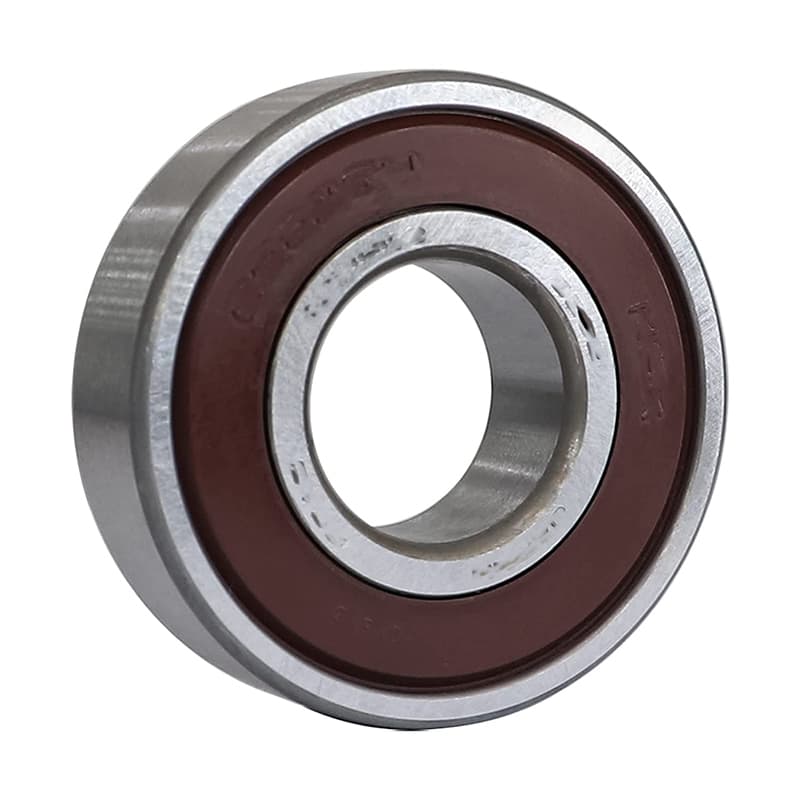
A power tool bearing doesn’t just spin; it survives impacts, endures dirt, and runs hot. Choosing the right bearing isn’t just about size; it’s about matching its strengths to the brutal reality of handheld use. Let’s look at what makes deep groove ball bearings the workhorse of this industry and how to specify them correctly.
What are deep groove ball bearings1 used for?
Open any handheld electric tool. From the trigger to the chuck, you’ll likely find deep groove ball bearings1. They are the default choice for a reason. Their job is to make high-speed rotation2 smooth, efficient, and compact inside a tight housing.
Deep groove ball bearings are used to support rotating shafts while minimizing friction. In power tools, they are specifically used in the motor armature shafts, gearbox input/output shafts, fan blades, and chuck assemblies. They enable high-speed operation, handle moderate loads from cutting forces, and help manage heat through efficient rotation.
The Specific Roles Inside a Handheld Power Tool
A power tool is a system. Bearings play different roles in different parts of that system, but they all share the need for reliability under stress.
1. Motor Armature Bearings: The High-Speed Heart
The electric motor spins at 10,000 to 30,000 RPM (or more). The bearings here must:
- Handle very high speeds with minimal friction and heat generation.
- Manage the magnetic axial pull from the rotor.
- Operate reliably for thousands of hours. This often requires precision grades (P5/P6)3 and high-quality grease that won’t separate at high speeds.
2. Gearbox Bearings: The Load and Shock Handlers
Gears reduce speed and increase torque. The bearings here face different challenges:
- Combined Loads: They take radial load from gear teeth and axial thrust from helical or bevel gears.
- Shock Loads: When a drill bit jams or a saw blade hits a knot, an immense shock load transfers through the gears to the bearings. The bearing steel must be tough.
- Contamination: Gear grease can thicken with metal wear particles, creating an abrasive environment.
3. Chuck and Spindle Bearings: The Interface with Work
These bearings are closest to the action.
- They must maintain precise alignment for the drill bit or saw blade.
- They experience direct vibration and impact from the workpiece.
- In grinders and sanders, they are exposed to fine, abrasive dust that can destroy seals.
For a power tool manufacturer or a repair parts distributor like Rajesh’s company, understanding these roles dictates the bearing specification. A bearing for a motor armature is not the same as one for a hammer drill’s impact mechanism, even if they share the same bore size. The table below summarizes these critical applications:
| Tool Component | Primary Bearing Function | Key Demands on the Bearing |
|---|---|---|
| Motor Armature | Support high-speed rotation2 of the rotor. | Ultra-low friction, heat resistance, high-speed stability. |
| Gearbox Shaft | Transmit torque and handle gear forces. | High combined load capacity, shock resistance, durability. |
| Fan | Support the cooling fan blade. | Moderate speed, low noise, long life with minimal maintenance. |
| Chuck/Spindle | Provide precise, stable rotation for the tool bit. | Good radial stiffness, vibration damping, contamination resistance. |
At FYTZ, we supply bearings to power tool OEMs and the aftermarket. We know that a motor bearing might need a C3 clearance4 to handle heat, while a gearbox bearing might need enhanced steel cleanliness to resist shock-induced fatigue. Providing this application-specific insight is part of our value to distributors serving diverse markets from Brazil to Indonesia.
What are the disadvantages of deep groove ball bearings?
No bearing is perfect for every job. The deep groove ball bearing’s simplicity and versatility come with inherent trade-offs. In the harsh world of power tools, these disadvantages can become failure points if not properly managed.
The main disadvantages of deep groove ball bearings are their limited axial (thrust) load capacity, sensitivity to misalignment, lower load capacity compared to roller bearings of the same size, and potential for noise if precision is low. In power tools, these limitations are tested by shock, vibration, and demanding use cases.
When the Tool’s Demands Meet the Bearing’s Limits
Power tools often operate at the very edge of these disadvantages. Acknowledging them is the first step to designing around them and selecting the right bearing grade.
1. Limited Axial Load Capacity1: The Chuck Challenge
- The Disadvantage: Deep groove bearings can handle some axial load, but continuous or heavy thrust is not their strength.
- Power Tool Reality: A drill press or a screwdriver applies constant axial pressure. A hammer drill generates intense axial impacts. Using a standard deep groove bearing here may lead to rapid wear on the raceway shoulders and increased heat.
- The Mitigation: Tool designers often use two bearings in a back-to-back arrangement to share axial load, or pair a deep groove bearing with a thrust washer. For FYTZ, we can supply bearings with reinforced shoulder design on request for such applications.
2. Sensitivity to Misalignment2: The Housing and Shock Problem
- The Disadvantage: They require good alignment (typically <0.1 degrees). Misalignment causes stress concentration at the ball/raceway edge.
- Power Tool Reality: The plastic or aluminum housings in tools can warp or flex under force. Users drop tools. This creates misalignment.
- The Mitigation: Using self-aligning ball bearings3 or spherical roller bearings is sometimes an option, but they are larger. More often, tool design focuses on creating a rigid, precise housing. High-precision bearings (P5 class) also have tighter tolerances, which can help compensate for minor housing imperfections.
3. Lower Load Capacity vs. Rollers4: The Gearbox Torque Test
- The Disadvantage: Point contact handles less load than the line contact of a roller bearing.
- Power Tool Reality: High-torque tools like impact wrenches put huge stress on gearbox bearings.
- The Mitigation: Designers must select a sufficiently large deep groove bearing to handle the load, or consider using needle or cylindrical roller bearings in the gearbox where space allows. For distributors, stocking the common, robust sizes for high-torque tools is essential.
4. Noise Generation: The User Experience Factor
- The Disadvantage: Lower precision bearings or worn bearings can generate whining or rumbling noise.
- Power Tool Reality: Noise is a key indicator of quality and wear. A noisy tool feels cheap and is annoying to use.
- The Mitigation: Using low-noise, high-precision bearings5 (P5/P6) with specially selected grease makes a tool sound and feel smoother. This is a selling point for premium tools.
For a repair shop or importer, these disadvantages are diagnostic tools. When a customer brings in a grinder with a noisy bearing, the likely causes are misalignment from a bent housing (exploiting disadvantage #2) or a worn bearing from excessive axial pressure (exploiting disadvantage #1). Recommending a higher-grade FYTZ replacement bearing and checking the housing can solve the real problem.
What is the difference between standard and deep groove ball bearings1?
This is a common point of confusion. "Standard" and "deep groove" are not opposing terms. "Deep groove" is a type of ball bearing. The real question people often mean to ask is: "What is the difference between a deep groove ball bearing and other types of ball bearings?"
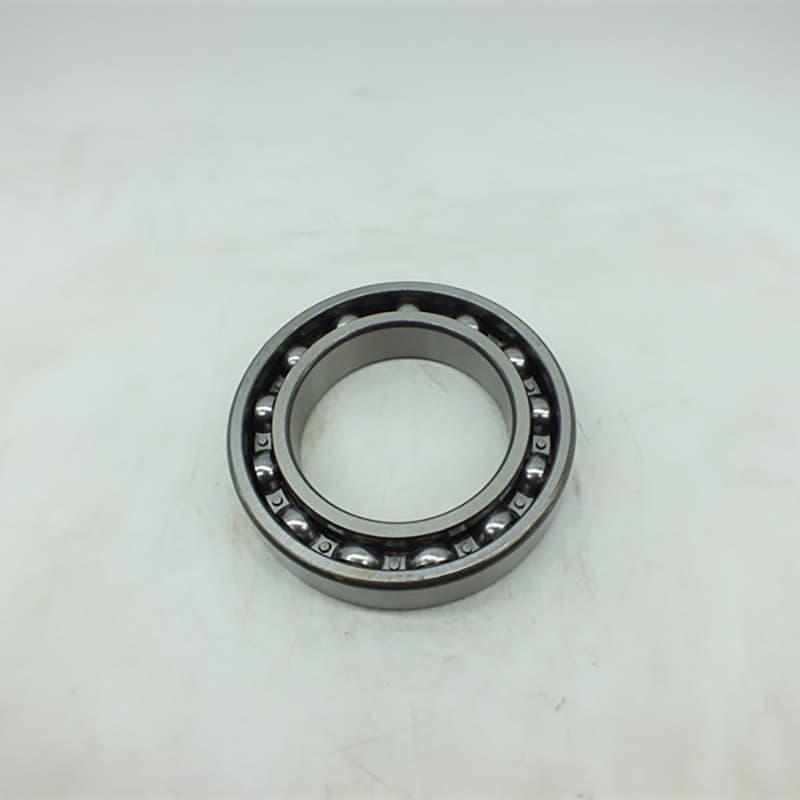
All deep groove ball bearings1 are a type of standard ball bearing. The key difference is in the raceway design compared to other "standard" types like angular contact or self-aligning ball bearings. Deep groove bearings have continuous, deep arc raceways on both rings, allowing them to handle radial and axial loads from both directions.
Choosing the Right "Standard" Ball Bearing for the Job
The term "standard bearing" often refers to the most common, general-purpose type—which is the deep groove ball bearing. But other standard designs exist for specific needs.
1. Deep Groove Ball Bearings (The Generalist)
- Raceway: Deep, continuous arcs on both inner and outer rings.
- Load Capability: Good for combined radial and moderate axial loads in both directions.
- Typical Power Tool Use: The most common type. Used in motors, fans, and general shaft support where loads are not extreme and alignment is good.
2. Angular Contact Ball Bearings (The Thrust Specialist)
- Raceway: The inner and outer ring raceways are offset. They are designed to carry heavy axial loads in one direction.
- Load Capability: Excellent for high axial loads combined with radial loads. Usually used in pairs (back-to-back or face-to-face).
- Typical Power Tool Use: Used in high-precision spindles (like in routers) or in pairs to handle the strong axial thrust in certain gearboxes or drill chucks.
3. Self-Aligning Ball Bearings (The Misalignment Compensator)
- Raceway: The outer ring has a spherical raceway; the inner ring has two deep grooves.
- Load Capability: Good for radial loads and limited axial loads. Their superpower is accommodating angular misalignment (2-3 degrees).
- Typical Power Tool Use: Less common due to size, but might be used where housing alignment is difficult to guarantee, or in oscillating mechanisms.
For someone sourcing parts, this distinction is critical. If a tool manual specifies a "6202 bearing," it is almost certainly a deep groove type. But if it specifies a "7202 BEP" or similar, it’s an angular contact bearing, and a standard 6202 will fail quickly under the same axial load. The table below clarifies the choice:
| Need / Application Challenge | Recommended Ball Bearing Type | Why? |
|---|---|---|
| General shaft support, motor, fan, moderate 2-way axial load. | Deep Groove Ball Bearing | Versatile, cost-effective, handles the load. |
| High one-directional thrust (e.g., from a helical gear or drill pressure). | Angular Contact Ball Bearing (or a pair). | Engineered specifically for high axial load. |
| Suspected housing misalignment or shaft deflection. | Self-Aligning Ball Bearing | Compensates for misalignment, preventing edge loading. |
| Very high precision and stiffness (e.g., router collet). | Precision Angular Contact Pair | Provides rigid, accurate axial and radial positioning. |
Rajesh’s company, supplying the aftermarket, must get this right. If a customer needs a replacement for a worn bearing in a tool gearbox, they must identify the exact type. Selling a deep groove bearing where an angular contact is needed will lead to a quick comeback and a dissatisfied customer. At FYTZ, we produce both deep groove and angular contact bearings to cover the full spectrum of power tool needs.
What are the dimensions of a deep groove ball bearing1 to fit a 12mm shaft2?
This is the most practical question for repair and replacement. The answer isn’t a single set of numbers. The bore is 12mm, but the outer diameter and width can vary based on the "series," which defines the bearing’s load capacity and size profile.
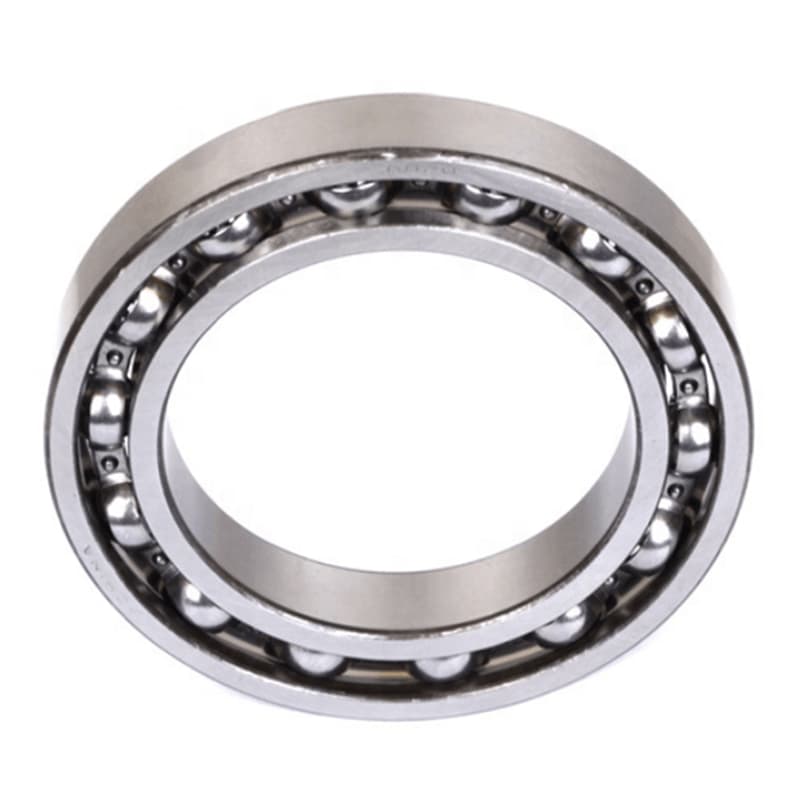
A deep groove ball bearing1 for a 12mm shaft2 has a standard bore diameter of 12mm. Its outer diameter (OD) and width vary by series: a 60 series (e.g., 6012) is extra thin, a 62 series3 (e.g., 6212) is light, a 63 series (e.g., 6312) is medium, and a 64 series is heavy. The most common is the 62 series3, with dimensions approximately OD=32mm, Width=10mm.
Decoding the Bearing Number: More Than Just the Bore
The dimensions are encoded in the bearing number4. For a 12mm shaft2, the bore code is ’12’ (since 12 * 5 = 60? Wait, that rule changes for bore >= 20mm). Actually, for a 12mm bore, the last two digits of the bearing number4 are the bore in mm. The preceding digits indicate the series.
1. The Series Code (Defines OD and Width)
The first digit (or two) indicates the series, which is a standardized size profile.
- Series 60: Extra Thin Section. For very space-constrained designs.
- Series 62 (Most Common): Light Series. The standard, general-purpose size. Offers a good balance of size and capacity.
- Series 63: Medium Series. Larger OD and width than 62 series3 for higher load capacity.
- Series 64: Heavy Series. Even larger for maximum load in a given bore size.
2. Dimension Examples for 12mm Bore:
- 6012: Bore=12mm, OD=28mm, Width=7mm. (Extra Thin)
- 6212: Bore=12mm, OD=32mm, Width=10mm. (Light – Most Common)
- 6312: Bore=12mm, OD=37mm, Width=12mm. (Medium)
- 6412: Bore=12mm, OD=44mm, Width=12mm. (Heavy)
3. How to Choose the Right Series for a Power Tool:
You can’t just pick any 12mm bore bearing. You must match the series to the original part or the housing design.
- Space is Tight (Small Motor): Use 60 or 62 series3.
- High Load (Gearbox, High-Torque Tool): Use 63 or even 64 series if the housing allows.
- Replacement: You must match the original bearing’s series. A 6312 is physically larger than a 6212 and will not fit into a housing designed for a 6212.
For distributors and repair technicians, having a dimension chart5 is essential. When a workshop in Vietnam calls Rajesh’s company for a bearing for a 12mm shaft2 in a Makita drill, the first question should be: "What are the outer diameter and width of the old bearing?" or "What is the bearing number4 stamped on it?" This ensures the correct part is supplied. At FYTZ, we produce bearings in all common series. For the power tool market, the 62 series3 (like 6200, 6201, 6202, 6203) and 63 series are our highest volume items, precisely because they fit the most common handheld equipment designs globally.
Conclusion
In power tools, deep groove ball bearings are indispensable for high-speed, compact performance. Success depends on understanding their roles, respecting their limits, choosing the correct type among "standard" bearings, and precisely matching the dimensions to the tool’s design.
-
Explore this link to understand the versatility and applications of deep groove ball bearings in various industries. ↩ ↩ ↩ ↩ ↩ ↩ ↩
-
This resource will provide detailed specifications and options for bearings compatible with a 12mm shaft. ↩ ↩ ↩ ↩ ↩ ↩ ↩
-
Discover the features and benefits of the 62 series bearings, the most common choice for general-purpose applications. ↩ ↩ ↩ ↩ ↩ ↩ ↩
-
This guide will help you decode bearing numbers, ensuring you select the right bearing for your needs. ↩ ↩ ↩ ↩ ↩
-
Access a comprehensive dimension chart to easily compare and select the right deep groove ball bearings for your projects. ↩ ↩