
Have you ever faced a costly machine breakdown just weeks after installing new bearings? I understand your frustration. In my years at FYTZ Bearing, I have seen many cases where the bearing itself was high quality, but an improper installation destroyed its potential. Let us explore the critical link between mounting practices and bearing lifespan.
Spherical roller bearings are designed to be robust, but incorrect fit and poor mounting methods create stress and misalignment that the bearing cannot compensate for. This directly leads to premature failures like spalling, overheating, and cage breakage, drastically shortening service life.
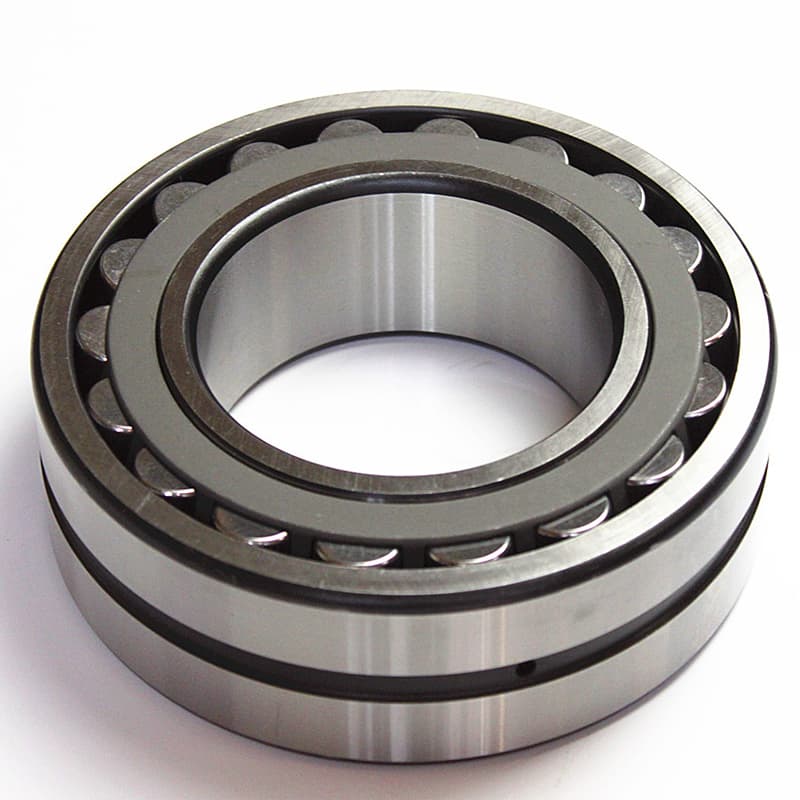
You might think the bearing itself is the main cause of failure. But the reality is often different. The way we install the bearing is the first test it faces. A good installation sets it up for a long, productive life. A bad one guarantees an early and expensive breakdown. Let us look closely at the common questions I get from clients like Rajesh in India, and see how installation is at the heart of them all.
Can spherical bearings handle misalignment?
You install a bearing expecting it to run smoothly, but soon there is noise and heat. You might blame the bearing for not living up to its promise of handling misalignment. The truth is, even the best spherical roller bearing has its limits. I have dealt with this issue many times.
Yes, spherical roller bearings1 can handle misalignment. This is their key advantage. Their internal design allows the rollers to align themselves slightly with the raceway. But this ability is not unlimited. The typical permissible range is only 0.5 to 2 degrees. Incorrect mounting often forces misalignment far beyond this safe limit, leading to immediate problems.
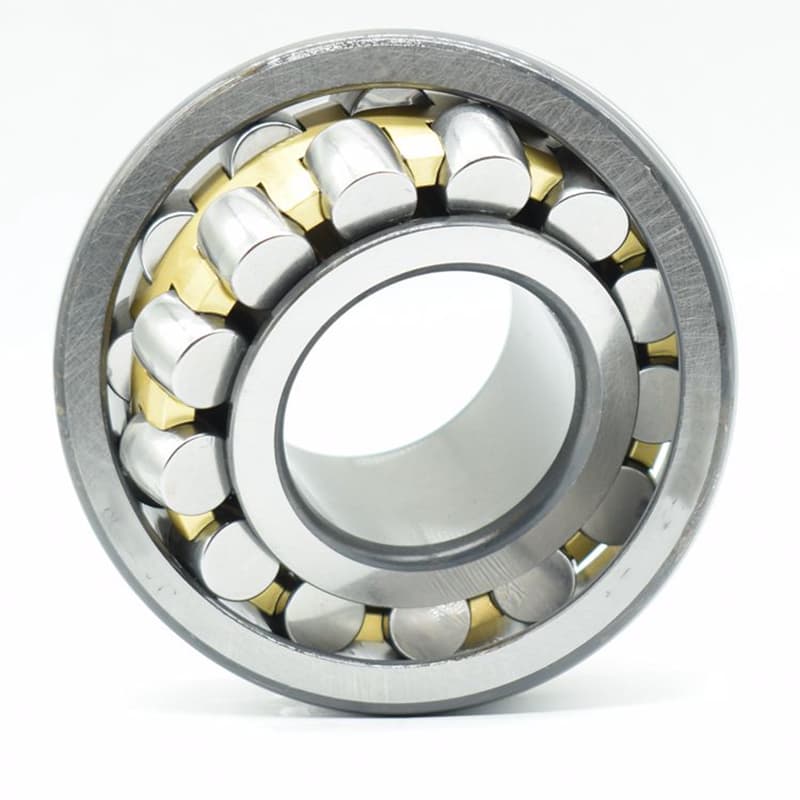
The Critical Balance of Self-Alignment
It is crucial to understand that "can handle" does not mean "thrives on." Think of misalignment tolerance as a safety buffer, not an operational target. When we at FYTZ Bearing design and manufacture our spherical roller bearings1, we build in this self-aligning feature2 to compensate for minor shaft deflections or small installation errors. However, relying on it to fix major mounting mistakes is a recipe for disaster.
The primary failure mode from excessive misalignment is edge loading3. Instead of the load being distributed evenly across the full length of the roller, it concentrates on a tiny area at one end.
This creates immense localized stress, far exceeding the material’s design limits. The result is rapid fatigue, manifested as:
- Spalling and Brinelling: The surface of the raceway or roller starts to crack and pit, creating fragments that contaminate the lubricant and accelerate wear.
- Excessive Heat Generation: The uneven friction from edge loading3 produces significant heat. This heat can degrade the lubricant, soften the bearing steel, and even cause thermal expansion4 that worsens the fit.
- Cage Damage: The cage, which guides and separates the rollers, experiences uneven forces. This can lead to cage fracture or severe wear, causing rollers to skew or clash.
So, while our FYTZ spherical bearings are built tough, their ability to handle misalignment is a finite resource. Proper installation aims to minimize misalignment, not maximize it. The table below contrasts proper practices with common mounting errors that induce harmful misalignment:
| Goal: Minimize Operational Misalignment | Common Mounting Error Leading to Excessive Misalignment |
|---|---|
| Ensure shaft and housing shoulders are square and clean. | Dirty or damaged shoulder seats cause the bearing to sit crookedly from the start. |
| Use proper tools (induction heaters, hydraulic nuts) for press fits. | Hammering directly on the bearing rings or using uneven force during pressing. |
| Follow precise interference fit specifications. | Using an incorrect fit (too loose or too tight) that distorts the bearing rings. |
| Check and adjust alignment after the machine is at operating temperature. | Assuming "cold" alignment is sufficient, ignoring thermal expansion4 effects. |
For a client like Rajesh Kumar, whose customers rely on his bearings for heavy machinery, explaining this is key. A bearing sold as "misalignment-tolerant" installed with a 3-degree error will fail quickly. The failure is not a product defect; it is an installation defect5. Our job is to provide not just the bearing, but the knowledge to install it within its designed parameters, ensuring it delivers its full, promised life.
What is the lifespan of a spherical bearing?
A customer once asked me for a bearing with a "10-year guarantee." I had to explain that bearing life is not a fixed number like a battery expiry date. It is a statistical probability under specific conditions. The rated "L10 life1" is a calculation, but the real-world lifespan is determined by how you treat the bearing from the moment it is unboxed.
The lifespan of a spherical roller bearing2 is not a single number. It is calculated based on load, speed, and operating conditions, resulting in an "L10 life1" – the hours at which 90% of identical bearings are expected to survive. However, incorrect fit and mounting are the primary factors that cause bearings to fall far short of this calculated life.

From Theoretical Life to Reality: The Mounting Multiplier
When engineers calculate the L10 life1 (often called "Bearing Rating Life"), they use standardized formulas that consider dynamic load capacity3, applied load, and speed. This gives a theoretical baseline. But this calculation assumes perfect conditions: ideal alignment, perfect fit, clean environment, and perfect lubrication.
In the real world, none of these are perfect. Mounting is where theory meets reality. Poor practices act as a negative multiplier on the calculated life. A bearing with a theoretical L10 life1 of 30,000 hours could see its actual life reduced to 5,000 hours or less due to installation errors4.
The mechanisms are clear. An incorrect fit, whether too tight or too loose, introduces internal stress. A tight interference fit on the inner ring stretches it, reducing the internal clearance. This creates preload, leading to increased friction, heat, and early fatigue. A loose fit allows the ring to creep or rotate on the shaft or in the housing. This fretting wear generates abrasive debris and destroys the fit integrity.
Mounting impacts every critical system within the bearing:
- Lubrication System: Forced misalignment from poor mounting creates uneven gaps in seals and shields. This can allow contaminants in or grease to leak out. It also increases friction, raising the operating temperature. High heat oxidizes and breaks down grease, turning it from a protective film into a sludgy abrasive.
- Load Distribution System: As discussed, misalignment causes edge loading. This concentrates stress on a small area, dramatically accelerating the fatigue process that the L10 life1 formula is based on.
- Structural Integrity: Using a hammer to install the bearing can cause immediate damage like dents (Brinell marks) on the raceways. These dents become stress risers, creating vibrations and initiating cracks that propagate into spalling.
For a distributor like IndoMotion Parts Pvt. Ltd., this is critical knowledge. When Rajesh supplies our FYTZ spherical roller bearing2s to a factory, the end-user’s maintenance team determines the ultimate lifespan. By providing clear mounting guidelines – perhaps even simple instructional videos – Rajesh adds tremendous value. He transforms from a parts supplier into a reliability partner, helping his customers achieve the long life our bearings are engineered for, protecting his reputation and ensuring repeat business.
What are the failures of spherical roller bearings1?
Opening a failed bearing is like a detective examining a crime scene. The patterns of damage tell a clear story. Very often, the "cause of death" points back to the initial installation. Seeing the same failure modes repeatedly in bearings returned from the field taught me this hard lesson early on.
Common failures of spherical roller bearings1 include spalling (surface fatigue)2, overheating and thermal seizure3, cage breakage4, and brinell marks5 from impact. While these appear as distinct problems, incorrect fit and mounting are very often the root cause that triggers these failure modes.
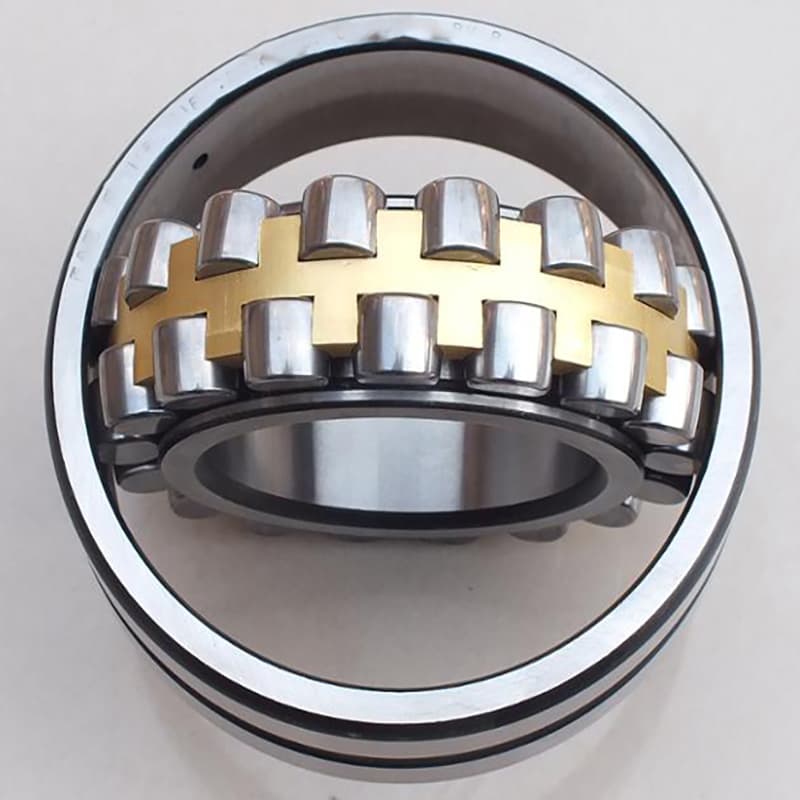
Connecting the Failure Symptom to the Mounting Cause
It is not enough to list failures. We must understand why they happen. In a B2B wholesale context, where FYTZ supplies bearings to distributors like Rajesh’s company, this knowledge helps them provide better technical support to their own customers, reducing unjustified claims and building trust.
Let us break down the most common failures and link them directly to mounting practices6:
1. Spalling (Flaking)
- What it looks like: Pieces of material flaking off the raceway or roller surfaces.
- The Mounting Link: This is classic fatigue failure. It is accelerated exponentially by edge loading from misalignment and internal preload from excessively tight fits. The concentrated stress cycles faster than designed, leading to subsurface cracks that surface as spalls.
2. Overheating and Thermal Seizure
- What it looks like: Discolored (blue/brown) rings and rollers, melted cage, solidified grease.
- The Mounting Link: Heat is a symptom of excessive friction. This friction comes from loss of internal clearance due to tight fits, misalignment, and improper sealing that allows lubricant loss. Using force incorrectly during installation can also damage seals on the spot.
3. Cage Breakage or Severe Wear
- What it looks like: Cracked or deformed cage, often with wear marks where rollers contact it.
- The Mounting Link: The cage is the most fragile component. Excessive vibration from misalignment and uneven roller speeds from skewing put abnormal stress on cage pockets. Poor lubrication due to heat increases friction between rollers and cage. Direct impact from tools during mounting can also crack cages instantly.
4. Brinell Marks (False Brinelling)
- What it looks like: Indentations on the raceways, often in a pattern matching the roller spacing.
- The Mounting Link: This is direct physical damage. Hammering directly on the bearing ring to install it is the most common cause. These dents create vibration and act as nucleation points for spalling. They are an undeniable sign of abusive installation.
For a factory like FYTZ, our quality control ensures the bearing leaves our facility without these defects. So, when a distributor reports these failures, our first questions are about installation: What tools were used? Was the fit correct? Was the alignment checked? By diagnosing the root cause, we help our partners avoid repeat failures, saving them and their customers time and money. This collaborative troubleshooting strengthens our long-term B2B relationships.
What is the most common cause of bearing failure?
In my countless discussions with engineers and maintenance managers from Turkey to Indonesia, one theme emerges more than any other. They often suspect material quality or load capacity first. But after analyzing the evidence, the conclusion is frequently the same. The failure started not in operation, but at the very beginning.
The most common cause of spherical roller bearing failure1 is improper installation and lubrication2. Studies and field experience show that these two factors account for over half of all premature bearing failures. Incorrect fit, misalignment from poor mounting, and contamination during installation directly lead to the fatigue and wear failures we see in the field.
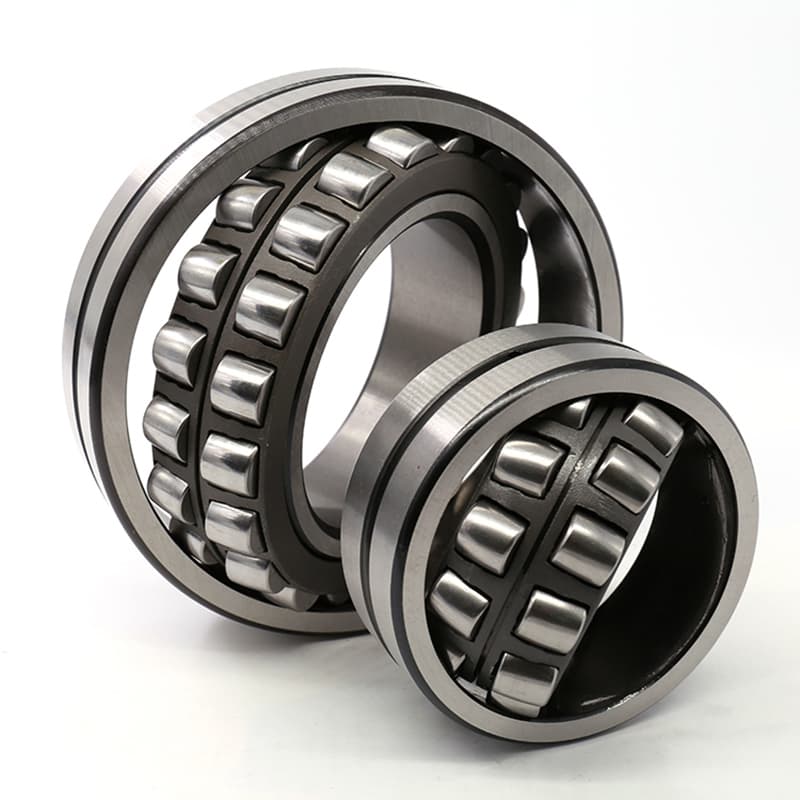
Why Installation Reigns as the Top Failure Cause
It is a startling statistic, but it makes perfect sense when you consider the bearing’s journey. A bearing is a high-precision component manufactured to micron-level tolerances. Its internal geometry – the curvature of the raceways, the profile of the rollers, the internal clearance – is meticulously designed to distribute load and manage stress.
Installation is the process of integrating this precision component into a larger, less precise system: the machine. This is the point of maximum vulnerability. The common installation errors are not just minor mistakes; they are systematic attacks on the bearing’s core design principles.
Let us examine why it is so prevalent:
- Lack of Knowledge and Tools3: In many workshops, bearings are still treated as simple "parts." The crew may not understand the importance of clean hands, clean tools, and clean workspaces. They might use a hammer and a piece of pipe as standard installation tools, unaware of the shock damage they cause. Investing in a simple induction heater and proper mounting tools pays for itself by preventing just one or two failed bearings.
- Rushing the Process: Downtime is expensive. There is immense pressure to get the machine running again. This leads to shortcuts: not cleaning the shaft and housing properly, not checking the fit with micrometers, not using the correct amount or type of lubricant, not verifying alignment after tightening. Each shortcut adds risk.
- Misunderstanding Fits and Tolerances4: The concept of interference vs. clearance fit is critical. Selecting the wrong fit from a standard table without considering the actual application conditions (load, rotation, temperature) is a major error. A fit that is perfect for a high-speed spindle will be disastrous for a heavily loaded conveyor pulley, and vice versa.
- Contamination at Installation5: This ties directly to lubrication failure. An open bearing is incredibly vulnerable. Dust, dirt, moisture, and even fibers from wiping cloths can enter during the mounting process. Once inside, these particles act as abrasives, grinding away at the smooth surfaces from day one.
For a bearing wholesaler6, this presents both a challenge and an opportunity. The challenge is that a failure due to poor installation can unfairly reflect on the bearing brand. The opportunity is to become an educator. At FYTZ, we support our distributors by providing detailed mounting instructions, specification sheets, and application advice. When Rajesh from IndoMotion Parts supplies our bearings, he can share this knowledge with his customers. This transforms the transaction. He is not just selling a commodity; he is selling a solution packaged with expertise, helping his customers achieve reliability and protecting the reputation of our FYTZ brand in the competitive markets of India and beyond. By addressing the #1 cause of failure, we build stronger, more successful partnerships.
Conclusion
A spherical roller bearing’s true lifespan is not just manufactured in our factory; it is built on-site during installation. Correct fit, precise mounting, and clean handling are the non-negotiable first steps to unlocking its full potential and preventing premature failure.
-
Understanding the causes of spherical roller bearing failure can help prevent costly downtime and improve machinery reliability. ↩ ↩ ↩ ↩ ↩ ↩ ↩ ↩ ↩ ↩
-
Exploring this topic reveals critical insights into maintenance practices that can enhance bearing longevity. ↩ ↩ ↩ ↩ ↩
-
Gaining knowledge about the right tools and techniques can significantly reduce installation errors and improve performance. ↩ ↩ ↩ ↩ ↩
-
This knowledge is crucial for selecting the right bearings for specific applications, preventing failures. ↩ ↩ ↩ ↩ ↩
-
Learning about contamination risks can help implement better practices to protect bearings during installation. ↩ ↩ ↩
-
Discover how wholesalers can educate customers and improve installation practices, enhancing overall reliability. ↩ ↩