
A crane bearing failure is not just a breakdown; it’s a major safety risk and a project-stopping event. The sudden, heavy loads and constant sheave misalignment in crane systems demand a bearing that is not only strong but also inherently forgiving and robust. Standard bearings cannot meet this challenge.
Spherical roller bearings are the premier choice for crane sheaves and hoisting equipment due to their exceptional radial load capacity, self-aligning capability to compensate for sheave groove misalignment, and ability to handle moderate thrust loads. They ensure smooth operation, long service life, and critical safety in demanding lifting applications.
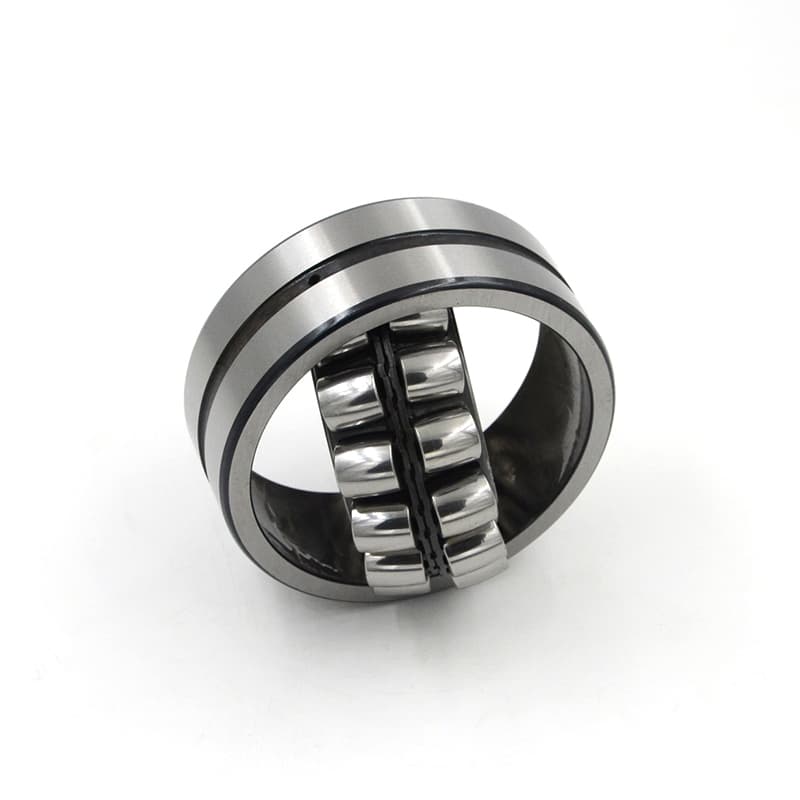
The demands on a crane bearing are unique. It’s a combination of immense static weight, dynamic shock from lifting, and persistent misalignment forces. Selecting the right spherical roller bearing—and understanding its specifications—is key to reliability. This guide covers their role, their specific use in cranes, how to decode a common part number, and the standards that guarantee their performance.
What are spherical roller bearings used for?
Spherical roller bearings are often misunderstood as just "heavy" bearings. Their real value is in solving a specific set of mechanical problems that other bearings struggle with, particularly where things are not perfectly straight or aligned.
Spherical roller bearings are used in applications with very high radial loads, combined with moderate axial loads, and where shaft or housing misalignment is present or expected. They are common in heavy industry: vibrating screens, conveyors, gearboxes, fans, and—critically—in material handling equipment like cranes, where their self-aligning feature is indispensable.
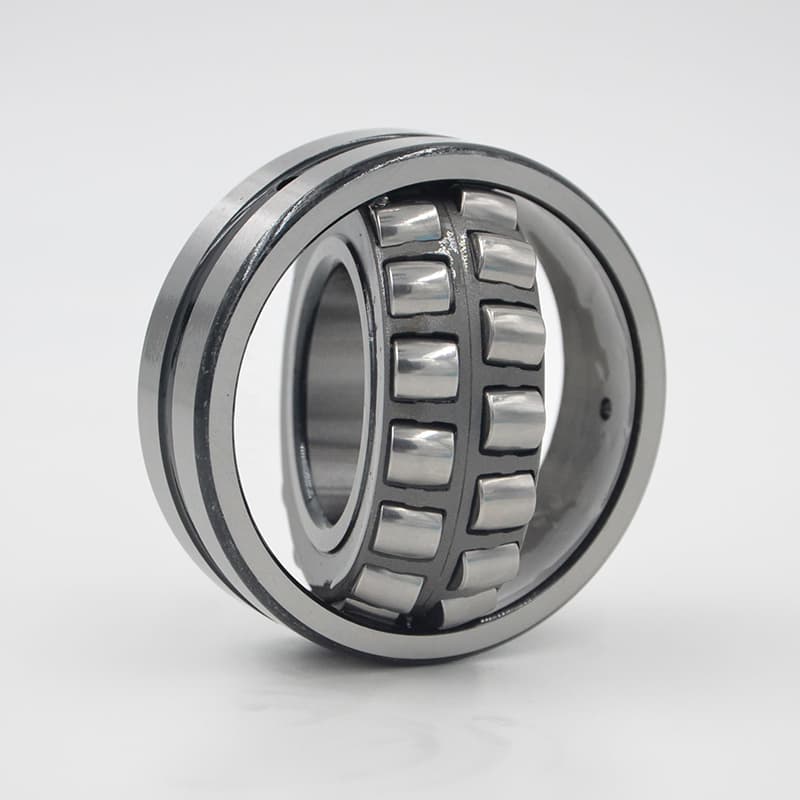
The Versatile Problem-Solver in Harsh Environments
To understand "what they are used for," we must look at the problems they are designed to solve. Their design incorporates features that directly address common failure modes in heavy machinery.
Core Problem-Solving Features:
- High Radial Load Capacity1: The two rows of barrel-shaped rollers provide a large load-carrying surface area through line contact. This makes them incredibly strong under pure weight and radial forces.
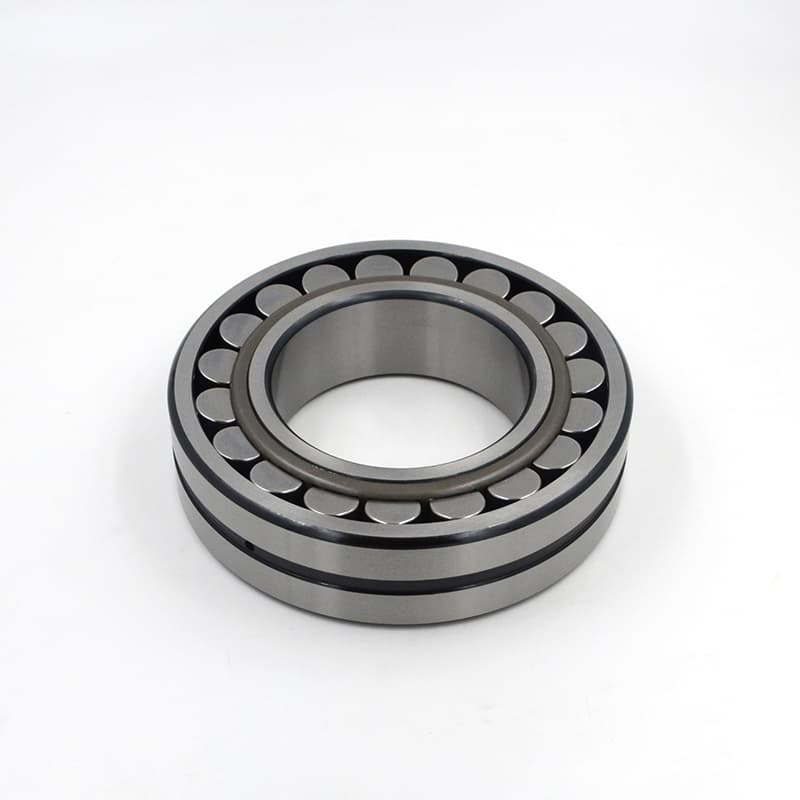
- Self-Alignment2: The spherical outer ring raceway allows the inner ring and roller assembly to pivot. This accommodates up to 2-3 degrees of misalignment. This is not a luxury; it’s a survival mechanism in real-world installations where perfect alignment is impossible or changes under load.
- Robustness3: They are typically built with large rollers and strong cages (often machined brass "CC"), making them resistant to shock loads and vibration.
Industry Applications Driven by These Features:
- Mining & Quarrying: Crushers, vibrating screens (shock loads, vibration, misalignment).
- Metals: Rolling mills (extreme loads, high temperatures).
- Pulp & Paper: Dryer drums (long shafts that deflect, causing misalignment).
- Energy: Wind turbine gearboxes (high torque, shaft deflection).
- Material Handling4: Cranes, hoists, and conveyor systems (heavy loads, sheave misalignment).
In the context of cranes, the self-alignment is the critical feature. A sheave (pulley) that guides the cable is never perfectly aligned with the drum or the next sheave. Wire rope tension pulls the sheave off-axis. A rigid bearing would see this angular force as misalignment, leading to edge loading, overheating, and premature spalling. A spherical roller bearing simply adjusts, keeping the load evenly distributed. This is why they are the default choice for this safety-critical application. At FYTZ, we manufacture these bearings knowing they will be used in such demanding roles, which drives our focus on material quality and precision in our production process.
What bearings are used in cranes?
Cranes are complex machines with multiple bearing points, each with different demands. Using the wrong bearing type in any location compromises safety and efficiency. From the massive slewing ring to the small hook sheave, each bearing has a specific job.
Cranes use a variety of bearings tailored to each function: Spherical roller bearings1 are dominant in sheave blocks2, boom foot pins, and drum shafts for their load and misalignment capacity. Tapered roller bearings3 are common in wheel hubs and travel drives for combined loads. Large-diameter slewing ring bearings4 allow the crane to rotate, and needle roller bearings may be used in compact spaces like hydraulic cylinder joints5.
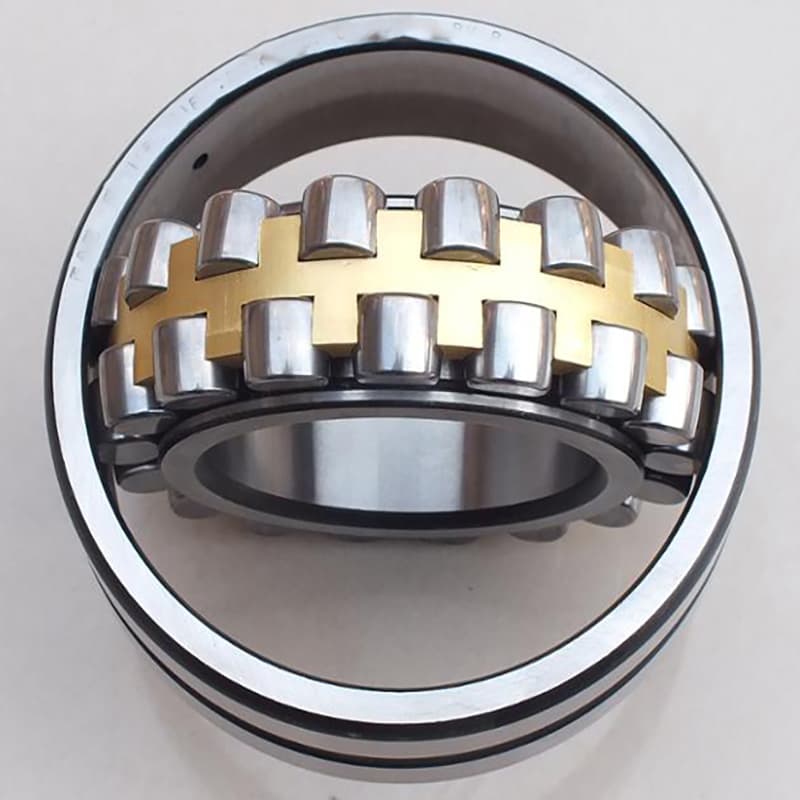
A Bearing Map for Crane Reliability and Safety
Different parts of a crane experience vastly different forces. The bearing selection for each point is a deliberate engineering decision. Let’s map the crane and identify why specific bearings are chosen for key locations.
1. Sheave Blocks (The Wire Rope Guides):
- Bearing Type: Spherical Roller Bearings (almost exclusively).
- Why: This is their ideal application. The sheave is subject to:
- Extreme Radial Load: The entire weight of the lifted load, multiplied by rope tension factors.
- Constant Misalignment: The wire rope enters and exits the sheave groove at an angle, exerting a tilting moment on the sheave. The spherical bearing’s self-alignment accommodates this tilt perfectly.
- Shock Loads: From sudden starts, stops, or load swinging.
2. Hoist Drum Shaft:
- Bearing Type: Spherical Roller Bearings or Tapered Roller Bearings in heavy-duty applications.
- Why: The drum shaft sees high radial load from wound cable and some axial thrust. Spherical rollers handle both and tolerate housing misalignment. Tapered rollers provide very rigid support if alignment is precise.
3. Boom Foot Pins6 (Pivots):
- Bearing Type: Spherical Roller Bearings or Special Spherical Plain Bearings (rod ends).
- Why: These are slow-oscillating, heavily loaded pivots. Spherical roller bearings1 can handle the load and the inherent misalignment in the linkage.
4. Travel & Wheels (Mobile Cranes):
- Bearing Type: Tapered Roller Bearings.
- Why: Similar to heavy truck axles, they need to handle high radial load (crane weight) and axial thrust from turning and track guidance.
5. Slewing Ring (Rotation):
- Bearing Type: Large-diameter slewing ring bearing (a special type with gear teeth integrated).
- Why: To support the entire upper structure (cab, boom, counterweight) and allow smooth 360-degree rotation. These are custom-engineered for each crane model.
| Crane Component | Primary Loads | Preferred Bearing Type | Key FYTZ Product Relevance |
|---|---|---|---|
| Main Hoist Sheave | Very high radial, misalignment, shock. | Spherical Roller Bearing. | Our core product line (e.g., 222, 223 series) with C3 clearance and W33. |
| Drum Shaft | High radial, some axial. | Spherical Roller or Tapered Roller Bearing. | We supply both types for OEMs. |
| Boom Foot Pin | Heavy radial, oscillating motion, misalignment. | Spherical Roller Bearing. | Our spherical rollers are ideal for this slow-rotation, high-load pivot. |
For crane manufacturers and maintenance companies, this knowledge is critical. When sourcing replacement parts for a sheave block, they must look for a spherical roller bearing. At FYTZ, we work with OEMs and large distributors who supply the crane aftermarket. We ensure our spherical roller bearings are built to the required specifications—like high static load rating (C0) for holding massive weights—to be reliable drop-in replacements for original equipment.
What is a spherical roller bearing 22228 cck W33?
To a maintenance manager, "22228 CCK W33" is not just a part number; it’s the exact recipe for a bearing that will work in their equipment. Getting one suffix wrong can mean the bearing lacks a lubrication feature or has the wrong internal fit, leading to quick failure.
A spherical roller bearing 22228 CCK W331 is a specific model. 22228 indicates a 222 series bearing with a 140mm bore (28×5). CC means a two-piece machined brass cage2. K denotes a tapered bore (1:12) for mounting with an adapter sleeve. W33 specifies an outer ring lubrication groove and three holes3 for effective grease distribution. This combination is typical for heavy-duty, serviceable industrial applications like large sheaves.
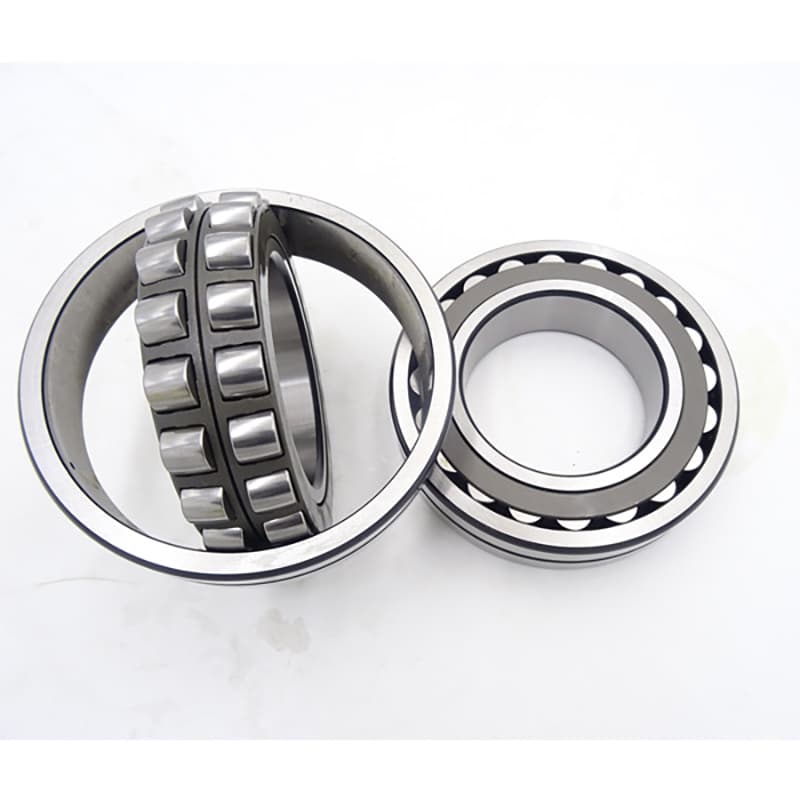
Decoding the DNA of a Heavy-Duty Bearing
This part number is a perfect case study in how bearing codes communicate critical technical details. For crane applications, each part of this code has significance. Let’s dissect it completely.
1. Basic Designation: 22228
- Type & Series (222): The first two digits "22" identify it as a spherical roller bearing. The third digit "2" indicates it is from the "22" series, which generally means a medium cross-section. This is a common, versatile series.
- Bore Size (28): For bore codes 04 and above, multiply by 5. 28 x 5 = 140mm bore. This tells you the shaft size it fits.
2. Suffix – Cage Design: CC
- This stands for a two-piece, machined brass cage. This is a premium feature.
- Why it matters for cranes: Brass cages are strong, can withstand high temperatures from heavy loads, and are very durable under vibration and shock—all common in hoisting equipment. They are superior to standard pressed steel cages in demanding environments.
3. Suffix – Tapered Bore: K
- Indicates the inner ring has a tapered bore with a 1:12 taper4.
- Why it matters for cranes: This bearing is designed to be mounted using an adapter sleeve (withdrawal sleeve). The sleeve slides onto a straight shaft, and the bearing is driven onto the tapered sleeve. This allows for:
- A very secure, tight fit on a straight shaft.
- Precise adjustment of the bearing’s internal radial clearance during installation by how far it is driven on. This is crucial for optimal performance.
4. Suffix – Lubrication Feature: W33
- This is a lubrication groove and three holes3 in the outer ring.
- Why it matters for cranes: This is essential for maintenance. In a crane sheave housing, a grease fitting lines up with this groove. When grease is pumped in, it flows through the holes into the bearing, ensuring all rollers are lubricated. It also allows for purge lubrication, where new grease forces out old, contaminated grease, extending bearing life dramatically. For a crane operating in a dirty port or construction site, this feature is non-negotiable.
Typical Crane Application for this Bearing:
A 22228 CCK W33 would be an excellent candidate for the main sheave on a medium-to-large mobile crane5 or a stationary hoist. Its 140mm bore is suitable for a substantial shaft, the CC cage handles shock, the K bore allows for secure mounting, and the W33 enables easy on-site maintenance.
At FYTZ, we produce bearings like this to exacting standards. When a distributor in the Middle East orders this part for crane maintenance, they know they are getting a fully featured, industrial-grade bearing. We can also supply it with specific internal clearance (like C3)6 if needed for thermal expansion in hot climates.
What is the ISO standard for spherical roller bearings?
In the global market, standards are the common language that ensures interchangeability and safety. For a crane manufacturer in the USA sourcing bearings from China, or a shipyard in Singapore doing repairs, ISO standards guarantee that a bearing will fit and perform as expected.
The primary ISO standard for spherical roller bearings is ISO 15:20111, which defines the boundary dimensions (bore, outer diameter, width). Other critical standards include ISO 281:20072 for dynamic load ratings and life calculation, and ISO 199:20143 for tolerance classes4 (like P5, P6). Compliance ensures dimensional interchangeability and predictable performance across manufacturers.
The Framework of Global Interchangeability and Safety
ISO standards are not just paperwork; they are the technical rules that allow global trade and safe engineering. For spherical roller bearings in critical equipment like cranes, these standards are the foundation of reliability.
1. ISO 15:20111 – The Dimensional Rulebook:
- What it defines: The boundary dimensions for radial bearings: bore diameter (d), outside diameter (D), and width (B or C).
- Why it matters: This is the most basic standard. It ensures that a 22228 bearing from FYTZ in China, SKF in Sweden, or NSK in Japan will have the exact same d=140mm, D=250mm, and width=68mm. This is absolute for interchangeability. A crane builder can design a sheave housing for a 22228 bearing and source it from any compliant supplier globally.
2. ISO 281:20072 – The Life and Strength Calculator:
- What it defines: The method for calculating the basic dynamic load rating (C)5 and the basic rating life (L10). The ‘C’ value is the load the bearing can carry for 1 million revolutions with a 90% survival rate.
- Why it matters for cranes: This standard allows engineers to calculate the expected fatigue life of a bearing under a given load. For a crane, they calculate the load on the sheave bearing and select a bearing size (like 22228) whose ‘C’ rating provides a sufficient safety margin and design life. It’s the scientific basis for bearing selection, ensuring it is strong enough for the duty.
3. ISO 199:20143 / ISO 492:2014 – The Precision Guidelines:
- What it defines: The tolerance classes4 for dimensions and running accuracy. Common classes are Normal (P0), P6, P5, P4 (increasing precision).
- Why it matters for cranes: Higher precision classes (P5, P6) have tighter tolerances on dimensions and lower allowed runout (wobble). In a crane gearbox or a high-speed hoist drum, a P5 bearing will run smoother, with less vibration and noise, contributing to overall equipment longevity. While sheave bearings often use standard precision, gearbox applications may specify P5.
4. ISO 76:2006 – The Static Strength Standard:
- What it defines: The basic static load rating (C0)6. This is the load a bearing can withstand without permanent deformation.
- Why it matters for cranes: Extremely important. Cranes often hold static loads for long periods (loaded, not rotating). The static load rating ensures the bearing won’t suffer from brinelling (raceway denting) under the massive weight of a suspended load. This is a critical safety check.
At our FYTZ factory, our production and inspection processes are aligned with these ISO standards. We calibrate our gauges to ISO 15, calculate our load ratings per ISO 281, and can produce bearings to P5/P6 tolerances per ISO 199. This compliance is what gives our global B2B partners—whether they are crane OEMs in Europe or distributors like Rajesh supplying repair shops in India—the confidence that our bearings are dimensionally and performance-wise compatible with the international market.
Conclusion
For crane sheaves, spherical roller bearings are unmatched, combining high load capacity with essential self-alignment. Selecting the correct model (like a 22228 CCK W33) and ensuring it meets key ISO standards (15, 281) guarantees reliability, safety, and global interchangeability in critical hoisting applications.
-
Explore this link to understand the foundational dimensions for spherical roller bearings, ensuring compatibility across manufacturers. ↩ ↩ ↩ ↩ ↩ ↩
-
Learn about the dynamic load ratings and life calculations that are crucial for selecting the right bearings for heavy machinery. ↩ ↩ ↩ ↩ ↩
-
Discover how tolerance classes impact bearing performance and precision, essential for high-speed applications. ↩ ↩ ↩ ↩ ↩ ↩
-
Explore the significance of tolerance classes in bearing manufacturing, which affects performance and longevity in machinery. ↩ ↩ ↩ ↩ ↩
-
Understanding the ‘C’ rating helps in selecting bearings that can withstand specific loads, ensuring safety and reliability. ↩ ↩ ↩
-
This rating is vital for applications like cranes, where bearings must support heavy static loads without deformation. ↩ ↩ ↩