
A failed wheel bearing can strand a truck. A failed gearbox bearing can halt a production line. The cost is not just the bearing itself; it’s the downtime, the repair labor, and the lost trust in your equipment. Reliability is not a luxury; it’s the core requirement.
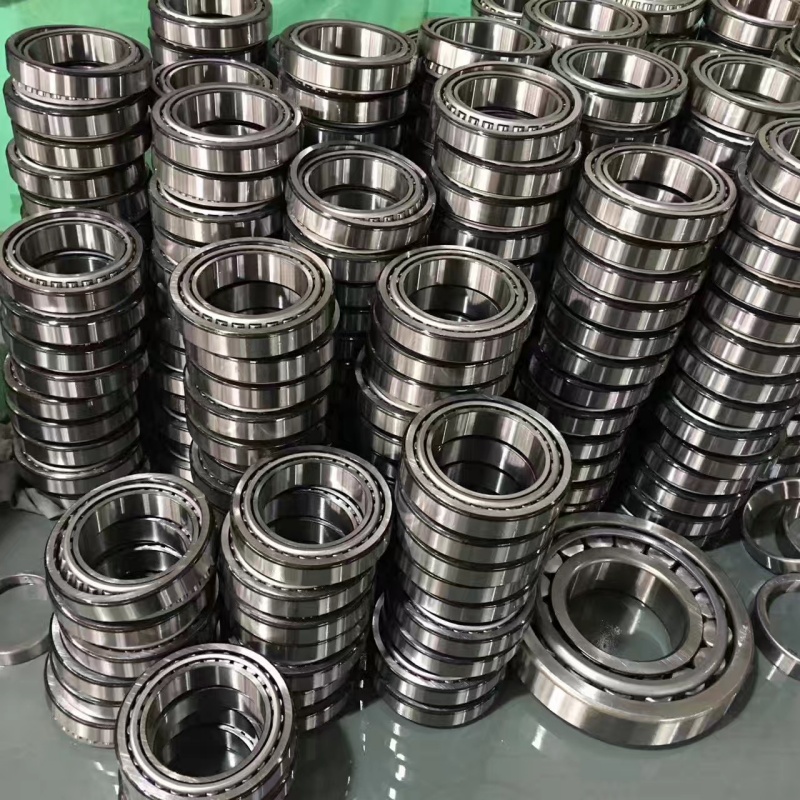
Reliable tapered roller bearings for automotive and industrial use combine high-quality steel, precise heat treatment, consistent geometry, and effective sealing. They are manufactured by global brands and quality-focused factories like FYTZ to handle the combined radial and axial loads in wheel hubs, gearboxes, and heavy machinery, ensuring durability and performance.
Reliability is built, not claimed. It comes from understanding what makes a bearing good for a specific job, who can produce it consistently, and how to select the right type. Let’s move beyond generic terms and examine the concrete factors that define a truly reliable tapered roller bearing for your application.
Who makes the best automotive bearings?
This is a common question with a complex answer. "Best" depends on context. For a Formula 1 team, the best bearing is ultra-lightweight and custom-engineered. For a cost-conscious fleet manager in India, the best bearing offers long life at a competitive price with reliable availability.
Major global brands like SKF, Timken, NTN, and NSK1 are renowned for their high-quality automotive bearings due to extensive R&D and strict quality control. However, for the aftermarket and price-sensitive OEM segments, quality manufacturers from China, Japan, and Europe2 produce bearings that meet or exceed OEM specifications, offering excellent reliability and value, such as those supplied by FYTZ Bearing.
Defining "Best" in a Diverse Market
The quest for the "best" automotive bearing is really about finding the optimal supplier for a specific need3. The market is segmented, and each segment has different priorities. A one-size-fits-all answer does not exist.
We can analyze the landscape by looking at different supply channels and their definitions of "best":
1. For Original Equipment Manufacturers (OEMs):
- Priority: Integration, technical partnership, global supply chain support, and brand alignment.
- Typical Suppliers: The large multinationals (SKF, Schaeffler, JTEKT, Timken). They work directly with car companies from the design phase.
- Why they are considered "best": They provide complete bearing system solutions, not just parts.
2. For the Premium Aftermarket (e.g., Europe, North America):
- Priority: Brand recognition, perceived quality, and exact OEM matching.
- Typical Suppliers: The same multinational brands, sold through their authorized distribution networks.
- Why they are considered "best": They carry the trust of the original brand name.
3. For the Value-Conscious Aftermarket & Emerging Economies (e.g., India, Africa, Southeast Asia):
- Priority: Cost-effectiveness, availability, and proven reliability4 that matches the vehicle’s economic lifecycle. This is where companies like FYTZ excel.
- Typical Suppliers: Quality-focused manufacturers, often from Asia, who supply to large importers and distributors.
- Why they can be the "best": They deliver 95% of the performance at 60% of the cost5, which is the smartest business decision for many vehicle owners and fleet operators.
Here is a comparison of the value proposition:
| Supplier Type | Strength for "Best" | Consideration for Buyers |
|---|---|---|
| Multinational Brand (SKF, Timken) | Strong brand trust, extensive R&D, global technical support. | Higher price point. May be over-specified for many replacement needs. |
| Quality Asian Manufacturer (e.g., FYTZ) | Excellent price-to-performance ratio, high-volume consistency, flexibility for distributor needs. | Requires due diligence to select a reputable factory with proper quality systems. |
For an importer like Rajesh in India, the "best" supplier is one that allows his business to thrive. He needs a factory that:
- Produces bearings to international quality standards (ISO, JIS6).
- Offers competitive pricing for container-load orders.
- Provides reliable lead times and export documentation.
- Can offer a range of related products (seals, kits).
A factory like FYTZ, with integrated production and inspection, fits this definition of "best" perfectly for his B2B model. We become his reliable partner, enabling him to be the "best" supplier to his own customers.
Who makes tapered roller bearings1?
Many people think tapered roller bearings1 are made only by a few specialized companies. This misconception limits sourcing options and can increase costs. In reality, they are a standard industrial component produced by a wide global supply base.
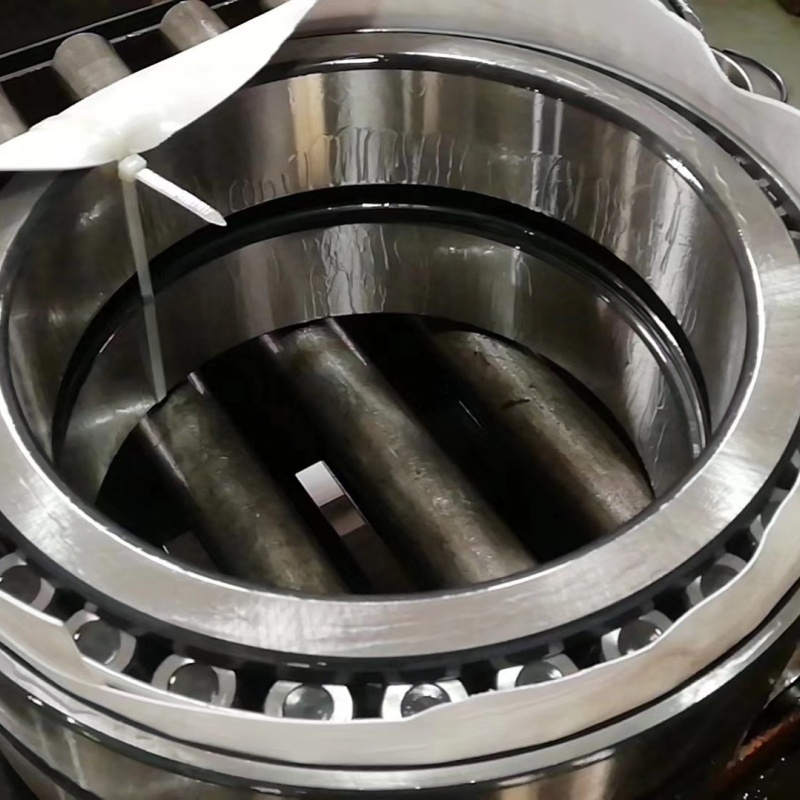
Tapered roller bearings are manufactured by a wide range of companies globally. Major players include Timken2 (USA), SKF (Sweden), Schaeffler Group (INA/FAG, Germany), and NSK/NTN/JTEKT (Japan). In China, large manufacturers like LYC, C&U, ZWZ, and specialized exporters like FYTZ Bearing produce high volumes of quality tapered roller bearings1 for the global industrial and automotive aftermarkets.
The Global Production Ecosystem: From Giants to Specialists
The manufacturing base for tapered roller bearings1 is diverse, serving different tiers of the market. Understanding this ecosystem helps buyers make informed sourcing decisions based on volume, quality needs, and commercial terms.
The market can be viewed in layers:
Layer 1: The Pioneers and Giants
- Timken2 is synonymous with the tapered roller bearing, having invented and perfected the design. They hold a strong position in heavy industry and premium automotive.
- SKF, Schaeffler, NSK, NTN are broad-line bearing giants. They produce every type of bearing, including extensive tapered roller lines, often targeting the automotive OEM and high-end industrial markets.
Layer 2: Major Volume Producers
- This is where many Chinese manufacturers3 operate. Companies like LYC, C&U, and ZWZ are state-owned or publicly listed giants with massive production capacity. They supply the domestic Chinese market extensively and are major exporters.
- Their focus is on achieving scale and meeting international quality standards at a competitive cost.
Layer 3: Focused Export Factories (Like FYTZ)
- These are often privately-owned factories with modern equipment that specialize in serving the international B2B and wholesale market. Their model is built on export flexibility4, OEM/ODM customization5, and direct factory-to-distributor relationships.
- FYТZ operates in this space. We are not the largest in China, but we are focused. We invest in precision grinding machines6, heat treatment lines, and 100% inspection to ensure our tapered roller bearings1 meet the P5/P6 precision classes our industrial and automotive aftermarket clients require.
Here’s how a distributor might choose among them:
| Sourcing Need | Likely Manufacturer Type | Rationale |
|---|---|---|
| Small quantity, exact replacement for a European machine | Authorized distributor for SKF/FAG. | Guaranteed interchangeability, easy to source in small lots. |
| Large volume for a machinery OEM project | Major Chinese producer (LYC, C&U) or a multinational. | Need for large-scale supply assurance and project pricing. |
| Container-load orders for aftermarket stock (e.g., Rajesh’s business) | Focused export factory like FYTZ. | Optimal balance of quality, price, minimum order quantity, and direct communication. |
Our role at FYTZ is clear. We are the efficient, reliable manufacturing partner for bearing importers and industrial equipment builders who value consistent quality without the premium brand markup. We make tapered roller bearings1 that are dimensionally interchangeable with those from major brands, built with the same core principles of material quality and geometric precision, ready for export to markets worldwide.
What are tapered roller bearings good for?
Using a ball bearing for a high-thrust application is a design error. Using a cylindrical roller bearing where shaft position must be rigidly fixed is another mistake. Tapered roller bearings are the specialist tool for a specific set of mechanical problems.
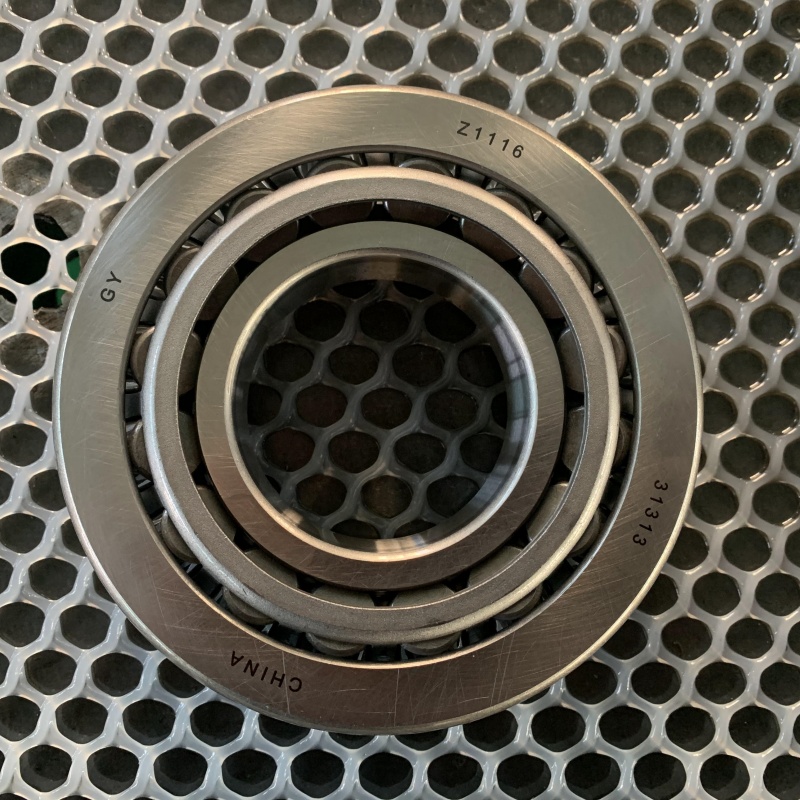
Tapered roller bearings are exceptionally good for applications that experience combined radial and axial (thrust) loads1, particularly where those loads are heavy and primarily in one direction. They excel in vehicle wheel hubs2, gearboxes, differentials, rolling mills, construction machinery, and agricultural equipment where precise shaft positioning, high rigidity, and adjustable clearance are required.
The Ideal Tool for Specific Load and Control Scenarios
Their "goodness" is not universal; it’s targeted. They solve specific engineering challenges better than other bearing types. The key to their effectiveness lies in two intertwined features: combined load capacity and adjustable rigidity3.
Let’s break down their core competencies:
1. Managing Combined Loads Efficiently:
Their conical geometry is key. A radial load generates an induced axial reaction force within the bearing. This means they are inherently designed to handle both types of forces simultaneously. This is perfect for:
- Car Wheel Hubs: The radial load is the vehicle’s weight. The axial load comes from cornering forces. A pair of tapered bearings handles both.
- Gearbox Shafts (Helical Gears): Helical gears generate axial thrust along the shaft during power transmission. Tapered roller bearings directly counteract this thrust while supporting the radial gear loads.
2. Providing Adjustable Rigidity and Precision:
This is their superpower. By adjusting the axial position of the cone relative to the cup, you can set the internal clearance4.
- Zero Clearance or Preload: This eliminates all free play, making the shaft assembly extremely rigid. This is critical for machine tool spindles and precision gearboxes to prevent deflection under cutting loads.
- Controlled Clearance: Allows for thermal expansion in applications like rolling mills.
3. Offering High Load Capacity in a Compact Design:
The line contact of the rollers provides a high load rating for their size, especially compared to ball bearings.
The following table shows where they are the preferred choice versus alternatives:
| Application | Why Tapered Roller Bearings Are "Good For" This | A Less Suitable Alternative |
|---|---|---|
| Automotive Differential Pinion | Handles high radial load from gear mesh and massive axial thrust from the pinion gear angle. Adjustable preload sets correct gear mesh pattern. | Spherical roller bearing (less axial capacity, less precise). |
| Heavy-Duty Truck Wheel Hub | Supports vehicle weight (radial) and cornering/braking forces (axial). Can be adjusted to remove play during maintenance. | Deep groove ball bearing (insufficient axial capacity for heavy loads). |
| Industrial Gearbox Input/Output Shaft | Manages thrust from helical gears, provides rigid shaft support for accurate gear alignment. | Paired angular contact ball bearings (similar function, but different load profile and cost). |
| Rolling Mill Roll Neck | Withstands tremendous rolling forces (radial) and some axial guiding forces. Adjustable to accommodate roll thermal expansion. | Four-row cylindrical roller bearing (handles radial only, needs separate thrust bearing). |
For our clients, this application knowledge is part of our service. When a gearbox rebuilder in South Africa asks for bearings, we confirm the shaft loads and the need for preload. We then supply bearings with the appropriate internal clearance4 (e.g., a specific "C" class) and material quality to ensure reliable performance in that exact role.
What are the different types of tapered roller bearings?
Not all tapered roller bearings are the same. Selecting the wrong type—like a single-row for a very high thrust load—can lead to instability and failure. The different types are optimized for different load magnitudes, combinations, and space constraints.
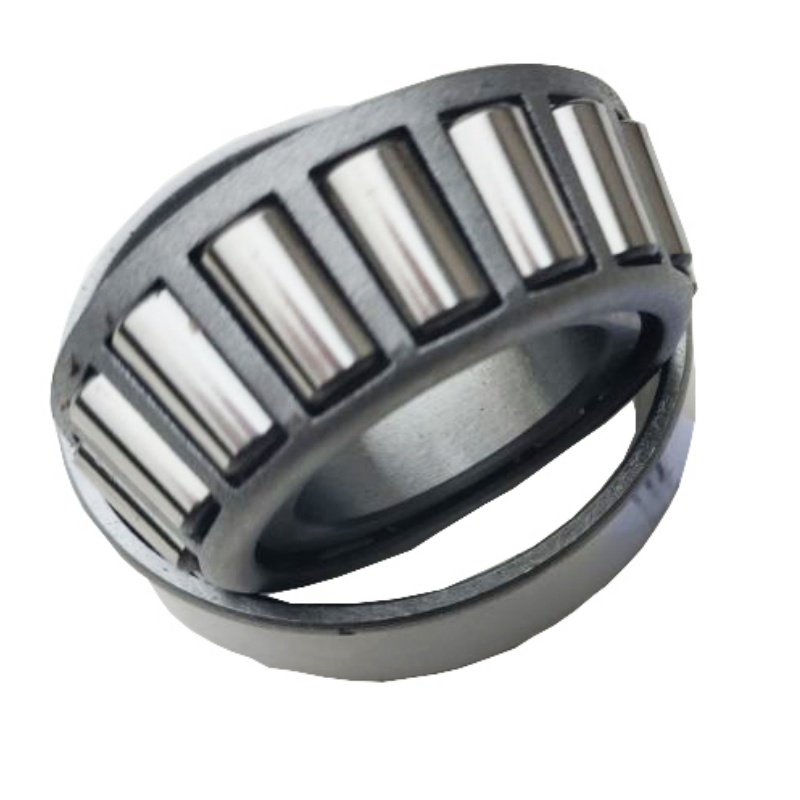
The main types of tapered roller bearings are classified by their row configuration and design features: Single-Row (most common), Double-Row, Four-Row, and Tapered Roller Thrust Bearings1. They also vary by cage design2 (pressed steel, machined brass), precision class3 (P0, P6, P5), and sealing options to suit specific automotive and industrial applications4.
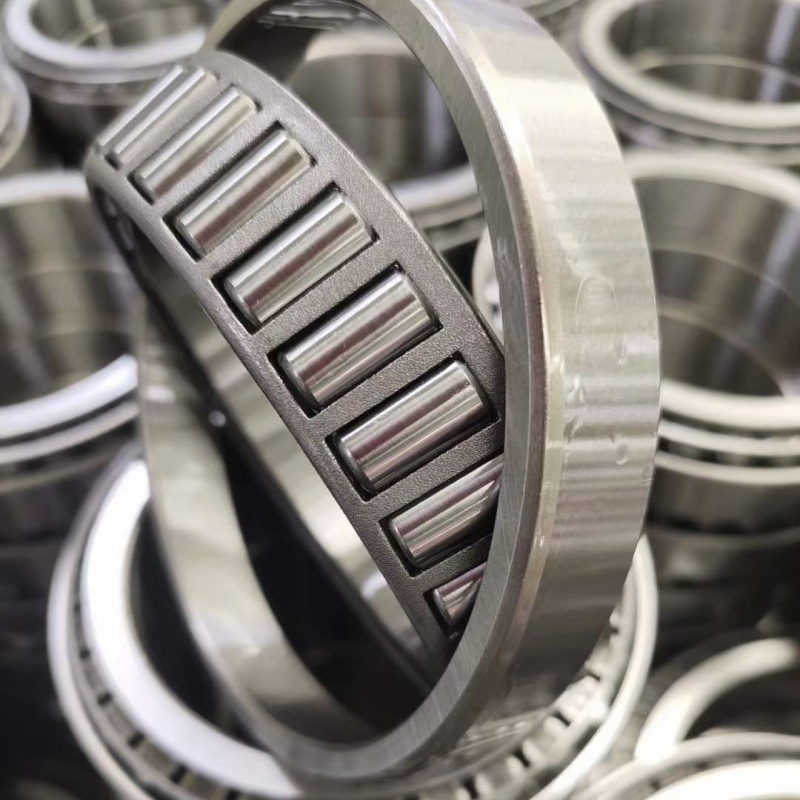
Navigating the Family: Matching Bearing Type to Application Demand
The "type" of tapered roller bearing defines its load-carrying strategy. Understanding these differences is crucial for correct selection in both automotive and industrial design. The choice affects the bearing’s footprint, its ability to handle moment loads, and its complexity of adjustment.
1. Single-Row Tapered Roller Bearings5 (e.g., 30200 series):
- Description: The basic, most widely used type. Consists of one cone and one cup.
- Load Capability: Designed to handle combined radial and axial loads in one direction.
- Key Feature: Must always be used in opposing pairs to secure the shaft axially in both directions. Adjustment of clearance/preload is required during mounting.
- Typical Use: Automotive wheel hubs, gearbox shafts, general industrial machinery. This is the type we supply in high volume to the automotive aftermarket.
2. Double-Row Tapered Roller Bearings6 (e.g., 352900, 32200 series):
- Description: Two single-row cone assemblies arranged back-to-back (DB) or face-to-face (DF) in a single unit.
- Load Capability: Can handle radial loads and axial loads in both directions. Higher radial capacity than two single rows in the same space.
- Key Feature: Preload is usually set by the manufacturer and maintained by spacers. Simplifies installation but offers less field adjustability.
- Typical Use: Machine tool spindles, rolling mill rolls, high-precision applications where rigidity in both axial directions is needed.
3. Four-Row Tapered Roller Bearings7:
- Description: Essentially two double-row bearings in one unit. Very complex and robust.
- Load Capability: Extremely high radial and axial capacity.
- Key Feature: Used with a separate thrust bearing to handle all loads in a rolling mill work roll.
- Typical Use: Heavy industry – the backup rolls in steel and aluminum rolling mills.
4. Tapered Roller Thrust Bearings1:
- Description: Designed specifically for very high axial loads with some radial capacity.
- Typical Use: Large vertical pumps, screw-down mechanisms in presses, crane hooks.
The selection logic for common scenarios is summarized below:
| Application Requirement | Recommended Bearing Type | Why |
|---|---|---|
| Passenger Car Front Wheel Hub | Pair of Single-Row Tapered Bearings (e.g., 30205 + 30206). | Standard design, allows for adjustment to remove play over time. |
| Heavy Truck Differential | Single-Row Pinion Bearings (set), often with a paired configuration. | Handles high pinion thrust, adjustable for perfect gear contact pattern. |
| Industrial Gearbox Output Shaft | Pair of Single-Row or a Double-Row bearing, depending on load and space. | Provides rigidity against gear forces. |
| Steel Rolling Mill Backup Roll | Four-Row Tapered Roller Bearing. | Only design capable of handling the monumental rolling forces. |
At FYTZ, we primarily manufacture single-row tapered roller bearings in the common metric series (30200, 30300, 32200, etc.) because this covers the vast majority of automotive and general industrial needs. We produce them in various precision grades and with different cage options. For a client building agricultural gearboxes in Brazil, we might supply 30310 bearings with a machined brass cage for higher reliability. For Rajesh’s automotive aftermarket business in India, we supply the common 30205/30206 series with pressed steel cages, offering the perfect balance of performance and value for replacement use.
Conclusion
Reliability in tapered roller bearings is achieved by selecting the correct type for the load (single/double-row), sourcing from manufacturers that balance quality and value, and applying them precisely where their strengths in handling combined loads and providing rigidity are needed.
-
Find out how Tapered Roller Thrust Bearings handle high axial loads in various applications. ↩ ↩ ↩ ↩ ↩ ↩ ↩ ↩ ↩ ↩
-
Explore the significance of cage design in tapered roller bearings and its impact on performance. ↩ ↩ ↩ ↩ ↩
-
Understand how precision class affects the performance and reliability of tapered roller bearings. ↩ ↩ ↩ ↩
-
Discover the various industrial uses of tapered roller bearings and their importance in machinery. ↩ ↩ ↩ ↩ ↩
-
Explore this link to understand the most common type of tapered roller bearings and their applications. ↩ ↩ ↩
-
Learn about the benefits and applications of Double-Row Tapered Roller Bearings for high-precision needs. ↩ ↩ ↩
-
Discover the robust design and applications of Four-Row Tapered Roller Bearings in heavy industries. ↩