Off-the-shelf bearings often force you to compromise your machine design. A slight variation in dimension, a need for a special seal, or a different material requirement can turn a standard bearing into a source of constant problems, leading to fitment issues, premature wear, or performance limitations.
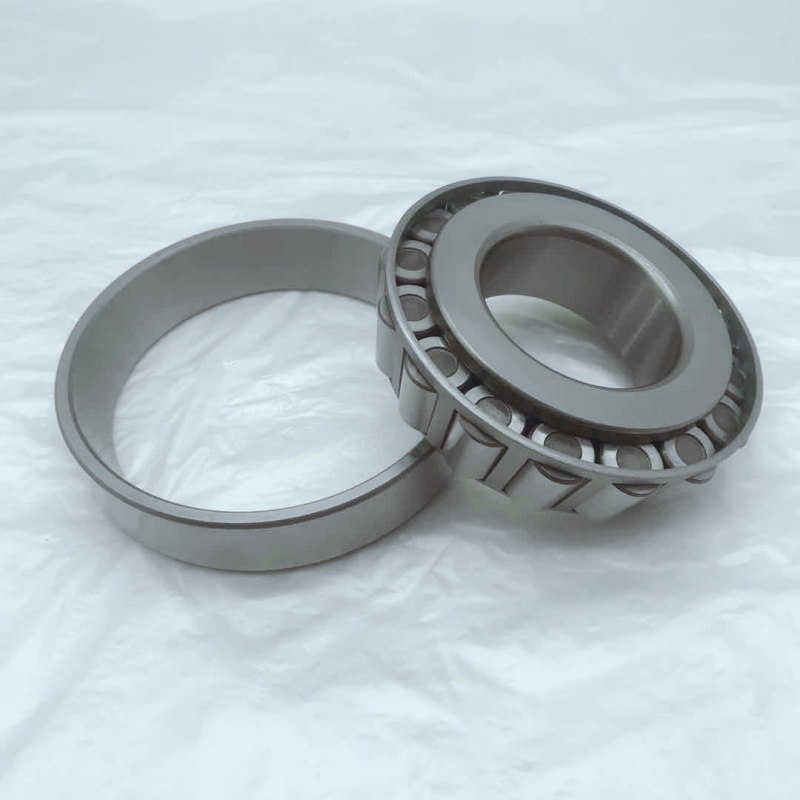
Custom tapered roller bearing solutions involve modifying standard designs in dimensions, materials, heat treatment, tolerances, cages, seals, or lubrication to meet specific application requirements. This OEM/ODM service is offered by manufacturers like FYTZ to global machinery builders and distributors, ensuring optimal performance and supply chain efficiency.
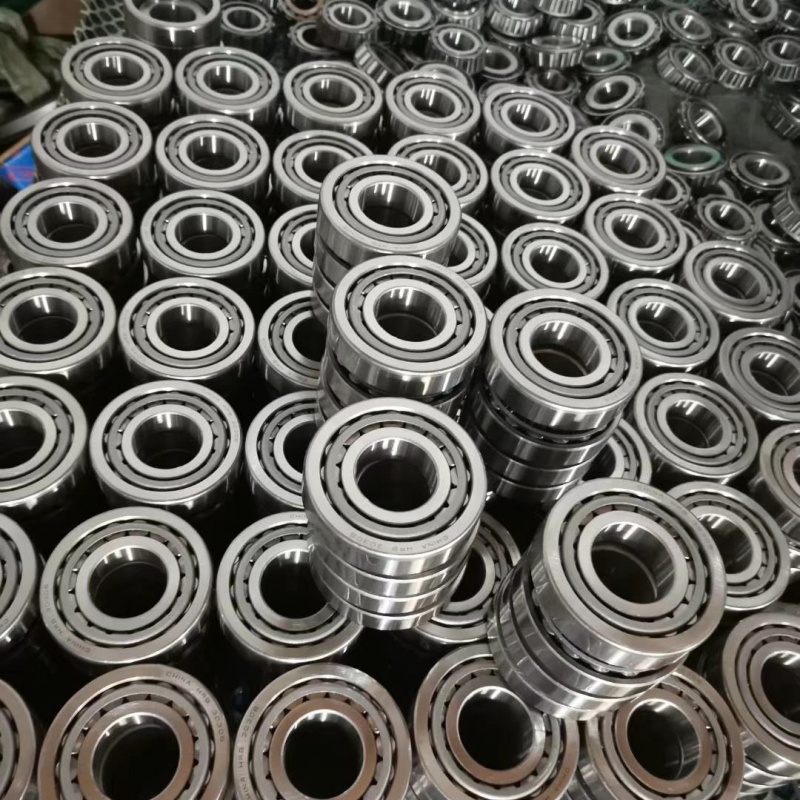
The world of bearings is not one-size-fits-all. For businesses that operate on a global scale, the ability to tailor a core component like a tapered roller bearing can be a decisive competitive advantage. Understanding who provides this service, and how it fits into the broader manufacturing landscape, is key. Let’s explore the market, the players, and the practicalities of customization.
Who makes the best tapered roller bearings?
This question often seeks a simple brand name. But "best" is subjective. For a high-volume automotive OEM, the best supplier offers integrated engineering. For a machinery builder in Vietnam, the best supplier offers reliable customization at a viable cost. Context defines the answer.
There is no single "best" maker for all situations. Timken is renowned for expertise, SKF for breadth, and NTN/NSK for precision. For custom and value-driven solutions, quality-focused manufacturers in China, like FYTZ1, excel by offering tailored designs, flexible production, and competitive pricing to global B2B customers, making them the "best" choice for many applications.
Defining "Best" Through the Lens of Customer Needs
The "best" manufacturer is the one that best aligns with your specific business and technical requirements. The market serves different segments, and each segment has a different ideal partner. Let’s evaluate the landscape based on key customer profiles.
1. For Large OEMs Seeking Full-Service Partnership:
- Priority: Co-engineering, global project support, brand alliance, risk-sharing.
- "Best" Suppliers: SKF, Schaeffler, Timken, JTEKT2. They have the R&D resources to develop bearing systems from scratch.
- Value Proposition: They are not just component suppliers; they are technology partners.
2. For Specialized Niche or Ultra-High-Precision Applications:
- Priority: Pushing performance limits in speed, precision, or environment (e.g., aerospace, racing).
- "Best" Suppliers: The R&D divisions of the above, or very specialized boutique manufacturers.
- Value Proposition: Cutting-edge materials and geometries.
3. For Machinery Builders & Industrial Distributors (The Core FYTZ Market):
- Priority: Getting a bearing that fits their design perfectly, at a competitive price, with reliable supply3. This often requires modifications to standard designs.
- "Best" Suppliers: Modern, capable factories with strong OEM/ODM services. This is where manufacturers like FYTZ Bearing position themselves.
- Value Proposition: Customization agility, cost efficiency, and direct technical collaboration without the overhead of a giant corporation.
Consider this decision matrix for a machinery manufacturer:
| If Your Primary Need Is… | Then Your "Best" Supplier Type Is… | Because… |
|---|---|---|
| Brand Prestige for Marketing | A leading multinational (SKF, Timken). | The brand name adds value to your final product. |
| A Standard Bearing for Maintenance | Any reputable supplier of interchangeable parts. | Interchangeability and availability are key. |
| A Modified Bearing for Your Unique Machine | A flexible OEM/ODM manufacturer like FYTZ4. | They will adjust dimensions, seals, or materials to your drawing, ensuring a perfect fit and function. |
For Rajesh, our importer in India, the "best" supplier for his business is FYTZ. We provide him with bearings he can brand, bearings customized for the local market conditions (e.g., extra sealing for dusty environments), and consistent quality that builds his reputation. We become his reliable, strategic partner in China, which makes him a stronger supplier to his own customers. This partnership model defines "best" in the global B2B wholesale space.
Who is the largest bearing manufacturer in the world?
Size matters for capacity and reach, but it doesn’t always correlate with suitability for custom solutions1. The largest factory may be optimized for producing billions of standard bearings for the automotive industry, not for handling small-batch custom orders for an industrial equipment builder.
By revenue and production volume, SKF Group of Sweden2 is consistently ranked as the largest bearing manufacturer in the world. Other giants include the Schaeffler Group3 (Germany), NSK Ltd. (Japan), JTEKT Corporation (Japan), and NTN Corporation (Japan). In China, LYC Bearing and C&U Group are among the largest domestic producers.
The Scale Giants vs. The Agile Specialists
Being the "largest" confers advantages in R&D investment, brand recognition, and raw material purchasing power. However, for a customer needing custom solutions1, other factors like flexibility, minimum order quantity (MOQ), and responsiveness become more important than sheer size.
The Titans: SKF, Schaeffler, etc.
- Strengths: Massive global footprint, extensive product portfolios, strong technical libraries, and the ability to supply any bearing type anywhere.
- Considerations for Custom Work: Their processes are often optimized for high-volume, standard production4. Engaging them for a custom project may involve high development costs, long lead times, and very high MOQs. They are ideal for very large OEM projects that justify this engagement.
The Major Chinese Producers: LYC, C&U, ZWZ
- Strengths: Enormous scale within China, significant government backing, complete vertical integration (steel to finished bearing).
- Considerations for Custom Work: They can handle customization, but as large entities, they may prefer large-volume orders. Communication and project management for international SME clients can sometimes be less agile.
The Focused Export Factories (Like FYTZ)
- Strengths: Agility, customer-centricity, and specialization in the export/OEM market. Our entire business model is built on serving international clients.
- Considerations for Custom Work: This is our core competency. We are structured to handle custom drawings, prototype development, and production runs with flexible MOQs5. We provide direct communication with engineering and project management.
Here is how a global customer might choose based on project scale:
| Project Scale & Nature | Likely Manufacturer Type | Rationale |
|---|---|---|
| Redesign of a bearing for 500,000 cars/year | SKF, JTEKT, or a major Chinese OEM supplier. | Requires massive scale and deep integration with the auto maker. |
| 5,000 pieces of a standard bearing for stock | Major distributor or a large factory’s standard catalog. | Pure commodity purchase; price and delivery are main drivers. |
| 2,000 pieces of a modified bearing for a new conveyor design | An agile OEM/ODM factory6 like FYTZ. | We can quickly quote on the drawing, make samples, and run the production efficiently at a competitive MOQ. |
Our position at FYTZ is clear. We are not the largest in the world. We aim to be the most responsive and reliable custom solution provider for our segment of the global market. Our integrated production lines give us control over quality, and our focus on B2B exports makes us adept at handling the specific needs of machinery builders and distributors from Turkey to Brazil to Indonesia. For them, we are the "right-sized" partner.
Where are tapered roller bearings used?
The versatility of tapered roller bearings is their strength, but it also leads to misapplication. Using them where a spherical roller bearing is needed (for misalignment) or where a cylindrical roller bearing is better (pure radial load) wastes their potential and may lead to sub-optimal performance.
Tapered roller bearings are used in applications requiring management of combined radial and axial loads1 with high rigidity. Key sectors include automotive (wheel hubs, differentials, transmissions)2, heavy industry (rolling mills, gearboxes, mining machinery), agriculture (tractor axles, combines), and aerospace (landing gear, engine accessories). They are chosen where precise shaft positioning and adjustability are critical.
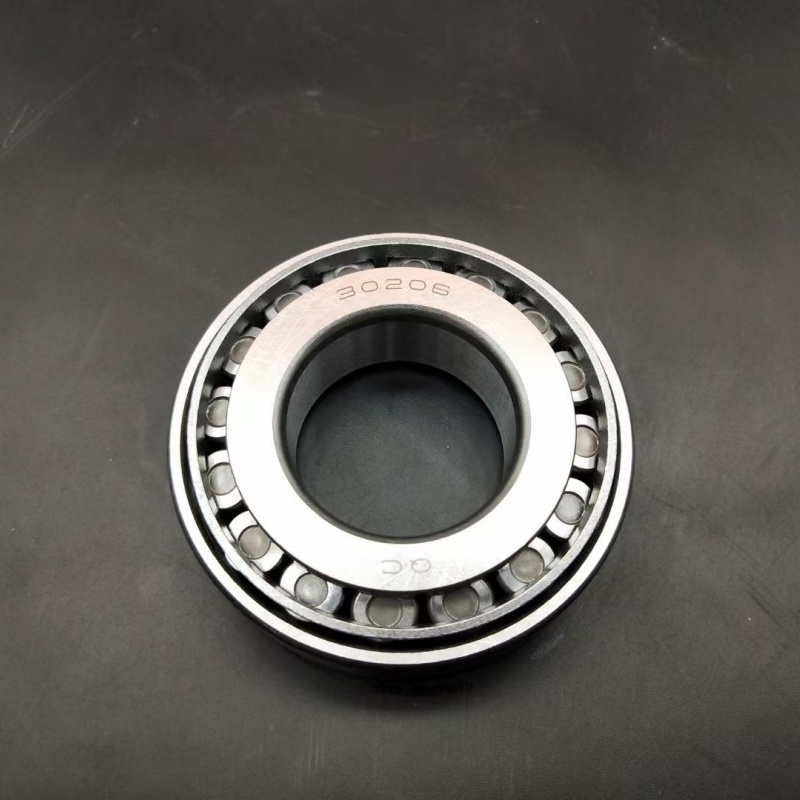
Mapping Applications to the Need for Customization
Knowing "where" they are used is the first step. The second, more important step is understanding why they are used in those places, and how that often leads to the need for custom solutions3. Standard bearings solve common problems, but unique machines have unique requirements.
Their use is driven by three core functional needs:
- Handling Combined Loads with Precision: This is their primary reason for being.
- Providing Adjustable Rigidity: The ability to set preload or clearance.
- Offering High Load Density: A lot of load capacity in a relatively compact package.
Let’s examine specific industries and the common triggers for customization within them:
| Industry | Typical Application | Standard or Custom? & Why |
|---|---|---|
| Passenger Automotive | Wheel hubs, differential pinions. | Mostly Standard. High-volume, highly standardized designs from tier-1 suppliers. |
| Commercial Vehicles & Off-Highway | Truck wheel ends, axle differentials, transmission shafts. | Increasingly Custom. Heavier loads, specific environmental challenges (dust, immersion), and proprietary designs from machinery OEMs often require custom dimensions, special seals, or material specs. |
| Industrial Gearboxes | Input, output, and intermediate shafts. | Very often Custom. Gearbox builders have proprietary housing designs and load profiles. They need bearings with specific internal clearances (C3, C4), optional lubrication features (W33 groove), or non-standard widths to fit their housing. |
| Rolling Mills (Steel, Aluminum) | Work rolls and backup rolls. | Highly Custom. These are some of the most heavily loaded bearings on earth. They are almost always custom-engineered for the specific mill, with unique dimensions, material grades, and internal geometries. |
| Agriculture & Construction | Final drives, track rollers, implement hubs. | Mix of Standard and Custom. Harsh environments drive need for custom sealing solutions or corrosion-resistant coatings on otherwise standard bearing sizes. |
For a global customer, this is where we add value. A gearbox manufacturer in Germany might have a legacy design that uses a bearing size no longer in common production. They come to us for a custom production run4 of that exact size. A mining equipment builder in Chile might need a standard 32216 bearing, but with a specially plated surface to resist corrosion in a saline environment. We execute these modifications as part of our OEM/ODM service. For Rajesh, his customers in the Indian market might need a bearing for a locally manufactured sugar mill. That mill might use a shaft size that is not a standard metric series. We can produce that non-standard bore or O.D. bearing for his specific supply chain.
Which country made koyo bearings?
Brand origin is a common proxy for quality perception. Knowing a brand’s heritage helps buyers understand its technological background. However, in today’s globalized supply chain, manufacturing location and brand ownership can be separate. A "Japanese" brand may produce bearings in multiple countries, including China.
KOYO Bearings1 is a Japanese brand, originally founded in Japan. It is now a core brand within the JTEKT Corporation2, one of the world’s largest bearing and steering system manufacturers headquartered in Japan. While KOYO bearings are designed and engineered in Japan, they are manufactured in factories located in Japan, the United States, and other countries worldwide to serve global markets.
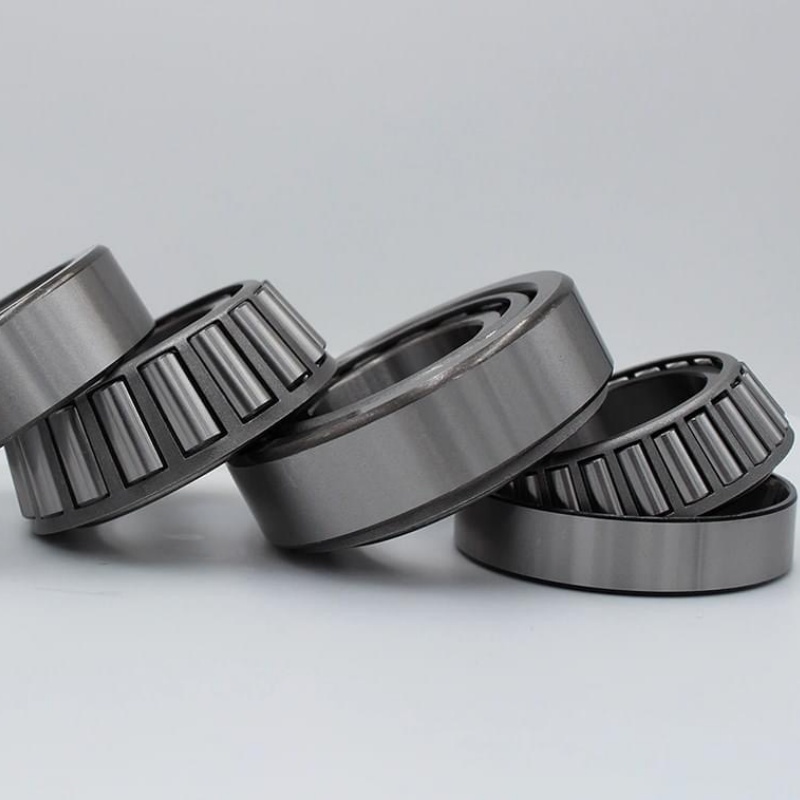
Brand Heritage, Global Production, and the Modern Supply Chain
The question of "which country made" a bearing touches on complex issues of brand identity, manufacturing quality, and global logistics. For a buyer, it’s important to distinguish between brand nationality, design origin, and production location3.
KOYO: A Japanese Engineering Heritage
- Brand Origin: Japan. The brand carries the reputation for precision, reliability, and technological innovation associated with Japanese manufacturing.
- Corporate Structure: KOYO is now a division of JTEKT. JTEKT itself was formed from the merger of KOYO Seiko and Toyoda Machine Works. This underscores its deep roots in Japanese industry.
Global Manufacturing Footprint4:
Like all major bearing companies, JTEKT/KOYO manufactures globally. They have factories in:
- Japan: For high-precision and prototype bearings.
- The Americas (USA, Brazil): To serve regional automotive and industrial markets.
- Asia (Thailand, China, India): For cost-competitive production and to serve local markets.
- Europe: To be close to customers.
This leads to a key insight for global customers: A KOYO bearing purchased in Europe may have been made in a JTEKT factory in Thailand. The quality is controlled to JTEKT’s global standards, but the point of origin is not necessarily Japan.
What This Means for Sourcing Custom Solutions:
As a Chinese manufacturer, we respect and learn from the engineering standards set by companies like JTEKT/KOYO. However, our value proposition is different:
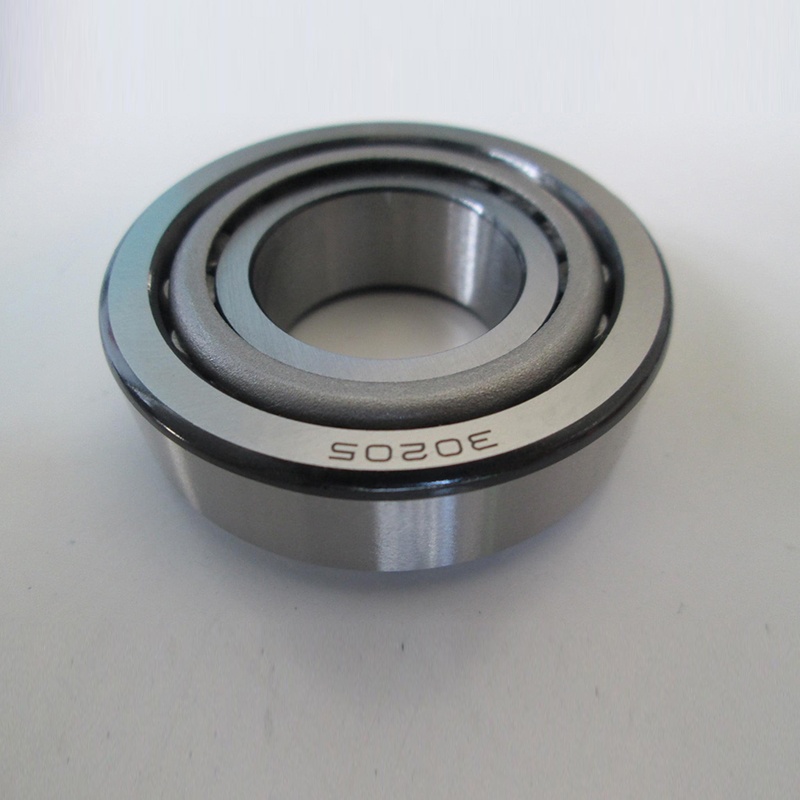
- For Standard Bearings: We produce bearings that are dimensionally and performance-wise interchangeable with KOYO’s standard series (e.g., 30205, 30310). A distributor like Rajesh can offer these as high-quality alternatives.
- For Custom Bearings: This is where we diverge. If a customer needs a modification to a KOYO standard design—perhaps a different seal, a special grease, or a non-standard tolerance—they would typically need to go through JTEKT’s custom engineering process5, which may be costly and slow for small to medium volumes.
- Our Niche: At FYTZ, we specialize in efficiently executing these customizations. A customer can bring us a KOYO drawing (or any standard drawing) and request a modification. We can prototype and produce it, often with more flexibility on MOQ and lead time than a giant multinational. We become their agile custom bearing workshop6.
This understanding empowers our global clients. They know that for standard quality, they have many choices including FYTZ. For custom solutions derived from any global standard, they have a direct, responsive partner in us. We complement the global supply chain by filling the need for flexible, customized manufacturing.
Conclusion
Custom tapered roller bearing solutions bridge the gap between standard catalog items and unique machine requirements, with agile manufacturers like FYTZ serving as essential partners for global machinery builders and distributors seeking tailored performance and supply chain efficiency.
-
Explore the rich heritage of KOYO Bearings, a brand synonymous with precision and reliability in the bearing industry. ↩ ↩ ↩ ↩ ↩
-
Learn about JTEKT Corporation, the parent company of KOYO, and its role in the global manufacturing landscape. ↩ ↩ ↩ ↩
-
Understand the complexities of product sourcing and how these factors influence quality and consumer perception. ↩ ↩ ↩ ↩
-
Discover the extensive global manufacturing footprint of KOYO and how it impacts product availability and quality. ↩ ↩ ↩ ↩
-
Gain insights into the custom engineering process at KOYO and how it affects product modifications and lead times. ↩ ↩
-
Explore the concept of agile custom bearing workshops and how they provide flexible solutions in the bearing industry. ↩ ↩