
Salt air and water are relentless. They attack standard steel bearings, causing rust that starts as a cosmetic issue but quickly becomes a functional one. Seized bearings, pitted raceways, and contamination from rust particles lead to unexpected equipment failure in critical marine and coastal applications.
Corrosion-resistant deep groove ball bearings for marine use are manufactured from stainless steels (like AISI 440C or 316), treated with specialized coatings (zinc-nickel, DLC), or use ceramic components. They are essential for equipment like boat trailer winches, marine pumps, coastal HVAC fans, and food processing machinery exposed to saltwater and high humidity.
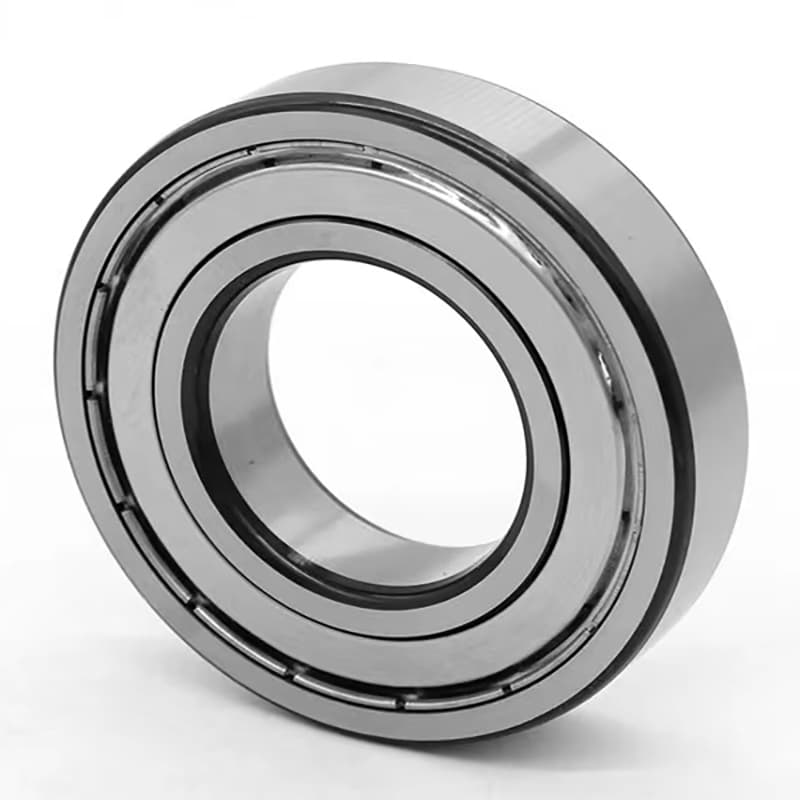
Standard bearings are designed for clean, dry environments. The marine world is their opposite. Selecting the wrong bearing for this environment guarantees premature failure. To make the right choice, you need to understand the bearing’s basic function, its common sizes, and the specific technologies that fight corrosion. This guide provides that foundation.
What are deep groove ball bearings?
Many people see a bearing as a simple ring of metal. But its internal geometry defines its capabilities. A deep groove ball bearing is not just a ring; it’s a precision system for managing motion and load in the most common and efficient way possible.
Deep groove ball bearings are the most common type of rolling bearing. They are characterized by deep, continuous raceways on both rings, which allow them to support significant radial loads and moderate axial (thrust) loads from both directions1. They are simple in design, easy to install, and suitable for high-speed operation, making them versatile for countless applications.
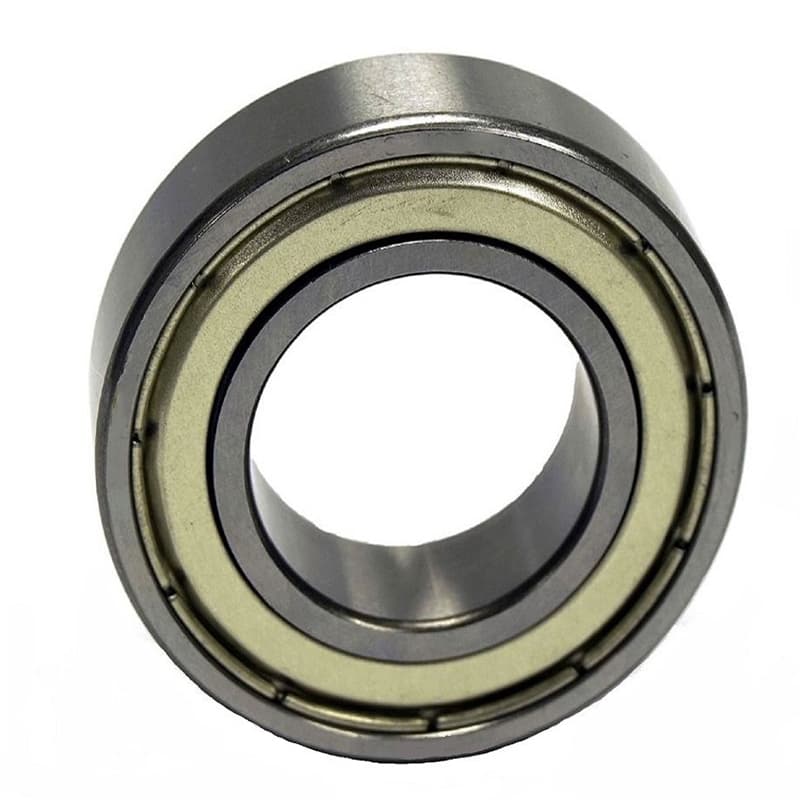
The Workhorse of Rotation: Design and Versatility
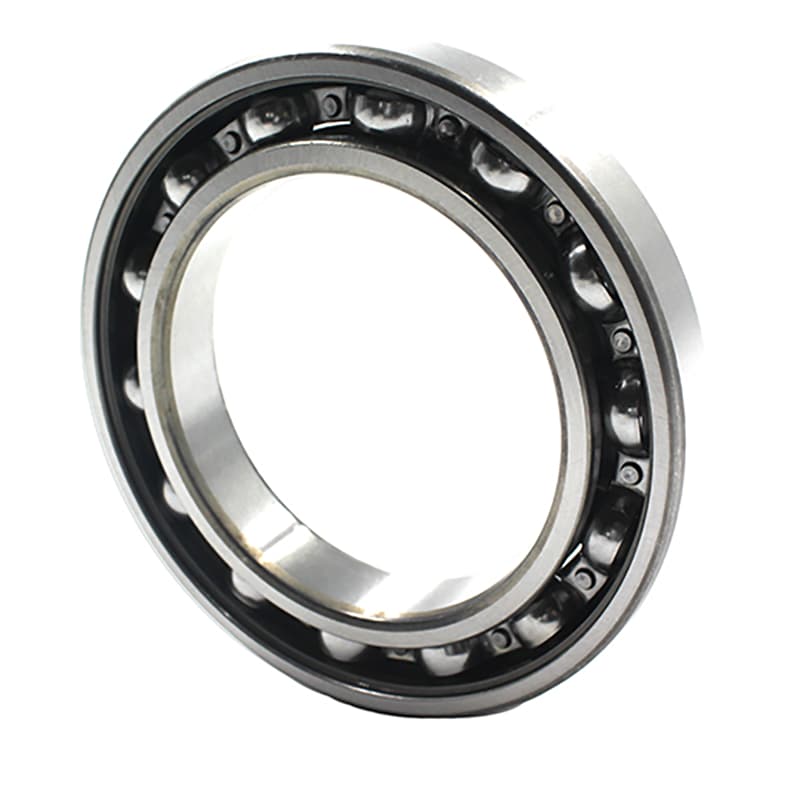
To truly understand what they are, we must look at their design philosophy and how it translates into universal applicability. Their name comes from the deep, uninterrupted groove machined into both the inner and outer rings2. This groove geometry is the key to their performance.
Core Design Features:
- Deep Raceways: The deep grooves securely guide the balls, enabling the bearing to handle axial loads from either direction without the need for additional components. This is a major advantage over other bearing types.
- Point Contact: The balls make point contact with the raceways. This results in very low friction3, allowing for high rotational speeds and efficient operation.
- Simplicity: They are typically a single, non-separable unit (except for some max-capacity types). This makes them easy to handle and install.
Primary Functions in Machinery:
- Reduce Friction: Their main job is to allow a shaft to rotate freely with minimal resistance.
- Support Loads: They carry the weight and forces (radial) applied to the shaft.
- Locate the Shaft: They help maintain the shaft’s position relative to the housing, handling moderate thrust forces.
In marine and coastal environments, their simplicity is an advantage. Fewer parts mean fewer crevices for corrosion to start, especially when made from the correct materials. They are the default choice for electric motors on deck, pump shafts, and small winches where loads are not extreme but exposure to elements is constant. At FYTZ, we produce these in vast quantities because they are the foundation of industrial motion. For an importer like Rajesh, understanding this basic type is essential, as it makes up a large portion of his sales to automotive and general industrial repair shops, including those servicing equipment near coastlines.
What is a 6203 bearing used for?
A 6203 bearing is more than just a code; it’s a specific physical object with defined dimensions and capabilities. Mistaking it for a similar-looking code like 6303 can lead to a bearing that doesn’t fit the housing, causing installation failure and downtime.
A 6203 deep groove ball bearing1 has standard dimensions: 17mm bore, 40mm outer diameter, and 12mm width. It is one of the most commonly used bearing sizes worldwide, found in small electric motors2 (fans, pumps), idler pulleys, conveyor rollers, agricultural equipment sensors, and light-duty machinery where compact size and reliable performance are needed.
A Global Standard in Miniature: The Ubiquity of the 6203
The 6203 is a perfect example of bearing standardization. Its dimensions are governed by ISO standards, meaning a 6203 from any reputable manufacturer, including FYTZ in China or a European brand, will have the same basic size. This interchangeability is what makes it so widely used.
Let’s decode its name: 6 (Deep Groove) 2 (Light Series) 03 (Bore = 17mm). The "Light Series" means it is designed for applications where space is limited and loads are moderate, not extreme.
Typical Marine and Coastal Applications for a 6203:
Even in harsh environments, small, standardized components are everywhere. The 6203 is often the bearing of choice inside sealed units or where space is at a premium.
- Marine Bilge Pumps: The motor shaft bearing in many small submersible pumps.
- Boat Cabin Ventilation Fans: The motor bearing in 12V or 24V DC fans.
- Navigation & Electronics Cooling: Small fans inside radar units or control consoles.
- Winch Motors: Smaller electric winches on trailers or decks may use 6203 bearings in their motor.
- Coastal HVAC Systems: Fans in air conditioning units for seaside buildings.
The Corrosion Challenge for the 6203:
In these applications, a standard carbon steel 6203 with minimal seals would rust quickly. Therefore, for marine use, specifying the correct variant is critical. This leads directly to the need for corrosion-resistant options3:
| 6203 Bearing Type | Material/Coating | Suitability for Marine Environment |
|---|---|---|
| Standard 6203 (Carbon Steel) | SAE 52100 steel, zinc-plated or uncoated. | Not suitable. Will rust rapidly. For indoor, dry use only. |
| Stainless Steel 6203 (e.g., 6203-2RS SS) | AISI 440C or similar martensitic stainless steel. | Good. Resists corrosion from salt spray and humidity. Common choice. |
| Corrosion-Coated 6203 | Carbon steel with a zinc-nickel or Dacromet coating. | Better than standard, but not as good as SS. Provides a barrier. Coating can wear. |
| Ceramic Hybrid 6203 | Stainless steel rings with silicon nitride (ceramic) balls. | Excellent. Inert ceramic balls will not corrode, reducing friction and further resisting galvanic corrosion. |
For a distributor like Rajesh, who may supply parts to boatyards or coastal industries, stocking the 6203-2RS in stainless steel is a smart move. It is a direct, corrosion-resistant replacement for the standard bearing that fails so often in those conditions. At our factory, we can produce 6203 bearings in all these variants. When a client in Florida or the Mediterranean region orders bearings, we proactively ask about the environment to ensure they get the stainless steel or coated version, not the standard one that would lead to product failure and a dissatisfied customer.
What bearings are corrosion proof?
The term "corrosion proof" is a misnomer; all materials can degrade under extreme conditions. A more accurate term is "corrosion-resistant1." Assuming a standard sealed bearing is sufficient for marine use is a costly error. The seal keeps grease in, but it does not stop the bearing rings themselves from rusting.
Truly corrosion-resistant1 bearings are made from materials that inherently resist oxidation. The most common are stainless steel bearings (AISI 440C for hardness, AISI 316 for chemical resistance), ceramic bearings (full ceramic or hybrid), or carbon steel bearings with advanced protective coatings like zinc-nickel, Dacromet, or titanium nitride. The choice depends on the specific corrosive agent and mechanical requirements.
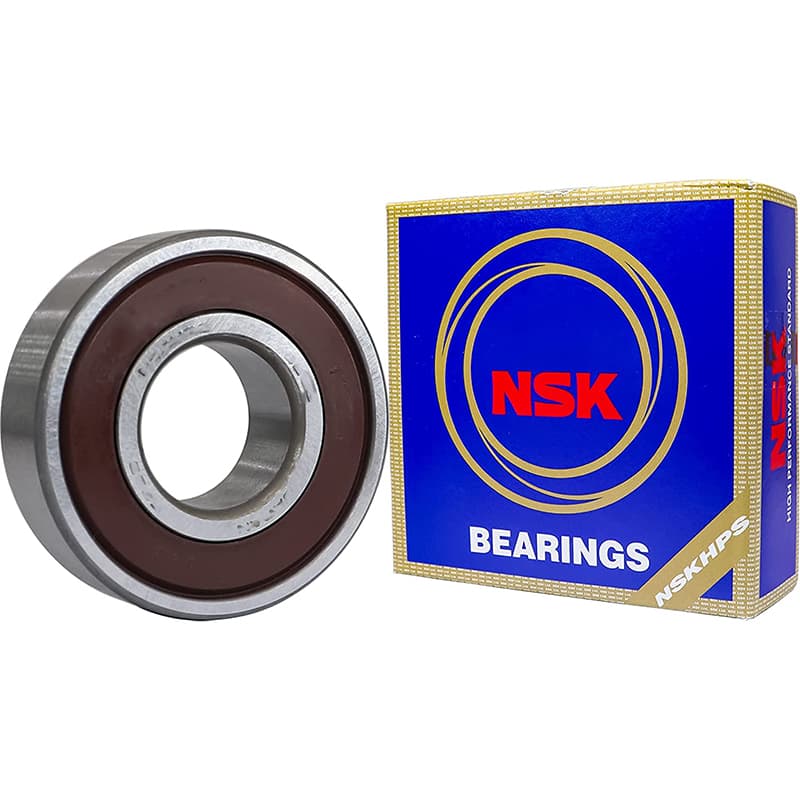
A Layered Defense: Materials and Strategies for Marine Environments
Achieving corrosion resistance is a multi-faceted approach. It involves selecting the right base material and often combining it with protective technologies. The best choice balances corrosion resistance with the necessary mechanical properties like load capacity and hardness.
1. Material-Based Resistance (The Best Defense):
- Martensitic Stainless Steel (AISI 440C): This is the standard for corrosion-resistant1 precision bearings. It can be heat-treated to a high hardness (58+ HRC), providing good load capacity and wear resistance. It offers excellent resistance to fresh water, salt spray, and many chemicals. This is what we typically use for our FYTZ marine-grade deep groove ball bearings.
- Austenitic Stainless Steel (AISI 304, 316): Softer and cannot be hardened like 440C. Used where extreme corrosion resistance (e.g., to acids) is needed over high load capacity. Often used in food processing or chemical industry bearings.
- Ceramic (Silicon Nitride – Si3N4): Full ceramic bearings are virtually inert and excel in total immersion or highly corrosive chemical applications. Hybrid bearings (stainless steel rings with ceramic balls) offer excellent corrosion resistance, lower weight, and electrical insulation.
2. Surface Engineering & Coatings (An Effective Barrier):
When high load capacity of carbon steel is needed but some corrosion resistance is required, coatings are applied.
- Zinc-Nickel (Zn-Ni) Plating2: Provides a robust, sacrificial layer. Good for automotive and general industrial use in moderately corrosive environments.
- Dacromet/Geomet3: A thin, non-electrolytic coating offering excellent corrosion resistance without hydrogen embrittlement. Common on fasteners and can be applied to bearings.
- Physical Vapor Deposition (PVD)4: Coatings like Chromium Nitride (CrN) provide a very hard, thin, and corrosion-resistant1 layer.
Choosing the Right Level of Protection:
The selection depends on the exposure level and the consequence of failure.
| Exposure Level & Application | Recommended Bearing Type | Rationale |
|---|---|---|
| Salt Spray / Coastal Atmosphere (e.g., outdoor fan) | Stainless Steel (440C) deep groove ball bearing with seals (2RS). | Provides the best balance of corrosion resistance and mechanical performance for most marine applications. |
| Intermittent Splash / High Humidity | High-quality coated carbon steel bearing (Zn-Ni or Dacromet) with seals. | A cost-effective step up from standard, suitable for less severe conditions. |
| Full Immersion / Highly Corrosive Chemicals | Full Ceramic or AISI 316 Stainless Steel Bearing. | Material must be completely inert to the medium. |
| Requires Electrical Insulation | Full Ceramic or Hybrid Ceramic Bearing. | Prevents electrical arcing damage (pitting) from stray currents. |
For our global clients, we offer these options. A fishing net winch manufacturer in Norway needs 440C stainless steel bearings. A chemical pump OEM in Egypt might need 316 stainless. A client wanting to upgrade standard machinery in a seaside plant might opt for Zn-Ni coated bearings. We provide these through our OEM/ODM service5, often custom-greasing them with water-resistant or food-grade lubricant to complete the protective system.
What is the difference between 62051 and 63052 bearings?
This is a critical question for mechanics and buyers. The numbers are similar, but the bearings are not directly interchangeable. Installing a 62051 where a 63052 is designed to go will result in catastrophic overload and rapid failure. The difference is in their load-carrying architecture.
Both the 62051 and 63052 are deep groove ball bearings with a 25mm bore. The key difference is their dimension series. The 62051 is a "Light Series3" (62) bearing: smaller outer diameter (52mm) and width (15mm). The 63052 is a "Medium Series4" (63) bearing: larger outer diameter (62mm) and width (17mm), giving it a significantly higher load capacity (approx. 50-60% higher dynamic load rating).
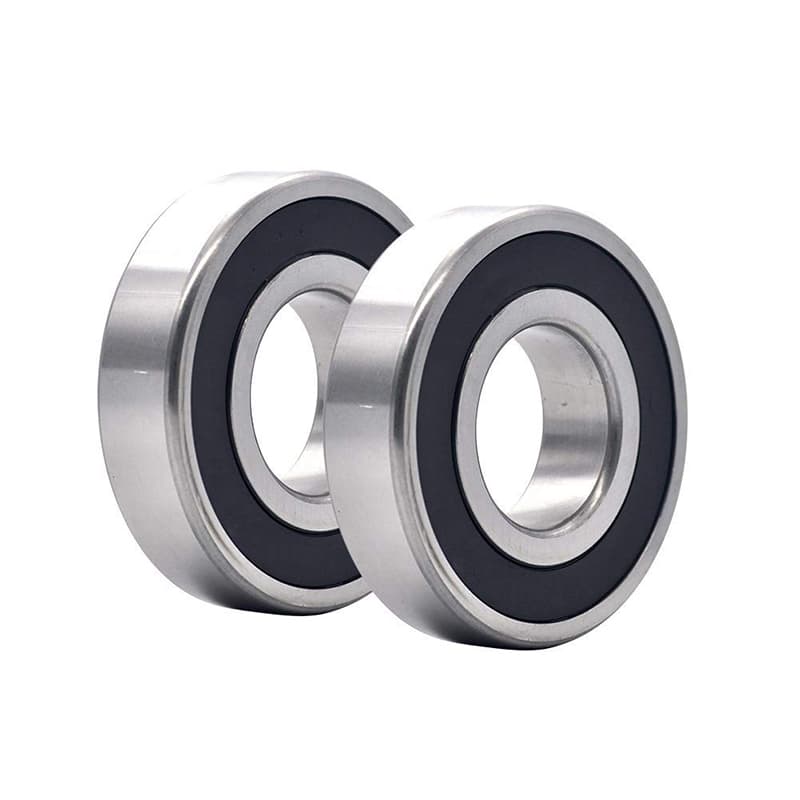
Decoding Size and Strength: The Impact of Bearing Series
The difference between a 62051 and a 63052 is a perfect lesson in bearing selection. It highlights that bore size alone is not enough. You must also consider the housing space available and the load the bearing must carry. The series code (the second digit) is the key.
Breaking Down the Numbers:
- Bore: Both have a 25mm bore (05 x 5 = 25mm).
- Series: 62 vs. 63. This dictates the cross-sectional size.
- Result: The 63052 is a more robust bearing. It uses larger balls and has more material in the rings to support higher stresses.
Let’s look at the specific dimensional and performance differences:
| Parameter | 62051 Bearing (Light Series3) | 63052 Bearing (Medium Series4) |
|---|---|---|
| Bore (d) | 25 mm | 25 mm |
| Outer Diameter (D) | 52 mm | 62 mm |
| Width (B) | 15 mm | 17 mm |
| Dynamic Load Rating5 (C) | ~14.0 kN | ~22.5 kN |
| Static Load Rating (C0) | ~7.8 kN | ~11.6 kN |
| Approx. Weight | 0.12 kg | 0.23 kg |
Implications for Marine and Coastal Applications:
- Housing Fit: A machine designed for a 63052 has a housing bore of 62mm. A 62051 (52mm O.D.) would be loose and would not transfer load properly, causing fretting corrosion and failure. They are not interchangeable without modifying the housing.
- Load Capacity: If a pump or motor shaft experiences heavy loads, the designer would specify a 63052. Using a 62051 in its place would cause premature fatigue failure (spalling) of the raceways.
- Corrosion Resistance6 Consideration: This distinction remains true regardless of material. You can get a 62051 in stainless steel or a 63052 in stainless steel. The choice between 62 and 63 series is about load and space; the choice of material (stainless vs. coated) is about environment.
Selection Logic:
- You need a 62051 if: Your housing is machined for a 52mm O.D. bearing, and the loads are moderate (e.g., a small to medium electric motor).
- You need a 63052 if: Your housing is machined for a 62mm O.D. bearing, or the application has high radial loads (e.g., a larger pump, a heavily loaded conveyor pulley).
For our clients, this is basic but vital knowledge. When a shipyard in Indonesia orders replacement bearings for a deck crane motor, they must provide the old bearing’s number or precise measurements. We will not ship a 62051 if a 63052 is required. For Rajesh, when his customer brings in a failed bearing, he must check the series. Selling the correct series is as important as selling the correct bore size or material. Our product catalogs and technical support help our partners make these distinctions correctly, preventing costly comebacks and ensuring reliable performance in the field.
Conclusion
For marine and coastal use, select deep groove ball bearings made from corrosion-resistant materials like AISI 440C stainless steel, ensure correct sizing (e.g., 6203, 6205/6305), and specify effective sealing to combat the destructive effects of saltwater and humidity.
-
Explore this link to understand the specifications and applications of 6205 bearings, ensuring you choose the right one for your needs. ↩ ↩ ↩ ↩ ↩ ↩ ↩ ↩ ↩ ↩ ↩ ↩ ↩ ↩ ↩ ↩ ↩
-
Discover the specifications and applications of 6305 bearings to ensure optimal performance in your machinery. ↩ ↩ ↩ ↩ ↩ ↩ ↩ ↩ ↩ ↩ ↩ ↩ ↩ ↩ ↩
-
Learn about the differences between Light Series and Medium Series bearings to make informed choices for your projects. ↩ ↩ ↩ ↩ ↩
-
Find out the advantages of Medium Series bearings to understand their benefits in high-load applications. ↩ ↩ ↩
-
Understanding how Dynamic Load Rating is calculated can help you select the right bearing for your load requirements. ↩ ↩
-
Explore materials that enhance corrosion resistance in bearings to ensure longevity and reliability in harsh environments. ↩