
Precision in a harsh environment seems like a contradiction. Dust, shock loads, and misalignment typically destroy precise components. Yet, modern machinery demands both: the rigidity and accuracy of a precision bearing, and the durability to survive punishing real-world conditions.
Precision tapered roller bearings for tough conditions combine tight ISO tolerance classes (P5/P6) with robust design features like premium steel, optimized heat treatment, and effective sealing. This ensures minimal vibration, accurate shaft positioning, and long service life in demanding applications like off-road vehicles, heavy gearboxes, and rolling mills.
Achieving this combination is not easy. It requires a deep understanding of what precision truly means, how it’s graded, and how to protect it from the elements. It also requires knowing who can reliably deliver such specialized components. This guide will clarify these points, from basic definitions to the global supply landscape.
What are tapered roller bearings?
Many people confuse roller bearing types. Using the wrong type for an application with axial thrust is a common design error. A cylindrical roller bearing in that role will fail quickly because it cannot handle the axial force, leading to machine breakdown.
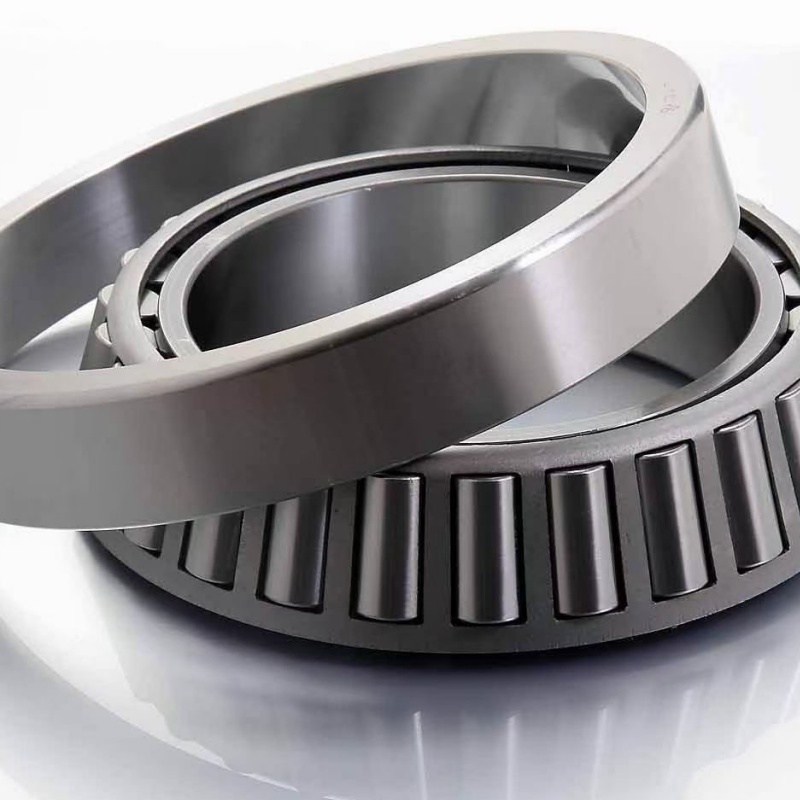
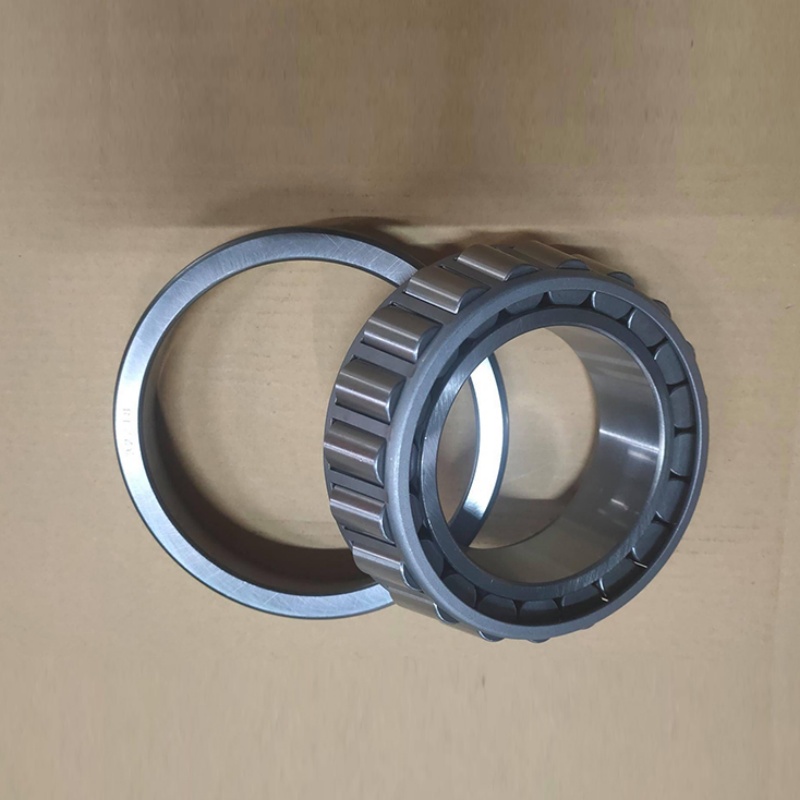
Tapered roller bearings are a type of rolling-element bearing designed to handle combined radial and axial (thrust) loads1. Their components—the inner ring (cone), outer ring (cup), and rollers—are all conical. This geometry allows them to support heavy loads from multiple directions, making them ideal for wheels, gearboxes, and heavy machinery where shafts experience both types of forces.
The Geometry of Strength and Control
Tapered roller bearings are more than just strong; they are a system for precise load management. Their unique conical shape is the key to their capabilities and their specific application requirements.
The core principle is that the apexes of all the tapered surfaces (cone, cup, rollers) converge at a common point on the bearing’s axis. This geometry ensures true rolling motion with minimal sliding friction. More importantly, it creates a direct relationship between radial and axial load capacity. A radial load on the bearing generates an induced axial force2. Because of this, they are almost always used in pairs, mounted opposite each other. This arrangement controls shaft position axially in both directions.
Let’s break down their primary characteristics:
- Load Handling: They excel at high combined loads3. The line contact of the rollers provides great radial capacity, while the taper angle provides high thrust capacity, primarily in one direction per bearing.
- Adjustability: A key feature is their adjustable internal clearance4. By moving the cone axially relative to the cup during installation, technicians can set a specific clearance or apply preload5 (negative clearance) for maximum rigidity.
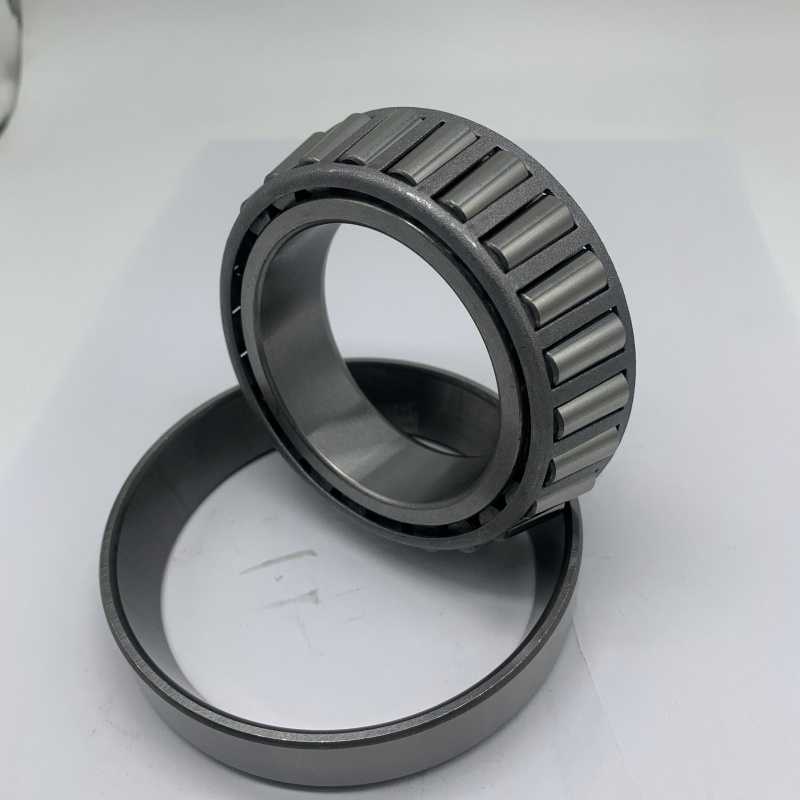
- Separability: Most tapered roller bearings are separable6. The cone assembly (inner ring with rollers and cage) can be mounted independently from the cup (outer ring). This simplifies installation and maintenance in complex assemblies.
Their design makes them suitable for very specific niches in tough conditions. Compare them to other common heavy-duty bearings:
| Bearing Type | Best For Applications Where… | Limitation in Tough Conditions |
|---|---|---|
| Tapered Roller Bearing | High combined load, need for adjustable rigidity/precision (gearboxes, wheel hubs). | Sensitive to misalignment and contamination; requires excellent sealing. |
| Spherical Roller Bearing | Very high radial load with misalignment and moderate axial load (conveyors, vibrators). | Less axial capacity, generally lower precision, higher friction. |
| Cylindrical Roller Bearing | Extremely high pure radial load, high speed (machine tool spindles). | Cannot handle axial thrust at all. |
For our clients building heavy axles for mining trucks in Indonesia or precision gearboxes for wind turbines in Brazil, the tapered roller bearing is the cornerstone of their design. Its ability to be preload5ed gives them control over gear mesh alignment and system stiffness. At FYTZ, our production process for these bearings focuses on consistency in the cone angle and roller dimensions, because even minor variations affect the load distribution and the accuracy of preload5 adjustment—critical factors for performance in tough conditions.
What are the precision classes1 of Timken2?
Buyers often use major brands like Timken2 as a benchmark for quality. Asking about their precision classes1 helps understand the market standard. However, precision is governed by international standards, not by brand. Any manufacturer can achieve these classes with the right processes.
Timken2, a leading manufacturer, aligns its tapered roller bearing3 precision grades with international ISO standards4. Their classes typically include Standard (equivalent to ISO Normal/P0), Class 3 (roughly P6), Class 0 (P5), Class 00 (P4), and higher for ultra-precision applications. These classes define tolerances on dimensions, runout, and surface finish.

Understanding the Precision Hierarchy: From Standard to Super-Precision
Precision classes are a standardized language for defining how much deviation from perfect dimensions is allowed. Lower numbers (or more zeros) indicate higher precision. Timken2‘s system is a well-known implementation of this global concept. For engineers and buyers, understanding this hierarchy is key to specifying the right bearing for the job’s accuracy needs.
Precision affects three main areas:
- Dimensional Accuracy: The tolerance on the bore, outer diameter, and width.
- Running Accuracy: How much the bearing "wobbles" when it rotates (radial and axial runout).
- Surface Finish: The smoothness of the raceways and rollers.
Here is a breakdown of common precision classes1 and what they mean for performance in tough applications:
| Common Designation | Equivalent ISO Class (approx.) | Typical Tolerance / Runout | Application Context for Tough Conditions |
|---|---|---|---|
| Standard / Commercial | Normal (P0) | Widest tolerances. | Used in many general industrial applications where extreme precision is not critical. |
| Class 3 / P6 | P6 | Tighter than standard. Runout controlled. | Common for heavy-duty, high-quality industrial machinery. Offers a good balance of performance and cost. Improves gear mesh and reduces vibration in gearboxes. |
| Class 0 / P5 | P5 | Significantly tighter tolerances. Very low runout. | High-precision industrial applications. Used in machine tool feed shafts, high-performance vehicle transmissions, and critical gearboxes where positioning and low vibration are paramount. |
| Class 00 / P4 | P4 | Very tight tolerances. Extremely low runout. | Super-precision. For machine tool spindles, high-speed applications. Rarely needed in typical "tough" environments due to cost and sensitivity. |
The critical insight is that for "tough conditions" like in a steel mill drive or an off-road vehicle differential, you often need better than standard precision (P6 or P5) but not necessarily the ultra-levels of P4. Why? Because increased precision means:
- Better Load Distribution: Tolerances ensure rollers are nearly identical and evenly spaced, so load is shared equally. This extends bearing life under heavy, shock loads.
- Reduced Vibration: Lower runout means smoother rotation. This reduces noise and prevents vibration from loosening other components or causing fatigue cracks in structures.
- Accurate Preload Setting: Precise dimensions allow for more accurate and consistent preload adjustment, which is crucial for tapered roller bearing3 performance.
At FYTZ, we produce tapered roller bearing3s to P5 and P6 precision classes1 as part of our standard high-quality offering. Our integrated inspection lines use air gauges and runout testers to verify every batch meets these tolerances. For an importer like Rajesh, this means he can offer his customers in the Indian industrial market a product that meets the same precision benchmarks as premium brands, but at a competitive price point, suitable for demanding rebuilds and OEM applications.
What are high precision bearings1?
There’s a misconception that all bearings from a quality factory are "high precision." In reality, high precision is a specific technical category with defined limits. Using a standard bearing in a high-precision application leads to poor machine performance, product defects, and unreliable operation.
High precision bearings are manufactured to tolerance classes significantly tighter than standard industrial bearings, typically ISO P5, P4, P2 or ABEC 5, 7, 92. They feature extremely low running noise (vibration), minimal radial and axial runout, superior surface finish, and often require special handling. They are used where rotational accuracy, high speed, and rigid shaft support are critical.
The Defining Attributes of True High Precision
The term "high precision" refers to a set of measurable attributes that collectively enable exceptional performance. It’s not just about one feature; it’s about the consistency and excellence of every aspect of the bearing. For tapered roller bearings destined for tough conditions, these attributes must be built to survive that environment.
Let’s examine the key attributes that define high precision in this context:
1. Exceptional Geometrical Accuracy3:
This is the foundation. Every dimension—bore, outer diameter, width, roller diameter, cone angle—must be held within very tight limits. This ensures perfect fit on the shaft and in the housing, and most importantly, it ensures all rollers carry an equal share of the load. Uneven load sharing in a tough application leads to premature failure of the most overloaded rollers.
2. Superior Running Accuracy4 (Low Runout):
Runout is the "wobble" of the bearing when it rotates. High-precision bearings have extremely low radial and axial runout. This is critical for applications like the pinion shaft in a vehicle differential or the main shaft in an industrial gearbox. Low runout means smooth power transmission, minimal vibration, and reduced noise—even under heavy, fluctuating loads.
3. Enhanced Surface Finish and Material Quality5:
The raceways and rollers are ground and polished to a mirror-like finish. This reduces friction, heat generation, and wear initiation. Furthermore, the steel is of higher cleanliness, with fewer non-metallic inclusions. This improves fatigue life, which is essential for withstanding the cyclic stresses of tough operating conditions.
4. Controlled Internal Clearance6 and Preload Capability:
High-precision tapered roller bearings are supplied with a very narrow range of internal clearance. This allows the machine builder to achieve a precise, repeatable preload setting during assembly. Consistent preload across all units is key to uniform machine performance and longevity.
For a bearing to be both high-precision and tough, these attributes must be paired with:
- Robust Cage Design7: A strong, guided cage (often machined brass or bronze) to maintain roller alignment under shock and vibration.
- Advanced Heat Treatment8: Case carburizing is common, providing a hard, wear-resistant surface over a tough, shock-absorbing core.
- Special Lubrication: Often greased with high-performance, stable lubricants designed for long life under stress.
At our factory, achieving high precision for tough conditions is a deliberate process. We don’t just make a standard bearing "a little better." We have dedicated lines and protocols for P5/P6 tapered roller bearings. This includes controlled grinding environments, 100% dimensional and runout inspection, and selective assembly for consistency. When a client in South Africa needs bearings for a remanufactured mining truck differential, they need P5 precision to ensure the gear mesh is quiet and durable. We provide that, configured with the correct internal clearance for their preload method.
Who is the top 10 bearing manufacturer?
This is a common question from buyers seeking reliable suppliers. However, a static "top 10" list can be misleading. The best manufacturer for a giant automotive OEM may not be the best for a medium-sized importer needing a mix of standard and precision bearings1 at competitive prices.
Globally recognized top bearing manufacturers include SKF (Sweden)2, Schaeffler Group3 (containing INA and FAG, Germany), NSK, NTN, JTEKT (Japan), Timken (USA), and Nachi. In China, leading manufacturers like LYC, C&U, ZWZ, and FYTZ offer high-quality, competitive alternatives, especially for standard and precision industrial bearings in the B2B and wholesale markets.
Navigating the Global Bearing Supply Landscape
The question of "top 10" is better framed as "who are the right suppliers for my specific needs?" The market is segmented by geography, product focus, and business model. For an importer or machinery builder, understanding this segmentation is more valuable than a simple ranking.
We can categorize the major players:
1. The Western & Japanese Multinationals (Tier 1):
- Companies: SKF, Schaeffler, NSK, NTN, Timken.
- Strengths: Strong R&D, globally recognized brands, comprehensive product ranges, extensive technical support networks4.
- Typical Focus: Direct sales to large OEMs (automotive, aerospace, wind energy), high-margin specialty products, and the premium aftermarket.
2. The Major Chinese Manufacturers (Tier 1.5 / 2):
- Companies: LYC, C&U, ZWZ, HRB, and growing export-focused factories like FYTZ Bearing.
- Strengths: Extremely competitive pricing, rapidly improving quality, massive production capacity, flexibility for OEM/ODM customization5, and a focus on the B2B wholesale6 and industrial aftermarket.
- Typical Focus: Supplying the global industrial replacement market, machinery manufacturers in developing economies, and serving as competitive second-source or primary suppliers for cost-conscious OEMs.
3. Specialized and Regional Manufacturers:
- These companies focus on niche products (e.g., ceramic bearings, miniature bearings) or dominate specific regional markets.
For a business like Rajesh’s in India, the choice is strategic. He could source from European brands at a high cost, limiting his margins and market reach. Alternatively, he can partner with a quality Chinese manufacturer like FYTZ. This gives him:
- Price Competitiveness: Ability to compete in price-sensitive markets.
- Product Range Access: A full range of bearings, including the precision tapered roller bearings7 discussed here.
- Supply Chain Reliability: Direct factory access ensures stable supply and the ability to handle large container orders.
- Technical Collaboration: Factories like ours provide application support and can customize products (seals, clearances, grease) for local market conditions.
The following table contrasts the procurement approach for different client types:
| Client Profile | Ideal Supplier Type | Primary Considerations |
|---|---|---|
| Global Automotive OEM | Tier 1 Multinational (SKF, NTN) | Brand partnership, integrated design, global logistics. |
| European Industrial Machine Builder | Mix of Tier 1 and quality Chinese (like FYTZ) | Cost optimization, dual-sourcing, specific technical specs. |
| Importer/Distributor in India, Africa, Middle East | Quality Chinese Manufacturer (e.g., FYTZ) | Total cost, product breadth, minimum order quantity, export support. |
| Aftermarket Repair Shop | Local distributor sourcing from above. | Availability, price, reliable quality for the application. |
We position FYTZ in that crucial space for distributors and industrial OEMs worldwide. We are not trying to be SKF. We are a reliable, high-quality factory partner for businesses that need precision components like tapered roller bearings7 without the premium brand price. Our integrated production and inspection lines allow us to control quality from steel to finished bearing, ensuring our partners receive products that perform reliably in tough conditions, backed by our technical data and support.
Conclusion
Precision tapered roller bearings for tough conditions merge high geometric accuracy (P5/P6) with rugged design, demanding a supply chain that balances uncompromising quality with practical value for industrial machinery and wholesale distribution.
-
Learn about precision bearings and how they can enhance machinery performance. ↩ ↩ ↩ ↩ ↩ ↩ ↩
-
Explore SKF’s strengths in R&D and product range to understand why they are a top choice for OEMs. ↩ ↩ ↩ ↩ ↩ ↩ ↩
-
Discover Schaeffler’s diverse product offerings and their impact on the bearing industry. ↩ ↩ ↩ ↩ ↩ ↩
-
Explore the importance of technical support in ensuring product reliability and customer satisfaction. ↩ ↩ ↩ ↩
-
Find out how customization can meet specific market needs and improve competitiveness. ↩ ↩ ↩ ↩ ↩
-
Understand the role of B2B wholesale in connecting manufacturers with industrial buyers. ↩ ↩ ↩
-
Discover the benefits of tapered roller bearings and their applications in various industries. ↩ ↩ ↩
-
Discover how heat treatment processes improve the toughness and wear resistance of high precision bearings. ↩