
The failure of a small bearing can stop a giant combine harvester. In agriculture, downtime during harvest is not an option. Deep groove ball bearings are everywhere in farm equipment, but selecting the wrong one leads to premature failure, costly repairs, and lost productivity in the field.
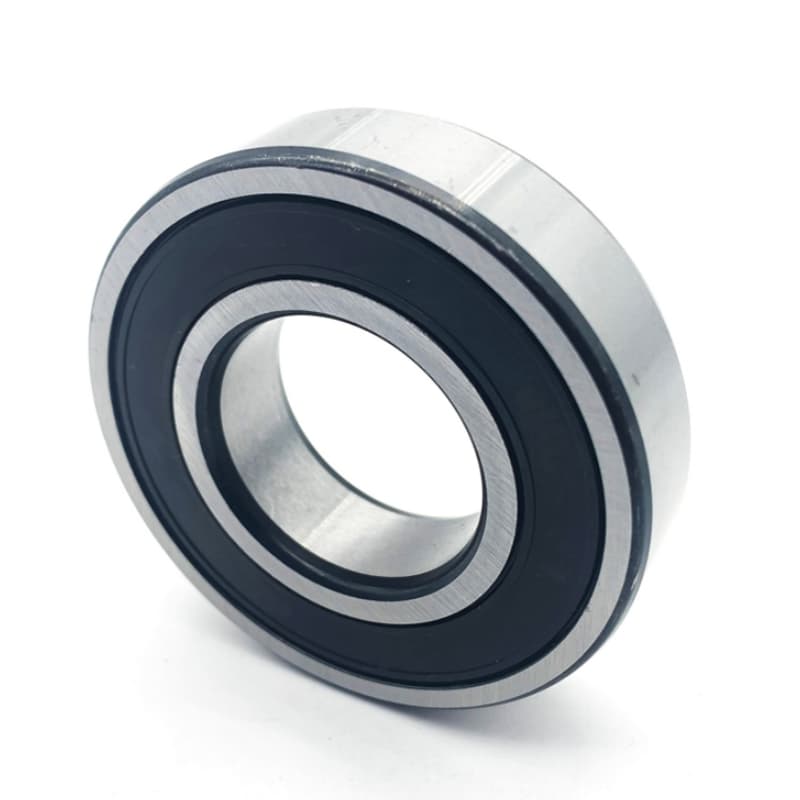
For agricultural machinery, deep groove ball bearings must be selected with appropriate seals (RS or 2RS), adequate clearance (often C3), and the correct size for loads from electric motors, gearboxes, and implements. Understanding bearing codes like 6205 and dimensions ensures reliable sourcing and prevents equipment breakdowns.
You might think a bearing is just a commodity item. But in the harsh world of farming, the details make all the difference. The right design choices and precise sourcing knowledge separate a bearing that lasts a season from one that lasts for years. This guide will walk you through the key points, from applications to part numbers.
What are deep groove ball bearings used for?
Many people see bearings as complex, but the deep groove ball bearing is the simplest and most common type. Its strength is its versatility. In a tractor or harvester, it quietly performs dozens of critical jobs, from spinning a fan to supporting a PTO shaft.
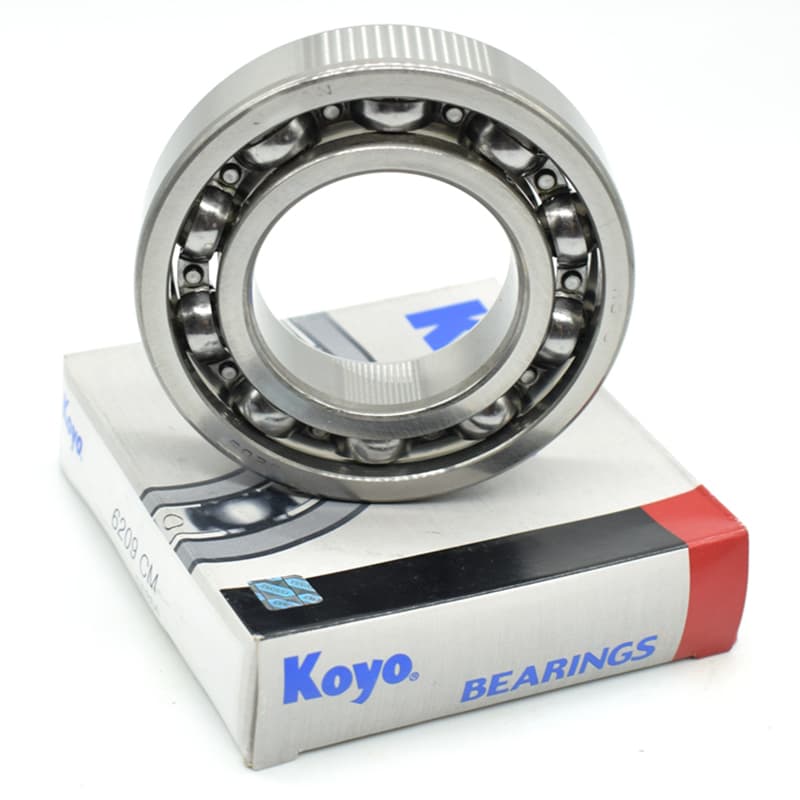
Deep groove ball bearings are used to support rotating shafts with moderate radial and axial loads at medium to high speeds. In agriculture, they are found in electric motors for fans and pumps, gearboxes, wheel hubs on smaller implements, PTO shafts, mower deck spindles, and conveyor rollers, providing reliable and efficient rotation.
The Versatile Power Transmitter in Farm Equipment
To understand "what they are used for," we need to look at the problems they solve on a farm. Agricultural machinery is a mix of heavy loads, harsh environments, and need for reliability. Deep groove ball bearings fit where loads are not extreme but where speed, simplicity, and cost matter.
Their primary function is to reduce friction between a rotating shaft and a stationary housing. Their deep, continuous raceways allow them to handle both radial loads (like the weight on a wheel) and axial loads (like thrust from a helical gear) from either direction. This two-way capability makes them very convenient for designers.
Here is a breakdown of their specific roles in common agricultural equipment:
| Agricultural Machine System | Typical Bearing Location | Why a Deep Groove Ball Bearing is Used |
|---|---|---|
| Tractor Powertrain & Implements | Alternator, starter motor, water pump, hydraulic pump shaft. | Handles moderate loads at high speeds, cost-effective for high-volume components. |
| Harvester & Forage Equipment | Electric motors for fans (cleaning, cooling), conveyor roller ends, auger support bearings. | Good for combined loads from material flow, available with seals for dust protection. |
| Mower & Tillage Equipment | Mower blade spindle (for lighter-duty rotary mowers), tiller drive shafts. | Handles radial load from cutting and some axial thrust, simple to install and replace. |
| Irrigation Systems | Pump shaft bearings, pivot wheel hubs. | Resists corrosion with proper seals, handles steady radial loads from water pressure. |
For our clients who are agricultural machinery manufacturers in Brazil or India, deep groove ball bearings are a bulk purchase item. They need bearings that are consistent, readily available, and suited for the environment. We work with them to specify bearings with rubber contact seals (2RS) to keep out chaff and dust, and sometimes with C3 internal clearance to handle the heat from long hours of operation. For an importer like Rajesh, these are fast-moving items in his warehouse. He supplies them to repair shops that service the local farming community. Knowing these applications helps him forecast demand and stock the right sizes.
What is the difference between 6205 and 6305 bearings?
This is a common point of confusion for mechanics and buyers. The numbers look similar, but the bearings are not interchangeable. Installing a 6205 where a 6305 is needed means the bearing is too weak. It will fail quickly under load, damaging the shaft and housing.
The difference between a 6205 and a 6305 bearing is their size and load capacity. Both have a 25mm bore. However, the 6305 is from the "63" medium series, meaning it has a larger outer diameter and width than the "62" light series 6205. The 6305 is significantly heavier and can carry a much higher load.
Decoding Bearing Series: The Key to Load and Size
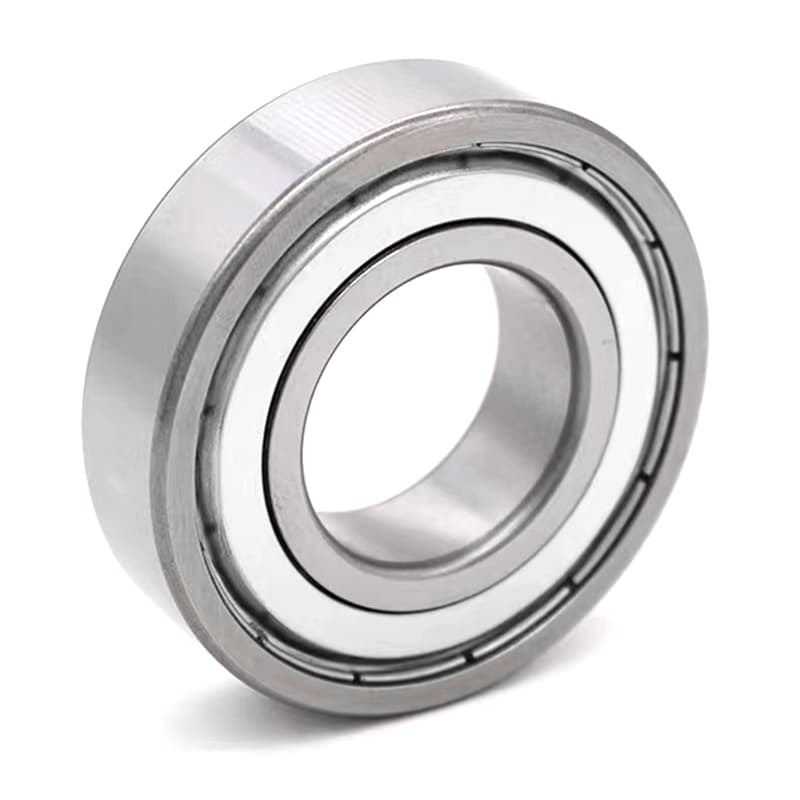
The numbers in a bearing’s basic designation are not random. They follow an international system (ISO 15) that tells you its dimensions and series. Understanding this system prevents costly mistakes and ensures you select a bearing with the right strength for the job.
The basic code for metric deep groove ball bearings is structured as: Type Code + Dimension Series Code + Bore Code.
- Type Code (6): The first digit "6" stands for Deep Groove Ball Bearing. This is consistent.
- Dimension Series Code (2 or 3): The second digit is critical. It indicates the "series," which defines the bearing’s cross-sectional size relative to its bore.
- 62 Series: This is the "Light" series. Bearings in this series are relatively slim and compact for their bore size.
- 63 Series: This is the "Medium" series. Bearings in this series are wider and have a larger outer diameter for the same bore size. They are more robust.
- Bore Code (05): For bore sizes from 20mm upward, the bore code multiplied by 5 gives the bore diameter in mm. So, 05 x 5 = 25mm bore for both 6205 and 6305.
Now let’s compare the specific differences for 6205 and 6305:
| Parameter | 6205 Bearing (Light Series) | 6305 Bearing (Medium Series) |
|---|---|---|
| Bore Diameter (d) | 25 mm | 25 mm |
| Outer Diameter (D) | 52 mm | 62 mm |
| Width (B) | 15 mm | 17 mm |
| Dynamic Load Rating (C) | ~14 kN | ~22 kN |
| Static Load Rating (C0) | ~7.8 kN | ~11.6 kN |
| Approx. Weight | ~0.12 kg | ~0.23 kg |
What this means in practice:
The 6305 bearing is over 50% stronger in terms of dynamic load capacity. It can handle much heavier loads and last longer under the same conditions. However, it requires a larger housing (62mm vs. 52mm) and more axial space (17mm vs. 15mm).
In agricultural machinery, this choice is crucial. A 6205 might be perfectly adequate for the shaft of a small hydraulic pump or a fan motor. But for a heavily loaded implement jack shaft or a gearbox idler, the designer would specify a 6305 for its extra strength and durability. As a factory, we produce both series in large volumes. When a machinery OEM sends us their bill of materials, we verify that the series selected matches their load calculations. For a distributor, this knowledge is power. If a farmer brings in a failed 6205 from a high-stress application, a knowledgeable parts dealer might suggest upgrading to a 6305 if the housing can be modified, solving the chronic failure problem.
What is a 6203 bearing used for?
The 6203 is one of the most common bearing sizes in the world. Its versatility makes it a staple in both industrial and consumer products. In agriculture, its small size belies its importance in many auxiliary systems.
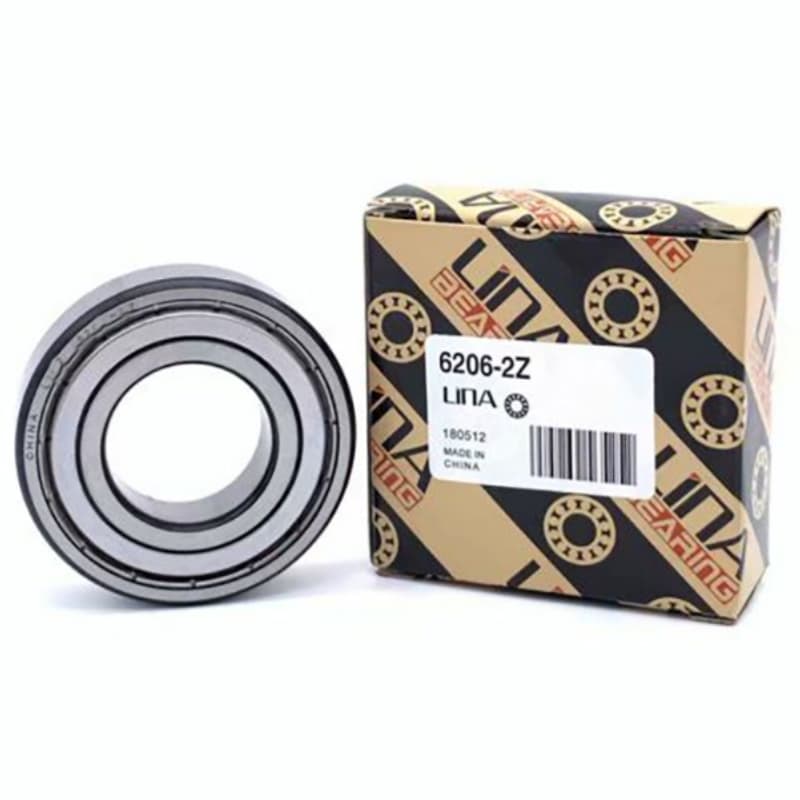
A 6203 deep groove ball bearing1 is a specific size: 17mm bore, 40mm outer diameter, 12mm width. It is commonly used in small electric motors (like those in HVAC fans, power tools), idler pulleys, conveyor rollers, and in agricultural machinery for applications like small pump shafts, sensor rollers on planters, and fan motors in cab ventilation systems.
The Workhorse of Small-Scale Rotation: Pinpointing 6203 Applications
The 6203 is the "go-to" bearing for a huge range of light to moderate duty applications. Its popularity stems from its ideal balance of size, capacity, and cost. When we ask "what is it used for," we are really identifying the countless places where a compact, reliable, 17mm shaft support is needed.
First, let’s decode its dimensions from its name: 6 (Deep Groove) 2 (Light Series) 03 (Bore = 17mm). It’s a light series bearing, so it’s designed for applications where space is limited and loads are not extreme.
Its primary role across industries, including agriculture, is in supporting small electric motor shafts2. Motors in the fractional to 1 horsepower range often use 6203 or similar sized bearings. These motors are everywhere:
- Tractor & Harvester Cab: HVAC blower motors3, ventilation fans.
- Irrigation Systems: Control panel cooling fans, small water circulation pumps.
- Grain Handling: Motors on small augers, conveyor belt drives.
Beyond motors, the 6203 is a standard component in power transmission idlers and guides4:
- Belt tensioners on engine accessory drives (alternator, water pump).
- Idler pulleys for serpentine belts or implement drives.
- Guide rollers on planting and seeding equipment that monitor seed flow.
Here is a comparison of where a 6203 fits versus other common small bearings in ag equipment:
| Bearing Code | Bore (mm) | Common Agricultural Use Case | Reason for Use |
|---|---|---|---|
| 6003 | 17mm | Very small, high-speed motors (e.g., sensors). | Extra-light series, even more compact than 6203. |
| 6203 | 17mm | Small general-purpose motors, idlers, pumps. | The standard, most common light-series size. |
| 6303 | 17mm | Heavier-duty small motors or gearbox shafts. | Medium series for higher load where space allows. |
| 6204 | 20mm | Slightly larger motors (e.g., larger hydraulic pumps). | Next common size up for more power. |
For our business, the 6203 is a high-volume staple. We produce them by the millions with different options: open (for sealed housings), shielded (ZZ for dust), or sealed (2RS for grease retention and better contamination protection). When a manufacturer of agricultural generators in Pakistan orders bearings, they often include 6203-2RS for their alternator and cooling fan motors. For Rajesh, the importer, the 6203 is a best-seller. He keeps large stocks because it fits so many repair needs across different types of farm and light industrial equipment. Understanding its specific uses helps him bundle it effectively with other parts for common repairs.
What are the dimensions of a deep groove ball bearing to fit a 12mm shaft?
This is the most practical question for anyone replacing a bearing. Getting the dimensions wrong means the bearing won’t fit the shaft, won’t fit the housing, or will be too loose or too tight. All these errors lead to immediate failure and wasted time and money.
To fit a 12mm shaft, you need a bearing with a 12mm bore (d)1. The most common deep groove ball bearing for this is the 62012. Its standard dimensions are: Bore (d) = 12mm, Outer Diameter (D) = 32mm, Width (B) = 10mm. Other series like 6001 or 6301 also have a 12mm bore but different outer dimensions and load capacities.
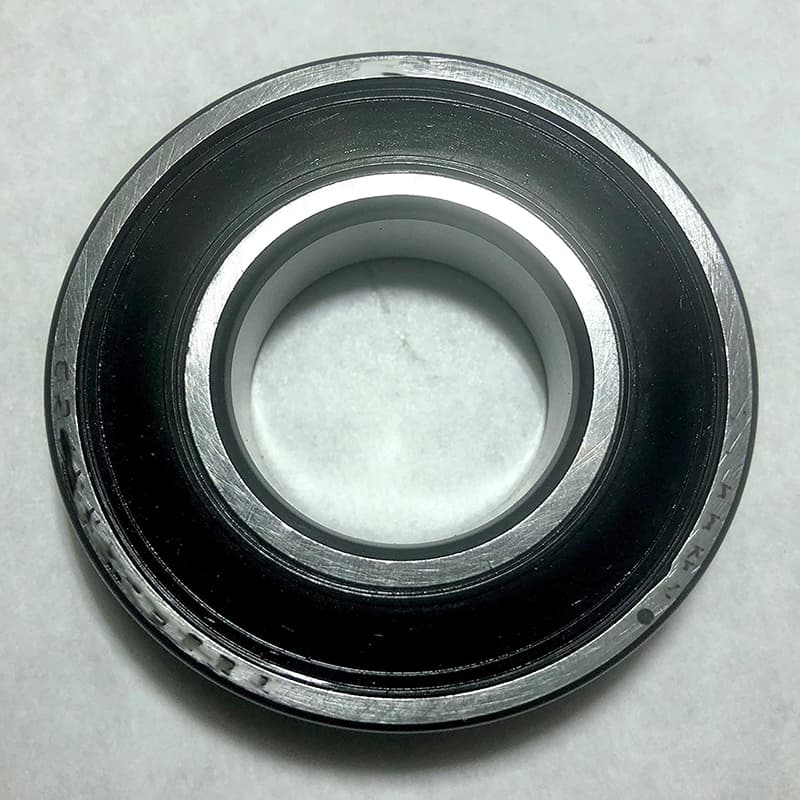
Finding the Right Fit: Beyond Just the Bore Size
Knowing you need a 12mm bore is only step one. The bearing must also fit the housing (outer diameter) and the available axial space (width). Furthermore, you must choose the right series (light, medium) for the load. The designation system gives you all this information.
The first step is to identify bearings with a 12mm bore. In the standard numbering system, for bores from 10mm to 17mm, the bore code is a direct indicator:
- 00 = 10mm bore
- 01 = 12mm bore
- 02 = 15mm bore
- 03 = 17mm bore
So, any bearing ending in 01 has a 12mm bore. Now, we combine this with the series code (second digit) to get the full dimensions.
Here are the three most common 12mm bore deep groove ball bearings and their key differences:
| Bearing Code | Series | Bore (d) | Outer Diameter (D) | Width (B) | Dynamic Load (C) ~ | Primary Application Characteristic |
|---|---|---|---|---|---|---|
| 6001 | Extra Light (9) | 12 mm | 28 mm | 8 mm | ~5.1 kN | Most compact. Used where space is extremely tight and loads are very light. |
| 62012 | Light (2) | 12 mm | 32 mm | 10 mm | ~6.8 kN | The standard, most common choice. Balanced size and capacity for general purposes. |
| 6301 | Medium (3) | 12 mm | 37 mm | 12 mm | ~9.6 kN | Heavy-duty for size. Used where higher load capacity3 is needed and housing space allows. |
How to select the right one for your agricultural application4:
- Identify the Old Bearing: If replacing, note the number on the old bearing’s seal or side. If it’s unreadable, measure the housing ID and width.
- Match the Housing: The bearing’s outer diameter (D)5 must be a light press fit into the housing. Measure the housing inner diameter carefully. A 32mm housing needs a 62012. A 28mm housing needs a 6001.
- Consider the Load: If the previous bearing (likely a 62012) failed from fatigue, and the housing can be machined larger, upgrading to a 6301 provides about 40% more load capacity3.
- Specify Seals: For agricultural use, always choose a sealed (2RS)6 or at least shielded (ZZ) version to protect against dust and moisture.
In our factory, we produce all these variants. When a customer from Egypt sends us a sample of a failed bearing from a water pump, we can measure it and confirm it’s a 62012-2RS. We then quote for an exact replacement or suggest an upgrade if appropriate. For distributors, having this dimensional data at hand is crucial. When a repair shop in Vietnam calls Rajesh asking for a "bearing for a 12mm shaft on a rice mill fan," Rajesh can ask, "What is the housing diameter?" Based on the answer (32mm or 37mm), he can immediately recommend the correct 62012 or 6301 bearing from his stock. This fast, accurate service builds a strong reputation.
Conclusion
Selecting deep groove ball bearings for agriculture requires matching the bearing’s size (from codes like 6201, 6205), load series (62 vs 63), and protective features (seals, clearance) to the specific demands of motors, pumps, and drivelines in harsh field conditions.
-
Understanding the importance of bore size ensures you select the right bearing for your application, preventing costly mistakes. ↩ ↩
-
The 6201 is a standard choice for many applications; knowing its specs helps in making informed decisions for replacements. ↩ ↩ ↩ ↩ ↩ ↩ ↩
-
Understanding load capacity helps in selecting the right bearing for your specific application needs. ↩ ↩ ↩
-
Selecting the right bearing for agricultural use is vital for performance; explore best practices to ensure reliability. ↩ ↩
-
The outer diameter is crucial for fitting the bearing into the housing; learn more to avoid fitting issues. ↩
-
Sealed bearings offer protection against contaminants, extending the life of the bearing in harsh environments. ↩