
Gearbox failure often starts with a bearing. The wrong bearing choice leads to excessive noise, heat, and premature wear on expensive gears. This downtime is costly, especially for heavy industries like mining or cement production where every hour of stoppage means lost revenue.
Selecting spherical roller bearings for gearboxes requires focus on load capacity, internal clearance (C3), precision class (P5/P6), and effective lubrication features like a W33 groove. Correct selection ensures smooth power transmission, compensates for shaft deflection, and extends the entire gearbox’s service life under demanding conditions.
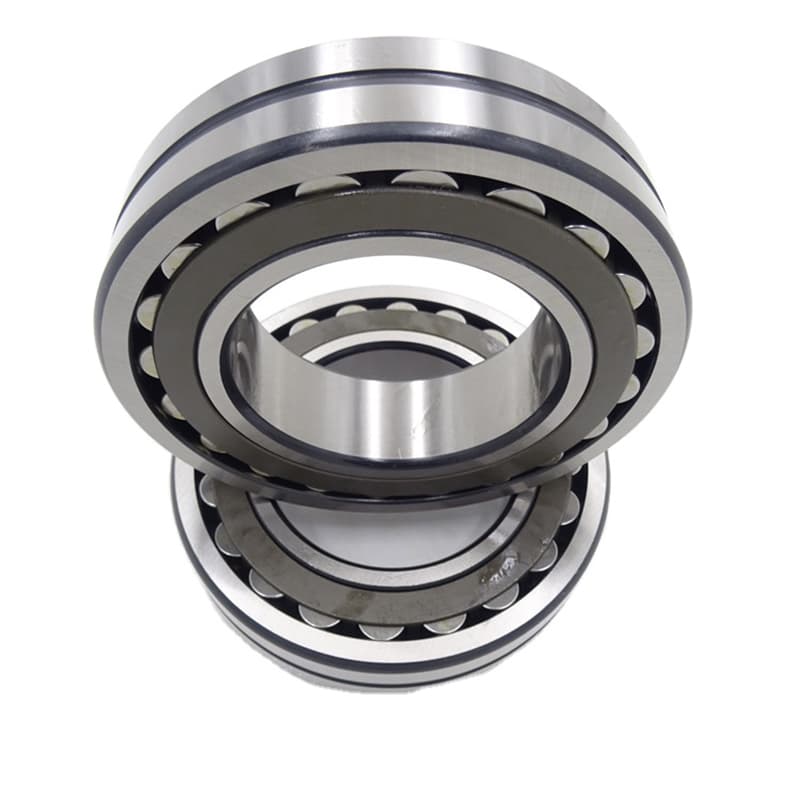
Knowing you need a spherical roller bearing is just the beginning. The real challenge is in the details—the specific features that make one bearing perfect for a high-torque reducer and another unsuitable. Let’s explore these key points, from understanding their general use to decoding the exact part number you might need for a repair.
What are spherical roller bearings used for?
People often think bearings are just simple rings of steel. But when a heavy shaft bends under load, a standard bearing fights against that bend, creating stress and heat. This is a common root cause of failure in many heavy machines.
Spherical roller bearings1 are primarily used in applications with heavy radial loads, moderate axial loads, and where shaft misalignment is present or expected. Their key function is to support high loads while self-aligning to compensate for mounting errors or shaft deflection, ensuring smooth operation.
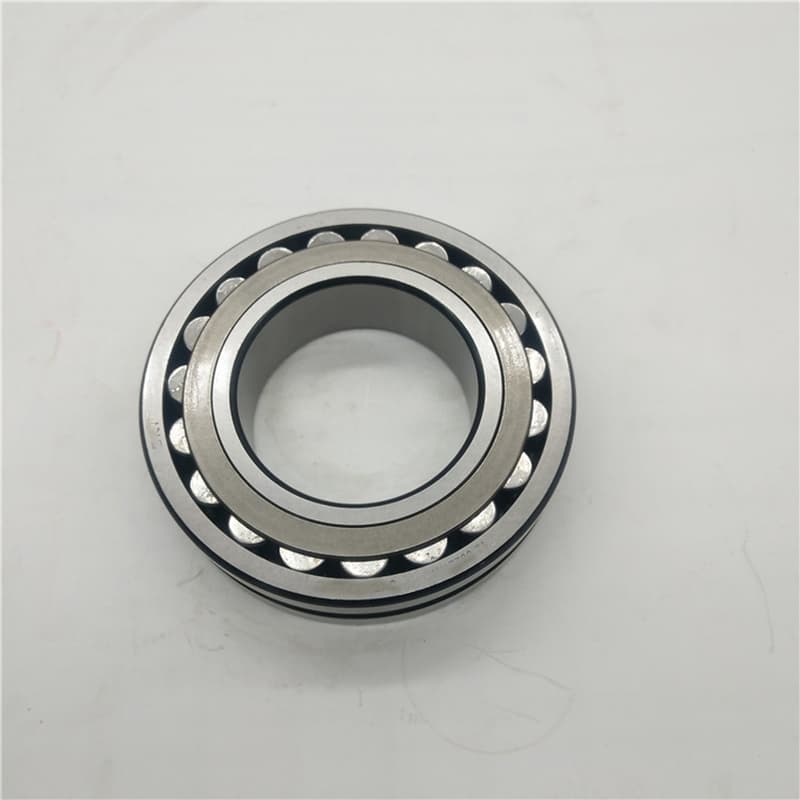
The Versatile Workhorse: From Heavy Industry to Everyday Machines
The question "What are they used for?" is best answered by looking at why their unique features are needed. The self-aligning capability and high load capacity solve specific, common problems across many sectors. Let’s break down their primary roles and the industries that depend on them.
Spherical roller bearings1 act as the robust connection between rotating shafts and stationary housings in harsh conditions. They are not for high-speed precision spindles. They are for applications where strength, durability, and forgiveness are more important than ultra-high speed.
Their three core functions are:
- Support Heavy Radial Loads2: The two rows of barrel-shaped rollers distribute weight over a large area.
- Handle Combined Loads: They can carry radial load and axial (thrust) load from both directions simultaneously.
- Compensate for Misalignment3: They automatically adjust to shaft deflection or installation errors, preventing edge loading.
Here is a table of common applications grouped by industry:
| Industry | Typical Application | Why Spherical Roller Bearings Are Used |
|---|---|---|
| Mining & Quarrying4 | Crushers, vibrating screens, conveyor head pulleys. | Extreme shock loads, massive weight, and constant vibration. Self-alignment handles frame flex. |
| Metal Processing | Rolling mills, continuous casters. | Immense radial forces from shaping metal. High temperature resistance is often needed. |
| Pulp & Paper | Large dryer drums, press rolls. | Heavy rolls cause shaft deflection. Bearings must align to this bend to avoid hot spots and failure. |
| Agriculture | Combine harvesters, tractors (final drives). | Heavy loads from implements and uneven terrain causing housing distortion. |
| Energy | Wind turbine gearboxes, pump shafts. | In gearboxes, they handle high output torque. They cope with bending moments on long shafts. |
| General Manufacturing5 | Large industrial gearboxes, fans, mixers. | Reliable, long-life solution for common heavy-duty power transmission. |
From our experience supplying to countries like Russia and Brazil, the story is often the same. A client, maybe a gearbox manufacturer, comes to us after facing repeated bearing failures in their product. The problem is rarely the gear design. The problem is often that the bearing cannot handle the real-world misalignment inside the housing. By switching to a correctly specified spherical roller bearing—often with a C3 clearance—we solve the failure. For importers like Rajesh, understanding these applications helps him identify new sales opportunities with his customers in machine repair shops. He can recommend a spherical roller bearing not just as a replacement part, but as an upgrade for problematic equipment.
What is the ISO standard for spherical roller bearings?
When a maintenance team needs a replacement bearing, confusion over dimensions can cause long delays. A bearing that is just one millimeter too wide will not fit the housing. This stops production and creates frustration for everyone involved.
The main ISO standard for spherical roller bearings is ISO 15:2011. This standard defines the boundary dimensions for radial bearings: the bore diameter (d), outside diameter (D), and width (B). It ensures that a bearing from any manufacturer following this standard will have the same basic dimensions and fit the same housing and shaft.
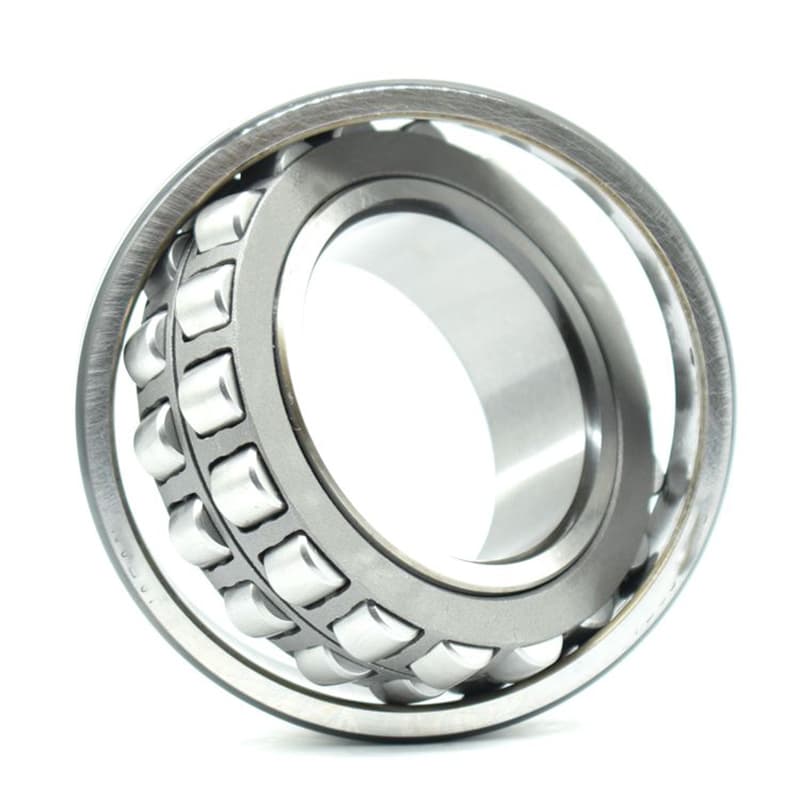
More Than Just Size: The Family of Standards for Reliability
ISO 15 is the essential starting point for interchangeability, but it only covers size. To ensure a bearing performs as expected, you must consider a family of related ISO standards. These standards cover everything from load ratings to tolerances and life calculation. Understanding this ecosystem is key to specifying and sourcing quality bearings.
For a gearbox designer or a bearing importer, relying only on ISO 15 is like buying a car based only on its exterior dimensions. You need to know about the engine and safety features too. Here are the other critical ISO standards:
- ISO 281:2007 (Rolling bearings — Dynamic load ratings and rating life): This is the core performance standard. It defines how to calculate the basic dynamic load rating (C). This ‘C’ value is the load a bearing can carry for 1 million revolutions with a 90% survival rate. It is calculated based on the bearing’s geometry, material, and manufacturing quality. A higher ‘C’ rating means a higher load capacity and longer life.
- ISO 199:2014 (Rolling bearings — Tolerances): This standard defines the precision classes. For gearboxes, where smooth and quiet operation is critical, precision class P5 or P6 is often specified. These classes have tighter limits on dimensional accuracy and running smoothness (runout) compared to the standard Normal (P0) class.
- ISO 76:2006 (Rolling bearings — Static load ratings): This defines the static load rating (C0). This is important for bearings that do not rotate but must hold a heavy stationary load, or for applications with severe shock loads.
To see how these standards work together, let’s look at a typical gearbox bearing specification process:
| Design/Specification Step | Relevant ISO Standard | Why It Matters for Gearboxes |
|---|---|---|
| 1. Determine Shaft & Housing Size | ISO 15:2011 (Boundary Dimensions) | Ensures the bearing will physically fit the designed space. |
| 2. Calculate Required Load Capacity | ISO 281:2007 (Dynamic Load Rating) | Ensures the bearing is strong enough to handle the gear forces without premature fatigue. |
| 3. Specify Running Precision | ISO 199:2014 (Tolerances) | A P5/P6 bearing reduces vibration and noise, leading to smoother gear mesh and longer gear life. |
| 4. Consider Shock Loads | ISO 76:2006 (Static Load Rating) | Ensures the bearing won’t be damaged by sudden high impacts during startup or jams. |
In our factory, our inspection lines are set up to verify compliance with these standards. When we produce a batch of P5 precision spherical roller bearings for export to India or South Africa, we check not only the dimensions (ISO 15) but also the runout and surface finish (ISO 199). This gives our B2B partners confidence. They know that the FYTZ bearings they sell will meet the same technical benchmarks as other international brands, making them a reliable and competitive alternative for their customers.
What are the 4 types of roller bearings?
Choosing the wrong type of roller bearing for a gearbox is a fundamental design error. Each type has a specific load profile. Putting a bearing that cannot handle axial thrust on a gear shaft will lead to rapid failure, damaging gears and requiring a complete rebuild.
The four main types of roller bearings are: Cylindrical Roller Bearings (high radial load only), Tapered Roller Bearings (high radial and axial load in one direction), Spherical Roller Bearings (high radial and moderate axial load in both directions with self-alignment), and Needle Roller Bearings (high radial load in very compact spaces).
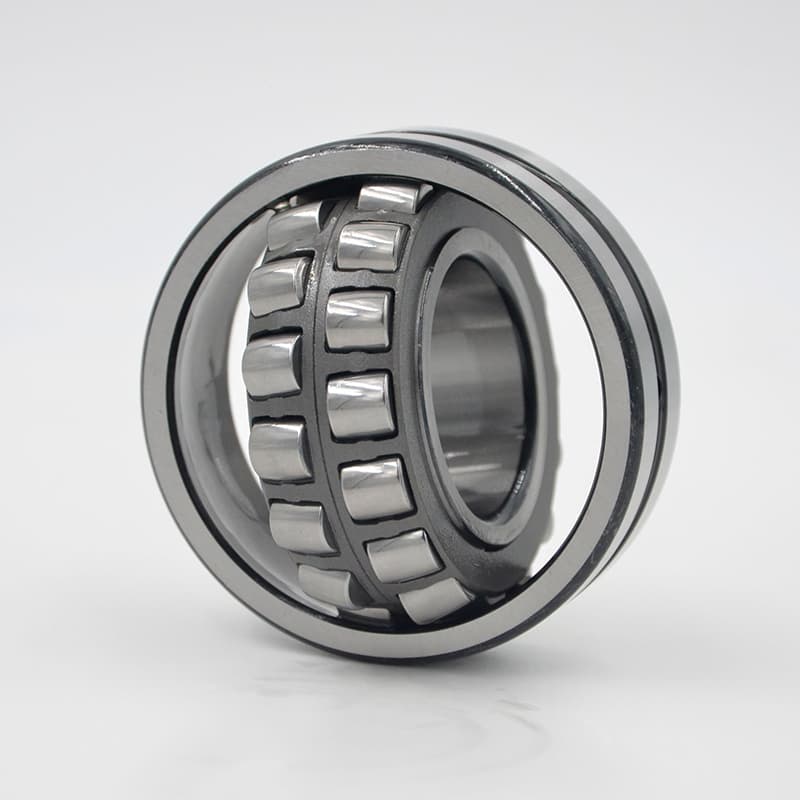
Selecting the Right Tool for the Job: A Comparative Guide
Knowing the four types is basic knowledge. The real skill is knowing when to use each one. For gearboxes and speed reducers, the choice between cylindrical, tapered, and spherical roller bearings is particularly important. Each has distinct advantages and trade-offs that directly impact performance, cost, and maintenance.
Let’s compare them in detail, focusing on gearbox-relevant criteria.
1. Cylindrical Roller Bearings (e.g., NJ, NU types):
- Load Profile: Excellent for very high pure radial loads. They generally cannot handle any axial (thrust) load unless specifically designed (like NJ type with a flanged ring).
- Key Feature: Very low friction, allowing for high-speed operation. They have a rigid design with no self-alignment.
- Gearbox Use: Ideal for positioning gears on a shaft where the load is purely radial and alignment is perfect. Often used in high-speed gear stages. A poor choice if any axial force is present.
2. Tapered Roller Bearings (e.g., 30200 series):
- Load Profile: Excellent for combined radial and axial loads, but the axial load is only in one direction. They are usually used in pairs, facing opposite directions.
- Key Feature: Very rigid and precise. They require careful adjustment of clearance (preload) during installation.
- Gearbox Use: Common in automotive differentials and gearboxes where space is limited and loads are well-defined. They are sensitive to misalignment, so housing must be very precise.
3. Spherical Roller Bearings (e.g., 22200, 22300 series):
- Load Profile: Excellent for high radial loads and moderate axial loads from both directions.
- Key Feature: Self-aligning. This is their biggest advantage for industrial gearboxes, forgiving installation errors and shaft deflection.
- Gearbox Use: The premier choice for heavy-duty, low-to-medium speed gearboxes (e.g., for conveyors, mills, mixers). They handle unpredictable loads and misalignment, protecting the gears.
4. Needle Roller Bearings:
- Load Profile: High radial capacity in a very small cross-section.
- Key Feature: Extremely compact design.
- Gearbox Use: Used where space on the shaft is extremely limited, such as in planetary gear sets or small gearboxes.
This comparison table summarizes the choice for gearbox shafts:
| Bearing Type | Best for Gearbox Applications Where… | Potential Drawback in Gearboxes |
|---|---|---|
| Cylindrical Roller | Speed is very high, loads are purely radial, and alignment is guaranteed. | Cannot handle thrust from helical gears. Rigid design amplifies misalignment issues. |
| Tapered Roller | Loads are high and well-defined, space is tight, and precise adjustment is possible. | Requires expert installation for preload. Sensitive to housing misalignment. |
| Spherical Roller | Loads are heavy and may include shock, shaft/housing alignment is imperfect, and reliability is critical. | Physically larger and has higher friction than cylindrical rollers for the same bore size. |
For our clients who are gearbox manufacturers or rebuilders, this decision is crucial. We often advise them. If they are building a standardized, high-volume gearbox with perfect machining, tapered rollers might be most cost-effective. But if they are building a large, custom gearbox for a mining site, where housing weldments can distort and loads are immense, spherical roller bearings are the only safe choice. This technical guidance helps partners like Rajesh provide more value to his industrial customers.
What is a spherical roller bearing 22228 cck W33?
A bearing designation like "22228 CCK W33" looks like a complex code. For someone ordering a replacement, getting one letter wrong can mean receiving a bearing that lacks a critical feature. This leads to installation problems, immediate failure, or a much shorter lifespan.
A spherical roller bearing 22228 CCK W33 is a specific model. "22228" defines its dimension series (222) and 140mm bore. "CC" indicates a robust two-piece machined brass cage. "K" means a tapered bore (1:12). "W33" is a lubrication feature: a groove and three holes in the outer ring for efficient grease distribution.

Decoding the Bearing’s DNA for Perfect Replacement
The suffix code (CCK W33) is where the bearing’s special capabilities are defined. It tells you about its internal construction, mounting method, and lubrication—details that are vital for performance in a gearbox. Let’s break down this specific example to show how to read any spherical roller bearing designation.
The basic designation follows a common pattern: Type Series + Bore Code + Suffix Codes.
1. Prefix & Type Series (222): Sometimes there is a prefix like "SN" for adapter sleeve mounting. Here, "222" is the dimension series. The first digit ‘2’ indicates a medium width series. The second digit ‘2’ indicates a light diameter series. This tells you the bearing’s proportions relative to its bore size.
2. Bore Diameter (28): For bore diameters from 20mm up, the bore code is multiplied by 5 to get the bore in mm. So, 28 x 5 = 140mm. This is the shaft size it fits.
3. Suffix – Cage Design (CC): The cage holds the rollers in place. "CC" stands for a two-piece, machined brass cage. This is a high-performance cage. It is strong, can handle high speeds and temperatures better than a stamped steel cage, and is very durable under vibration. For a gearbox bearing, this is a premium feature.
4. Suffix – Tapered Bore (K): "K" indicates the bearing has a tapered bore with a taper of 1:12. This means the inside diameter is not cylindrical; it is conical. Why is this important? This bearing is designed to be mounted on a tapered shaft or, more commonly, on a withdrawal sleeve (adaptor sleeve). The sleeve is pushed onto the tapered bore, causing the bearing inner ring to expand slightly. This creates a very tight, secure fit on a cylindrical shaft. It also allows for precise radial clearance adjustment during installation, which is critical for optimal performance.
5. Suffix – Lubrication Feature (W33): "W33" is a very common and important suffix. It means the bearing’s outer ring has a lubrication groove and three equally spaced holes. This allows grease to be injected into the housing and pass directly through these holes into the bearing’s rolling elements. It ensures even grease distribution and purges old, contaminated grease, significantly extending relubrication intervals and bearing life.
Here is a summary of what this bearing is suited for:
| Feature | What It Means | Ideal For Gearboxes That… |
|---|---|---|
| 222 Series | Medium-wide, robust design. | Need high load capacity and stability. |
| 140mm Bore | Fits a 140mm diameter shaft. | Are of medium to large size. |
| CC Cage | Machined brass cage. | Operate with vibration, heat, or require high reliability. |
| K (Tapered Bore) | Mounts via adapter sleeve. | Require secure mounting and adjustable clearance on a straight shaft. |
| W33 | Has grease grooves and holes. | Are in service for long periods, enabling easy re-greasing without disassembly. |
When a maintenance engineer in Egypt looks for a replacement for a failed gearbox bearing, finding one with the exact suffix code is essential. If the original had W33 and the replacement does not, proper lubrication becomes very difficult. As a factory, we can produce bearings with all common suffix combinations. For our distributors, understanding these codes empowers them to provide accurate technical support and ensure their customers get the exact, fully functional bearing they need for a successful repair.
Conclusion
Selecting the right spherical roller bearing for a gearbox hinges on matching its specific features—like load rating, precision, internal clearance, cage type, and lubrication design—to the exact demands of the application, ensuring reliable and long-lasting power transmission.
-
Explore the diverse applications of spherical roller bearings and understand their importance in various industries. ↩ ↩
-
Learn how spherical roller bearings distribute weight effectively, enhancing the performance of heavy machinery. ↩
-
Discover the self-aligning capabilities of spherical roller bearings that prevent failures in machinery. ↩
-
Find out how spherical roller bearings are essential in handling extreme conditions in mining operations. ↩
-
Explore the role of spherical roller bearings in enhancing the efficiency of manufacturing processes. ↩