
Dust, mud, rain, and shock loads attack agricultural bearings every day. A failed bearing on a combine during harvest doesn’t just stop a machine; it costs a farmer money and time during the most critical period. Standard industrial bearings cannot survive this relentless punishment.
Selecting the right pillow block bearing for agriculture requires sealed housings, robust bearing inserts (often spherical roller), corrosion-resistant materials, and proper lubrication. The correct choice protects against contamination, handles misalignment from uneven terrain, and ensures reliable operation in the harshest field conditions.
Knowing you need a durable pillow block is the first step. The next step is understanding the specific features that make it durable. From their basic purpose to their different names and applications, each detail matters for making the right choice. Let’s walk through the key selection points.
What are pillow block bearings used for?
Many people see a bearing as just a metal ring. But in the field, a bearing without a housing is exposed and vulnerable. It needs protection and a solid base to work from. That is where the pillow block comes in.
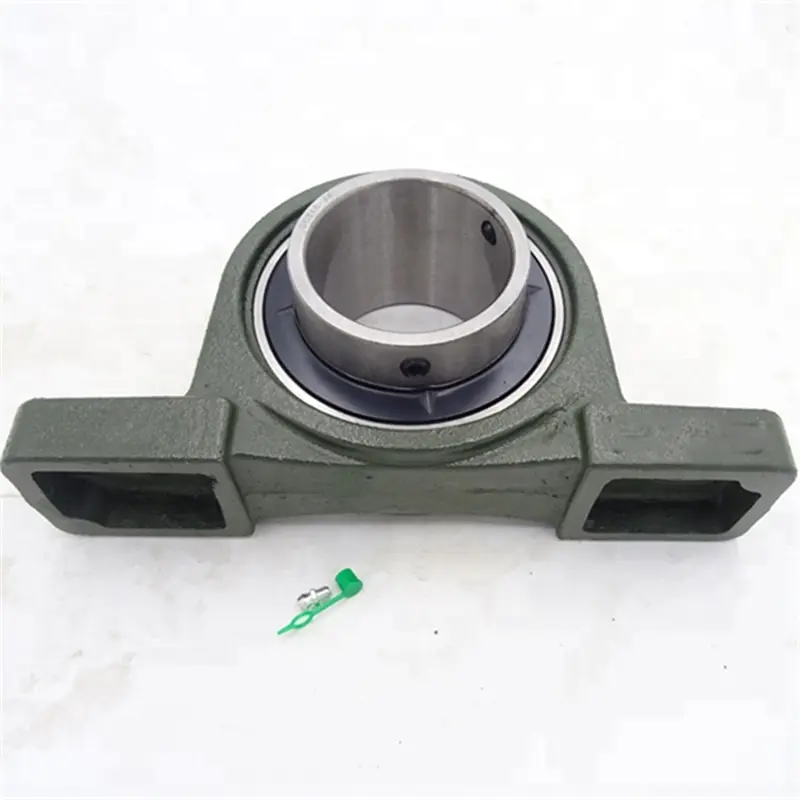
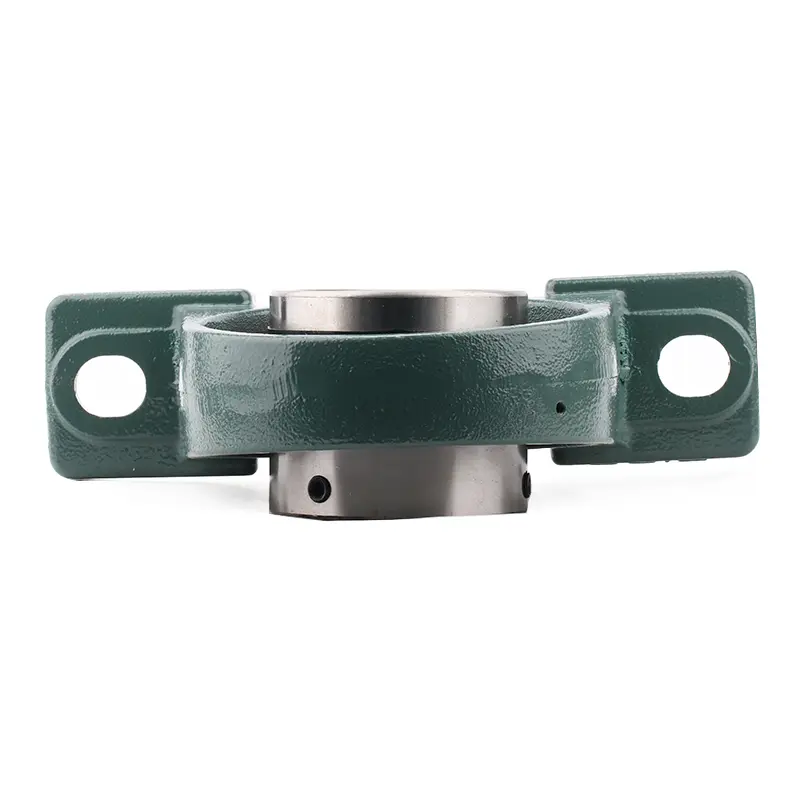
Pillow block bearings are used to provide ready-to-mount support for a rotating shaft. They combine a bearing insert (like a ball or roller bearing) with a sturdy housing. Their primary use is to simplify installation, protect the bearing from the environment, and allow for easy maintenance in machinery like conveyors, fans, and agricultural equipment.
The Ready-Made Solution for Rotating Shafts
The question "What are they used for?" can be answered by looking at the problems they solve. A pillow block bearing is not a single component; it is a system. This system solves several practical challenges in machinery design and maintenance, especially in demanding environments like agriculture.
First, pillow blocks provide easy installation and alignment. A machine builder does not need to design and machine a complex housing. They simply bolt the pillow block onto the machine frame. Many blocks have self-aligning features, which compensate for small frame inaccuracies. This saves time and cost in manufacturing.
Second, they offer integrated sealing and protection. The housing acts as a first line of defense. It keeps large contaminants away from the bearing. Better designs include labyrinth seals or rubber lip seals to keep out dust and moisture. For a tractor operating in a dusty wheat field, this sealing is the difference between a bearing that lasts one season and one that lasts for years.
Third, they enable simplified maintenance. Many pillow blocks are designed for re-lubrication. They have a grease fitting (zerk). A maintenance technician can add fresh grease without disassembling anything. The new grease pushes out old, contaminated grease, extending bearing life.
Let’s look at their specific roles in different parts of a farm:
| Agricultural Machine Component | Function of the Pillow Block Bearing |
|---|---|
| Combine Harvester (Auger, Conveyor) | Supports long, rotating shafts that move grain. Handles shock loads from varying material flow. |
| Tractor (PTO Shaft, Implement Linkage) | Provides a stable pivot point for linkages and supports auxiliary drive shafts. |
| Irrigation System (Pivot Wheels, Pump) | Supports wheels on center-pivot systems and pump shafts, often in wet, muddy conditions. |
| Hay Baler (Pickup Reel, Drive Shafts) | Supports high-speed shafts under heavy and uneven loading from gathered crop material. |
For our clients who are farm equipment manufacturers in Turkey or Brazil, pillow blocks are a key purchased component. They rely on us to supply blocks that are pre-assembled, correctly greased, and ready to bolt on their assembly line. For importers like Rajesh, who sells to repair shops, stocking the right pillow block means a farmer can get a quick, complete replacement. The farmer doesn’t need to source a separate bearing and housing. This convenience is a major part of the product’s value.
What is the purpose of a bearing block?
A loose bearing on a shaft is useless. It needs to be positioned correctly and held firmly. Without a proper block, the bearing can walk along the shaft or vibrate out of place. This causes misalignment, wear, and rapid failure of both the bearing and the shaft.
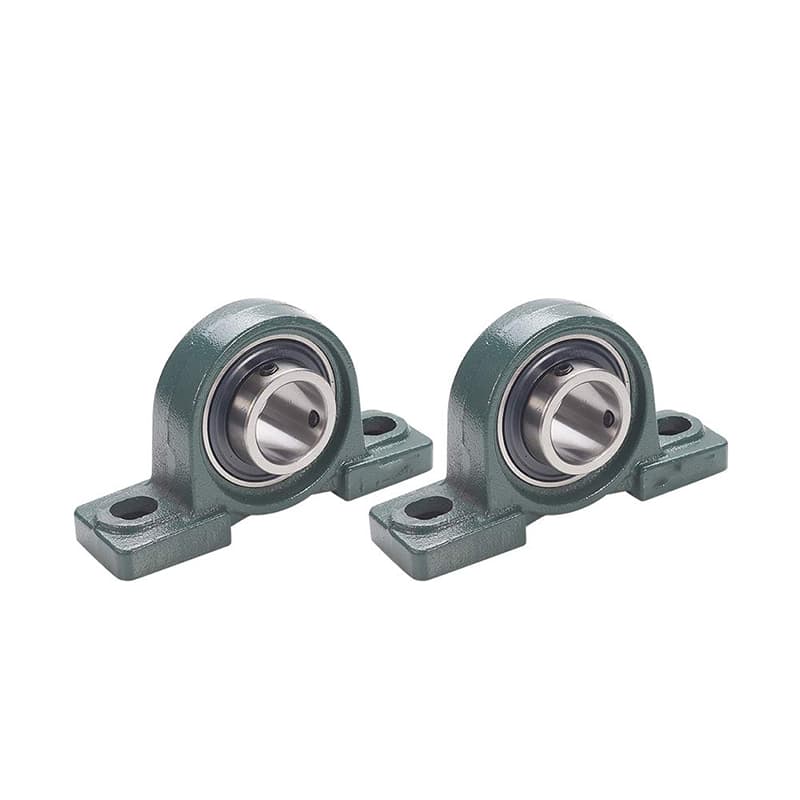
The purpose of a bearing block (or pillow block) is to house, support, and align a bearing securely on a machine frame. It provides a rigid mounting surface, protects the bearing from external contaminants and forces, and often includes features for lubrication and sealing, ensuring the bearing performs reliably over its intended life.
The Five Essential Jobs of a Bearing Block
The "purpose" of a bearing block can be broken down into five distinct, critical functions. Each function addresses a specific challenge in mechanical power transmission. A good bearing block does all these jobs well.
1. Secure Mounting and Location:
The block has a base with bolt holes. This allows it to be fastened securely to a flat surface on the machine frame. This prevents any movement of the bearing’s outer ring. The inner ring is locked to the shaft with set screws, locking collars, or eccentric collars. This fixes the bearing’s exact position on the shaft.
2. Load Transfer and Support:
The housing is made of strong, rigid material like cast iron or pressed steel. It absorbs the forces from the bearing (radial and axial loads) and distributes them over a larger area of the machine frame. This prevents local stress points that could crack or distort a thinner frame.
3. Contamination Exclusion:
This is perhaps its most important job in agriculture. The housing creates a protected chamber around the bearing. Combined with seals (like rubber lips or labyrinth paths), it tries to keep dust, dirt, water, and crop residue from entering the bearing cavity. A block with poor sealing is just an expensive bracket.
4. Lubrication Retention and Management:
The housing acts as a reservoir or channel for lubricant. Grease-filled blocks keep lubricant around the bearing. Many have a grease fitting and a relief port (or seal gap). This allows for purging re-lubrication: new grease is pumped in, and it pushes the old, contaminated grease out, renewing the lubricating film.
5. Accommodation of Misalignment:
Some bearing blocks have a special feature. They use a spherical bearing insert inside a spherical seat in the housing. This allows the inner assembly to pivot slightly. This compensates for angular misalignment between the shaft and the housing base. In agricultural machinery, where frames can twist on uneven ground, this self-alignment is crucial to prevent binding.
We can compare how different housing designs prioritize these purposes:
| Bearing Block Type | Primary Purpose Emphasis | Typical Agricultural Use |
|---|---|---|
| Standard Rigid Pillow Block | Secure mounting & load transfer. | Applications with good frame alignment and lighter contamination. |
| Self-Aligning Pillow Block | Accommodation of misalignment. | Most common for ag machinery. Used on implement frames, harvesters where flex is expected. |
| Flange Block | Compact, rigid mounting on a vertical surface. | Mounting gearboxes or motors, supporting short shafts. |
| Take-Up Block | Adjustment of shaft tension (for belts/chains). | Conveyor systems, adjustable drivelines. |
At our FYTZ factory, we produce these blocks with these purposes in mind. When we make a self-aligning pillow block for a sugarcane harvester manufacturer, we focus on the strength of the cast iron housing, the quality of the spherical roller bearing insert, and the effectiveness of the triple-lip contact seal. We test the seal’s exclusion capability. For a distributor, understanding these purposes helps them explain the value of a higher-quality block to a customer who might be tempted by a cheaper, unsealed version.
Where are pillow blocks used?
Pillow blocks are not just for factories. They are everywhere machinery rotates. From the food processing plant to the construction site, their reliability determines how long equipment can run without interruption. Their versatility makes them a fundamental mechanical component.
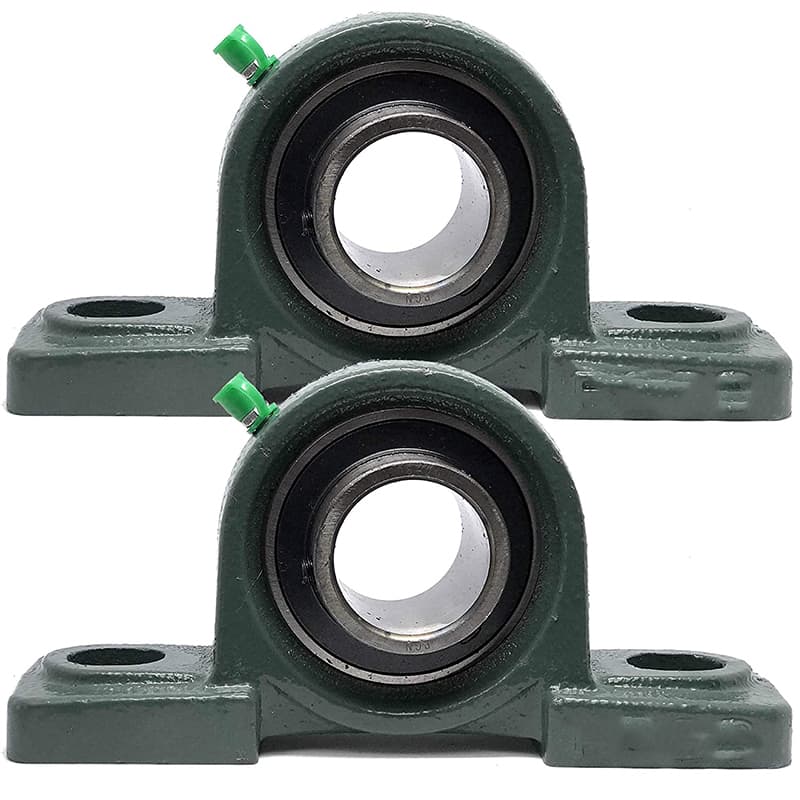
Pillow blocks are used in virtually every industry that involves rotating shafts. Common applications include conveyor systems, agricultural machinery (tractors, harvesters), food processing equipment, packaging machines, fans and blowers, and construction equipment. Anywhere a shaft needs simple, robust, and protected support, a pillow block is a likely solution.
Mapping Pillow Blocks Across Industries and Machines
To truly understand "where" they are used, we should look at the different environments and demands. The specific type of pillow block changes based on the application’s unique challenges. Let’s explore a spectrum of uses, from the benign to the brutal.
We can categorize applications by their primary environmental and operational challenge:
1. Harsh, Abrasive Environments (Agriculture, Mining, Construction):
- Challenge: Extreme dust, mud, grit, moisture, and shock loads.
- Pillow Block Specs: Heavy-duty cast iron or ductile iron housing. Spherical roller bearing inserts for high load and self-alignment. Multiple labyrinth seals or heavy-duty contact seals. Often have a large grease reservoir.
- Examples: Combine harvester grain augers, rock conveyor idlers, excavator track rollers, cement mixer drums.
2. Wet and Corrosive Environments (Food Processing, Chemical, Marine):
- Challenge: Water, steam, acids, alkalis, and frequent washdowns.
- Pillow Block Specs: Stainless steel housings and shafts. Bearings with food-grade or corrosion-resistant grease. Special seals like V-ring seals or fully encapsulated designs.
- Examples: Bottling line conveyors, meat processing slicers, pump supports in chemical plants, boat trailer rollers.
3. General Industrial Duty (Material Handling, Manufacturing):
- Challenge: Moderate dust, consistent loads, need for reliability and easy maintenance.
- Pillow Block Specs: Standard cast iron or pressed steel housing. Deep groove ball bearing or tapered roller bearing inserts. Rubber lip seals. Standard grease fittings.
- Examples: Warehouse conveyor systems, industrial fans, printing presses, textile machinery.
4. High-Speed, Precision Applications (Some packaging, machine tools):
- Challenge: High rotational speed, low vibration, and precise running.
- Pillow Block Specs: Often use precision angular contact ball bearing inserts. Rigid, machined housings. Non-contact labyrinth seals to minimize friction.
- Examples: High-speed packaging wrappers, spindle supports, dental drill handpieces.
For an agricultural machinery OEM, the focus is squarely on the first category. They need blocks that can survive a season in the field with minimal maintenance. We work with them on OEM/ODM customization—perhaps making the housing with extra mounting lugs for their frame, or pre-drilling specific hole patterns. For an importer like Rajesh in India, his customers—the repair shops—need blocks for all these areas. A repair shop near a port might need marine-grade blocks for fishing boat equipment. Another in a farming region needs heavy-duty combine harvester blocks. By stocking a range of FYTZ pillow blocks, Rajesh can serve multiple markets from his warehouse in Mumbai.
What is another name for a pillow block1 bearing?
Confusion over names causes ordering mistakes. A maintenance manager might ask for a "plummer block2," while the parts catalog lists "pillow block1s." This simple miscommunication can delay a repair for days while the correct part is identified and sourced.
Another common name for a pillow block1 bearing is a "plummer block2." This term is widely used, especially in British-influenced engineering contexts. Other names include bearing housing unit3, mounted bearing4, or bearing block. All refer to the same concept: a pre-assembled unit containing a bearing inside a protective housing.

Navigating the Terminology: A Global Perspective for Buyers
The variety of names is more than just synonyms; it reflects regional preferences, industry jargon, and specific design variations. For international traders and procurement managers, understanding this terminology is essential to avoid confusion in global supply chains.
Let’s clarify the most common terms and their subtle nuances:
-
Pillow Block vs. Plummer Block:
- Pillow Block: This is the most common term in North America and general international trade. It describes a housing with a base that sits on a surface, like a pillow.
- Plummer Block: This is the preferred term in the UK, Commonwealth countries (like India, South Africa, Australia), and much of Europe. It is functionally identical to a pillow block1. The term comes from an old engineering context but means the same thing today. When our sales team talks to Rajesh in India, we use "plummer block2" because that’s what he and his customers recognize.
-
Bearing Housing Unit / Mounted Bearing:
- These are broader, more generic terms. They encompass not just pillow/plummer block2s, but all types of pre-assembled bearing housings. This family includes:
- Pillow/Plummer Blocks (two-bolt or four-bolt base).
- Flange Blocks (mounted on a wall via a flange).
- Take-Up Units (with adjustable bases for belt tensioning).
- Cartridge Units (housed in a cylindrical sleeve).
- These are broader, more generic terms. They encompass not just pillow/plummer block2s, but all types of pre-assembled bearing housings. This family includes:
-
Specific Design Names:
- SN Series, SAF Series: These are industry-standard housing dimension codes. For example, an "SN 520" block has specific dimensions that are interchangeable between manufacturers. This is a precise way to specify a part, avoiding name confusion.
- UCP5, UCFL, UCT: These are common product codes. "UCP5" typically means a Pillow Block with a set screw locking mechanism. "UCFL" means a Flange Block. Buyers often use these codes.
This table helps translate between different naming conventions for a common product:
| Common Order Description | What It Usually Means | Key Identifying Feature |
|---|---|---|
| "Pillow Block, 1-inch bore" (USA) | A block with a base, for a 1" shaft. | Two or four bolt holes in the base. |
| "Plummer Block, 25mm bore" (India/UK) | The same as above, for a 25mm shaft. | Same as above, metric dimensions. |
| "UCP5 205" | A specific model: Pillow Block, with a 25mm bore bearing (205) and set screw lock. | Industry-standard part number. |
| "SN 520 Housing" | A housing that fits a bearing with 100mm outer diameter. | Dimension-based specification. |
In our daily business, we see all these terms. A client from Russia might email asking for "bearing housing SN 630." A client from Egypt might send an image of a "plummer block2." Our technical team knows they are often asking for the same type of product. We clarify the bore size, the locking method, and the seal type. This clarity is a key part of our service. We ensure that when a distributor in Bangladesh places an order for "UCP5 208 Plummer Blocks," they receive the exact product that will fit the replacement market there. Using the correct, regionally understood name builds trust and prevents costly errors.
Conclusion
Selecting the right pillow block for agriculture means choosing a sealed, self-aligning unit with a robust housing and a high-capacity bearing insert, specifically designed to conquer dust, moisture, misalignment, and shock loads.
-
Find out more about pillow block bearings and their importance in supporting rotating shafts. ↩ ↩ ↩ ↩
-
Explore this link to understand the term ‘plummer block’ and its significance in engineering contexts. ↩ ↩ ↩ ↩ ↩
-
Learn about bearing housing units and their applications in various machinery and equipment. ↩
-
Discover the functionality of mounted bearings and their role in mechanical systems. ↩
-
Explore the meaning of UCP and its significance in identifying specific bearing types. ↩ ↩ ↩ ↩