

Heat is a bearing’s silent enemy. In a dryer or kiln, a standard bearing doesn’t just fail; it slowly cooks. The steel softens, the grease burns away, and the cage deforms. This leads to unplanned shutdowns and costly replacements in industries where continuous operation is vital.
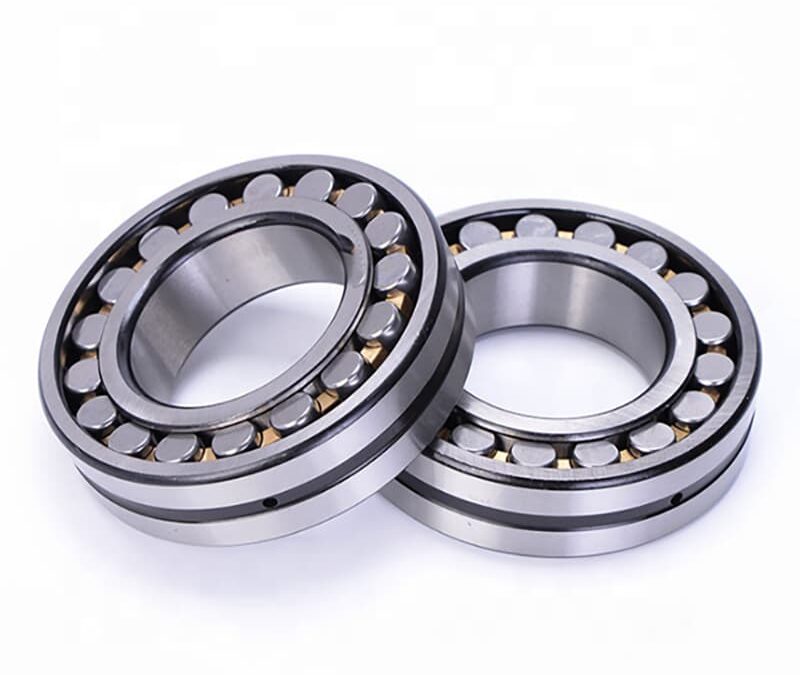
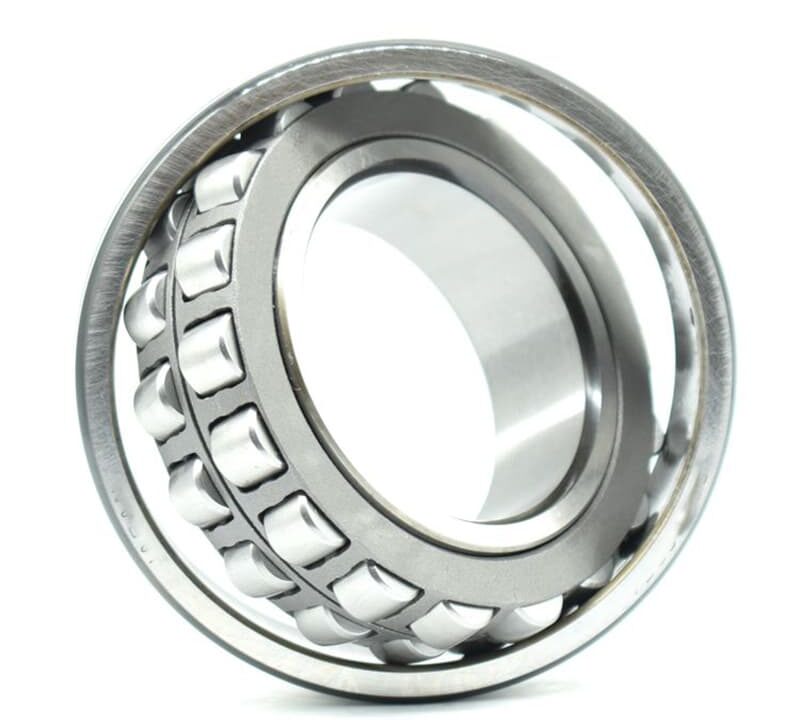
High-temperature spherical roller bearings are specifically engineered with heat-stable steels, special heat treatments, and compatible cages and lubricants. They can operate reliably from 150°C up to 250°C or more, ensuring long service life in the demanding environments of dryers, ovens, and rotary kilns.
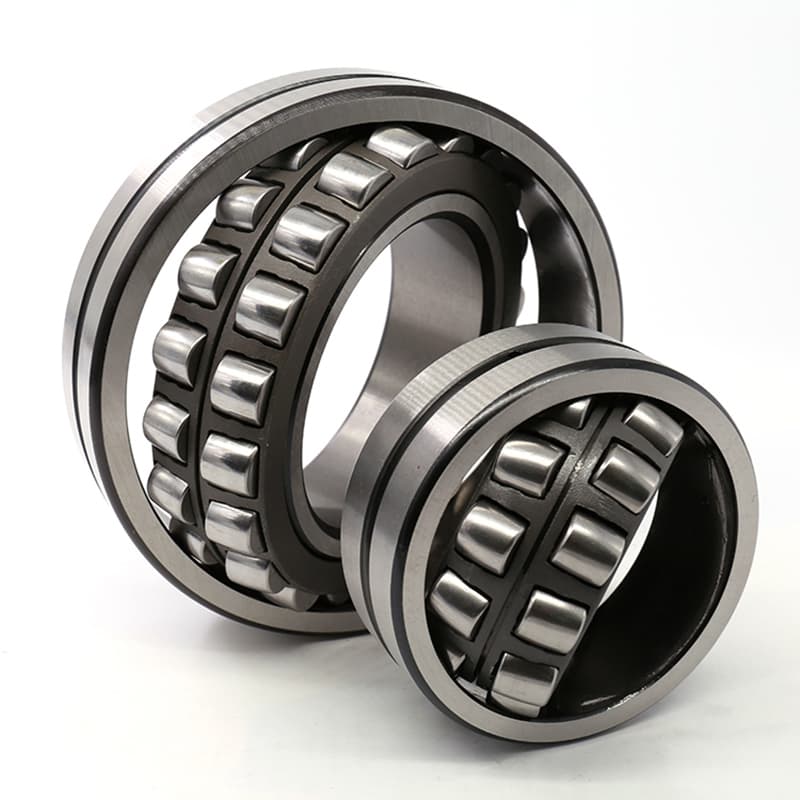
Knowing you need a high-temperature bearing is the first step. The next step is knowing how they are different. The specifications, the material choices, and even the customs codes matter for a smooth procurement process. Let’s explore the key points that ensure your hot applications keep running cool.
Most people look at a bearing’s load rating. But in a hot environment, the temperature rating is just as important. Using a bearing beyond its thermal limit is like running an engine without coolant – failure is guaranteed, and it happens faster than you think.
The term "high temperature1" for spherical roller bearings2 typically starts at 150°C (302°F). Standard bearings are limited to about 120°C. Specially designed high-temperature bearings can operate continuously at 200°C to 250°C (392°F to 482°F), with some designs reaching even higher for short periods.
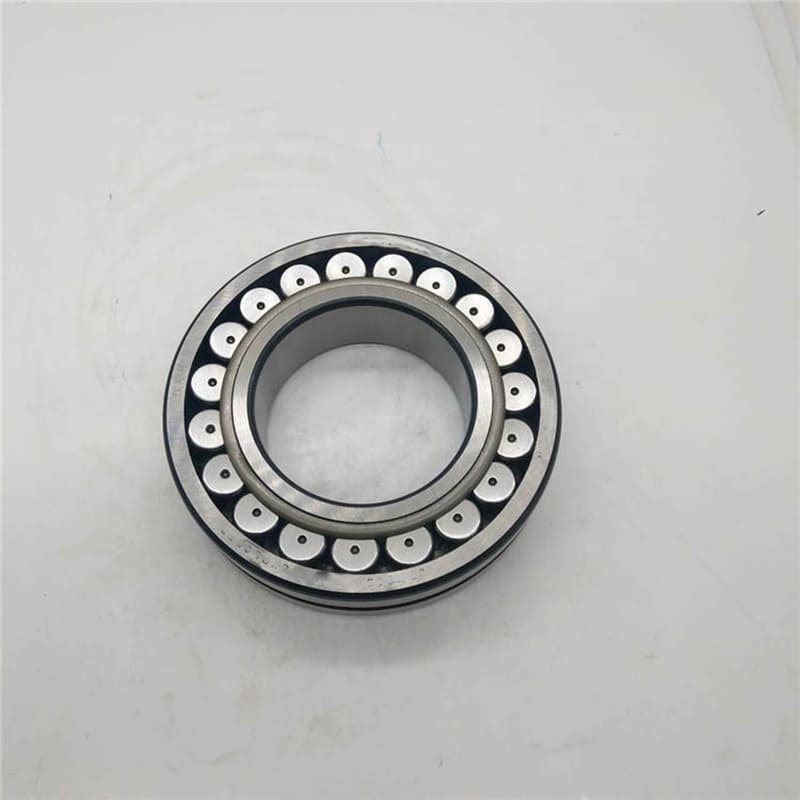
The phrase "high temperature1" is relative. It depends on the bearing’s components and their individual limits. We cannot give one single number. Instead, we must understand the temperature limits of each part: the rings and rollers, the cage, and the lubricant. The overall bearing’s limit is set by the weakest link.
First, let’s talk about the steel itself3. Standard bearing steel (like SAE 52100) is through-hardened. It has a high hardness at room temperature. But when this steel is exposed to temperatures above 150-170°C for a long time, it undergoes "overtempering." This means its hardness drops. A softer bearing cannot support heavy loads and will wear out quickly. So, for high-temperature applications, we change the material or the treatment.
Here is how different approaches raise the temperature ceiling:
| Approach | How It Works | Typical Continuous Temp Limit | Key Consideration |
|---|---|---|---|
| Stabilized Heat Treatment | The bearing is tempered at a temperature higher than its operating temperature. This stabilizes the structure against further softening. | Up to 200°C | A cost-effective upgrade for many industrial ovens and dryers. |
| Case Carburizing (e.g., 8620 steel) | Creates a hard surface over a tough, ductile core. The core material is less sensitive to tempering at moderate high temps. | Up to 150-170°C | Excellent for applications with both high temperature1 and shock loads. |
| High-Temperature Tool Steels (e.g., M50, Cronidur) | These alloy steels are formulated to retain hardness and resist corrosion at very high temperature1s. | 200°C to 315°C+ | Used in aerospace and extreme applications. Cost is significantly higher. |
Second, the cage is often the first component to fail from heat. A standard polyamide (plastic) cage can start to deform and lose strength above 120°C. For high-temperature duty, we use cages made from machined brass, bronze, or steel. These metallic cages can withstand temperatures well above 250°C. Their design is also stronger, which is important because the lubricant is less effective at high heat.
Third, and most critically, is lubrication4. Standard lithium-based grease oxidizes and separates rapidly above 80-100°C. It turns into a hard, carbon-like deposit that causes bearing seizure. High-temperature applications require synthetic-based greases5 with thickeners like polyurea, clay, or complex lithium. These greases are designed to withstand temperatures from 150°C to over 200°C without breaking down.
For a client in Indonesia running a palm oil dryer, we don’t just ask about the load. We ask about the operating temperature at the bearing housing. Based on that, we configure the bearing system: a stabilized or high-temperature steel, a brass cage, and the correct high-temperature grease. This system approach is what we offer through our OEM/ODM service to machinery builders and informed distributors.
Putting the wrong bearing in a hot location is a common and expensive mistake. A standard deep groove ball bearing might work for a while, but its small contact area and standard grease will lead to rapid wear and overheating under heavy loads at high temperatures.
Spherical roller bearings are highly suitable for high-temperature, heavy-load applications like kilns and dryers. Their robust design, combined with high-temperature steels, metallic cages, and special lubricants, provides the necessary durability. Cylindrical roller bearings with similar upgrades are also used where axial loads are minimal.
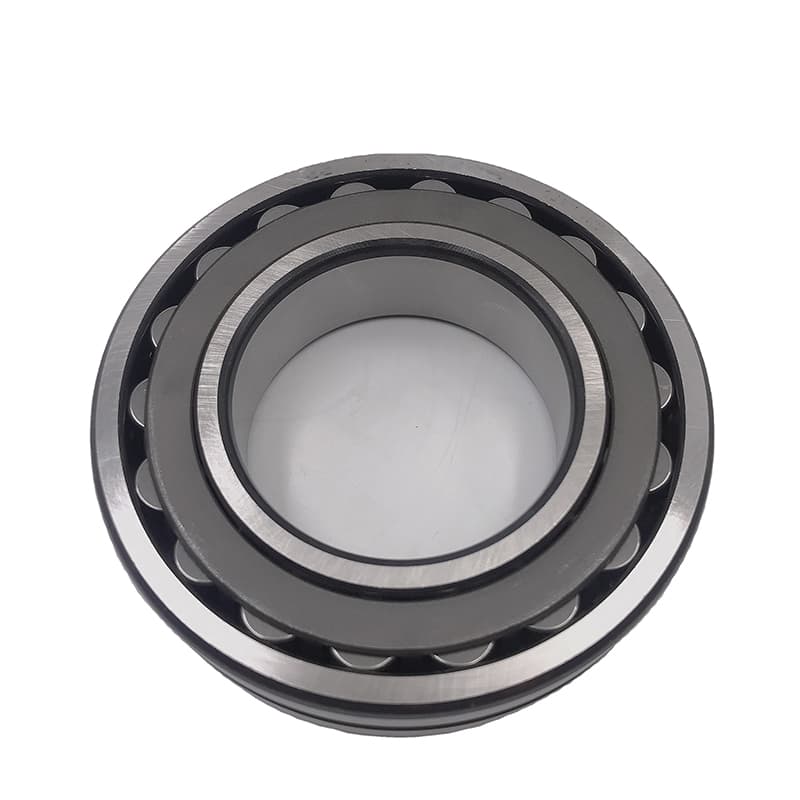
"Suitable" means the bearing type must handle both the thermal challenge and the mechanical loads of the application. Not all high-temperature bearings are the same. The choice between spherical, cylindrical, or even tapered rollers depends on the specific conditions inside the oven, dryer, or kiln.
Let’s evaluate the common bearing types for high-temperature service:
1. High-Temperature Spherical Roller Bearings:
2. High-Temperature Cylindrical Roller Bearings:
3. High-Temperature Deep Groove Ball Bearings:
The decision matrix for an oven or dryer manufacturer looks like this:
| Application Scenario | Recommended Bearing Type | Primary Reasons |
|---|---|---|
| Rotary Drum (Kiln/Dryer) with Heavy Load & Axial Thrust | Spherical Roller Bearing | Self-alignment for drum sag/thermal distortion. Handles combined radial & axial loads. |
| Straight-Through Conveyor in Oven (Radial Load Only) | Cylindrical Roller Bearing | Maximum radial load capacity, efficient operation. Axial movement handled elsewhere. |
| Hot Air Fan Blower | Deep Groove Ball Bearing (High-Temp) | Sufficient for fan loads, handles moderate speeds, compact design. |
A critical, often overlooked factor is internal clearance. As temperature rises, all bearing components expand. The inner ring, attached to the shaft, gets hotter and expands more than the outer ring in the housing. If the bearing starts with normal clearance (C0), this thermal expansion can use up all the free space. This causes preload, which leads to extreme friction, heat generation, and rapid failure. For high-temperature applications, we always recommend larger internal clearance, typically C4 or special high-temperature clearance. This extra space accommodates differential thermal expansion and keeps the bearing running freely. This is a standard modification we make for our B2B clients who supply to the ceramic or food processing industries in countries like Vietnam or Egypt.
For importers like Rajesh, customs clearance delays are a nightmare. An incorrect or vague HS code can lead to goods being held, extra inspections, unexpected duties, and storage fees. This disrupts supply chains and erodes profit margins.
HS code 8482300080 is a specific harmonized system code used for customs declaration. It classifies "Spherical roller bearings, with an outer diameter exceeding 400mm but not exceeding 500mm." This precise code ensures correct tariff application and smooth international shipping of large, high-temperature spherical roller bearings.
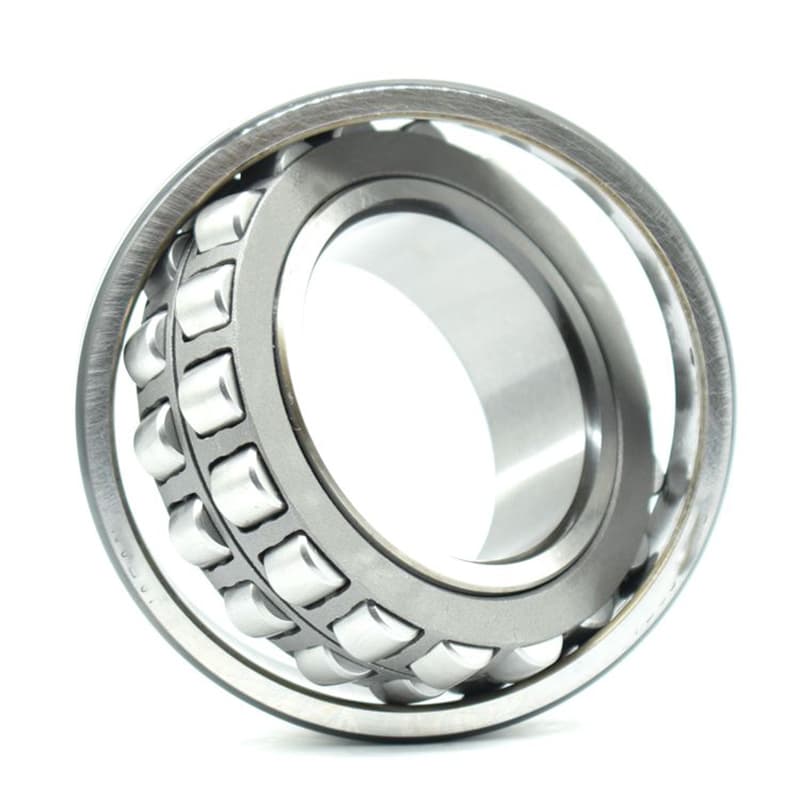
The HS (Harmonized System) code is a global language for traded goods. For bearing importers and distributors, using the correct code is not just a bureaucratic step; it is a critical business practice that affects cost, speed, and compliance. Code 8482300080 is a very specific example within a larger structure.
The HS code is a 10-digit number (for many countries) that becomes more specific with each pair of digits. Let’s break down 8482300080:
Why is this specificity important?
For our international clients, we provide the correct HS code on all commercial documents. Here is a simplified reference table for spherical roller bearings based on size, which is the primary classifying factor in HS codes:
| Bearing Outer Diameter (D) | Example HS Code Series (China Export) | Typical Application Size |
|---|---|---|
| Small (D ≤ 30mm) | 8482301000 | Small machinery, not typical for high-temp kilns. |
| Medium (30mm < D ≤ 400mm) | 8482309000 | Most common size range for industrial gearboxes and many dryers. |
| Large (400mm < D ≤ 500mm) | 8482300080 | Large rotary dryers, kilns, and heavy machinery. |
| Extra-Large (D > 500mm) | 8482300090 | Very large mining and cement kiln equipment. |
When a distributor in Brazil orders a batch of high-temperature spherical roller bearings for local sugar mill dryers, we ensure the packing list and invoice clearly state the correct HS code based on the bearing’s outer diameter. This professionalism helps them avoid delays at Santos port. It’s a small detail from our side, but it makes a big difference in our partners’ logistics and customer satisfaction. For someone like Rajesh, understanding this means he can prepare his customs documentation in Mumbai more accurately, making his business more efficient.
Many buyers use a major brand’s specification as a benchmark. They ask, "What can SKF handle?" to understand what’s possible. However, this question lacks context. The maximum temperature1 depends entirely on the specific bearing type, material, and configuration, not just the brand.
SKF, as a leading brand, offers a range of high-temperature spherical roller bearings2. Their standard "HT" series bearings are designed for continuous operation at up to 200°C (392°F). Their specialized "HTS" series, using tool steel and special cages, can operate at temperatures up to 250°C (482°F) and higher for limited periods.

Asking about a specific brand’s maximum temperature1 is a good starting point for research. It sets a performance benchmark in the market. However, for a procurement manager or engineer, the goal is not to copy a brand but to understand the engineering principles that allow such performance. Then, you can find equivalent solutions that meet the same technical needs, often at a more competitive price.
SKF’s specifications clearly show what is achievable with advanced engineering. Let’s analyze what their high-temperature ratings imply:
The important takeaway is that these are not magical bearings. They achieve their rating through defined methods: special material, special heat treatment, and special components. Any bearing manufacturer, including our FYTZ factory, can produce bearings to similar specifications if they use the same engineering approach.
Here is a comparison of how different performance levels are achieved:
| Target Temperature | Key Engineering Requirements | Equivalent FYTZ Solution Approach |
|---|---|---|
| Up to 150°C | Standard steel with possible stabilization. Brass cage. HT grease. | We supply standard bearings with stabilization treatment on request, fitted with brass cages (CC) and packed with polyurea grease. |
| Up to 200°C | Stabilized heat treatment (overtempering). High-grade brass/steel cage. Synthetic HT grease. | This is our standard high-temperature bearing offering. We use stabilized 52100 or carburized steel, machined brass cages, and recommend specific high-temperature greases. |
| Up to 250°C+ | High-temperature tool steel (e.g., M50 class). Special steel cages. Advanced lubrication system4. | We offer this as an OEM/ODM customization5. We source the specified high-temperature steel and manufacture to client drawings and heat treatment protocols. |
For a machinery manufacturer in Turkey building a ceramic kiln, they might have a design that originally specified an SKF 22228 CC/W33 HT bearing. When they come to us for a competitive quote or a dual-source supplier, we don’t just say "we have an equivalent." We explain that we can produce a spherical roller bearing, dimension series 222, bore 140mm, with a machined brass cage (CC), a W33 lubrication groove, and processed with a stabilized heat treatment for operation up to 200°C. This technical parity gives them confidence. For distributors, this knowledge allows them to present our products as direct, high-quality alternatives, based on specifications, not just price.
Selecting high-temperature spherical roller bearings requires a system view: matching heat-stable materials, appropriate internal clearance, robust cages, and specialized lubrication to the specific thermal and load demands of dryers, ovens, and kilns.
Understanding the maximum temperature helps in selecting the right bearing for high-temperature applications. ↩ ↩ ↩ ↩ ↩ ↩ ↩ ↩
Explore the features and benefits of high-temperature spherical roller bearings for demanding applications. ↩ ↩ ↩
Gain insights into how Stabilized Heat Treatment enhances bearing performance and longevity. ↩ ↩
Find out about effective lubrication systems that ensure optimal performance in high-temperature environments. ↩ ↩
Learn how OEM/ODM customization can meet specific engineering requirements for unique applications. ↩ ↩