
You buy a bearing for its load rating and promised life. But what happens inside the steel determines if those promises are kept. The wrong material or a rushed heat treatment can turn a premium design into a fragile component, failing long before its time under heavy loads.
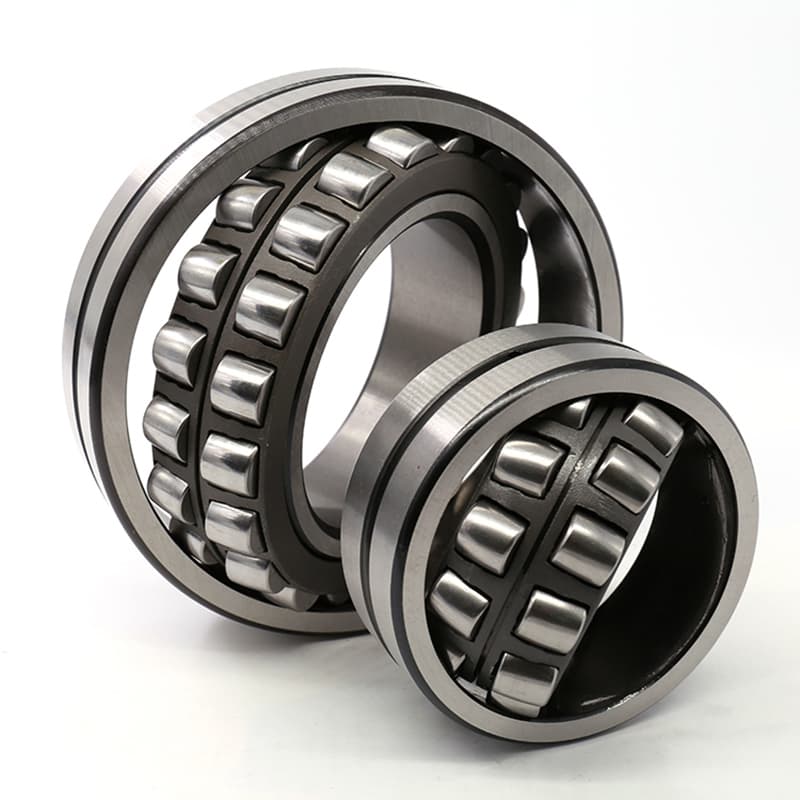
The material and heat treatment of spherical roller bearings directly control their core strength, hardness, and toughness. High-quality bearing steel, processed through precise carburizing or through-hardening, creates a wear-resistant surface and a tough core. This combination maximizes dynamic load capacity and extends service life, especially under shock and heavy loads.
Knowing that material matters is just the first step. The real value comes from understanding how and why it matters. This knowledge helps you ask the right questions to your supplier. It helps you spot the difference between a truly durable bearing and a cheap imitation. Let’s examine the key factors, from temperature limits to lifespan, that are all rooted in the quality of the steel and its processing.
What is the temperature limit1 for spherical roller bearings2?
A bearing overheating is a clear sign of trouble. Excessive heat softens the steel, reducing its hardness and load-carrying ability. This leads to rapid wear, loss of dimensional stability, and lubrication breakdown. Eventually, the bearing can seize, causing a catastrophic failure in your equipment.
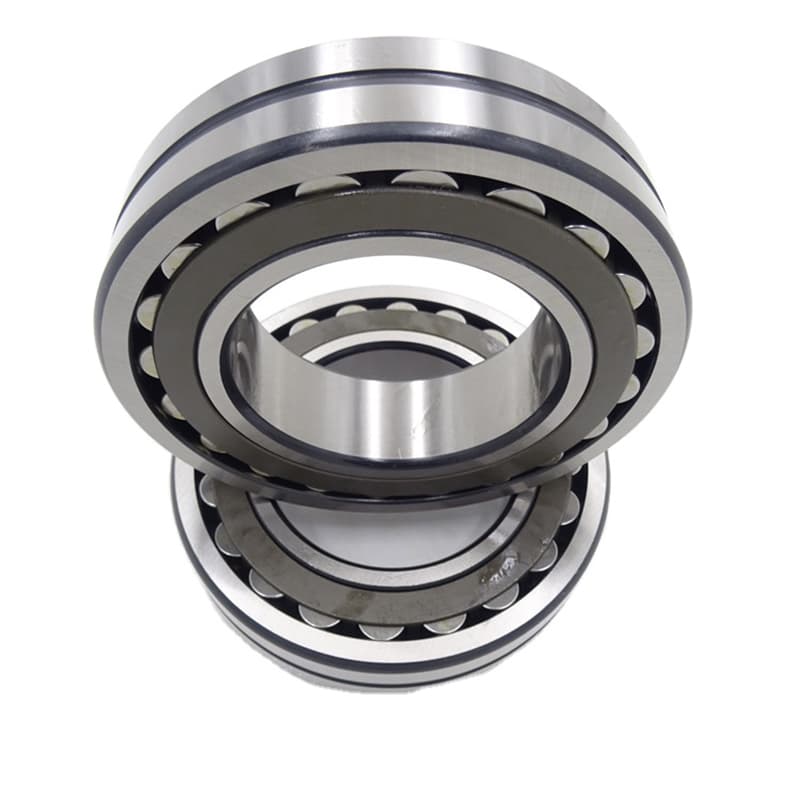
The standard temperature limit1 for spherical roller bearings2 is typically 120°C (248°F). This limit is set by the stability of standard cage materials and lubricants. However, with special heat-treated steels (like tempered for high temperatures), ceramic cages, and high-temperature greases3, some bearings can operate reliably up to 200°C (392°F) or more.
Understanding How Temperature and Material Interact
The stated temperature limit1 is not just a single number. It is a result of several interacting factors, all tied back to material science. When we talk about temperature limit1s, we are really discussing the limits of the bearing’s individual components: the rings and rollers, the cage, and the lubricant.
First, consider the bearing rings and rollers4. Standard high-carbon chromium bearing steel (like SAE 52100) is through-hardened. It has excellent wear resistance at normal temperatures. But when this steel is exposed to temperatures above 150-170°C for long periods, its hardness begins to drop. This process is called tempering. A softer bearing surface cannot support heavy loads and will wear out quickly. To solve this, we use different materials and treatments.
| Material / Treatment | Key Feature | Typical Max. Operating Temp | Best For |
|---|---|---|---|
| Through-Hardened 52100 Steel | High hardness at room temp. Good wear resistance. | ~120°C (with standard grease) | Most common industrial applications. |
| Case-Carburized Steel (e.g., 8620) | Tough, ductile core with a hard surface. Resists shock. | ~150°C | Applications with heavy shock loads. |
| M50 Tool Steel / High-Temp Steels | Retains hardness at elevated temperatures. | 200°C – 315°C+ | Aerospace, high-speed spindles, very hot environments. |
| Stabilized Heat Treatment | A special tempering process to resist softening. | Up to 200°C | Ovens, dryers, and other steady high-heat equipment. |
Second, the cage is often the weakest link in high-temperature situations. Standard cages made from stamped steel or polyamide (plastic) have much lower temperature limit1s. A polyamide cage might deform above 120°C. A brass or bronze cage can handle higher temperatures, often up to 250°C. For the most extreme temperatures, machined steel or even ceramic cages are used.
Third, the lubricant fails first. Standard mineral oil-based grease separates (oil bleeds out) and oxidizes quickly above 80-100°C. It turns into a hard, carbon-like substance that no longer lubricates. For high-temperature applications, we specify synthetic greases with a thickener like polyurea or clay, which can withstand 150°C to 200°C continuously.
In our factory, when a client from Brazil needs bearings for a sugar mill dryer that runs hot, we don’t just sell a standard bearing. We discuss the operating temperature profile. We might recommend a bearing made from stabilized steel, fitted with a machined brass cage5, and packed with a high-temperature synthetic grease. This system approach ensures all components work together within their thermal limits. For a distributor like Rajesh, understanding this helps him provide the right technical solution to his customers facing heat-related failures.
What bearings are best for heavy loads?
Heavy loads demand more than just a large bearing. They demand a bearing whose internal structure can distribute stress without yielding. A bearing with poor material quality will develop micro-cracks under repeated heavy loading. These cracks grow and cause surface spalling, leading to noisy operation and eventual failure.
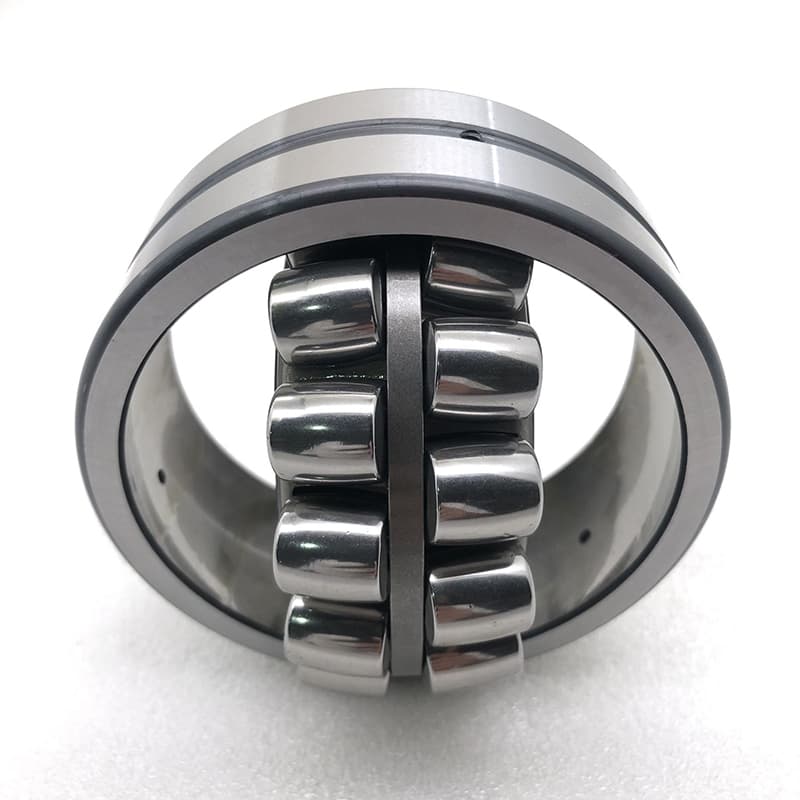
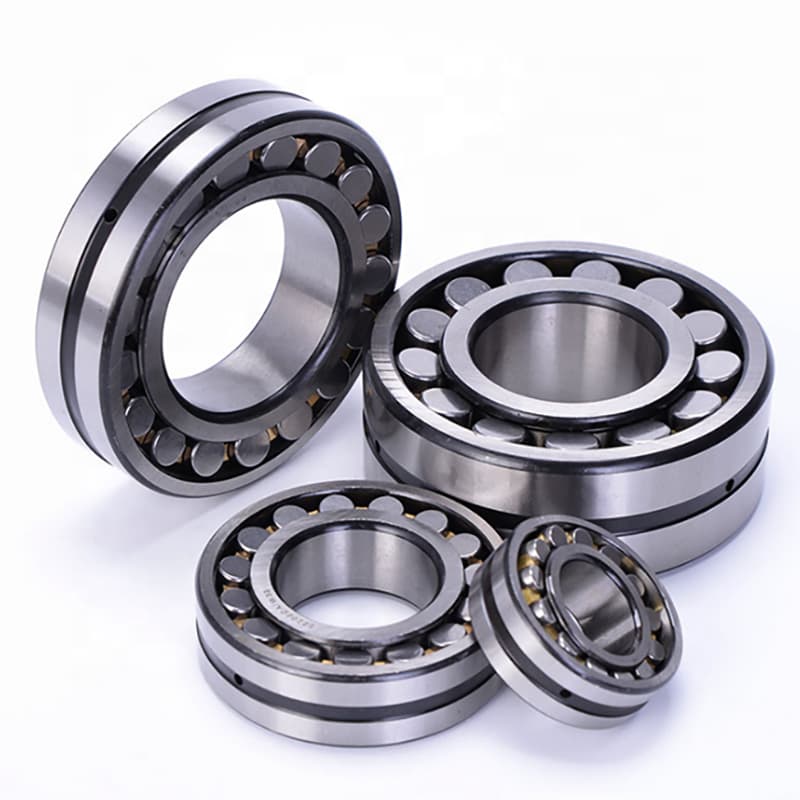
Spherical roller bearings are among the best choices for heavy radial and combined loads. Their two rows of barrel-shaped rollers provide a large load-carrying surface area. Crucially, the material’s hardness and the heat treatment’s depth ensure this surface can withstand the immense pressure without deforming.
The Material Science Behind Carrying Heavy Loads
The title "best for heavy loads" is earned through a combination of geometric design and metallurgical excellence. The spherical roller’s shape gives it an advantage, but without the right steel treatment, that advantage is lost. Let’s break down the material properties that are non-negotiable for heavy-duty performance.
The most important property is high hardness. Hardness, measured on the Rockwell C scale (HRC), directly relates to the bearing’s ability to resist wear and surface indentation. For heavy loads, a high surface hardness (typically 58-64 HRC for through-hardened bearings) is essential. This hardness prevents the rollers from denting the raceways under extreme pressure. However, hardness alone can make the steel brittle. This is where the core toughness becomes critical.
For applications with severe shock loads—like in a crusher or a forging press—a through-hardened bearing might chip or crack. The solution is case carburizing. This is a specific heat treatment process. We use a different steel alloy, like SAE 8620. The bearing components are heated in a carbon-rich atmosphere. Carbon diffuses into the surface layer. After subsequent quenching and tempering, the result is a bearing with a hard, wear-resistant surface (60+ HRC) but a softer, tougher, and more ductile core (typically 30-45 HRC). This core can absorb impact energy without cracking, while the hard surface resists wear.
The choice between through-hardening and case carburizing depends entirely on the load character:
| Load Type | Material & Treatment Choice | Reason |
|---|---|---|
| Steady, Heavy Radial Load | Through-Hardened 52100 Steel | Provides maximum uniform hardness for excellent wear resistance against constant pressure. |
| Heavy Load with Shock/Impact | Case-Carburized Steel (e.g., 8620) | The tough core absorbs shock, preventing catastrophic brittle fracture. The hard surface resists wear. |
| Very Heavy Load with Misalignment | Case-Carburized Spherical Roller Bearing | Combines the shock resistance of carburizing with the misalignment forgiveness of the spherical design. |
Furthermore, the cleanliness of the steel is a hidden but vital factor. Inclusions (non-metallic particles like oxides or sulfides) are weak points in the steel structure. Under the cyclic high stress of a heavy rolling load, fatigue cracks can start at these inclusions. High-quality bearing steel undergoes processes like vacuum degassing to achieve a very clean, homogeneous structure. This increases the bearing’s fatigue life significantly, meaning it can endure more load cycles before showing signs of spalling. This is a key part of our in-house quality control at FYTZ. We source premium steel billets and verify the material cleanliness, because we know our B2B clients in the mining and construction sectors rely on this hidden quality to keep their machinery running.
What are the disadvantages of spherical roller bearings?
No bearing is perfect for every job. Choosing a spherical roller bearing where it’s not suited leads to higher costs, inefficiency, and premature failure. Understanding its limitations is just as important as knowing its strengths. This prevents costly misapplication.
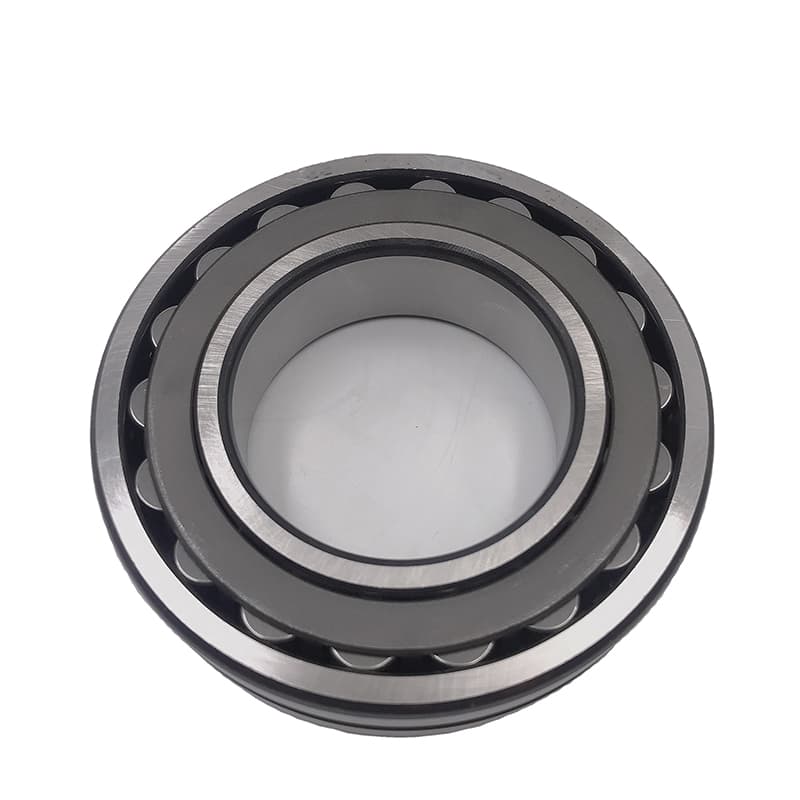
The main disadvantages of spherical roller bearings are higher friction and lower speed capability compared to ball bearings, sensitivity to improper installation (like excessive preload), and generally higher cost and weight for a given bore size. They are not ideal for high-precision, high-speed spindle applications.
A Balanced View: When to Look for Alternatives
Spherical roller bearings are superb workhorses, but they are not racehorses. Their disadvantages stem directly from their design and material choices made for strength and durability. Recognizing these trade-offs allows for smarter, more cost-effective machine design and maintenance planning.
Let’s categorize the key limitations and link them back to material and design causes.
1. Higher Frictional Torque and Lower Speed Limits:
The rolling friction between a cylindrical/spherical roller and a raceway is inherently higher than that of a ball. This is due to the larger contact area (line vs. point contact). More friction means more heat generation. Combined with the typically larger mass of the rollers and rings, this heat is harder to dissipate. Therefore, spherical roller bearings have lower limiting speed (dn value) compared to deep groove ball bearings of the same size. The heavy-duty steel and large rollers that give them strength also hold heat.
2. Sensitivity to Installation and Alignment (Within Limits):
While they are famous for tolerating misalignment, they are sensitive to incorrect internal clearance. If installed with excessive axial preload (by pressing too hard on the bearings or using incorrect shims), the self-alignment advantage is lost. The internal clearance is taken up, causing high friction, heat, and rapid wear. The hard, but not infinitely hard, material can be damaged by improper mounting forces.
3. Cost and Size/Weight:
The complex shape of the rollers and rings, the need for two rows of rollers, and the extensive heat treatment all add to the manufacturing cost. They are also physically wider and heavier than a single-row ball bearing designed for the same shaft size. This can be a disadvantage in applications where space and weight are critical, such as in some automotive or aerospace components.
The following table summarizes scenarios where alternative bearings might be a better fit:
| Application Requirement | Potential Better Choice than Spherical Roller | Reason |
|---|---|---|
| Very High-Speed Rotation (e.g., machine tool spindle) | Deep Groove Ball Bearing or Angular Contact Ball Bearing | Lower friction, lower heat generation, higher precision grades available. |
| Primarily Axial (Thrust) Loads | Tapered Roller Bearing or Thrust Ball Bearing | Designed specifically to handle thrust loads more efficiently. |
| Extremely Rigid, Precision Positioning (zero play) | Preloaded Cylindrical Roller Bearing or Ball Bearing | Spherical rollers’ internal clearance and self-alignment introduce small, acceptable amounts of "play" not suitable for ultra-precise axes. |
| Low Cost, Light Radial Load (e.g., electric motor) | Deep Groove Ball Bearing | More cost-effective and sufficient for the application’s demands. |
In our conversations with machinery manufacturers, we are honest about these points. If a client from Vietnam is designing a high-speed conveyor with moderate loads, we might suggest a deep groove ball bearing for the tail pulley to save cost and energy. But for the heavily loaded, misaligned head pulley, the spherical roller bearing remains the champion. This consultative approach builds trust with our wholesale distributors, as they can rely on us for accurate technical guidance, not just a sales pitch.
What is the lifespan of a spherical bearing?
"Lifespan" is the most common question we get, and also the most difficult to answer simply. Promising a specific number of hours without context is misleading. A bearing’s life is not a fixed expiration date; it’s a statistical probability under specific operating conditions.
The lifespan of a spherical roller bearing is calculated as the L10 life, the number of hours at which 90% of identical bearings under identical conditions are expected to survive. This life is determined by the applied load versus the bearing’s dynamic load rating, but is heavily influenced by material quality, heat treatment, lubrication, and environmental conditions.
Demystifying Bearing Life: From Theory to Reality
The theoretical L10 life calculation, based on the ISO 281 standard, is a starting point. It uses the basic dynamic load rating (C) and the actual applied load (P) in a formula: L10 = (C/P)^(10/3) for roller bearings. This shows a crucial relationship: if you double the load on a bearing, its theoretical life is reduced by a factor of nearly ten. This underscores why choosing a bearing with a sufficiently high load rating is critical.
However, the "C" value itself is derived from tests on bearings made from high-quality, clean, properly heat-treated steel. A bearing made from inferior material will have a lower effective load-carrying capacity, meaning its real-world life will be shorter than the calculation predicts, even under the same load. This is the core impact of material and heat treatment.
To understand real-world lifespan, we must look beyond the basic rating and consider the life adjustment factors (a1, aISO). These factors account for the reality of the operating environment. The most important ones are directly tied to material and treatment quality.
- Material & Manufacturing Quality (a1 factor): This factor accounts for the likelihood of failure from material imperfections. Bearings made from premium, vacuum-degassed steel with ultra-clean microstructure and precise, consistent heat treatment have a higher reliability factor. In our factory, achieving a high a1 factor is a key goal of our integrated production and inspection process.
- Operating Conditions (aISO factor): This is a combined factor considering lubrication, contamination, and temperature. Even the best material will fail quickly if it’s starved of clean lubricant or is grinding in abrasive dust.
We can visualize how different factors shorten or extend life:
| Condition | Effect on Real Bearing Life | Link to Material/Treatment |
|---|---|---|
| Perfect Conditions (Clean, cool, perfect lubrication) | Life may exceed the theoretical L10 calculation. | High-quality material can achieve its full potential. |
| Normal Industrial Conditions (Some contamination) | Life is typically 20-50% of the theoretical L10. | The hard surface resists mild abrasive wear. |
| Harsh Conditions (Dirty, hot, poor lubrication) | Life can be less than 10% of L10. | Even the best material will succumb to accelerated wear and fatigue. |
| Incorrect Material for Application (e.g., standard steel in high heat) | Dramatically shortened life due to softening and accelerated fatigue. | The material property limits are exceeded. |
For a procurement manager like Rajesh, this means two things. First, when comparing bearings from different suppliers, a higher dynamic load rating (C) for the same price and size often indicates better material or design, promising longer life under load. Second, educating his end-customers about the importance of proper lubrication and sealing is as crucial as selling them a good bearing. A premium FYTZ spherical roller bearing with a C3 clearance and effective seals will deliver on its lifespan promise in a dirty environment, while a standard bearing will not. The lifespan is not just in the bearing; it’s in the entire application system.
Conclusion
The performance of a spherical roller bearing is forged in its material and heat treatment. Choosing bearings made from high-quality, appropriately treated steel is the fundamental step to achieving the advertised load capacity and long, reliable service life in demanding applications.
-
This resource will provide detailed insights into the temperature limits for various types of bearings, crucial for maintenance. ↩ ↩ ↩ ↩ ↩
-
Explore this link to understand the various applications and benefits of spherical roller bearings in different industries. ↩ ↩
-
Learn about high-temperature greases and how they can enhance the performance of bearings in extreme conditions. ↩
-
Discover the materials used in bearing rings and rollers, which are essential for understanding their performance and durability. ↩
-
Explore the advantages of using a machined brass cage in bearings, especially in high-temperature applications. ↩
