
Dust and grit in your machinery are not just a nuisance; they are silent killers for bearings. Imagine the bearings as the heart of your equipment, and contamination is like cholesterol slowly clogging the arteries, leading to premature failure and costly downtime. This is a daily battle for our clients across industries like mining, construction, and agriculture. Selecting the wrong bearing in these conditions is a fast track to frequent replacements and lost productivity. Let’s cut through the confusion.
For harsh, dusty environments, you need spherical roller bearings with superior sealing, special internal clearances, and robust surface treatments. The correct choice, often following specific ISO standards, combines high load capacity with contamination resistance, ensuring reliable operation and extended service life even under punishing conditions.
You might think a standard bearing can handle it, but the reality is different. The challenges in dirty settings are specific and relentless. We have seen too many clients, like Rajesh in India, face this exact problem before they came to us. The key is not just picking a "tough" bearing; it’s about matching the bearing’s specific design features to the exact nature of the attack from your environment. The following sections will break down each critical factor, from bearing type to international standards, giving you a clear blueprint for selection. This knowledge is what separates a reliable supplier from a simple parts seller.
What type of bearing should be used in a dirty environment?
The constant invasion of abrasive particles is a primary cause of bearing failure. Standard bearings quickly wear out as contaminants breach their defenses, leading to increased vibration, heat, and eventual seizure. This process is accelerated in applications like conveyor systems, agricultural machinery, or construction equipment, where sealing is often the first line of defense to fail.
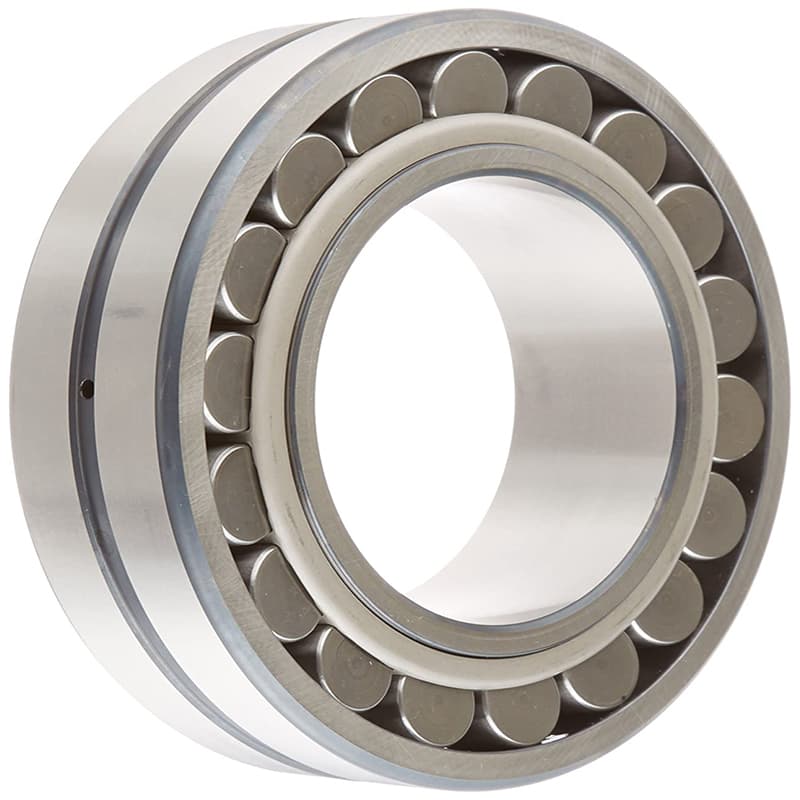
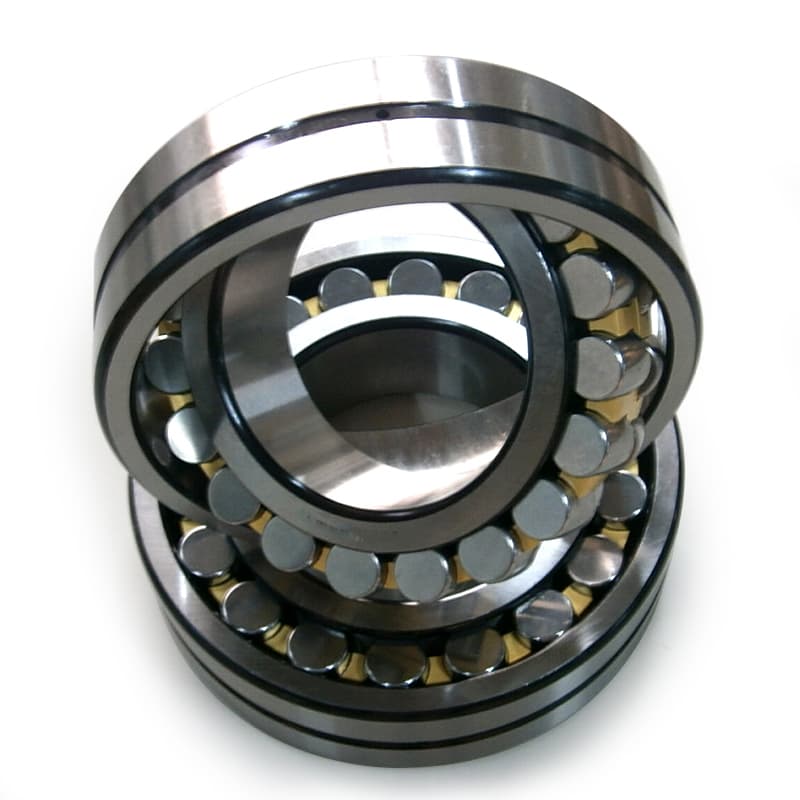
In high-contamination settings, sealed or shielded spherical roller bearings are essential. They provide a physical barrier against dust and dirt ingress. Additionally, bearings with "C3" or "C4" internal clearance are preferred as they accommodate thermal expansion and prevent preload from particle buildup, reducing stress and extending service life.
Understanding the Defense Strategy Against Contamination
Choosing a bearing for a dirty environment isn’t a single decision; it’s a layered defense strategy. You need to consider both external protection and internal design adjustments. Let’s break this down into a structured approach.
First, we look at the external sealing solutions. This is your bearing’s armor.
| Sealing Type | How It Works | Best For | Limitations |
|---|---|---|---|
| Contact Seals (Rubber) | A lip made of synthetic rubber presses against the inner ring, creating a tight, physical barrier. | Very fine dust, moderate moisture, and applications where sealing is critical. | Creates higher friction, which can increase operating temperature. Not ideal for very high speeds. |
| Non-Contact Seals (Labyrinth) | A complex path of grooves and gaps makes it difficult for contaminants to enter, often with grease purging. | Extremely dusty, dry environments, and high-temperature applications. | Offers less protection against pressurized water or fine slurry. Requires regular grease replenishment. |
| Shields (Metal) | A thin metal plate is fitted close to the inner ring with a small gap. It deflects large particles and directs airflow. | Coarse contaminants, retaining lubrication, and high-speed applications where low friction is key. | Does not provide a hermetic seal. Fine dust and moisture can eventually penetrate. |
Second, we consider the internal bearing design. A good seal keeps stuff out, but if something gets in, the bearing’s internal geometry must handle it. This is where spherical roller bearings shine. Their self-aligning capability allows for some shaft misalignment caused by housing distortion or mounting errors, which is common in heavy, vibrating machinery. This prevents localized stress that could crack a seal.
More importantly, for dirty environments, we specify bearings with larger internal radial clearance. Standard clearance bearings (C0/Normal) can run into problems. When abrasive particles mix with the grease inside the bearing, they create a grinding paste. As the bearing heats up during operation, the inner ring expands. In a standard-clearance bearing, this expansion can take up all the free space, causing the rolling elements to be squeezed. This leads to excessive friction, heat, and rapid failure.
Bearings with a C3 or even C4 designation have extra internal space. This extra space does two things: it accommodates thermal expansion without causing preload, and it provides a buffer zone where particles can settle without immediately jamming the rolling action. For our clients in cement plants or steel mills, this simple specification change can double the bearing’s operational life. It’s a critical detail that we always verify in our factory’s inspection process before shipping to partners like Rajesh’s company.
What bearings are best for heavy loads?
Equipment breakdown under heavy load is catastrophic. The sudden stress can crack components and halt production lines for days. In industries like mining or metal processing, bearing failure under load doesn’t just mean replacing a part; it risks damaging the entire machine drum, shaft, or gearbox, leading to repair bills that dwarf the bearing’s cost. The financial and operational impact is severe.
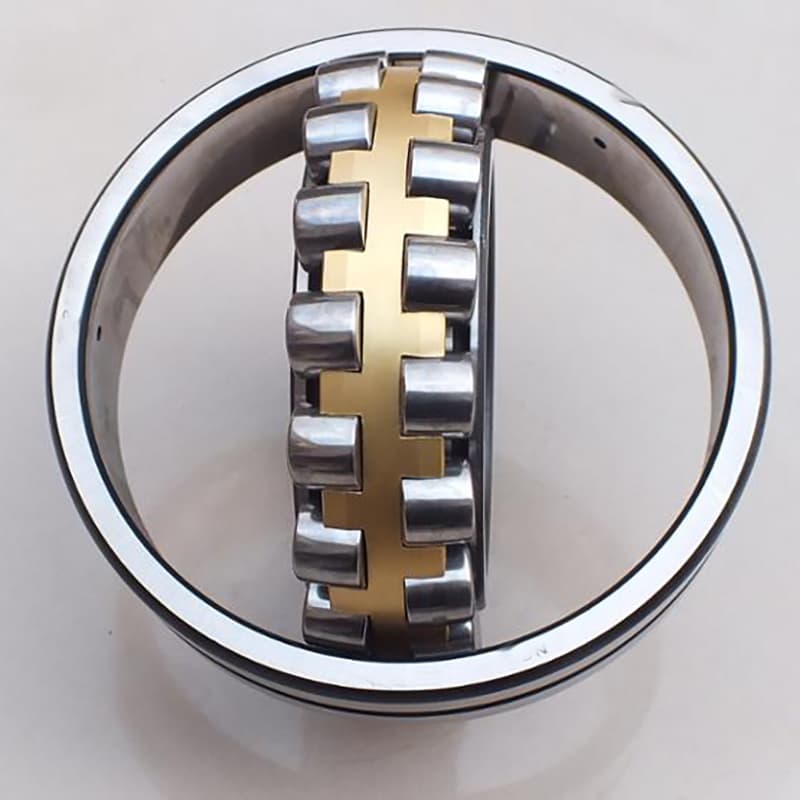
Spherical roller bearings are the best choice for heavy radial and moderate axial loads. Their two rows of barrel-shaped rollers and a common spherical outer ring raceway allow them to carry immense weight and compensate for misalignment. This unique design provides exceptional load capacity and durability where other bearings would fail.
The Engineering Behind Unmatched Load Capacity
The superiority of spherical roller bearings in heavy-load scenarios is not an accident; it’s a result of specific design principles. To understand why they outperform alternatives like deep groove ball bearings or even cylindrical roller bearings in many heavy-duty applications, we need to examine their load-handling mechanisms.
The core advantage lies in their internal geometry and load distribution. Unlike a ball bearing, which has point contact, a spherical roller bearing features line contact between its barrel-shaped rollers and the raceways. This spreads the load over a much larger surface area, dramatically reducing the stress on any single point. Think of it like standing on a single nail versus lying on a bed of nails; the distributed pressure prevents penetration.
Let’s compare the load profiles of different bearing types relevant to heavy machinery:
| Bearing Type | Primary Load Capacity | Secondary Load Capacity | Key Limitation for Heavy Duty |
|---|---|---|---|
| Spherical Roller Bearing | Very High Radial Load | Good Axial Load (both directions) | Generally has higher friction than ball bearings. |
| Tapered Roller Bearing | High Radial Load | High Axial Load (one direction) | Requires precise adjustment; sensitive to misalignment. |
| Cylindrical Roller Bearing | Very High Radial Load | Very Low Axial Load | Cannot handle misalignment or thrust loads well. |
| Deep Groove Ball Bearing | Moderate Radial Load | Moderate Axial Load (both directions) | Load capacity is limited by point contact. |
The second critical feature is self-alignment. The outer ring raceway is ground into a spherical shape, and the inner ring with rollers can pivot within it. This allows for a misalignment of up to 2-3 degrees. Why is this so important for heavy loads? In real-world applications, shafts deflect under heavy weight. A rigid bearing (like a cylindrical roller bearing) would see this deflection as a misalignment, causing the load to concentrate on one edge of the roller. This edge loading creates massive stress peaks, leading to spalling and premature failure. The spherical roller bearing simply adjusts to the new angle, ensuring the load remains evenly distributed across the full length of all rollers. This inherent forgiveness is invaluable in large, imperfectly aligned systems like crushers, vibrating screens, or large gearboxes.
Furthermore, for extreme loads, we at FYTZ can provide bearings in higher precision classes (P5, P6). These bearings have tighter tolerances on dimensions and running accuracy. This means less internal vibration and more uniform load sharing among the rollers under dynamic conditions. For a procurement manager sourcing bearings for a steel mill’s rolling line, specifying a P5 precision spherical roller bearing is a direct investment in stability and longevity. It’s not just a bearing; it’s an insurance policy against unplanned shutdowns. We manufacture these precision grades in-house, allowing us to control quality and offer competitive prices to our B2B partners globally.
What is the ISO standard for spherical roller bearings?
Navigating international standards can feel like deciphering a secret code. For buyers and engineers, a misunderstanding of these codes can lead to ordering the wrong part, causing machine incompatibility, installation headaches, and project delays. This confusion is a barrier to smooth global trade, something we help our clients overcome daily.
The primary ISO standard for spherical roller bearings is ISO 15:2011. This standard defines the essential boundary dimensions—the outer diameter (D), bore diameter (d), and width (B)—ensuring dimensional interchangeability between manufacturers. It is the foundational language that allows bearings from different factories to fit the same housing and shaft.

Decoding the Language of Global Interchangeability
ISO 15:2011 is more than just a set of numbers; it’s the rulebook that enables global commerce in the bearing industry. When a maintenance manager in Brazil needs to replace a bearing on a German-made machine, they rely on this standard to find a compatible part, whether it’s from a European brand or a supplier like FYTZ in China. Understanding this standard is crucial for procurement, design, and maintenance.
The standard organizes bearings into dimension series. This is a two-digit code you often see in bearing designations (e.g., 222, 223, 230, 231). The first digit indicates the width series, and the second digit indicates the diameter series. A larger number generally means a larger, more robust bearing for a given bore size.
| Dimension Series (Example) | Width Series | Diameter Series | General Characteristic |
|---|---|---|---|
| 222 Series | 2 (Wide) | 2 (Light) | Medium width, light cross-section. Good for space-constrained, moderate loads. |
| 223 Series | 2 (Wide) | 3 (Medium) | Medium width, medium cross-section. A common, versatile series. |
| 230 Series | 3 (Extra Wide) | 0 (Extra Light) | Very wide, very light cross-section. For applications needing high rigidity. |
| 231 Series | 3 (Extra Wide) | 1 (Extra Light) | Wide, with a larger outside diameter. Excellent for very high loads and shock. |
However, ISO 15 is just the start. For a complete specification, you must consider other ISO standards that govern performance and quality. This is where the distinction between a basic product and a high-performance component becomes clear.
- ISO 199:2014 specifies the tolerances for radial bearings, including spherical rollers. It defines precision classes like Normal (P0), P6, P5, and P4. A higher class means tighter tolerances on inner/outer ring dimensions, runout, and surface finish. For a critical high-speed gearbox, a P5 bearing from our production line ensures smoother, quieter, and more efficient operation compared to a standard P0 bearing.
- ISO 281:2007 is the rolling bearing life calculation standard. It provides the method to calculate the basic rating life (L10) based on dynamic load ratings. This is the theoretical life that 90% of a group of identical bearings will exceed. When we provide technical data to a distributor in Turkey, these calculations help them recommend the correct bearing size for their customer’s expected load and life requirements.
- ISO 15243:2017 classifies the modes of failure. It helps in post-failure analysis to determine if a bearing failed due to fatigue, wear, corrosion, or improper handling. This knowledge is part of our technical support, helping clients like Rajesh diagnose field issues and prevent repeat failures.
At our factory, our integrated inspection lines are calibrated to these ISO standards. This ensures that every batch of FYTZ spherical roller bearings we ship to Russia, India, or Egypt not only fits the dimensional blueprint of ISO 15 but also meets the performance and quality benchmarks expected in the international market. For a B2B buyer, this compliance is non-negotiable—it’s the assurance of reliability and a smooth supply chain.
What makes spherical roller systems ideal for heavy duty applications?
Heavy-duty applications are a perfect storm of challenges: immense forces, environmental abuse, vibration, and unavoidable misalignment. Using a bearing designed for simpler conditions is a gamble with expensive downtime as the stakes. The ideal bearing system must be robust, adaptable, and forgiving, not just strong.
Spherical roller bearing systems1 are ideal for heavy-duty use because they combine immense load capacity with built-in self-alignment2 and robustness. This triple capability allows them to withstand shock loads, compensate for installation errors or shaft deflection, and perform reliably in harsh conditions, reducing maintenance frequency and total cost of ownership.
The Synergy of Features for Ultimate Durability
The term "ideal" is not about having one super-feature; it’s about a synergistic combination of features where the whole is greater than the sum of its parts. In a spherical roller bearing system, three core attributes work together to create unparalleled suitability for heavy-duty work: Load Capacity, Self-Alignment, and System Robustness. Let’s see how they interact.
First, the high load capacity3 (as detailed earlier) provides the fundamental strength. It’s the muscle of the system. But muscle alone is useless if it’s rigid and prone to injury from unexpected movements. This is where the second feature, self-alignment2, acts as the flexible joints and tendons. It allows the bearing to adapt to real-world imperfections without compromising its strength. In a vibrating screen at a mining site, the frame shakes violently. A rigid bearing would quickly develop cracks from stress concentration. A spherical roller bearing simply rocks within its spherical outer ring, maintaining even load distribution and surviving where others fail.
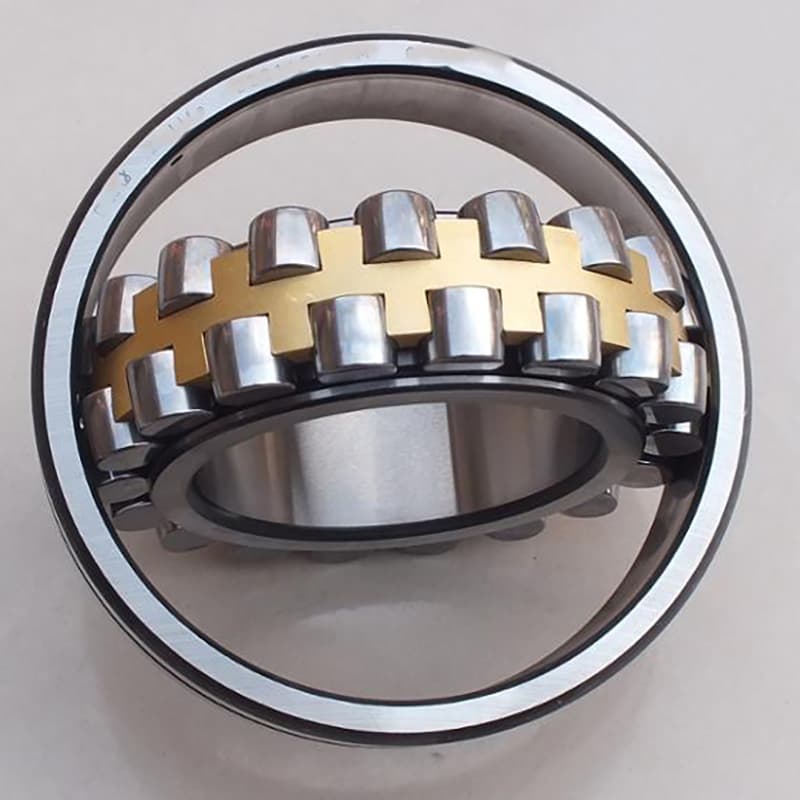
The third pillar is system robustness4. This encompasses everything from the material to the sealing and the lubrication. A spherical roller bearing designed for heavy duty will often feature:
- Tough, case-hardened steel5 to resist impact and shock loads.
- Advanced cage designs (like machined brass or steel pin-type cages) to securely guide the rollers at high speeds or under severe vibration, preventing roller skid and cage fracture.
- Optimized internal geometry for better lubricant flow and heat dissipation.
To visualize the application synergy, consider these common heavy-duty scenarios:
| Application (e.g., Mining) | Challenge | How Spherical Roller Bearing Systems Respond |
|---|---|---|
| Crusher Main Bearing | Extreme shock loads from crushing rocks, high vibration, dust ingress. | High load capacity absorbs shock. Self-alignment handles frame flex. Sealed, C3 clearance design fights dust. |
| Conveyor Drum Bearing | Continuous heavy radial load, exposure to moisture and slurry, possible shaft misalignment. | Line-contact rollers carry constant weight. Self-alignment corrects for misaligned mounts. Corrosion-resistant coatings/seals protect from slurry. |
| Gearbox Input/Output Shaft | Combined radial and axial loads, high speeds, need for precise operation. | Handles combined loads. High-precision (P5) variants ensure smooth transmission. Stable operation reduces gear wear. |
Finally, we must consider the Total Cost of Ownership (TCO)6. For our B2B wholesale clients, the initial bearing price is just one factor. A cheaper, less capable bearing that fails in 6 months causes hours of labor for replacement, production losses, and potential collateral damage. A premium spherical roller bearing system, while costing more upfront, often lasts for years in the same environment. It reduces the frequency of shutdowns, maintenance labor, and inventory needs for spares. When we work with distributors in countries like South Africa or Indonesia, we emphasize this TCO calculation. It helps them build stronger relationships with their end-customers by providing solutions that truly save money over time, not just parts that fill a box. This philosophy is built into our OEM/ODM service—we don’t just sell a standard bearing; we help configure the right system for the job.
Conclusion
Selecting the right spherical roller bearing for harsh, heavy-duty environments is a precise science. Focus on superior sealing, appropriate internal clearance (C3/C4), adherence to ISO standards, and the inherent advantages of self-alignment and high load capacity to ensure maximum reliability and lifespan.
-
Explore the advantages of spherical roller bearing systems, including their load capacity and self-alignment features, crucial for heavy-duty applications. ↩
-
Discover how self-alignment in bearings enhances performance and durability, especially in challenging environments. ↩ ↩
-
Understanding high load capacity can help you choose the right bearing for demanding applications, ensuring reliability and performance. ↩
-
Learn about the key features that make bearing systems robust, ensuring they withstand harsh conditions and extend service life. ↩
-
Learn why case-hardened steel is essential for bearing durability and performance in heavy-duty applications. ↩
-
Understanding TCO can guide you in selecting bearings that offer long-term savings and reliability, beyond just initial costs. ↩