
When a load wants to push a shaft sideways and shove it forward at the same time, only one bearing type is built to answer that challenge decisively.
Tapered roller bearings are engineered to excel under combined radial and axial (thrust) loads. Their conical geometry allows them to handle heavy forces from both directions simultaneously, making them the premier choice for wheel hubs, gearboxes, heavy machinery, and any application where load performance is non-negotiable.
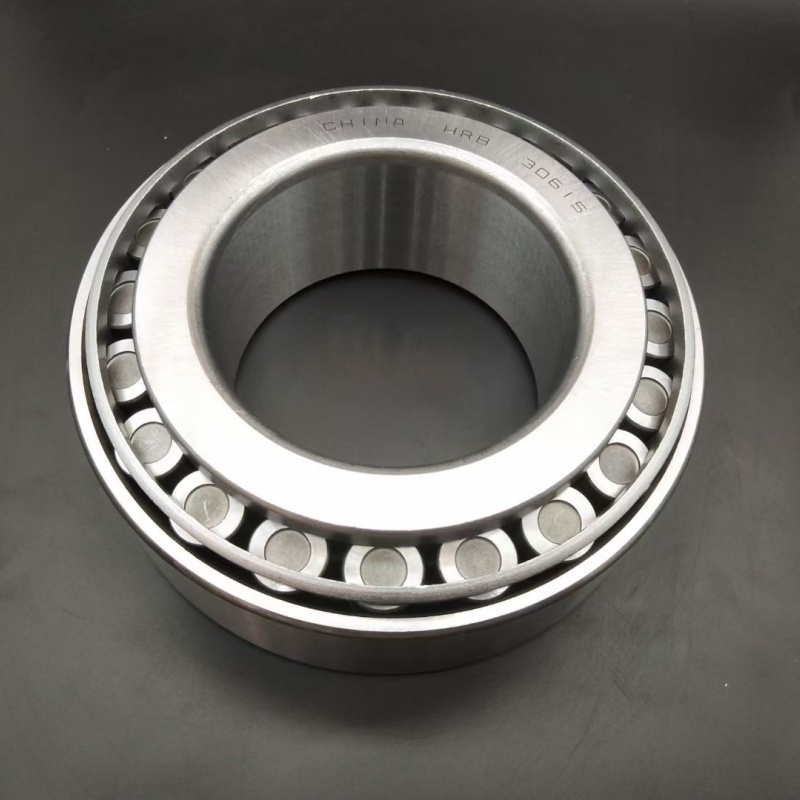
Load capacity is the ultimate measure of a bearing’s strength. In the world of rolling element bearings, tapered rollers hold a distinguished position. They don’t just carry weight; they manage complex force vectors with precision and durability. For engineers designing heavy equipment and for buyers like Rajesh sourcing critical spares, understanding the nuances of their load performance is key to reliability. Let’s dissect their capabilities in detail.
What load types is a tapered roller bearing1 suitable for?
Tapered rollers are not jacks-of-all-trades. They are masters of a specific, challenging type of loading that breaks other bearings.
A tapered roller bearing1 is specifically suitable for applications with combined radial and axial loads2. It is designed to handle these loads acting together, which is common in gears, wheels, and rollers. It is particularly effective when the axial load has a dominant direction.
The term "combined load" is the key. It’s the simultaneous push from the side and the push from the end. Let’s explore why this is their specialty.
The Mechanics of Combined Load Handling
The bearing’s unique shape is a direct response to the physics of combined loading. It’s a geometry problem solved with precision engineering.
Why the Tapered Design Works
Imagine a cone rolling on a flat surface. It tends to move in a circle. Now, constrain it between two angled surfaces (the cup and cone raceways). This geometry forces pure rolling motion. More importantly:
- A radial load (force perpendicular to the shaft) creates a component of force along the roller’s axis.
- This component manifests as an internal thrust force3 within the bearing itself.
- Because of this, a single tapered roller bearing1 can only resist axial load from one direction. The internal geometry pushes the rollers against the large end of the cone.
The Practical Implication: Always in Pairs
Because a single bearing handles one-directional thrust, they are almost invariably installed in opposed pairs (face-to-face or back-to-back). This arrangement achieves three things:
- It allows the bearing set to handle axial thrust in both directions.
- It provides rigid axial location4 for the shaft.
- The internal clearance or preload between the two bearings can be precisely adjusted, which is critical for setting gear mesh and minimizing shaft play.
Load Types They Are NOT Primarily For
- Pure, High-Speed Radial Load: For a shaft with only radial load at very high speeds, a cylindrical roller bearing often has lower friction and higher speed capability.
- Pure Thrust Load: For an application with only axial load (like a vertical pump), a dedicated thrust bearing (axial roller or ball) is usually more efficient and compact.
- High Misalignment: They have very limited tolerance for angular misalignment between the shaft and housing. Spherical roller bearings are the choice for misalignment.
Real-World Examples of Combined Load Scenarios
- Automotive Wheel Bearing: Car weight = radial load. Cornering force = axial load.
- Helical Gear Shaft: Gear tooth pressure = radial load. Helix angle of teeth = axial thrust load.
- Rolling Mill Roll: Weight of material = radial load. Rolling force = axial load.
For a distributor like Rajesh, this knowledge helps him validate customer needs. If a customer asks for a tapered roller bearing1 for a simple conveyor idler (mostly radial load, low speed), Rajesh might ask if a spherical roller or even a deep groove bearing could be more suitable or cost-effective. If the application is a gear reducer input shaft, then tapered rollers are likely the correct and specified choice.
Can tapered roller bearings handle thrust loads?
This is their defining capability. They don’t just handle thrust; they are one of the most robust solutions for substantial thrust loads when used correctly.
Yes, tapered roller bearings are excellent at handling thrust (axial) loads, but with a critical detail: a single bearing can only accommodate thrust in one direction. To handle bidirectional thrust, they must be used in opposed pairs. Their thrust capacity is inherently linked to their radial load capacity due to their conical design.
Saying they "handle thrust" is an understatement. They transform thrust load into a controlled, manageable force within their optimized geometry.
The Relationship Between Thrust and Radial Capacity
The thrust performance is not separate from radial performance; it’s a function of it. This interdependence is unique.
The Load Angle (α) – The Key Parameter
Every tapered roller bearing has a defined contact angle (α). This is the angle between the line of contact of the roller and the bearing’s radial plane.
- A small contact angle (e.g., 10°-15°) prioritizes radial load capacity but offers lower thrust capacity. Common in series like 30200.
- A large contact angle (e.g., 25°-30°) significantly increases thrust load capacity at the expense of some radial capacity. Common in series like 32200, 33200.
- The thrust capacity (Fa) of a bearing is approximately *Fa = Fr / (1.5 tan α)**, where Fr is the permissible radial load. This shows the direct mathematical link.
How They Manage High Thrust
- Large Contact Area: The rollers make long line contact with the raceways. Under thrust, this contact area is fully engaged, distributing the load over a large surface.
- Robust Guidance: The large end of the roller is guided by a flange on the cone (inner ring). This prevents the rollers from skewing or sliding out under heavy thrust.
- Adjustable Preload: When used in opposed pairs, the bearings can be preloaded (negatively cleared) to eliminate all internal play. This creates an extremely rigid system that resists axial deflection under thrust, which is critical for gearbox pinion shafts.
Limitations and Considerations
- Speed: Very high thrust loads at high speeds generate significant heat at the roller ends where they contact the guiding flange. This limits their maximum operating speed under heavy thrust.
- Lubrication: Adequate lubrication is critical to cool the contact area between roller ends and the cone flange, especially under thrust.
- Mounting: They require precise mounting and adjustment. Incorrect clearance or preload can lead to rapid failure from overheating or brinelling.
Application Spotlight: Where Their Thrust Capacity Shines
- Automotive Differentials: The pinion gear imposes heavy thrust from the helical gears. A precisely preloaded pair of tapered rollers is standard.
- Machine Tool Spindles: Preloaded tapered roller pairs provide the rigidity needed for accurate machining.
- Screw Down Mechanisms: In rolling mills, the screws that adjust roll gap exert enormous thrust.
For Rajesh, explaining this nuance builds credibility. When a customer needs a bearing for a high-thrust application, Rajesh shouldn’t just ask for the shaft size. He should ask about the direction and magnitude of the thrust load. This allows him to recommend the correct series (e.g., a 32200 series for higher thrust angle) and emphasize the need for proper pairing and adjustment. He can provide mounting instructions from FYTZ, adding value beyond the sale.
Which tapered roller bearing is able to withstand the most radial load?
Among tapered rollers themselves, the champion of pure radial load capacity isn’t determined by size alone, but by a specific design series optimized for it.
Within the tapered roller bearing family, the single-row bearings with a small contact angle (like the ISO 30200, 30300 series, or the inch-designated "L" series) are designed to withstand the highest radial load for a given envelope size. Their design prioritizes radial force over thrust capacity.
If your primary challenge is a crushing radial load with minimal thrust, you select a specific type of tapered roller bearing. The choice is in the series code.
Understanding Series Designation and Radial Load Optimization
The ISO dimension plan (and the older inch systems) uses series codes to indicate proportions. The contact angle is the hidden variable in these codes.
Key Series for High Radial Load
- ISO Metric Series (Example: 30205, 30305):
- The first digit ‘3’ indicates tapered roller bearing.
- The second digit indicates the width and contact angle series. ‘0’ and ‘1’ are less common. ‘2‘ and ‘3‘ are the workhorses.
- Series 302XX: "Light" series. Moderate cross-section, small contact angle. Good radial capacity.
- Series 303XX: "Medium" series. Wider and often with a slightly larger OD than the 302 series for the same bore. This gives it the highest radial load capacity among common single-row metric series. The contact angle remains relatively small.
- Inch Design Series (Example: LM67048):
- Series like LM (Light Medium), LL (Light), C (Medium) with smaller contact angles are optimized for radial load.
Why a Smaller Contact Angle Helps Radial Load
- The force from a radial load is resolved more directly along the roller’s axis, creating less separating force that would push the cone and cup apart.
- The rollers can be longer relative to their diameter for a given envelope, increasing the load-bearing contact line.
Comparison with High-Thrust-Optimized Series
- Series 322XX, 323XX, 332XX: These have a large contact angle. For the same bore size, a 32205 bearing will have a lower radial load rating but a higher thrust load rating compared to a 30205 bearing.
- Four-Row Tapered Roller Bearings: For extreme radial loads, such as in rolling mill roll necks, four rows of tapered rollers are used in a single unit. This multiplies the radial capacity enormously but is a highly specialized product.
Data-Driven Selection
A bearing catalog tells the story. For a 25mm bore:
- 30205: Dynamic Load Rating (C) ~ 40 kN
- 32205: Dynamic Load Rating (C) ~ 35 kN
- 30305: Dynamic Load Rating (C) ~ 55 kN (Highest among these examples)
Practical Guidance for Sourcing
Rajesh’s customers often need replacements for existing equipment. They might provide a code like "30210". Rajesh now knows this bearing is chosen for a balance of radial and thrust, leaning radial. If the application is purely radial (like a slow-turning support roller), he might check if a 30310 (if space allows) was considered for even longer life. However, he should never substitute a 322 series for a 302 series without engineering review, as the different contact angle would change the shaft’s axial positioning and load handling. Providing the correct cross-reference is a core part of his service.
What roller bearing has the greatest load capacity?
This is the heavyweight championship of the bearing world. While tapered rollers are strong, another type often wears the crown for pure, unadulterated radial force.
Among standard roller bearing types, spherical roller bearings generally have the greatest radial load capacity for a given bore and outer diameter. Their design, with two rows of barrel-shaped rollers, allows them to support heavier radial weights than single-row tapered or cylindrical roller bearings.
It’s important to compare apples to apples. For pure radial load in a standard envelope, one bearing type consistently outperforms.
A Detailed Load Capacity Showdown
Let’s stage a fair fight. Assume we have three bearings with the exact same bore (shaft size) and outer diameter (housing size). They are a single-row tapered roller bearing, a cylindrical roller bearing, and a spherical roller bearing.
Why Spherical Roller Bearings Win on Pure Radial Load
- Two Rows of Rollers: This is the primary advantage. A spherical roller bearing has two independent rows of rollers sharing the load. This essentially doubles the number of load-carrying elements compared to a single-row bearing within a similar width.
- Optimal Line Contact: The barrel-shaped (spherical) rollers make long, favorable line contact with the inner and outer raceways, spreading stress over a large area.
- Self-Alignment Not a Detractor: The feature that allows misalignment doesn’t reduce load capacity; it’s achieved through the spherical outer ring raceway, which doesn’t weaken the load-carrying structure.
The Contenders: Their Specialties
- Tapered Roller Bearings: Their strength is combined load capacity. When you need both high radial and high axial load together, a properly paired set of tapered rollers is often unbeatable. For pure radial load, the single-row design has fewer rollers than a two-row spherical.
- Cylindrical Roller Bearings (Single/Double Row): For pure, perfectly aligned radial loads, a high-precision cylindrical roller bearing has excellent capacity and can run at higher speeds than a spherical. A double-row cylindrical roller bearing can have a radial capacity rivaling a spherical, but it has zero axial load capacity and no misalignment tolerance.
Quantifying the Difference
Look at any manufacturer’s catalog. For a 100mm bore, 150mm OD approximate size:
- Tapered Roller Bearing (Single Row, 30220): Dynamic Load Rating C ≈ 200 kN
- Cylindrical Roller Bearing (Double Row, NN3020): C ≈ 300 kN
- Spherical Roller Bearing (22220): C ≈ 400 kN
The spherical roller bearing has a significantly higher rated capacity.
| When to Choose Each Champion | Application Load Profile | Bearing with Greatest Capacity | Reason |
|---|---|---|---|
| Extreme Pure Radial Load (e.g., vibrating screen, heavy idler) | Spherical Roller Bearing. | Maximizes radial load capacity, tolerates some misalignment. | |
| Heavy Combined Radial & Axial Load (e.g., gearbox pinion, wheel hub) | Tapered Roller Bearing (paired). | Unmatched ability to handle both loads simultaneously with rigidity. | |
| High-Speed Pure Radial Load (e.g., machine tool spindle) | Cylindrical Roller Bearing (Single Row). | Lower friction, higher speed capability with high radial stiffness. |
Strategic Insight for Distributors
For Rajesh, this knowledge helps him guide customers to the optimal solution, not just the one they initially ask for. If a mining customer complains about failing bearings on a conveyor tail pulley (high radial load, some misalignment), and they are using tapered rollers, Rajesh can explain the advantage of switching to spherical roller bearings for that specific location. He can provide a comparison of load ratings from the FYTZ catalog. This demonstrates his expertise and can lead to a more successful, longer-lasting solution for the customer, building trust and future business.
Conclusion
Tapered roller bearings are engineered specialists, offering superior performance under demanding combined radial and thrust loads. While other bearings may claim higher pure radial capacity, the tapered roller’s unique strength lies in its balanced, robust, and adjustable mastery of complex loading scenarios, making it indispensable in the most critical power transmission points across global industries.
-
Explore the benefits of tapered roller bearings to understand their unique capabilities in handling combined loads. ↩ ↩ ↩ ↩
-
Learn how combined loads impact bearing performance and why specific designs are crucial for efficiency. ↩
-
Discover the concept of internal thrust force and its significance in the functionality of tapered roller bearings. ↩
-
Understand the importance of rigid axial location for maintaining stability and performance in rotating machinery. ↩