
A bearing code is not a random number. It’s a precise technical language. Misreading it means buying the wrong part, causing downtime and waste.
To read deep groove ball bearing codes, start with the base number (e.g., 6205) where ‘6’ is the type, ‘2’ the width series, and ’05’ the bore (5×5=25mm). Suffixes like C3 (clearance), 2RS (seals), and P6 (precision) define key performance features. Understanding this system ensures you get the exact bearing your application requires.
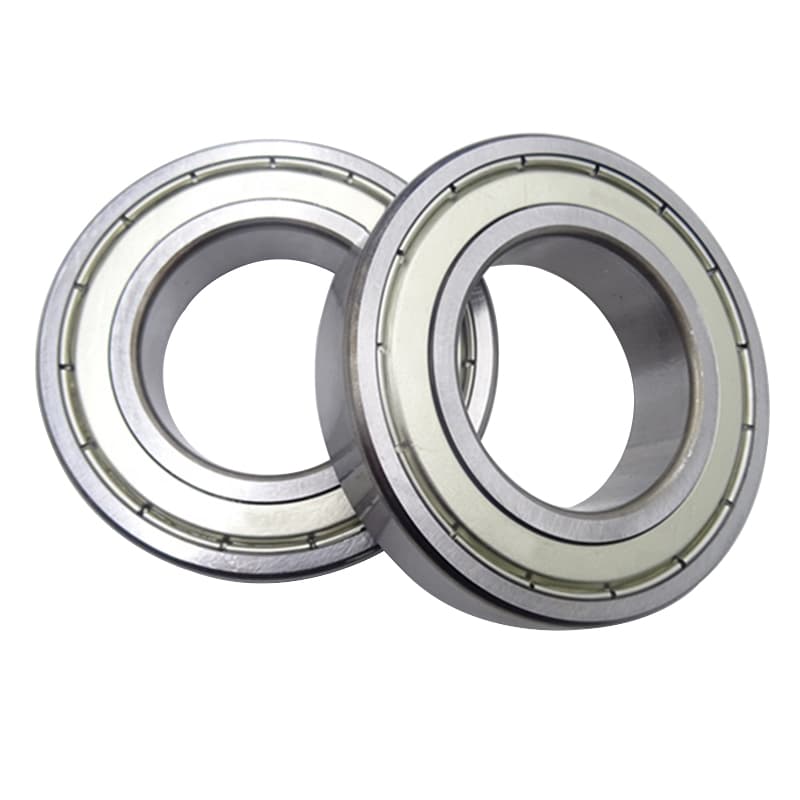
For buyers like Rajesh and his customers, the bearing code is the primary link between a machine’s need and a supplier’s catalog. You don’t need to be an engineer, but you must understand this basic technical alphabet. It prevents costly mistakes, enables accurate price comparison, and allows you to specify exactly what you need. Let’s break down this code language into simple, actionable knowledge.
How to read ball bearing code?
Reading the code is a process of decoding structured information. It starts with the basic number that defines size and type, followed by prefixes and suffixes that add details.
You read a ball bearing code from left to right. The basic number indicates type, dimension series, and bore size. Prefixes (like prefixes for cage or ring design) come before, and suffixes (for clearance, seals, precision) come after. For example, in 6205-2RS C3 P6, ‘6205’ is the basic size, ‘-2RS’ means two rubber seals, ‘C3’ is clearance, and ‘P6’ is precision class.
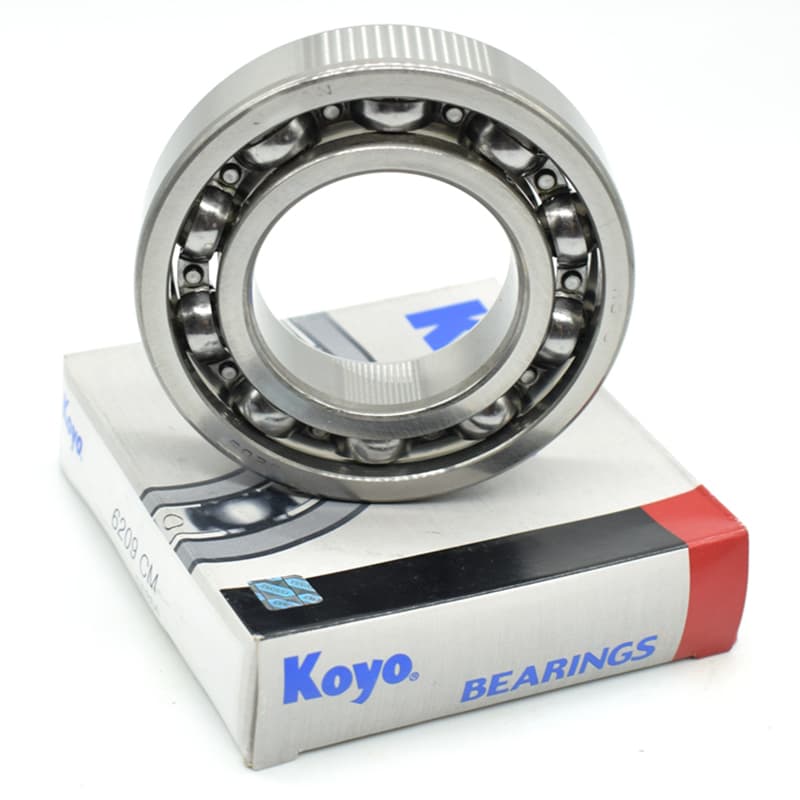
Let’s take a common example and decode it piece by piece. This is the foundation for all bearing identification.
Decoding the Basic Bearing Number: The Core Identity
The basic number is the most critical part. It tells you if the bearing will physically fit. The system is standardized but can vary slightly by manufacturer. We’ll focus on the most common ISO system.
Structure of a Basic Number (e.g., 6205)
The number has up to four digits, but for most common deep groove bearings, it’s three or four digits.
- First Digit (or first two digits): Bearing Type
- ‘6’ = Deep Groove Ball Bearing. This is the most important identifier for this article.
- Other examples: ‘1’=Self-aligning ball, ‘2’=Spherical roller, ‘3’=Tapered roller, ‘5’=Thrust ball, etc.
- Second Digit (or third digit): Dimension Series
- This digit combines the width series and the diameter series. It defines the cross-sectional proportions.
- For a 6205: The second digit is ‘2‘. In the ’62’ series, this means a light width series and a medium diameter series. This is the most common series.
- Other common series: ’63’ series (medium width, medium diameter – higher load capacity), ’60’ series (extra light).
- Last Two Digits: Bore Diameter Code
- This is the key to the shaft size.
- For bore codes ’04’ and above, you multiply the code by 5 to get the bore in millimeters.
- For 6205: The last two digits are ‘05‘. Bore = 05 x 5 = 25 mm.
- Special Cases:
- Bore code ’00’ = 10mm bore.
- Bore code ’01’ = 12mm bore.
- Bore code ’02’ = 15mm bore.
- Bore code ’03’ = 17mm bore.
- For bores 500mm and above, the bore is written directly in millimeters (e.g., 62/500).
So, 6205 tells us: A Deep Groove Ball Bearing (6), in the common light/medium 62 series (2), with a 25mm bore (05).
Why This Matters for Buyers
For Rajesh, when a customer gives him a number like 6205, he knows instantly it’s a 25mm bore, standard deep groove bearing. He can pull it from the correct bin. If a customer only knows the shaft is 25mm, Rajesh can deduce the likely code is 6205 (or possibly 6305 if a heavier duty is needed). This basic decoding skill is the first step in accurate procurement.
How to identify a deep groove ball bearing?
Identification is about confirming the type, not just reading a code. Sometimes the code is missing or worn. You need to use physical clues.
You identify a deep groove ball bearing by its simple, non-separable design with a deep, continuous groove in both rings, its ability to handle moderate axial loads in both directions, and by the stamped code starting with ‘6’ (e.g., 6000, 6200 series). Visually, it looks like a simple ring with balls inside, lacking the complex parts of tapered or spherical rollers.
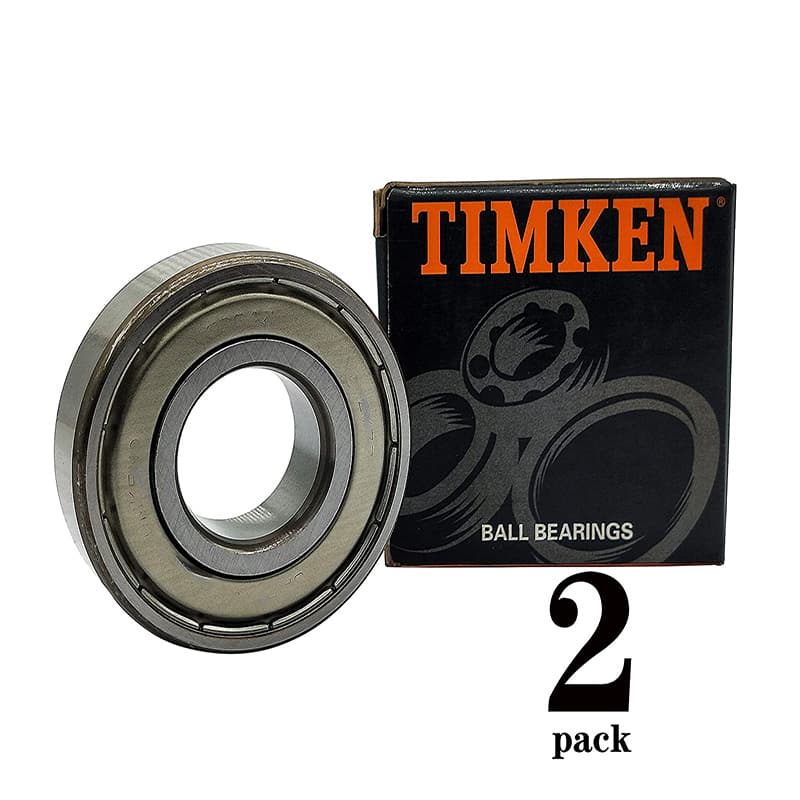
When a bearing is in your hand without a box, you need to be a detective. Here’s how to confirm it’s a deep groove ball bearing and not something else.
Physical and Functional Identification Techniques
Step 1: Visual Inspection
Look for these defining features:
- Non-Separable Design: In most cases, you cannot separate the inner ring, outer ring, and ball set. They are a single unit. (Some large or special designs are exceptions).
- Deep, Continuous Raceways: Both the inner and outer rings have a deep, U-shaped groove that runs around the entire circumference. This is the "deep groove."
- No Taper: The inner and outer ring raceways are parallel to the axis of rotation. There is no tapered angle like in a tapered roller bearing.
- Simple Cage: The cage holding the balls is usually a simple stamped steel ring or a polymer ring. It’s not the heavy, complex cage of a spherical roller bearing.
Step 2: Functional Test (If the bearing is clean and undamaged)
- Axial Load Test: Try to push and pull the inner ring axially relative to the outer ring. A deep groove bearing will have a small amount of axial play (its internal clearance) and can be moved in both directions. This distinguishes it from a single-row angular contact ball bearing, which typically has axial play in only one direction.
- Radial Play: There will also be a small amount of radial shake.
Step 3: Code Verification
Find the stamped code on the face of one of the rings (usually the outer ring).
- The code will almost always start with the digit ‘6’.
- Common series prefixes you’ll see: 60, 62, 63, 64 (extra light, light, medium, heavy cross-sections for a given bore).
Step 4: Comparison with Other Bearing Types
It’s easy to confuse it with other types. Here’s a quick comparison:
| Bearing Type | Key Visual Difference | Stamped Code Often Starts With |
|---|---|---|
| Deep Groove Ball Bearing | Deep grooves in both rings, simple cage, non-separable. | 6 (e.g., 6205) |
| Angular Contact Ball Bearing | Often has a higher shoulder on one side of the rings. May be separable. | 7 (e.g., 7205) |
| Cylindrical Roller Bearing | Uses cylindrical rollers, not balls. Often separable (NU, N type). | NU, NJ, N (e.g., NU205) |
| Tapered Roller Bearing | Components are conical. Always separable into cone (inner), cup (outer), and rollers. | 3 (e.g., 30205) or letter codes (LM, etc.) |
Practical Scenario for a Distributor
Imagine Rajesh receives a call from a panicked factory manager. "The bearing on our conveyor motor failed. It’s a ball bearing, 35mm shaft, but the number is rubbed off!" Rajesh can guide him:
- "Can you see a deep groove on both rings?" (Confirm it’s deep groove, not tapered).
- "Is it one solid piece?" (Confirm it’s not a separable cylindrical roller).
- "Measure the bore precisely." (Get 35mm).
With "deep groove ball bearing" and "35mm bore" confirmed, Rajesh can confidently offer a 6207 (bore = 07×5=35mm). He might also suggest checking the width to confirm it’s a 62 series and not a 63 series. This methodical approach solves the problem quickly and accurately.
How to read bearing notation?
Bearing notation is the full "sentence" – the basic number plus all its prefixes and suffixes. It tells the complete technical story of the bearing.
Bearing notation is read as a sequence: Prefixes (design features) + Basic Number (size/type) + Suffixes (internal design, seals, clearance, precision). Each letter and number has a specific meaning defined by ISO or manufacturer standards. Reading it fully ensures you understand all the bearing’s special characteristics.
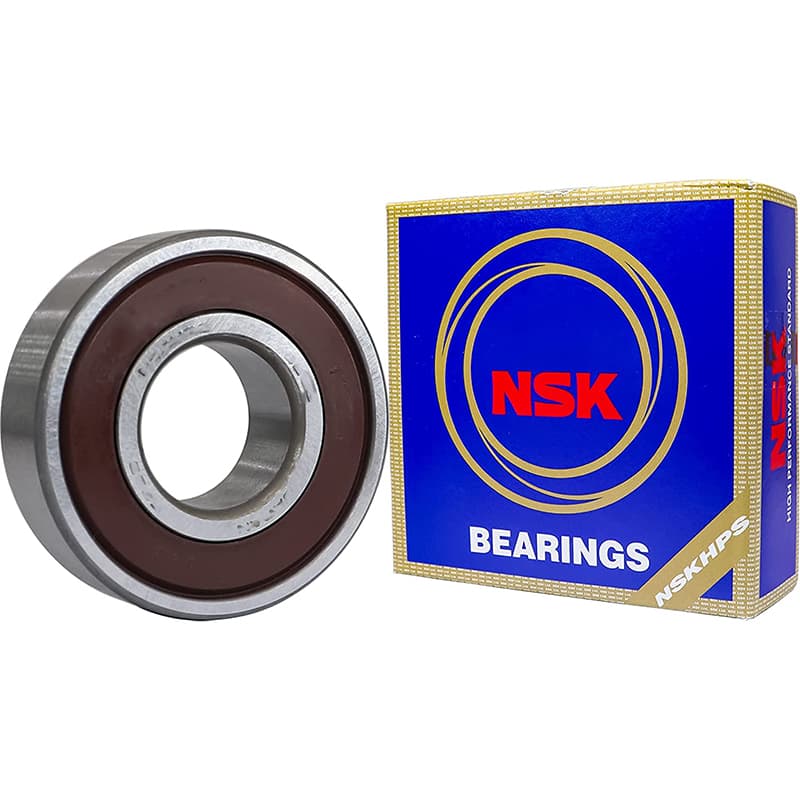
The basic number gets you the right size. The suffixes get you the right performance. Ignoring suffixes is where most buying mistakes happen.
A Guide to Common Prefixes and Suffixes
Let’s expand our example from 6205 to a full notation: 6205-2RS C3 P6. We’ll break down each added element.
Suffix Group 1: Internal Design & Cage (Often appear directly after basic number or as a suffix)
- No marking: Usually a standard stamped steel cage.
- J, JJ: Pressed steel cage with improved design.
- M, MA: Machined brass cage. (M=guided on outer ring, MA=guided on inner ring). Better for high speed/temperature.
- TN9: Injection molded glass fiber reinforced polyamide 66 cage (PA66). Excellent for high speed, low noise, and has temperature limits (~120°C).
- E: Optimized internal design, often with more and/or larger balls for higher load capacity. Example: 6205 E.
Suffix Group 2: Seals and Shields
- Open: No suffix. No protection.
- Z or ZZ (or 2Z): A metal shield on one side (Z) or both sides (ZZ). Keeps out large debris, low friction.
- RS or 2RS (or RSR, 2RSR): A rubber contact seal on one side (RS) or both sides (2RS). The ‘R’ sometimes indicates a nitrile rubber seal with a steel outer casing. Provides good dust/moisture protection.
- 2RS1 / 2RS2: Variants of rubber seal design (e.g., different lip contact).
- LS: Contact seal made of synthetic rubber (Acrylonitrile Butadiene).
Suffix Group 3: Internal Clearance
- CN: Normal clearance (often not marked).
- C2: Clearance smaller than normal.
- C3: Clearance greater than normal. Very common for electric motors and general industrial applications to handle thermal expansion.
- C4: Clearance greater than C3.
- C5: Clearance greater than C4.
Suffix Group 4: Precision & Vibration
- P0: Normal precision (ISO Class 0). Often not marked.
- P6: Precision class 6. Better than normal. Common for pumps, motors.
- P5, P4, P2: Increasing levels of precision for machine tools, spindles.
- Z1, Z2, Z3, Z4: Vibration acceleration levels (lower is better). Z1 is good for standard motors.
Suffix Group 5: Other Specialties
- NR: Bearing with a snap ring groove on the outer ring for axial location.
- N: With a locating snap ring groove.
Putting It All Together: Reading "6205-2RS C3 P6"
- 6205: Deep groove ball bearing, 62 series, 25mm bore.
- -2RS: Fitted with two rubber contact seals. Pre-greased.
- C3: Has a "greater than normal" internal clearance.
- P6: Manufactured to Precision Class 6 tolerance.
This is a high-quality, general-purpose industrial bearing suitable for motors, gearboxes, and pumps where some heat and contamination are expected.
Procurement Power
For Rajesh, mastering suffixes is a competitive advantage. He can look at a customer’s old bearing (e.g., 6205 ZZ C3) and know it’s for a high-speed, clean application. If the customer’s environment has become dusty, Rajesh can recommend switching to a 6205-2RS C3. This consultative selling builds trust and ensures customer success. At FYTZ, we use standard suffix notations, making it easy for our distributors to understand and specify exactly what they need.
What is C1, C21, and C32 bearing clearance?
Clearance suffixes are among the most important and most misunderstood. They don’t indicate quality, but fitness for purpose in the thermal and mechanical environment.
C1, C21, C32, C43, and C54 are standardized groups for radial internal clearance5 (RIC). C21 is less than normal, CN is normal, C32 is greater than normal, C43 is greater than C32, and C54 is the greatest. C32 is commonly specified for electric motors and general machinery to prevent overheating by accommodating shaft expansion.
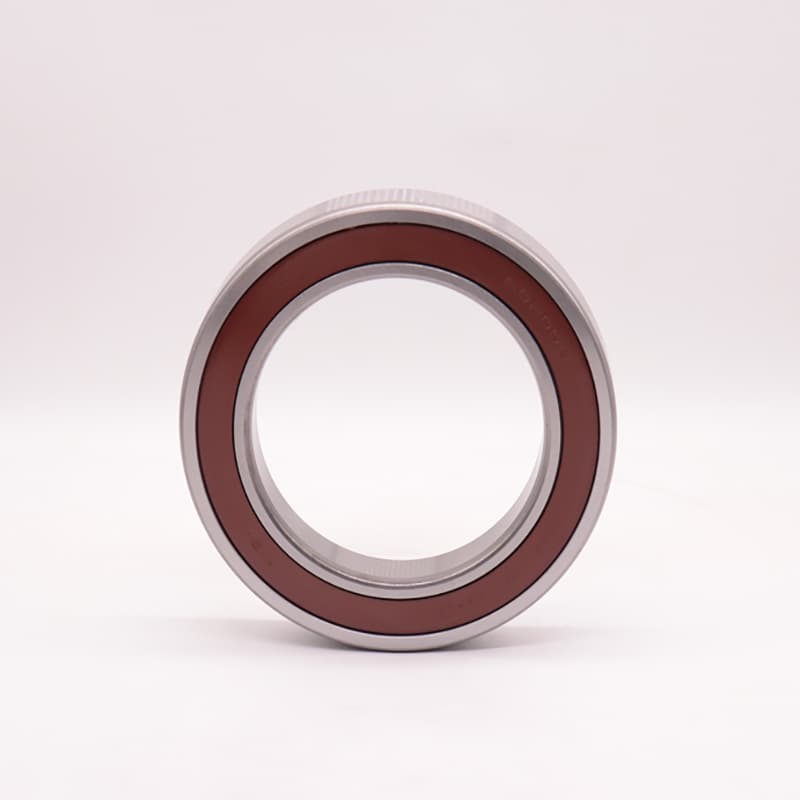
Clearance is the space inside the bearing between the balls and the raceways when it’s un-mounted. This "initial clearance" is critical because it changes when installed and running.
The Critical Role of Internal Clearance in Application
Choosing the wrong clearance can cause a new bearing to fail in hours. Let’s understand what happens and how to choose.
What Happens to Clearance in Operation?
When you install and run a bearing, two main factors reduce the internal clearance:
- Interference Fit: The inner ring is pressed onto the shaft, causing it to expand slightly. The outer ring is pressed into the housing, causing it to contract slightly. Both reduce clearance.
- Thermal Expansion: In operation, the inner ring (on the rotating shaft) gets hotter than the outer ring (in the cooler housing). The hot inner ring expands more than the outer ring, further reducing clearance.
If you start with a bearing that has normal (CN) clearance, these factors can use up all the space. The bearing can become preloaded (negative clearance). This creates high friction, heat, and rapid failure.
The Purpose of C32, C43, C54 Clearance
These are "greater than normal" clearances. They provide extra internal space from the start. This extra space is designed to be taken up by the interference fit and thermal expansion6. The goal is to end up with a small, positive operational clearance when the machine is running at normal temperature. This is ideal for smooth operation and long life.
Guidelines for Selecting Clearance
| Clearance Group | Relative Size | Typical Application | Reason |
|---|---|---|---|
| C21 | Smaller than Normal | Very precise instruments, applications with minimal heat and precise fits. | Requires minimal internal play. |
| CN (Normal) | Standard | Applications with light loads, low heat, and known precise fits. Often not marked. | General purpose where conditions are mild. |
| C32 | Greater than Normal | Electric motors, generators, gearboxes, pumps, general industrial machinery. The most common industrial specification. | Compensates for typical interference fits and moderate thermal expansion6. |
| C43 | Greater than C32 | High-temperature applications (e.g., dryer bearings), heavy interference fits, or where shaft/housing materials have different expansion rates. | Extra margin for severe thermal conditions. |
| C54 | Greatest | Special high-temperature applications (kiln carts), or with very heavy interference fits. | Maximum allowance for extreme conditions. |
A Critical Note on "C32" as a Default
In many industrial contexts, C32 is the safe, recommended choice. For Rajesh’s customers in motor repair or general machinery maintenance, specifying C3 clearance7/iskbearing.com/news/knowledge/understanding-c3-bearings-an-essential-guide-to-precision-in-machinery)2 clearance when ordering a replacement bearing is a best practice. It’s an insurance policy against unknown installation conditions or slightly higher operating temperatures.
Reading the Code and Sourcing
In a bearing code, clearance is a suffix. Example: 6205 C32 (Open bearing with C3 clearance7/iskbearing.com/news/knowledge/understanding-c3-bearings-an-essential-guide-to-precision-in-machinery)2 clearance), 6205-2RS C32 (Sealed bearing with C3 clearance7/iskbearing.com/news/knowledge/understanding-c3-bearings-an-essential-guide-to-precision-in-machinery)2 clearance).
- Important: A standard 6205-2RS often comes with normal (CN) clearance. If you need C32, you must specify it: "6205-2RS C32".
- A quality supplier like FYTZ will ask about clearance or default to C32 for industrial orders to ensure reliability. Rajesh should educate his customers to always verify or specify the clearance suffix when ordering, as it fundamentally affects performance.
Conclusion
Mastering the language of bearing codes and suffixes—especially for size, seals, clearance, and precision—empowers buyers to make accurate, informed decisions. This knowledge transforms you from someone who just orders parts into a savvy procurer who ensures the right bearing is installed for reliable, long-lasting performance.
-
C2 clearance is vital for precision instruments; learn when to use it for optimal performance. ↩ ↩ ↩ ↩
-
Understanding C3 clearance is crucial for ensuring optimal performance in machinery and preventing premature failure. ↩ ↩ ↩ ↩ ↩ ↩ ↩ ↩ ↩ ↩ ↩ ↩ ↩ ↩ ↩ ↩ ↩ ↩
-
C4 clearance is essential for high-temperature applications; understanding it can enhance machinery reliability. ↩ ↩ ↩ ↩
-
C5 clearance is designed for extreme conditions; understanding its use can prevent equipment failure. ↩ ↩ ↩ ↩
-
Learn about radial internal clearance to make informed decisions on bearing selection and maintenance. ↩
-
Explore the impact of thermal expansion on bearing performance and longevity. ↩ ↩
-
C3 clearance is a safe choice for many applications; explore why it’s recommended for reliability. ↩ ↩ ↩