
In a steel mill, bearing failure means more than downtime. It can mean a stalled slab of red-hot steel, causing catastrophic damage and massive financial loss.
Spherical roller bearings are critical for steel mill roller tables and continuous casting lines because they withstand extreme radial loads from heavy steel products, tolerate thermal expansion and frame distortion, and operate reliably in high-temperature, scale-dusted environments. Their self-aligning capability is essential for long, multi-bearing shafts.
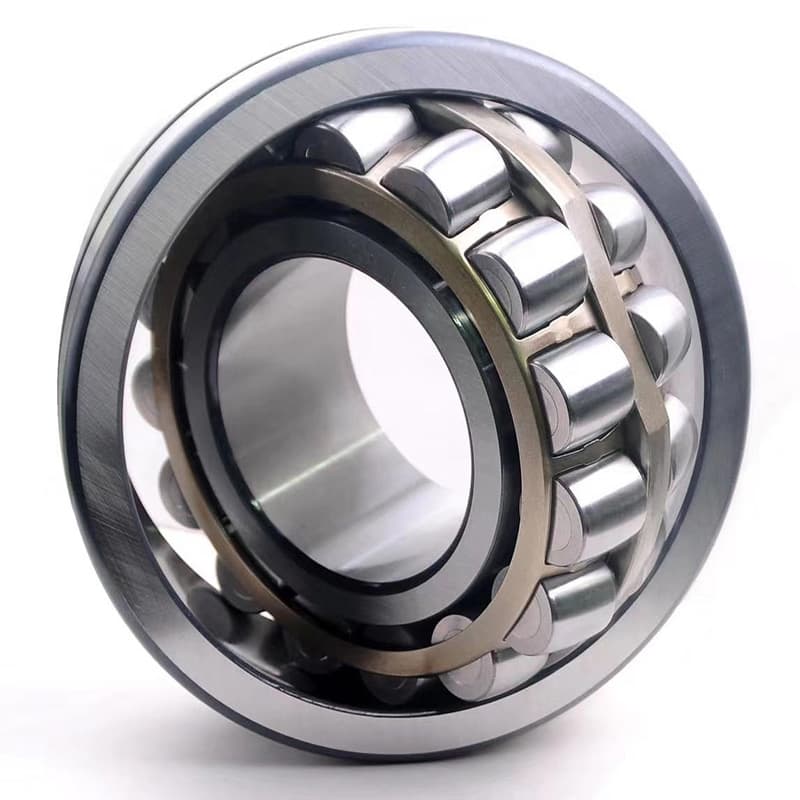
The environment of a steel mill is uniquely brutal. Bearings are exposed to radiant heat, conducted heat, heavy shock loads, water spray, and abrasive iron oxide scale. Ordinary bearings fail quickly here. The machinery demands a bearing that is not just strong, but also intelligent enough to adapt to shifting conditions. Spherical roller bearings are engineered for this challenge. Let’s explore their role and how to specify them correctly for these critical applications.
What bearings are used in rolling mills?
Rolling mills are complex, but the bearing choices follow a clear logic based on location, load, and speed. Spherical rollers dominate many areas, but they are part of a broader ecosystem.
In rolling mills, four-row tapered roller bearings are used for the work rolls and backup rolls due to their ultra-high radial and axial load capacity. Spherical roller bearings are widely used for roller table rolls, continuous casting segments, and mill auxiliary equipment because of their high radial load rating and self-alignment for long shafts.
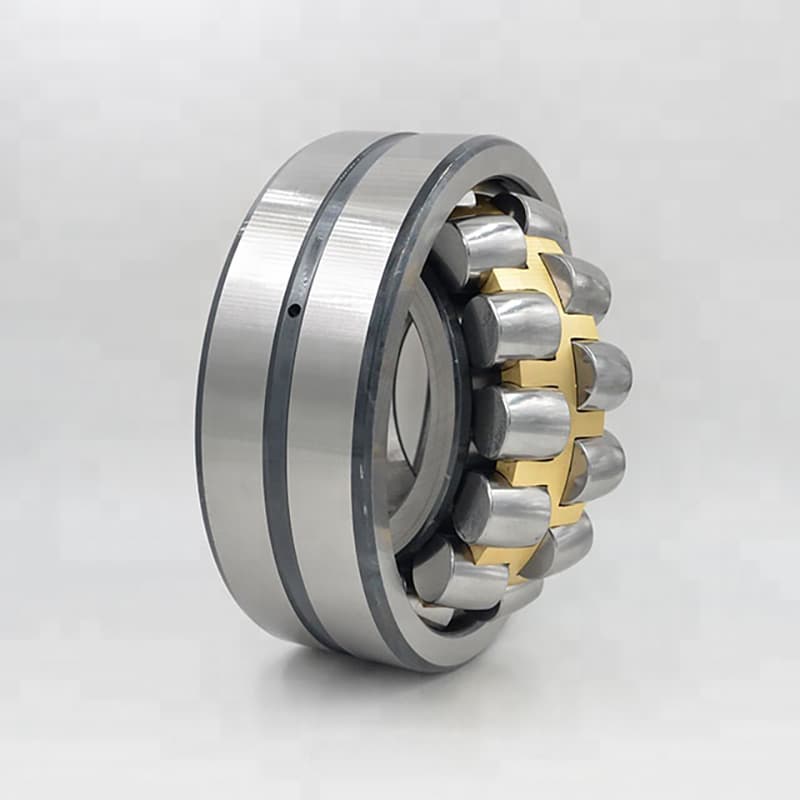
The bearing selection in a rolling mill is a masterpiece of applied mechanical engineering. Each type is chosen for a specific, punishing role.
A Detailed Breakdown of Bearing Applications in a Steel Mill
To understand where spherical rollers fit, we must first see the whole picture. The mill is divided into the "rolling stand" itself and the massive supporting infrastructure.
1. The Heart of the Mill: The Rolling Stand
This is where the actual shaping of steel happens under enormous pressure. The bearings here face the highest forces on the planet.
- Work Rolls & Backup Rolls: These rolls are supported by Four-Row Tapered Roller Bearings (or increasingly, Oil Film Bearings for the very largest stands).
- Why Tapered Rollers? They are uniquely capable of handling the extreme combined radial and axial loads generated during rolling. The four-row configuration provides immense radial stiffness and load capacity. They are mounted in specially designed "chocks" (housings) that are inserted into the mill housing.
- Spherical Rollers Here? Almost never. The requirement for extreme rigidity and precise control of axial roll position rules out the self-aligning feature of spherical rollers.
2. The Material Handling Backbone: Roller Tables and Transfer Lines
This is the domain of the spherical roller bearing. Roller tables are long lines of motorized rolls that transport slabs, billets, and finished product between processes.
- Application: Each table roll is supported at both ends by pillow block units or plummer blocks.
- Why Spherical Roller Bearings?
- High Radial Load: Each roll must support tons of hot steel.
- Long Shafts & Misalignment: Roller tables can be hundreds of meters long. Foundations settle, frames distort from heat, and perfect alignment of every bearing is impossible. Spherical rollers compensate for this.
- Shock Loads: When a heavy slab drops onto the table, it creates an impact.
- Environment: Exposed to scale, water, and heat.
3. Continuous Casting Machines
This is another critical area for spherical rollers. The machine has many segmented rolls that guide the solidifying steel strand.
- Application: Support bearings for the casting segment rolls.
- Why Spherical Roller Bearings?
- High Load: Supports the liquid/solid steel strand.
- Thermal Stress: The segments are water-cooled and experience intense thermal gradients, causing distortion. Self-alignment is crucial.
- Precision: Maintaining roll alignment is key to product quality.
4. Other Auxiliary Equipment
- Reheating Furnace Chargers/Dischargers: Heavy load, thermal environment.
- Shears and Saws: Shock loads.
- Coilers and Downcoliers: High radial load during winding.
Sourcing Insight for Distributors
For an importer like Rajesh, this map is his business plan. He likely won’t supply the specialized four-row tapered bearings for the mill stand (often handled by OEMs). His major opportunity is in the roller table and auxiliary equipment bearings. These are high-volume, recurring maintenance items. He should focus on stocking spherical roller bearings in the common series for table rolls (e.g., 22200, 22300 series) and their corresponding pillow block housings (SAF, SDAF series). By specializing in this "aftermarket" for mill infrastructure, he can build a stable, long-term business with plants in his region.
How do I know what size bearings I need?
This is the fundamental question for every maintenance engineer and buyer. In the pressure of a mill breakdown, you need a fast, accurate answer.
You know what size bearing you need by measuring the shaft diameter of the existing bearing or the housing bore. The shaft diameter determines the bearing bore size. Then, you identify the bearing series (e.g., 22217) from the old bearing’s markings or a dimension table based on the housing.

Sizing a replacement bearing is a forensic exercise. You gather clues from the failed part and the machine itself. For new designs, it’s a calculation.
A Step-by-Step Guide to Sizing for Replacement and Design
Method 1: For Replacement – The Direct Evidence
This is the most common scenario in maintenance.
- Locate the Bearing Code: Look on the side of the bearing ring for the stamped part number. For a spherical roller bearing, it might look like 22217 EK. "22217" is the size code. "EK" denotes design features (like a conical bore, reinforced cage). If the code is readable, your job is almost done.
- Measure the Shaft (If the code is worn): Use a caliper to accurately measure the shaft where the bearing sits. This gives you the bore diameter. For a 85mm shaft, the bearing bore is 85mm.
- Measure the Housing: Measure the inside diameter of the housing where the bearing outer ring fits. This gives you the outer diameter (OD).
- Measure the Width: Measure the total width of the bearing.
- Cross-Reference with a Table: Use your measured bore (e.g., 85mm) and the series you suspect (e.g., 222 series) to find the matching standard size. A bore of 85mm in a 222 series is a 22217 bearing (bore = 17 x 5 = 85mm).
Method 2: For New Design – The Engineering Calculation
When designing a new roller table or selecting a bearing for an upgrade, you must calculate the required size.
- Determine the Load: Calculate or estimate the radial load on the bearing. For a roller table, this is the weight of the steel product divided by the number of supporting rolls, plus dynamic factors.
- Determine the Speed: Know the rotational speed (RPM) of the roll.
- Select a Service Life: Define the required L10 life in hours. For critical 24/7 mill equipment, this is often 50,000 to 100,000 hours.
- Calculate Required Basic Dynamic Load Rating (C): Use the bearing life formula:
L10 = (C/P)^(10/3). Rearrange to solve forC:C = P * (L10)^(0.3). You need the bearing’sCrating to be greater than this calculated value. - Choose a Bearing Series: Look in a manufacturer’s catalog (like FYTZ’s) for a bearing with your shaft bore size that has a
Crating exceeding your calculated requirement. You will likely need a spherical roller bearing (222 or 223 series) to get the necessary capacity.
Key Considerations for Steel Mills
- Internal Clearance: Always specify C4 or even C5 clearance for high-temperature applications. The heat from the steel will reduce clearance.
- Cage Type: For high shock loads (like slabs dropping), request a machined brass or steel cage instead of a stamped steel cage for higher strength.
- Special Features: Bearings for continuous casting segments may require water-cooled housings or special seals to resist water ingress.
A Quick Reference Table for Common Sizes
| Typical Steel Mill Application | Common Shaft Size Range | Probable Spherical Roller Bearing Series | Key Spec to Check |
|---|---|---|---|
| Light Duty Table Roll | 60mm – 100mm | 22200 series (e.g., 22212) | C3/C4 clearance |
| Heavy Duty Table Roll / Transfer | 100mm – 180mm | 22300 series (e.g., 22318) | C4 clearance, brass cage |
| Continuous Caster Segment Roll | 80mm – 150mm | 22200 / 22300 series | C4 clearance, special sealing |
| Furnace Roller | 120mm+ | 23100 / 23200 series (higher load) | C5 clearance, heat-stabilized steel |
For Rajesh, providing a simple sizing guide to his mill customers is a valuable service. He can advise them: "First, measure the old shaft. Then call me with the number. I will confirm the bearing code and check our stock for the correct C4 clearance version." This turns a technical problem into a simple process, making him the easy and reliable source for replacements.
What are the three types of roller bearings?
This basic classification helps narrow down the choices. For heavy industry, understanding the difference between these types is the first step in selection.
The three main types of roller bearings are cylindrical roller bearings, tapered roller bearings, and spherical roller bearings. Each is defined by the shape of its rolling elements and its load-handling capabilities: cylindrical for high radial, tapered for combined loads, and spherical for high radial with self-alignment.
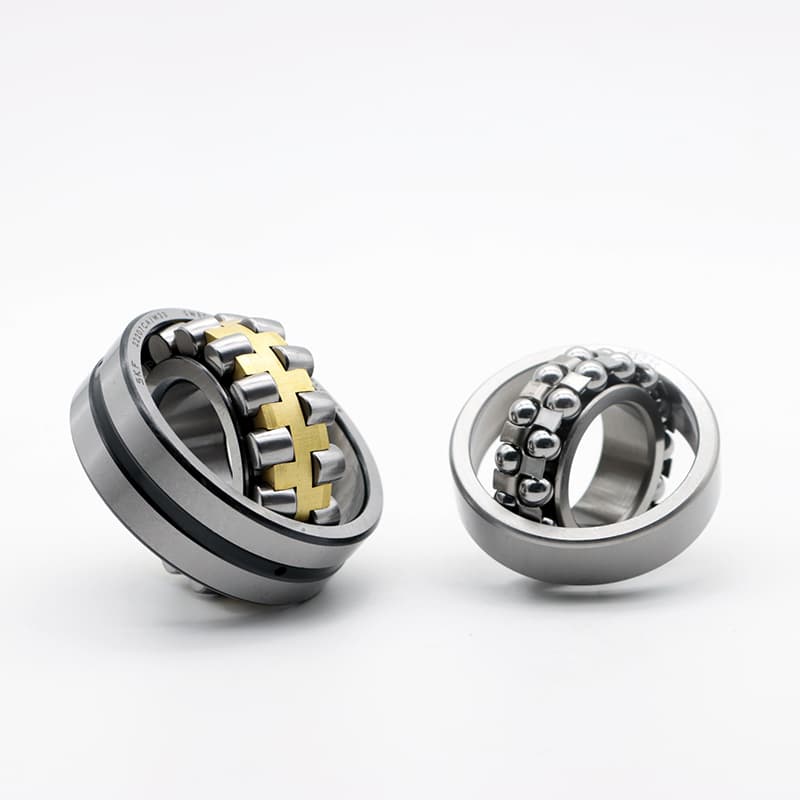
Knowing these three types is like knowing the difference between a truck, a sports car, and an off-road vehicle. They are all vehicles, but built for different terrains.
A Comparative Analysis for Industrial Application
Let’s examine each type in detail, focusing on their strengths, weaknesses, and where they fit in a steel mill context.
1. Cylindrical Roller Bearings
- Roller Shape: Cylindrical.
- Load Capacity: Very high radial load capacity. Essentially no axial load capacity in most types (NU, N design).
- Key Feature: Low friction, suitable for high speeds. They are "separable," meaning the inner ring, rollers, and cage can be mounted separately from the outer ring.
- Steel Mill Use: Primarily in applications with pure radial load and high precision, such as some electric motor shafts or gear shafts inside gearboxes. Not typically used on roller tables due to lack of axial and misalignment tolerance.
2. Tapered Roller Bearings
- Roller Shape: Conical (tapered).
- Load Capacity: High combined radial and axial load capacity. The axial load is primarily in one direction.
- Key Feature: Must be used in opposed pairs to handle bidirectional thrust. They are adjustable to set precise clearance or preload.
- Steel Mill Use: The dominant bearing for work rolls and backup rolls in the form of four-row tapered roller bearings. Also common in wheel bearings for mill cranes and transfer cars. Not ideal for long, potentially misaligned shafts like roller tables.
3. Spherical Roller Bearings
- Roller Shape: Barrel-shaped (spherical).
- Load Capacity: The highest radial load capacity of the three. Good bidirectional axial load capacity (typically 20-35% of radial capacity).
- Key Feature: Self-aligning. The outer ring has a spherical raceway, allowing the inner ring to tilt (typically 1.5°-2.5°). This compensates for shaft deflection and misalignment.
- Steel Mill Use: The standard for roller tables, continuous casting rolls, and most auxiliary equipment. Handles heavy weight, shock, misalignment, and harsh environments perfectly.
Comparison Table for Steel Mill Equipment Selection
| Bearing Type | Best For This Steel Mill Application | Why It’s Chosen | Not Suitable For |
|---|---|---|---|
| Cylindrical Roller | High-speed motor & gearbox shafts. | High radial load at high speed, low friction. | Roller tables (needs axial/misalignment tolerance). |
| Tapered Roller | Rolling mill work rolls & backup rolls. | Extreme combined radial/axial load, high rigidity. | Long, multi-support shafts where alignment is imperfect. |
| Spherical Roller | Roller tables, transfer lines, caster segments. | High radial load, self-alignment, shock resistance, harsh environment. | High-speed spindles, applications requiring zero play. |
Evolution and Niche Types
- Needle Roller Bearings: A subtype of cylindrical bearings with very thin rollers for compact spaces.
- CARB Toroidal Roller Bearings: A newer type that combines very high radial load capacity with alignment and axial displacement accommodation. It is finding some use in specific steel mill applications.
Strategic Sourcing Perspective
For Rajesh’s business, spherical roller bearings will be his volume product for the steel sector. However, a complete distributor also stocks cylindrical and tapered rollers for other parts of the plant (motors, gears, vehicles). By understanding this trio, he can have intelligent conversations with mill engineers. If an engineer asks for a bearing for a table roll, Rajesh knows to immediately propose a spherical roller. If the request is for a pump coupling, he might suggest a cylindrical roller. This knowledge builds his technical credibility.
How to size a roller bearing?
Sizing goes beyond just measuring. It’s the process of selecting a bearing with adequate capacity to perform reliably for its intended life under specific operating conditions.
To size a roller bearing, you must determine the shaft diameter, calculate the applied radial and axial loads, consider the speed and desired service life, and then select a bearing from a catalog whose Basic Dynamic Load Rating (C) meets or exceeds the calculated requirement for your application’s life.
Sizing is engineering. It transforms the physical needs of a machine into a specific part number. For a steel mill roller, guessing is not an option.
The Detailed Engineering Process for Sizing
Let’s walk through the sizing process for a new roller table application, which is a common design task.
Step 1: Define the Application Parameters
Gather all necessary information:
- Shaft Diameter (d): This is often determined by mechanical design for shaft strength and stiffness. Let’s assume 120mm.
- Radial Load (Fr): Estimate the maximum load. If a single slab weighing 30 tons rests on 10 rolls, and each roll is supported by two bearings, the load per bearing is: (30,000 kg / 10 rolls) / 2 bearings ≈ 1,500 kg-force or 14.7 kN. Add a safety factor for dynamic impact (e.g., 2.0), so Fr = 29.4 kN.
- Axial Load (Fa): For a simple roller table, axial load is minimal, but consider some force from drive gears or misalignment. Assume Fa = 4 kN.
- Speed (n): How fast does the roll turn? Perhaps 50 RPM.
- Required Life (L10h): For critical mill equipment, aim for at least 50,000 hours.
Step 2: Calculate the Equivalent Dynamic Bearing Load (P)
For spherical roller bearings, which handle combined loads, you calculate an "equivalent" pure radial load that would cause the same fatigue life.
The formula is: *P = Fr + Y1 Fa (when Fa/Fr ≤ e) or P = 0.67 Fr + Y2 Fa** (when Fa/Fr > e).
The factors e, Y1, and Y2 come from the bearing catalog and depend on the specific bearing series and the Fa/C0 ratio. This step often requires iteration, as you need to guess a bearing size to get its C0 value.
Step 3: Calculate the Required Basic Dynamic Load Rating (C)
Use the L10 life formula:
L10h = (10^6 / (60 * n)) * (C / P)^(10/3)
Rearrange to solve for C:
C = P * ( (L10h * 60 * n) / 10^6 )^(0.3)
Plug in our numbers: P ≈ 30 kN (simplified for example), L10h = 50,000, n = 50.
C = 30 * ( (50,000 * 60 * 50) / 1,000,000 )^(0.3) = 30 * (150)^(0.3) ≈ 30 * 4.1 = 123 kN.
Step 4: Select the Bearing from the Catalog
We need a bearing with a 120mm bore and a C rating ≥ 123 kN.
- Look at a 22324 spherical roller bearing: Bore=120mm, C ≈ 1220 kN (This is from a real catalog; our simplified calculation underestimated P and thus C. Real loads and safety factors lead to much higher C requirements).
- The catalog C value (1220 kN) is vastly higher than our initial calculation, indicating the bearing is more than strong enough. This shows that standard spherical rollers are incredibly robust for such applications.
Step 5: Finalize Specifications
Based on the catalog and application:
- Bearing Designation: 22324 (Spherical roller, medium series)
- Internal Clearance: Specify C4 for high-temperature operation.
- Cage: Specify Machined Brass Cage (MB) for better shock resistance in a mill.
- Lubrication: Specify high-temperature, extreme pressure grease.
The Role of the Supplier in Sizing
Most mill engineers don’t do this calculation for every replacement. They rely on OEM specs or previous part numbers. However, for a distributor like Rajesh, having access to a supplier with engineering support is a major advantage. At FYTZ, we can perform these sizing calculations for our distributors’ key projects. If Rajesh is bidding to supply bearings for a new roller table line in Vietnam, he can provide not just a price, but a technical proposal with bearing selections justified by load and life calculations. This elevates his offering from commodity to engineered solution.
Conclusion
For the relentless environment of steel mill roller tables and casters, spherical roller bearings are the engineered solution of choice. Success requires knowing their place among other bearing types, accurately sizing them for load and life, and sourcing from suppliers who understand the critical need for features like C4 clearance and robust construction in high-heat, high-shock applications.