
A wrong choice between open and sealed can cost you months of bearing life. I’ve seen both succeed and fail, and the reason always lies in the application.
The choice depends entirely on your operating environment and maintenance plan. Open bearings allow for custom lubrication and are best for very dirty, high-temperature, or high-speed conditions where regular grease replenishment is possible. Sealed bearings are pre-lubricated and protected, ideal for clean, moderate-speed applications where maintenance access is difficult or infrequent.
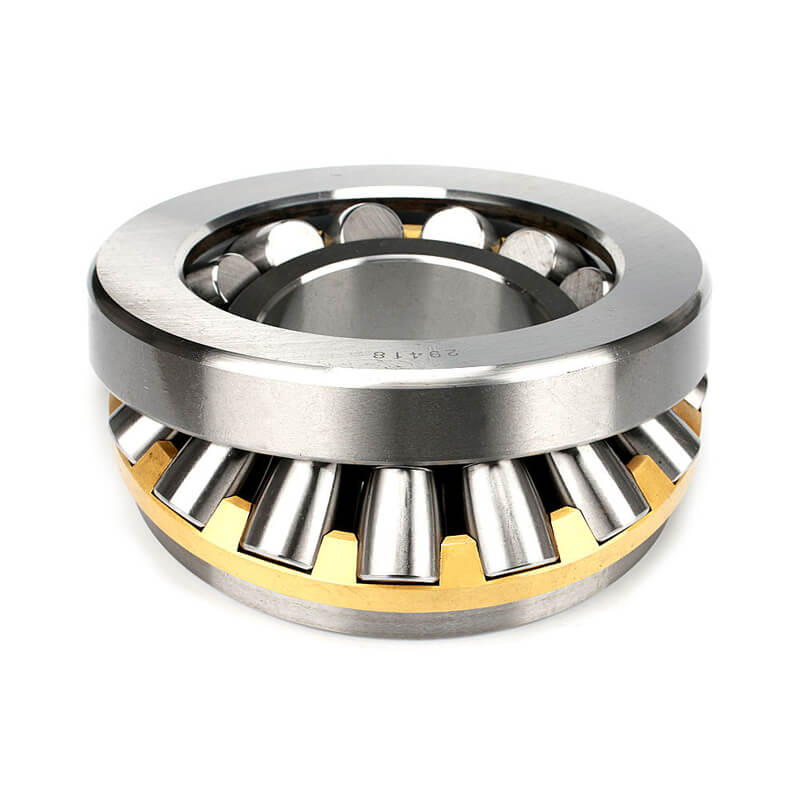
This is not a question of good versus bad. It is a question of fit. An open bearing in a dusty flour mill will fail quickly. A sealed bearing in a high-temperature dryer will cook its own grease and seize. For buyers like Rajesh, understanding this distinction helps them recommend the right product and avoid costly returns. Let’s examine the details to make a clear choice.
Are sealed bearings better than open bearings?
Many buyers assume "sealed" means "premium" or "maintenance-free." This is a dangerous oversimplification that leads to misapplication.
Sealed bearings are not universally better. They are better for specific situations: where contamination must be kept out, where re-lubrication is impossible, or where minimal maintenance is a key requirement. In many industrial heavy-duty applications, open bearings with proper external seals are often the superior choice.
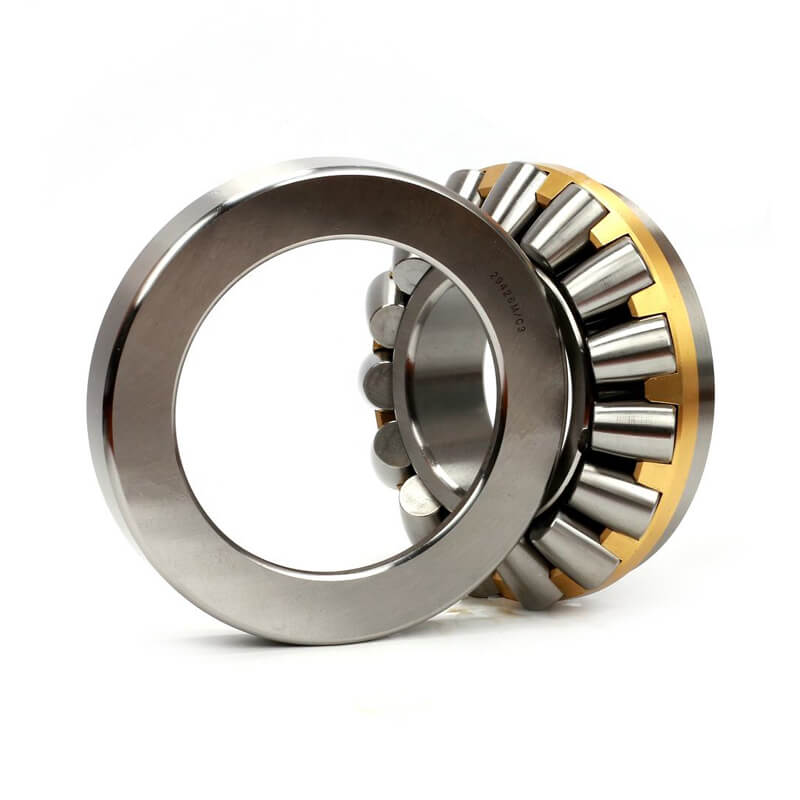
"Better" is a relative term in engineering. Let’s define what "better" means in terms of reliability, cost, and suitability.
Evaluating "Better" Across Key Application Parameters
We need to move beyond general statements. We must judge based on the specific demands of the machine.
The Case for Sealed Bearings (When They Are "Better")
Sealed bearings shine in environments where their inherent advantages directly solve a problem.
- Contamination Exclusion: The primary job of the seal is to keep dirt, dust, and water out. In relatively clean environments like some indoor machinery, light manufacturing, or certain agricultural equipment, this built-in protection is excellent.
- Maintenance Simplification: The bearing comes pre-filled with grease. You install it and forget about it for its design life. This is perfect for hard-to-reach locations or applications where scheduling lubrication is impractical.
- Grease Retention: The seal also keeps the lubricant inside. This prevents grease from leaking out and contaminating products, which is critical in food processing or packaging machinery.
- Ideal Applications: Electric motors, fans, conveyors in clean factories, light-duty gearboxes, and some automotive components.
The Case for Open Bearings (When They Are Truly "Better")
Open bearings, used correctly with a proper housing seal, are the workhorse of heavy industry for good reasons.
- Thermal Management: In high-temperature applications (like near kilns or dryers), grease degrades. Open bearings allow you to purge old, broken-down grease and inject fresh, cool grease. This flushes out heat and contaminants. A sealed bearing in this situation would trap the bad grease, leading to rapid failure.
- Heavy Contamination: In extremely dirty environments (mines, quarries, cement plants), no contact seal is perfect. Abrasive particles will eventually get in. With an open bearing, you can use a robust, replaceable external labyrinth seal on the housing and perform regular grease purging to push out any contaminants that enter. This is a more robust defense.
- Custom Lubrication: You can select the exact grease type for the operating temperature, speed, and load. You control the quantity and relubrication interval.
- Heat Dissipation: Open bearings generally have slightly lower friction than contact-sealed types, as there is no rubber lip dragging on a surface. This helps in high-speed applications.
- Ideal Applications: Vibrating screens, crushers, pulleys in mining, heavy-duty gearboxes, rolling mills, and any high-temperature or severely contaminated environment.
The Distributor’s Perspective
For Rajesh, this knowledge is key. When a customer from a local food packaging plant asks for a bearing for a clean, enclosed conveyor, recommending a sealed spherical roller bearing is smart. It reduces their maintenance hassle. But when a customer from a stone crusher plant asks for the same, Rajesh must advise against it. He should recommend an open bearing with a high-quality, externally sealed pillow block housing. By making the right recommendation, Rajesh prevents a premature failure, builds trust, and secures future business. At FYTZ, we produce both types and guide our distributors through this decision process for every order.
What are the disadvantages of sealed bearings?
Sealed bearings offer convenience, but that convenience comes with specific trade-offs. Ignoring these can be expensive.
The main disadvantages of sealed bearings are limited operating temperature range (seal material degrades), fixed lubrication that cannot be replenished or changed, higher friction and lower speed capability due to the contact seal, and the inability to purge contaminants that eventually ingress past the seal.
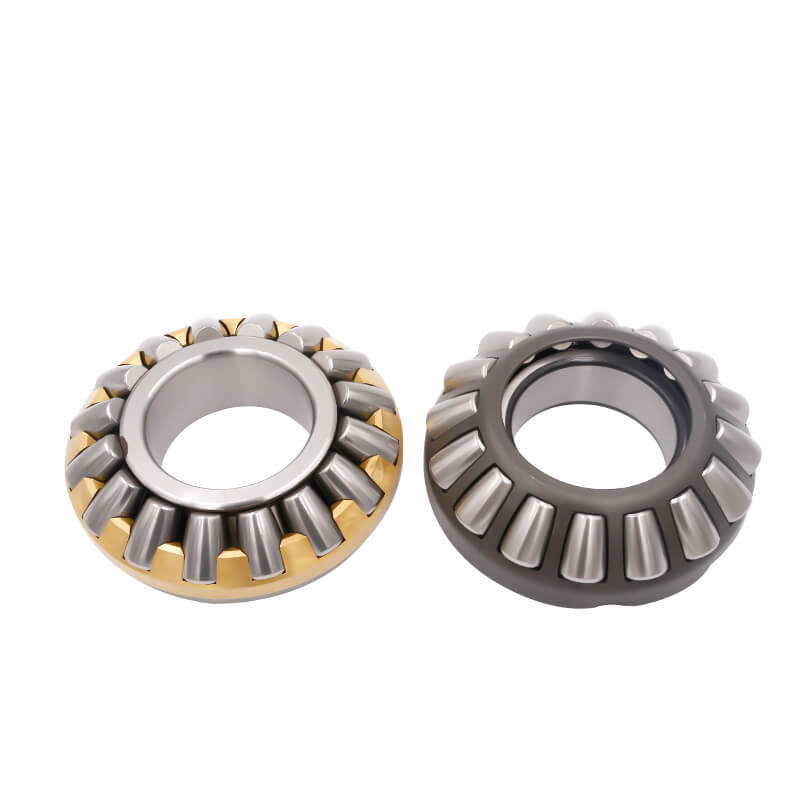
The sealed unit is a closed system. Its strengths are also its weaknesses when conditions are not perfect. Let’s examine the limitations.
The Inherent Limitations of a Closed System
A sealed bearing is designed for a specific, often moderate, service life under defined conditions. Pushing beyond these boundaries reveals the downsides.
1. The Lubrication Prison
The grease inside is there for life. You cannot add more, and you cannot change it. This creates several problems:
- Grease Degradation: All grease breaks down over time due to heat, shear, and oxidation. In a sealed bearing, the degraded grease stays in place, losing its lubricating properties. The bearing runs on poor lubrication until it fails.
- No Contamination Flushing: If any dirt or water gets past the seal, it mixes with the grease and stays there. It acts as an abrasive paste, accelerating wear. An open system allows you to pump in new grease to push the old, contaminated grease out through a relief valve.
- Fixed Quantity: The amount of grease is optimized for average conditions. In very hot or cold environments, this fixed quantity may not be ideal.
2. The Seal as a Performance Limit
The physical seal itself introduces constraints.
- Friction and Heat: The rubber or polymer seal lip contacts the inner ring or a sealing land. This contact creates constant friction. This friction generates additional heat and limits the maximum speed (rpm) the bearing can achieve. The
nvalue (speed factor) for a sealed bearing is lower than for an open one. - Temperature Limits: Standard seal materials (like nitrile rubber, NBR) have a continuous operating temperature limit of about 100-120°C. Above this, the seal hardens, cracks, and loses elasticity. High-temperature seals (like fluorocarbon, FKM) exist but are more expensive and still have limits around 200°C.
- Chemical Compatibility: The seal material may not be compatible with certain chemicals, solvents, or oils present in the environment.
3. Application Misalignment Challenge
Spherical roller bearings are chosen for their self-alignment capability. However, a rigid contact seal attached to the outer ring can partially restrict this movement. If the inner ring tilts too much, it can cause excessive wear on the seal lip, leading to early seal failure and then bearing contamination.
A Practical Table of Constraints
| Disadvantage | Consequence for the User | Typical Failure Scenario |
|---|---|---|
| Fixed, non-replenishable grease | Bearing life is finite and predetermined. | A bearing on a furnace fan runs hot. The grease oxidizes in 6 months. The bearing seizes after 8 months, despite low hours. |
| Seal friction and heat | Reduced maximum operating speed. Higher running temperature. | Replacing an open bearing with a sealed one in a pump causes overheating and higher energy consumption. |
| Seal temperature limit | Cannot be used in high-heat areas. | A sealed bearing near a dryer exhaust sees 150°C air. The seal cracks, dirt enters, and the bearing fails. |
| No contamination flushing | Once dirty, the bearing is doomed. | In a dusty workshop, fine dust slowly works past the seal. The bearing grinds itself to failure from the inside. |
Guidance for Selection
For industrial distributors, this means you must qualify the application before selling a sealed bearing. Ask Rajesh to ask his customers: "What is the temperature around the bearing?" "Is it very dusty or wet?" "How often can you maintain it?" If the answer is "very hot," "very dirty," or "we plan to grease it regularly," then an open bearing is the clear choice. Selling a sealed bearing into those conditions guarantees a short life and an unhappy customer.
Which bearing types work best for high-speed applications?
Spherical roller bearings have many strengths, but raw speed is not their primary one. It’s crucial to know their place in the speed spectrum.
For very high-speed applications, angular contact ball bearings and single-row cylindrical roller bearings are typically the best choices. Spherical roller bearings are optimized for high load and misalignment tolerance at low to moderate speeds. Their design creates more internal friction, limiting their maximum rotational speed.
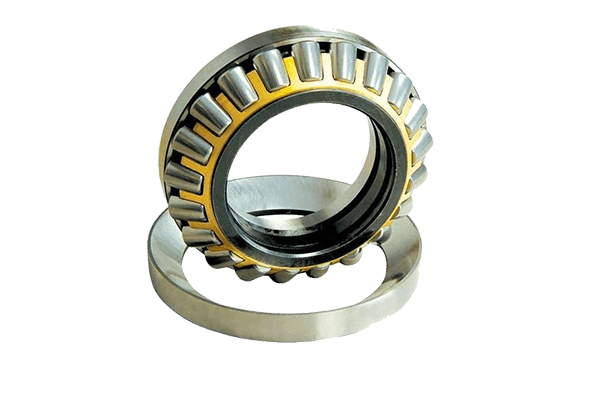
Putting a spherical roller bearing in a high-speed spindle is like using a truck to race in Formula 1. It’s built for a different kind of performance. Let’s understand why.
The Physics of Speed: Friction, Heat, and Centrifugal Force
Several design factors in spherical roller bearings work against high-speed operation.
Sources of Friction and Heat in Spherical Rollers
- Two Rows of Rollers: More rolling elements mean more contact points and more overall friction compared to a single-row bearing.
- Complex Cage Design: The cage that holds the two rows of barrel-shaped rollers is relatively large and heavy. At high speeds, it experiences significant centrifugal force and can cause instability.
- Roller End Flange Contact: The rollers are guided by flanges on the inner ring. At high speeds, the roller ends can slide against these flanges, generating heat.
- Self-Aligning Action: The very feature that allows misalignment compensation involves slight sliding or micro-movements within the spherical raceway, which adds to friction.
The Speed Champions and Why
- Angular Contact Ball Bearings: These are the kings of high-speed rotation. They use balls (point contact) which have very low rolling friction. They can be preloaded to eliminate internal play, providing extreme rigidity and precision. They are used in machine tool spindles, turbochargers, and high-speed motors.
- Single-Row Cylindrical Roller Bearings (N, NU type): These offer excellent high-speed capability for pure radial loads. The cylindrical rollers have line contact for high load capacity, and the simple, lightweight cage design minimizes friction. They have no inherent axial load capacity, which simplifies their internal dynamics.
- Deep Groove Ball Bearings: A versatile and very common bearing that can run at high speeds, especially when properly loaded and lubricated. They handle both radial and light axial loads.
Where Do Spherical Roller Bearings Fit In?
Spherical rollers occupy the "high load, low-to-medium speed" segment. Their speed limit is quantified by the dm•n value (mean bearing diameter in mm × speed in rpm). For spherical rollers, this value is typically lower than for comparably sized ball or cylindrical roller bearings.
Application-Based Speed Considerations
| Application | Typical Bearing Choice | Reason |
|---|---|---|
| Machine Tool Spindle (20,000 rpm) | Angular Contact Ball Bearing (P4 precision) | Extreme precision, low friction, high rigidity required. |
| Paper Machine Roll (1,500 rpm) | Cylindrical Roller Bearing (N type) | High radial load, high speed, precise alignment. |
| Industrial Fan Shaft (3,000 rpm) | Deep Groove or Cylindrical Roller Bearing | Moderate load, high speed. |
| Conveyor Head Pulley (500 rpm) | Spherical Roller Bearing | Very high radial load, misalignment, shock loads. Speed is secondary. |
| Vibrating Screen (900 rpm) | Spherical Roller Bearing (Special Design) | Extreme shock loads and misalignment. Speed is moderate. |
Advice for Bearing Selection
For Rajesh and his customers, the key is to prioritize requirements. If a customer’s main problem is a bearing failing from heavy load on a slow-moving crusher, a spherical roller is perfect. If the complaint is about a bearing overheating on a fast-running pump, suggesting a spherical roller would be a mistake. He should explore cylindrical roller or deep groove ball bearings instead. At FYTZ, we help our partners navigate this. We ask about the shaft speed first. If it’s above the typical range for spherical rollers, we guide them toward a more suitable product in our range, like our precision cylindrical rollers.
What are the disadvantages of spherical roller bearings?
We praise their strength and alignment, but a complete picture requires honesty about their limitations. Knowing the cons prevents misapplication.
The main disadvantages of spherical roller bearings are higher cost, lower maximum speed capability, higher friction and running temperature, more complex installation requirements, and a larger cross-sectional size for a given bore compared to some other bearing types.
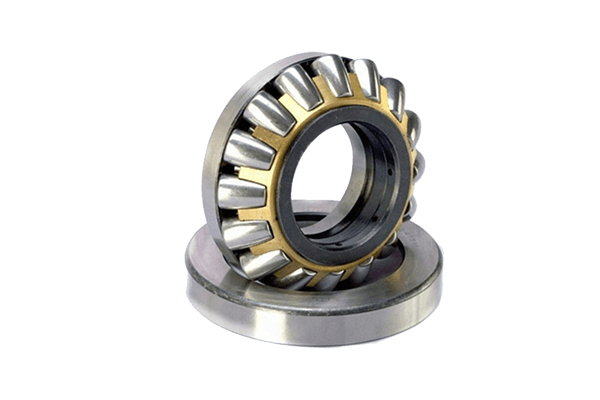
No single bearing type is perfect for every job. Spherical rollers solve specific problems, and those solutions come with inherent compromises.
A Balanced View: When Not to Choose a Spherical Roller Bearing
Let’s systematically review the situations where another bearing type might be a better fit.
Cost and Economic Factors
Spherical roller bearings are generally more expensive than deep groove ball bearings or single-row cylindrical roller bearings of a similar size. This is due to their more complex internal geometry with two rows of barrel rollers and a spherical outer ring raceway. For cost-sensitive applications where their unique features are not needed, a simpler bearing is more economical.
Performance Limitations in Specific Areas
- Speed: As discussed, they are not high-speed bearings. Their
dm•nvalue is limited by internal friction and cage design. - Friction and Efficiency: The two rows of rollers and internal guiding create more friction than a single-row bearing. This results in slightly higher energy consumption and a higher operating temperature under the same load and speed conditions.
- Precision: While available in P5 and P6 precision classes, they are not typically used for ultra-high precision applications like machine tool spindles, where angular contact ball bearings (P4, P2) are required. The self-aligning feature introduces a tiny amount of inherent "play" that is unacceptable in ultra-rigid, precise systems.
Physical Size and Design Constraints
For a given shaft diameter (bore), a spherical roller bearing has a larger outer diameter and width (cross-section) than a deep groove ball bearing or a cylindrical roller bearing. This means the housing must be larger and heavier. In compact machinery designs, this can be a significant disadvantage.
Installation and Handling Sensitivity
The internal components of a spherical roller bearing are more delicate during handling. The cage can be damaged if the bearing is dropped or struck. The self-aligning feature also means that the inner ring and roller assembly can separate from the outer ring if not handled carefully (non-separable types exist but are less common). Proper installation tools and techniques are more critical.
A Comparative Summary Table
| Disadvantage | Compared To… | Practical Implication for the Buyer |
|---|---|---|
| Higher Cost | Deep groove ball bearing, cylindrical roller bearing. | Increases initial machine cost. Must justify with longer life in tough conditions. |
| Lower Speed Limit | Angular contact ball bearing, cylindrical roller bearing. | Cannot be used in high-speed spindles, turbines, or some pump applications. |
| Higher Friction | Most other rolling bearings. | Runs hotter, may require more aggressive cooling or lubrication. |
| Larger Size | Other bearings with same bore. | Requires bigger, heavier housings, limiting design flexibility. |
| Installation Care | More robust deep groove ball bearings. | Requires trained personnel and proper tools to avoid damage. |
Strategic Guidance for Procurement
For a distributor like Rajesh, this knowledge is crucial for inventory and customer advice. He should not push spherical roller bearings for every industrial application. For example:
- A customer needs a bearing for a simple agricultural trailer wheel. A tapered roller bearing or even a deep groove ball bearing in a hub is likely sufficient and more cost-effective.
- A customer needs a bearing for a high-speed electric motor repair. A deep groove ball bearing is the standard and correct choice.
- A customer needs a bearing for a heavily loaded, misaligned conveyor idler in a mining plant. This is where the spherical roller bearing justifies its cost and complexity.
By understanding both the advantages and the disadvantages, Rajesh can provide honest, accurate advice. He can explain why a cheaper bearing might work in one case and why the more expensive spherical roller is necessary in another. This builds immense credibility and trust with his customers. At FYTZ, we ensure our distributors have this full picture, so they can be true partners to their clients, not just parts sellers.
Conclusion
Choosing between open and sealed spherical roller bearings, or even choosing a spherical roller at all, requires a clear understanding of your operating environment, speed, load, and maintenance capabilities. There is no single "best" option, only the best fit for your specific machine.