
Your machinery is straining under heavy loads. You worry about sudden bearing failure and costly downtime. This is a common fear for equipment owners and operators. I speak with clients like Rajesh every week who face this exact pressure. They need bearings that are strong and durable.
For the highest load capacity and long service life under heavy loads, tapered roller bearings are a top choice. They handle significant radial and axial (thrust) loads simultaneously, making them ideal for demanding applications. Their robust design, when manufactured with high-quality materials and precision, ensures reliable, long-lasting performance in gearboxes, wheel hubs, and heavy machinery.

You now know tapered roller bearings are key for heavy loads. But the world of bearings is vast. How do you know for sure this is the best type for your specific machine? What makes one bearing last longer than another under the same load? The answers are not simple. We need to look deeper into bearing types, capacities, and the secrets of longevity. The following sections will give you the detailed knowledge you need to choose with confidence.
What are the best bearings for heavy loads?
You have a conveyor system breaking down or a gearbox that keeps overheating. The problem often points to bearings that can’t handle the load. Picking the wrong type means repeat failures and lost money. Finding the best bearing feels like a guessing game without the right information.
The best bearings for heavy loads are typically roller bearings, not ball bearings. Among them, tapered roller bearings and spherical roller bearings are top choices. Tapered roller bearings excel in applications with combined radial and axial loads. Spherical roller bearings are better for very heavy radial loads and can tolerate misalignment. The "best" choice depends on the specific load direction, speed, and alignment conditions.

Calling one bearing the "best" is not helpful without context. The real answer requires comparing the top contenders side-by-side. We need to look at their strengths, weaknesses, and ideal applications. This will show you why tapered roller bearings are so often the right answer for heavy-duty use.
Comparing Heavy-Duty Bearing Champions
Think of heavy-load bearings as a team of specialists. Each player has a position where they perform best. Choosing the best one means matching the specialist to the job. Let’s examine the key players.
| Bearing Type | Best For This Load Type | Key Advantage | Main Limitation | Typical Application Example |
|---|---|---|---|---|
| Tapered Roller Bearing | Combined loads (Radial + Axial). Especially good where axial load is significant. | High capacity for both radial and axial loads in one compact unit. Long life with proper adjustment. | Sensitive to misalignment. Requires precise installation and clearance setting. | Automotive wheel hubs, gearboxes, rolling mill stands. Our client Rajesh supplies these for truck repairs in India. |
| Spherical Roller Bearing | Very heavy radial loads, often with some misalignment present. | Extremely high radial load capacity. Can self-align to compensate for shaft deflection or mounting errors. | Generally lower axial load capacity than tapered rollers. Often larger in size. | Vibrating screens, conveyor belt rollers, industrial fans. |
| Cylindrical Roller Bearing | Very high, pure radial loads. | Highest radial load capacity of all roller types. Allows axial displacement of the shaft. | Cannot handle any significant axial (thrust) load. | Large electric motors, machine tool spindles, pump shafts. |
| Needle Roller Bearing | High radial load in a very confined space. | Very high capacity for its small cross-sectional height. Saves space. | Low speed capability. Difficult to install. Sensitive to misalignment. | Transmissions, rocker arm pivots, planetary gear sets. |
From my experience running FYTZ Bearing, most inquiries for "heavy loads" involve a mix of forces. A wheel bearing on a truck doesn’t just carry the vehicle’s weight (radial load). It also handles forces during cornering and braking (axial loads). This is why tapered roller bearings dominate that market. They are the complete package. For a gearbox, the loads are complex. The bearings support gears and handle thrust from helical teeth. Again, tapered rollers are frequently specified.
However, I always ask my clients detailed questions. If their application involves a lot of shaft bending, like on a long conveyor, I might suggest spherical rollers. If the load is purely radial and high-speed, like in a motor, cylindrical rollers could be better. The "best" bearing is the one that matches the exact demands of the application. This table is your first step to making that match. Our factory can produce all these types, but we guide clients toward the optimal solution, not just the one we have in stock.
What roller bearing has the greatest load capacity?
You are designing a new machine or upgrading an old one. You push the specifications to the limit. You need the absolute maximum load capacity from your bearings. Picking a bearing based on size alone is a mistake. The type of roller bearing makes a huge difference in its ultimate strength.
The roller bearing with the greatest radial load capacity is the cylindrical roller bearing with full complement rollers (no cage). The bearing with the greatest combined (radial and axial) load capacity is typically a two-row tapered roller bearing (TDO type). For the highest possible overall load in a rugged application, spherical roller bearings are also top contenders due to their multiple rows of large rollers.
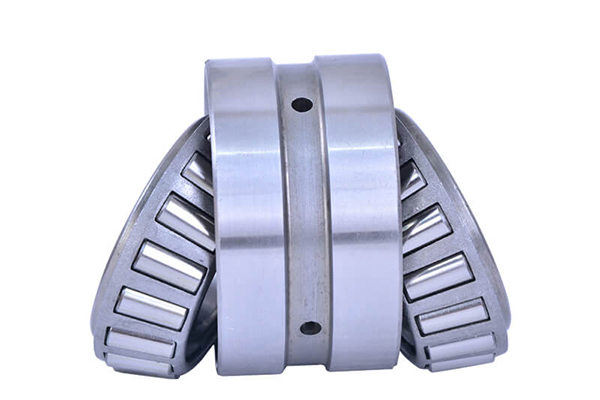
This answer points to several champions. To understand why, we need to look at the science of bearing capacity. It’s about contact area, roller design, and how the force is distributed. A deeper look will help you see why one bearing can hold more weight than another.
The Science Behind Maximum Bearing Capacity
Load capacity is not magic. It follows clear engineering principles. The goal is to spread the force over the largest possible area with the strongest possible materials. Let’s break down why these three bearings are the strongest.
1. Cylindrical Roller Bearings: The Radial Load King.
These bearings use cylinders as rolling elements. The contact between the cylinder and the raceway is a line. This is much larger than the point contact in a ball bearing. A larger contact area spreads the load, reducing stress on the metal. A "full complement" design removes the cage and fills the entire space with rollers. This maximizes the number of load-carrying elements. The result is the highest possible pure radial load rating for a given bearing size. However, they offer no axial load support. They are specialists, not all-rounders.
2. Two-Row Tapered Roller Bearings (TDO): The Combined Load Champion.
Think of this as two single-row tapered bearings in one package. By doubling the number of rollers, you effectively double the load-carrying points. The tapered design means each roller is angled. This allows the bearing to handle thrust loads efficiently. When you combine high radial and high axial loads, a properly designed TDO bearing is often the strongest solution. Its capacity comes from multiplication (two rows) and efficient design (tapered geometry for combined loads). In our factory, we commonly produce these for mining and steel mill equipment where loads are extreme in all directions.
3. Spherical Roller Bearings: The Heavy-Duty Workhorse.
These bearings have two rows of barrel-shaped rollers. They run on a spherical raceway in the outer ring. This gives them two big advantages for heavy loads. First, the large, barrel-shaped rollers provide a big contact area. Second, and crucially, the design allows the bearing to self-align. This means even if the shaft bends under load, the rollers can adjust their position. This ensures the load is distributed evenly across all rollers. Uneven load distribution is a major cause of premature failure. By preventing this, spherical rollers maintain their high theoretical capacity in real-world, imperfect conditions.
The Material Factor:
All this geometry is useless without strong materials. The highest capacity bearings use vacuum-degassed, high-carbon chromium steel. They undergo precise heat treatment like case hardening. This creates a super-hard surface (for wear resistance) and a tough core (to absorb shock and prevent cracking). At FYTZ, we control our steel sourcing and heat treatment process. This is how we ensure the bearings we label as "high capacity" truly live up to their design potential. The bearing with the greatest capacity is the one with the optimal design and flawless execution in material and manufacturing.
Which type of bearing is designed for the heaviest loads and can last for years?
You need a bearing that is both incredibly strong and durable. It must survive under crushing loads for thousands of hours, not just a short burst. Finding this balance between peak strength and long-term endurance is the real engineering challenge. Many bearings are strong but wear out quickly under constant stress.
The bearing type specifically engineered for the heaviest loads and long-term durability is the spherical roller bearing. It is followed closely by tapered roller bearings in applications with combined loads. These bearings are designed with large, robust rolling elements and advanced heat treatments to withstand extreme stress over extended periods, delivering years of reliable service.
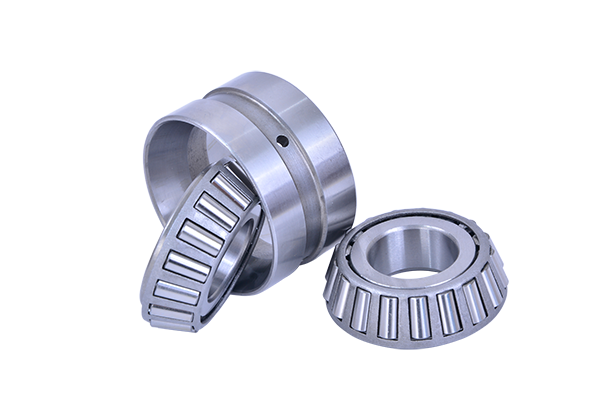
We have identified two leading types. But design alone does not guarantee long life. A bearing can be built for heavy loads but fail early due to other factors. Longevity is a system. It involves the bearing’s design, its environment, and how it is maintained. Let’s explore the complete picture of what makes a bearing last for years under heavy loads.
The System for Long Life Under Heavy Loads
A long-lasting, heavy-duty bearing is the result of several factors working together. It is not just about picking a type from a catalog. You must consider the entire application ecosystem.
1. Design for Durability:
- Robust Internal Geometry: Both spherical and tapered roller bearings use large rolling elements. Larger rollers distribute stress over a larger volume of metal, reducing peak stress and slowing down fatigue.
- Forged Components: High-quality bearings start with forged rings, not cut from tubing. Forging creates a continuous grain flow in the metal that follows the shape of the ring. This makes the part much stronger and more resistant to cracking under cyclical loads.
- Optimized Cage Design: The cage holds the rollers apart. Under heavy load and vibration, a weak cage can fail. Durable bearings use machined brass, steel, or advanced polymer cages designed for high strength and good lubrication retention.
2. The Critical Role of Metallurgy and Heat Treatment:
This is where factory expertise matters most. Long life requires exceptional material quality.
- Clean Steel: The bearing steel must have very low levels of non-metallic inclusions (impurities). These inclusions act as stress starters, leading to premature micro-cracks (fatailure). We use vacuum-degassed steel to achieve this cleanliness.
- Precision Heat Treatment: The process of hardening must be perfectly controlled. The goal is to achieve a deep, uniform hard case while maintaining a tough, ductile core. An uneven or shallow case will lead to early surface wear or spalling. Our integrated production line includes computer-controlled heat treatment furnaces for this consistency.
3. The Application Environment:
The bearing’s design must match its operating conditions to achieve long life.
- Lubrication: This is the most critical factor for longevity after the bearing itself. The right grease or oil film separates the rollers from the raceways, preventing metal-to-metal contact. For heavy loads, a high-viscosity, extreme pressure (EP) lubricant is essential. We often advise clients on lubrication selection.
- Sealing: Contaminants like dust, water, or metal chips are deadly to bearings. Effective seals keep the lubricant in and contaminants out. For harsh environments, we offer bearings with heavy-duty rubber seals or even labyrinth seal options.
- Installation and Alignment: As discussed before, a tapered roller bearing’s life depends on correct clearance setting. A spherical roller bearing is more forgiving but still needs proper mounting. A poorly installed bearing will never reach its potential lifespan.
A client in the mining industry in South Africa once came to us with a recurring bearing failure on a crusher. They were using a standard bearing. We analyzed the load and recommended a specific spherical roller bearing from our P5 precision range with a special seal and lubrication groove. We also provided clear mounting instructions. That bearing’s service life increased by over 300%. It wasn’t just a "heavier" bearing. It was the right bearing, made with the right materials, and used in the right way. That is the complete formula for a bearing designed to last for years under the heaviest loads.
What loads can a tapered roller bearing handle?
You have a technical drawing or a failed bearing in hand. You need to know if a tapered roller bearing is suitable. You see numbers for radial load and axial load, but what do they really mean in practice? Misunderstanding these limits leads directly to equipment failure.
A tapered roller bearing can handle significant radial loads (force perpendicular to the shaft) and substantial axial (thrust) loads (force parallel to the shaft). Its unique capability is managing these loads simultaneously. The exact capacity depends on the bearing’s size, series (like light, medium, heavy), and contact angle. Manufacturers provide detailed load rating tables (C and C0 values) for precise selection.

Knowing they handle both types of load is the start. To truly apply this knowledge, you need to understand how these loads interact. You also need to know the real-world factors that change a bearing’s load-handling ability. Let’s move from simple definitions to practical engineering use.
A Practical Guide to Tapered Roller Bearing Loads
The load capacity of a tapered roller bearing is not a single number. It is a relationship. Let’s look at this relationship and the factors that influence it.
1. Understanding the Load Relationship:
The tapered design creates a contact angle (α). This angle determines the load distribution.
- A steeper contact angle (e.g., 25°-30°) makes the bearing better at handling axial loads. It converts more of the axial force into a radial force on the rollers.
- A shallower contact angle (e.g., 10°-15°) makes the bearing better at handling radial loads.
- The Key Point: You cannot apply the maximum radial load and the maximum axial load at the same time. The combined effect must be calculated. Engineers use an equivalent dynamic load (P) formula: P = X Fr + Y Fa. Here, Fr is the radial load, Fa is the axial load, and X & Y are factors from the bearing’s catalog that depend on the contact angle and load ratio.
2. Static vs. Dynamic Load Ratings:
Bearing catalogs list two key ratings:
- Dynamic Load Rating (C): This is the load the bearing can theoretically withstand for 1 million revolutions with a 90% survival rate. It is used to calculate the fatigue life (L10 life) under rotating, dynamic conditions. This is crucial for machines that run continuously.
- Static Load Rating (C0): This is the maximum load the bearing can withstand while stationary (or with very slow rotation/oscillation) without permanent deformation. This is important for bearings that hold heavy loads without moving much, like in a crane hook.
3. Real-World Factors That Change Everything:
The catalog numbers are for ideal conditions. Real applications are not ideal. Here are key factors that affect what load a bearing can actually handle:
| Factor | Effect on Actual Load Capacity | Practical Consideration |
|---|---|---|
| Installation Preload/Clearance | Critical. Incorrect setting drastically reduces life. Too tight (high preload) creates heat and early fatigue. Too loose (excessive clearance) causes roller skidding and impact loads. | Follow manufacturer specs precisely. Use proper tools like a dial indicator. |
| Lubrication | Major Impact. Inadequate lubrication causes immediate metal-to-metal contact and failure, regardless of load rating. | Ensure correct lubricant type, quantity, and replenishment interval. Heavy loads need high-viscosity, EP additives. |
| Operating Temperature | High temperature reduces lubricant effectiveness and can soften the bearing steel, lowering its load capacity. | Monitor temperature. Consider heat-stable greases or oil circulation for hot applications. |
| Mounting Alignment | Misalignment causes edge loading on rollers, creating a massive local stress spike. This can reduce effective capacity by 50% or more. | Ensure shafts and housings are aligned. Use precise machining for mounting surfaces. |
| Shock Loads | Brief, extreme loads beyond the static rating (C0) can cause brinelling (dents) in the raceways. | For applications with heavy shocks (e.g., crushers), select a bearing with a high static rating and consider using a sturdier housing. |
In my work with machinery manufacturers, I often see them select a bearing based only on the radial load. They forget the axial component from gears or belts. This is a recipe for short life. We help them calculate the equivalent dynamic load to choose the correct bearing series. For Rajesh, our distributor in India, we provide simplified selection guides. These guides help his team recommend the right bearing to a repair shop based on vehicle type and application. The question "what load can it handle?" is always answered with: "It depends on the full picture." We provide the bearings, but we also provide the knowledge to use them to their full potential.
Conclusion
For heavy loads and long life, choose the right roller bearing type. Understand load ratings, prioritize quality materials and precision manufacturing, and ensure proper application. This is the path to reliable, durable performance.
